
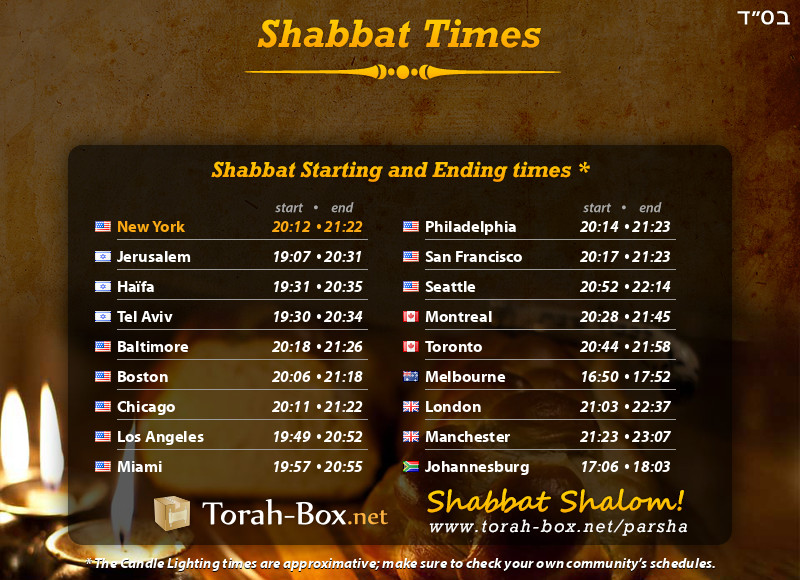
In a city that never truly sleeps, the precise timing of Shabbat’s conclusion, known as motzei Shabbat or tzeit hakochavim (the appearance of three stars), holds profound significance for observant Jews. While the principles governing these times are ancient, their determination and integration into daily life in a hyper-modern metropolis like New York increasingly rely on sophisticated technology. From the algorithms that calculate astronomical events to the apps that deliver real-time data and the smart devices that assist in observance, technology has become an indispensable tool in navigating the sacred rhythms of time.
The Digital Evolution of Halachic Timing
The fundamental task of determining Shabbat’s end involves astronomical calculations based on the sun’s position relative to the horizon. Historically, these calculations were complex and often required specialized knowledge, relying on published charts and almanacs. Today, advanced algorithms and global positioning systems (GPS) have revolutionized this process, offering unparalleled precision and accessibility.
From Astronomical Charts to Algorithmic Precision
Traditional methods for calculating Shabbat times involved intricate tables derived from astronomical observations, often requiring manual lookup and interpolation for specific geographic locations. These tables were meticulously prepared, often for major cities, and distributed widely. However, slight inaccuracies could accumulate, and their static nature meant they couldn’t account for dynamic factors easily.
Modern technology leverages sophisticated algorithms that precisely model the Earth’s rotation, orbit, and the sun’s apparent path. These algorithms take into account the exact latitude, longitude, and even altitude of any given location. For motzei Shabbat, the key calculation is often the moment when the sun reaches a certain number of degrees below the horizon (e.g., 8.5, 7.0, 6.4 degrees, depending on the halachic opinion). Digital systems can perform these complex trigonometric functions instantly, providing exact times down to the second, far surpassing the precision achievable with paper charts. Furthermore, these algorithms can be updated and refined, ensuring continuous improvement in accuracy. The underlying code often draws from open-source astronomical libraries, verified against centuries of scientific observation, making the digital outputs highly reliable.
The Challenge of Geographic Specificity in Urban Centers
New York City presents a unique challenge for halachic timing due to its vast geographical spread and dense urban landscape. With boroughs stretching across significant distances, and even within a single borough like Manhattan, the precise moment of sunset or the appearance of stars can vary by minutes. For instance, the timing in the Lower East Side might differ slightly from that in Riverdale, Bronx, simply due to differences in latitude and longitude.
Technology addresses this by enabling hyper-local calculations. GPS-enabled devices and applications can pinpoint a user’s exact location, allowing for personalized Shabbat times rather than relying on a generalized “New York City” time. This level of granularity is crucial for observant individuals who need to know the precise moment Shabbat concludes at their specific location. While the difference might seem small, even a minute can be significant for religious observance, particularly when planning to resume activities prohibited during Shabbat. Moreover, tall buildings in urban environments, though not affecting the astronomical calculation, can visually obscure the horizon, making traditional observation of stars difficult. Digital tools bypass this visual limitation by relying purely on calculation, providing an objective and consistent time.
Essential Apps and Software for Shabbat Times
The proliferation of smartphones and ubiquitous internet access has led to a boom in applications specifically designed to provide Jewish prayer times, including Shabbat’s end. These tools have become an indispensable part of life for many observant Jews in New York and worldwide.
User Experience and Data Accuracy
Leading apps like “Zmanim,” “Chabad.org,” “MyZmanim,” and others offer intuitive interfaces that make accessing complex halachic data remarkably simple. Users input their location, and the app instantly displays all relevant times, including candle lighting, sunset, and motzei Shabbat. Many apps allow users to select different halachic opinions (e.g., Rabbeinu Tam, Magen Avraham) for tzeit hakochavim, catering to the diverse customs within the Jewish community. This flexibility ensures that users can adhere to their specific communal or personal traditions.
The accuracy of these apps is paramount. Developers often collaborate with halachic authorities and experienced astronomers to validate their algorithms and data. Regular updates ensure that calculations remain current and precise, accounting for leap years, daylight saving time changes (where applicable, though Shabbat times are usually based on solar time), and any refinements in astronomical models. Cloud-based data repositories ensure that users always have access to the most up-to-date information, regardless of their device.
Features Beyond Basic Timings: Zmanim, Calendar Integration, Community Alerts

Modern Shabbat timing apps offer much more than just the exact moment Shabbat ends. They are comprehensive digital platforms for Jewish life.
- Comprehensive Zmanim: Beyond motzei Shabbat, these apps provide a full suite of zmanim (halachic times) for daily prayers, including sunrise, latest Shema, latest prayer, and various twilight periods. This allows users to plan their entire day around religious obligations.
- Calendar Integration: Many apps seamlessly integrate with standard digital calendars (Google Calendar, Apple Calendar), allowing users to add specific zmanim directly to their personal schedule. This is invaluable for busy professionals and families in New York, who can receive reminders and organize their commitments around religious observances.
- Community Alerts and Synagogue Integration: Some advanced platforms integrate with local synagogues and Jewish community centers. This feature can provide automated alerts for significant community events, class schedules, or even changes in prayer times specific to a user’s chosen synagogue. This fosters community cohesion and ensures members are always informed, leveraging communication technology to strengthen social fabric.
- Widgets and Notifications: For immediate access, many apps offer home screen widgets that display current zmanim at a glance. Customizable push notifications remind users of approaching times, ensuring that important moments like Shabbat’s conclusion are never missed, even amidst the hustle of New York City life.
Integrating Shabbat Observance with Smart Living
Beyond providing timing information, technology is also helping observant individuals manage their home environment and social interactions in a Shabbat-compliant manner. The rise of smart home devices and advanced communication tools is ushering in an era of “smart observance.”
Smart Home Automation and Sabbath Mode Devices
The convenience of smart home technology (e.g., smart lighting, thermostats, appliances) often relies on electronic interfaces that are typically avoided during Shabbat. However, a growing number of manufacturers and innovators are developing solutions that enable the use of these technologies in a halachically permissible way.
- Sabbath Mode Appliances: Many modern ovens and refrigerators now come equipped with a “Sabbath mode.” This feature disables automatic shut-off functions, internal lights, and audible alarms that would otherwise pose a halachic issue. These modes are often certified by halachic organizations, ensuring they meet rigorous standards for Shabbat use.
- Smart Plugs and Timers: For lights, heating, or other non-essential electronic devices, smart plugs and programmable timers can automate their operation without requiring direct interaction during Shabbat. Users can set schedules through an app before Shabbat begins, ensuring lights turn on and off at predetermined times, including motzei Shabbat, facilitating a smooth transition back to the week’s activities. Advanced smart home hubs can manage complex scenarios, creating a fully automated Shabbat environment.
- IoT for Observance: The Internet of Things (IoT) extends to more specialized devices, such as water heaters or heating/cooling systems, which can be programmed to operate optimally for Shabbat, ensuring comfort without requiring manual adjustments. This integration of everyday technology into religious practice represents a significant step forward in making modern living compatible with traditional observance.
Digital Communication and Community Cohesion
While direct electronic communication is prohibited on Shabbat, technology plays a vital role in strengthening community ties and organizing activities before and after Shabbat.
- Pre-Shabbat Planning: Group chats, email lists, and social media platforms are extensively used to coordinate Shabbat meals, invite guests, and share community announcements before Shabbat begins. In a large city like New York, this digital infrastructure is crucial for maintaining a vibrant and connected Jewish community.
- Post-Shabbat Debriefs and Events: Immediately following motzei Shabbat, digital channels light up with messages, event invitations, and class announcements for the upcoming week. This immediate re-engagement allows communities to quickly transition from the sacred repose of Shabbat back into the active communal life, often leveraging these very same platforms to announce events that start shortly after Shabbat concludes.
- Global Halachic Resources: For complex halachic questions related to technology or other matters, digital resources—online forums, Q&A platforms, and archived lectures from prominent rabbis—provide instant access to a vast body of knowledge and rabbinic guidance, connecting observant individuals in New York to global halachic discourse.
The Future of Observance Tech: AI, IoT, and Personalized Zmanim
The intersection of technology and religious observance is continually evolving. Emerging technologies like artificial intelligence (AI) and further integration of the Internet of Things (IoT) promise even more sophisticated solutions for managing Jewish life in the future.
Predictive Analytics for Observance Planning
AI and machine learning could enable highly personalized and predictive zmanim services. Imagine an AI assistant that learns an individual’s specific halachic preferences, daily routines, and even travel plans, then proactively provides tailored Shabbat and other zmanim alerts, suggests optimal prayer times based on traffic or appointments, or even predicts the best routes to a synagogue given real-time urban conditions. For New Yorkers, this could mean highly optimized planning, accounting for subway delays or street closures. AI could also analyze large datasets of community customs to provide nuanced guidance specific to an individual’s chosen synagogue or movement.

Ethical Considerations and Digital Halacha
As technology becomes more deeply embedded in religious life, it also raises new halachic and ethical considerations. Questions surrounding data privacy, the “gaze” of AI, and the nature of digital interactions versus human connection require careful examination. The development of “digital halacha” – a body of Jewish law specifically addressing technological advancements – is an ongoing field of rabbinic inquiry. Innovators in the tech space are increasingly collaborating with halachic scholars to ensure that new tools not only function effectively but also genuinely support and enhance religious observance in a permissible manner. This ensures that as technology advances, it continues to serve as a bridge to tradition, rather than a barrier.
aViewFromTheCave is a participant in the Amazon Services LLC Associates Program, an affiliate advertising program designed to provide a means for sites to earn advertising fees by advertising and linking to Amazon.com. Amazon, the Amazon logo, AmazonSupply, and the AmazonSupply logo are trademarks of Amazon.com, Inc. or its affiliates. As an Amazon Associate we earn affiliate commissions from qualifying purchases.