
Choosing the right generator for a 1200 sq ft house is not merely a technical decision; it’s a significant financial investment in your home’s resilience and a critical component of personal financial planning for unforeseen circumstances. The financial implications of selecting an appropriately sized generator — or, conversely, one that is either too small or too large — can impact everything from upfront costs and installation fees to long-term operational expenses, fuel consumption, and even the potential for property damage or lost income during extended outages. Understanding the wattage requirements of your household appliances, balancing initial outlay with ongoing operational costs, and evaluating the long-term return on investment are paramount when making this crucial financial decision.
The Financial Imperative of Correct Generator Sizing
The financial wisdom behind selecting the optimal generator size cannot be overstated. An ill-suited generator can lead to direct financial losses, ranging from excessive initial expenditure to ongoing operational inefficiencies and even appliance damage. For a 1200 sq ft home, where space and budget are often key considerations, precision in sizing is even more critical.
Avoiding Overspending on Unnecessary Capacity
Purchasing a generator with significantly more capacity than your household truly requires is a direct drain on your financial resources. Larger generators inherently come with a higher purchase price. Beyond the initial sticker shock, they typically incur greater installation costs due to increased complexity, heavier equipment, and potentially more extensive electrical work to integrate them into your home’s system. Furthermore, oversized generators often consume more fuel, even when running at partial loads, leading to higher operational expenses over time. This inefficiency means you are paying for unused capacity, effectively burning money on excess power generation that provides no additional utility. A 1200 sq ft home generally has a manageable number of essential circuits, making precise calculation of actual needs a prime strategy for cost avoidance.
The Costly Reality of Underpowering Your Needs
Conversely, selecting a generator that is too small for your 1200 sq ft home’s essential needs presents an equally, if not more, precarious financial situation. An undersized generator will struggle to power critical appliances simultaneously, leading to frequent overloads, circuit trips, and potential damage to the generator itself. Repairing or replacing a prematurely failed generator represents an unplanned financial burden. More critically, an undersized unit means that not all essential systems will function during an outage. Imagine the financial repercussions of losing refrigeration, leading to thousands of dollars in spoiled food, or the inability to run essential medical equipment, which could have catastrophic health and related financial consequences. If you work from home, an insufficient generator could mean lost productivity and, consequently, lost income. The perceived upfront savings of a smaller unit can quickly be dwarfed by these direct and indirect costs during its operational lifespan.
Long-Term Operational Savings
The sweet spot in generator sizing for a 1200 sq ft home is one that perfectly matches your typical and essential load requirements. A correctly sized generator operates more efficiently, consuming fuel at an optimized rate for the power it generates. This efficiency translates directly into lower fuel bills during extended outages, which can add up significantly over the generator’s lifetime. Moreover, an appropriately matched unit experiences less stress and wear, leading to reduced maintenance costs and a longer operational lifespan. This optimized performance protects your initial investment by extending its utility and minimizes unexpected repair expenditures, ensuring your financial outlay provides reliable, cost-effective backup power for years to come.
Budgeting for Backup Power: Portable vs. Standby Investments
The choice between a portable and a whole-house standby generator represents one of the most significant financial decisions you’ll make for your 1200 sq ft home’s backup power solution. Each option carries distinct initial costs, installation complexities, and long-term operational and maintenance budgets.
Portable Generators: Lower Initial Outlay, Higher Operational Engagement
Portable generators generally represent a lower upfront financial commitment. Their purchase price is significantly less than that of a standby system, making them an attractive option for homeowners on a tighter budget. Installation costs are minimal, often just requiring extension cords or, for more integrated solutions, a manual transfer switch costing a few hundred dollars. However, the operational engagement is higher, both in terms of physical effort and ongoing financial management. They typically run on gasoline, which can be expensive and requires careful storage. Fuel consumption rates are often less efficient than standby units for comparable power output. Additionally, portable units require manual setup, fueling, and starting during an outage, which can be inconvenient and, in adverse weather, even risky. This “sweat equity” and higher ongoing fuel expense must be weighed against the lower initial financial barrier.
Standby Generators: Significant Upfront Investment, Seamless Financial Protection
Whole-house standby generators represent a more substantial initial investment. The units themselves are significantly more expensive, and installation costs are considerable, involving professional electrical and gas line connections, a concrete pad, and an automatic transfer switch. For a 1200 sq ft home, a typical standby installation can range from several thousands to well over ten thousand dollars, depending on brand, capacity, and complexity. However, this higher upfront cost delivers unparalleled convenience and financial protection. Standby generators typically run on natural gas or propane, often more cost-effective and readily available than gasoline, eliminating the need for manual refueling. They activate automatically upon detecting an outage, ensuring seamless power restoration and protecting assets like refrigerated food, critical electronics, and temperature-sensitive items without homeowner intervention. This “set it and forget it” reliability translates into peace of mind and tangible financial benefits by preventing damage, spoilage, and lost productivity during prolonged outages, effectively safeguarding your home’s financial well-being.
Calculating Installation and Fuel Costs
Beyond the generator’s purchase price, a comprehensive financial assessment must include installation and ongoing fuel costs. For a 1200 sq ft home, a generator installation can involve:
- Electrical work: Integrating the generator with your home’s electrical panel via a transfer switch (manual for portable, automatic for standby). This requires a licensed electrician and can range from a few hundred to several thousand dollars.
- Fuel line installation: For natural gas or propane standby units, connecting to your existing utility line or installing a dedicated propane tank involves plumbers or gas technicians, adding hundreds to thousands to the cost.
- Site preparation: Pouring a concrete pad for a standby unit, ensuring proper ventilation, and compliance with local codes all contribute to the overall expense.
Fuel costs are a recurring financial consideration. Gasoline prices fluctuate, and storing large quantities can be problematic. Natural gas is often the most economical for standby units, as it’s piped directly to your home. Propane requires a tank and delivery, with costs varying by region and supplier. Understanding these variables is crucial for a complete financial picture of your generator investment.
Determining Your Household’s Essential Financial Loads

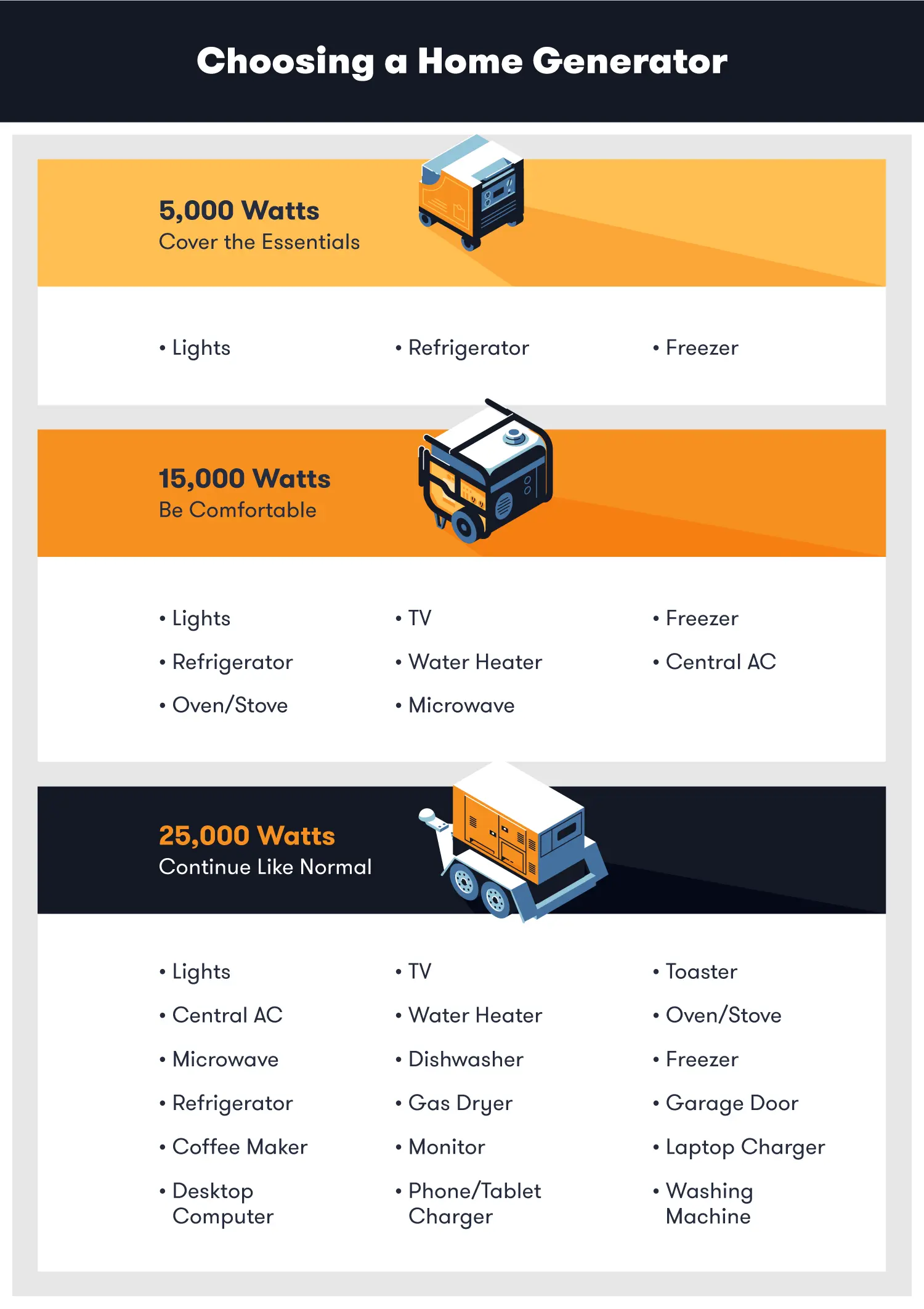
For a 1200 sq ft home, meticulously identifying your essential power needs is the cornerstone of financially astute generator sizing. This process ensures you invest in precisely the capacity required, avoiding both wasteful overcapacity and costly underpowering.
Prioritizing Critical Appliances for Cost-Effective Operation
The first step in calculating your financial load is to prioritize what absolutely must run during an outage. For a typical 1200 sq ft home, this often includes:
- Refrigerator/Freezer: To prevent food spoilage, a significant financial loss.
- Furnace fan/AC fan: For temperature regulation and comfort, impacting health and property (e.g., preventing pipes from freezing).
- Sump Pump: Critical for flood prevention, protecting your home’s structure and belongings from costly water damage.
- Lighting: Essential for safety and basic functionality.
- Critical Electronics: Charging phones, powering a computer for work, or medical devices.
- Water Heater (if electric): For basic hygiene.
A strategic approach involves focusing on these core necessities rather than attempting to power every appliance. This targeted approach keeps the required generator size, and thus its cost, manageable and efficient.
Understanding Starting vs. Running Wattage: A Financial Efficiency Metric
A common financial pitfall in generator selection is failing to account for starting wattage (surge watts) versus running wattage (rated watts). Many motor-driven appliances, like refrigerators, freezers, and sump pumps, require a significantly higher surge of power for a few seconds to start their motors than they do to run continuously.
- Running Wattage: This is the continuous power an appliance draws.
- Starting Wattage: This is the peak power spike needed for a motor to initiate operation. It can be 2-3 times higher than the running wattage.
Your generator must have enough surge capacity to handle the starting demands of your most demanding appliance, or a combination of them if they happen to start simultaneously. If your generator’s surge capacity is insufficient, it will trip a breaker, fail to start the appliance, or worse, be damaged. From a financial perspective, calculating this correctly prevents the need for costly upgrades, repairs, or the loss of functionality of critical devices during an outage. For a 1200 sq ft home, a typical estimate for essential circuits might total 3,000-5,000 running watts, but the starting wattage could push this requirement to 5,000-8,000 surge watts, necessitating careful consideration.
Energy Audits for Financial Optimization
Performing a rudimentary “energy audit” of your essential appliances can provide precise financial insights.
- Identify essential circuits: List every light, outlet, and hard-wired appliance you deem critical.
- Check wattage: Look for nameplate ratings on appliances for both running and starting watts. If not available, use online resources for typical wattages.
- Calculate total running watts: Sum the running watts of all simultaneously operating essential items.
- Determine peak starting watts: Identify the appliance with the highest starting wattage. Your generator’s surge capacity must at least meet this figure, plus the running watts of all other simultaneously operating items.
For a 1200 sq ft house, a 5,000-watt to 8,000-watt generator (running watts) is often sufficient for essential circuits, provided its surge capacity can handle peak loads. This range strikes a balance between functionality and cost-effectiveness, ensuring your investment delivers reliable power without unnecessary expenditure.
Maximizing Your Generator Investment: Beyond Initial Purchase
The financial prudence of your generator choice extends well beyond the initial purchase and installation. Long-term operational costs, maintenance, and the impact on your property’s value are all critical components of a comprehensive financial strategy for your 1200 sq ft home’s backup power.
Fuel Efficiency and Long-Term Operating Budgets
The type of fuel and the generator’s efficiency directly affect your long-term operating budget.
- Gasoline: Often the least efficient per kWh generated and the most expensive per unit. Storage can also be a financial and safety concern.
- Propane: More stable in price than gasoline, but requires a tank and delivery. Offers better efficiency.
- Natural Gas: Generally the most cost-effective and efficient for standby generators, as it’s piped directly to your home, eliminating storage and delivery concerns.
When evaluating generators, consider the “cost per hour” of operation based on fuel consumption at various load levels. For a 1200 sq ft home, even a few extended outages per year can lead to significant cumulative fuel expenses. Investing in a more fuel-efficient model, even if slightly more expensive upfront, can lead to substantial financial savings over its operational lifespan, effectively lowering your total cost of ownership.
Maintenance Schedules and Their Financial Impact
Generators, like any complex machinery, require regular maintenance to ensure reliability and longevity. Neglecting maintenance can lead to premature wear, reduced efficiency, and costly repairs or even replacement.
- Scheduled Servicing: Annual professional servicing, including oil changes, filter replacements, and system checks, typically costs a few hundred dollars. This preventative spending is a sound financial decision.
- DIY Checks: Regularly checking oil levels, fuel filters, and battery terminals (for standby units) can prevent minor issues from escalating into major financial burdens.
- Load Testing: Periodically running your generator under a significant load helps to keep its components lubricated and ensures it will perform when needed.
Budgeting for and adhering to a maintenance schedule protects your significant generator investment. It extends the unit’s operational life, preserves its efficiency, and ensures it’s always ready to provide backup power, thereby safeguarding your home’s financial well-being during outages.
Resale Value and Property Enhancement
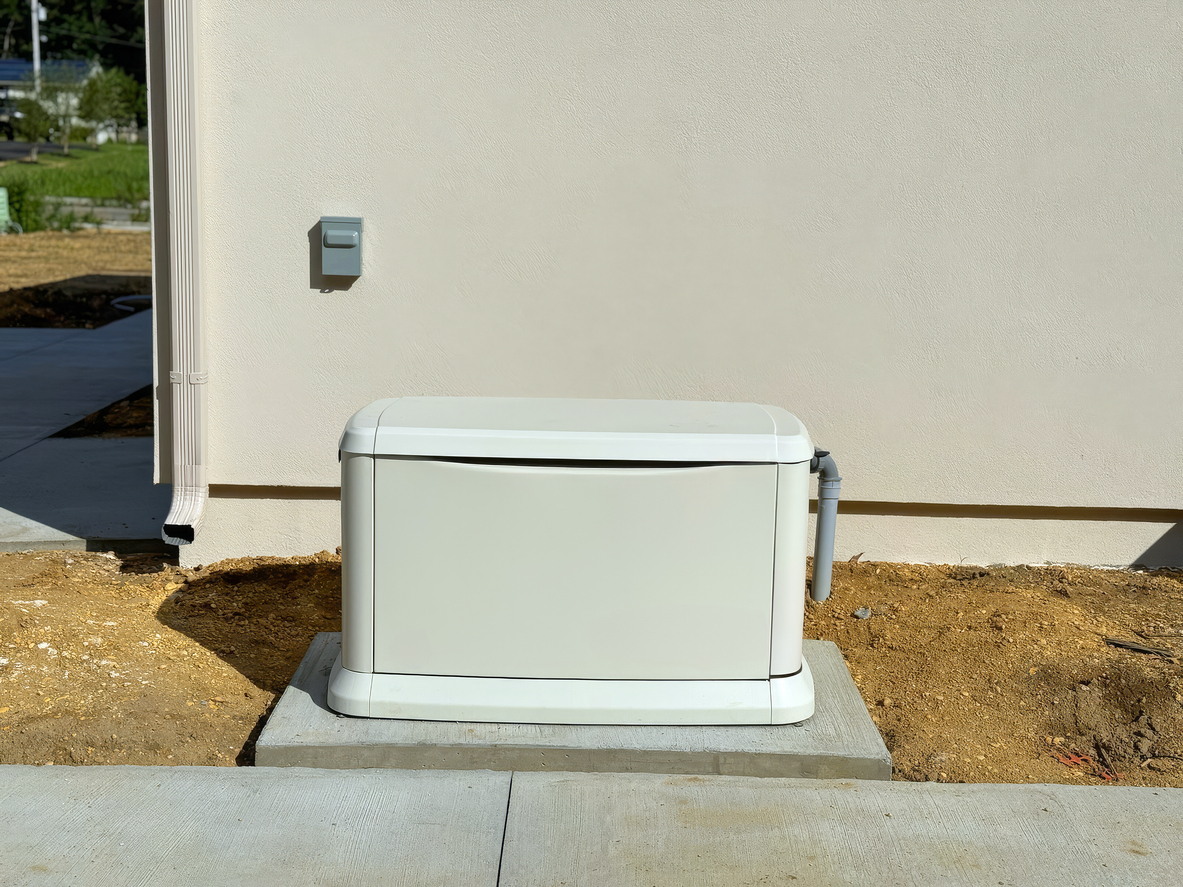
A properly sized and well-maintained standby generator can be a significant asset to your 1200 sq ft home, potentially enhancing its resale value. In regions prone to frequent power outages, a reliable backup power system is a highly desirable feature for potential buyers. It signals a well-cared-for home equipped for modern contingencies, offering peace of mind and convenience. While portable generators generally don’t add to property value, a professionally installed whole-house standby generator is considered a permanent fixture and a tangible improvement. This added value can translate into a higher asking price and a quicker sale, providing a financial return on your initial investment when it’s time to sell. Considering the generator as an integral part of your home’s infrastructure, rather than just an appliance, underscores its financial role in long-term property planning.
aViewFromTheCave is a participant in the Amazon Services LLC Associates Program, an affiliate advertising program designed to provide a means for sites to earn advertising fees by advertising and linking to Amazon.com. Amazon, the Amazon logo, AmazonSupply, and the AmazonSupply logo are trademarks of Amazon.com, Inc. or its affiliates. As an Amazon Associate we earn affiliate commissions from qualifying purchases.