
For anyone undertaking precision mechanical work, prototyping, or custom fabrication in the realm of technology, understanding the correct drill size for tapping is a fundamental skill. A poorly selected drill bit can lead to stripped threads, broken taps, or weak fastenings, all of which compromise the integrity and reliability of a project. When working with an 8/32 tap, selecting the precise drill bit is crucial for creating strong, durable threads suitable for a wide range of applications, from securing electronic components to assembling robust enclosures for sophisticated gadgets.
Understanding Tap and Drill Fundamentals
The process of tapping involves cutting internal threads into a pre-drilled hole, allowing a bolt or screw to be fastened. This seemingly simple operation relies on a delicate balance between the tap, the material, and, most importantly, the pilot hole created by the drill.
The Anatomy of a Tap
A tap is a hardened steel tool designed with cutting edges that progressively remove material to form threads. Taps come in various forms, including hand taps (taper, plug, and bottoming) and machine taps, each designed for specific applications and depth requirements. The critical features of a tap include its cutting flutes, which allow chips to escape, and its chamfer, the tapered cutting edge at the tap’s front. Understanding these components helps in selecting the right tap for the job and ensuring a clean cut.
The Role of the Tap Drill
The tap drill creates the initial pilot hole before the tapping process begins. This hole must be precisely sized:
- Too small: An undersized hole means the tap has to remove too much material. This significantly increases the torque required, leading to excessive friction, heat build-up, and a high risk of the tap binding or breaking, especially in harder materials.
- Too large: An oversized hole results in insufficient material for the tap to cut a full thread profile. This leads to reduced thread engagement, resulting in weak threads that are prone to stripping under load.
The goal is to select a drill size that leaves just enough material for the tap to cut threads with optimal strength, typically aiming for about 75% thread engagement.
Thread Engagement Explained
Thread engagement refers to the percentage of the thread depth that is actually engaged between the internal (tapped) thread and the external (screw) thread. While 100% engagement sounds ideal, it’s rarely practical or necessary. A higher percentage of engagement means more material contact, leading to stronger threads. However, increasing engagement also increases the cutting force required and the risk of tap breakage.
For most general-purpose applications, a thread engagement of 75% to 80% is considered the industry standard. This balance provides excellent strength while minimizing the risk of tap breakage. The relationship between tap drill size and thread engagement is inverse: a smaller tap drill results in higher thread engagement, and a larger tap drill results in lower engagement. Knowing the standard drill size for a particular tap is essentially knowing the drill size that yields this optimal thread engagement.
The 8/32 Tap: Specifications and Standard Practices
The 8/32 tap is a common size in North America, frequently encountered in electronics, automotive, and general machinery contexts due to its balance of size and strength. Getting the drill size right for this particular tap is a critical detail for quality work.
Deciphering the 8/32 Designation
The “8/32” designation refers to a standard UNC (Unified National Coarse) thread.
- The “8” represents the nominal major diameter of the screw, which is a gauge number, not an exact measurement in inches. For a #8 screw, the major diameter is approximately 0.164 inches (4.166 mm).
- The “32” indicates the threads per inch (TPI). This means there are 32 threads within every inch of the screw’s length.
UNC threads are known for their coarse pitch, which offers higher strength and easier assembly compared to UNF (Unified National Fine) threads.
Recommended Drill Sizes for 8/32 Taps
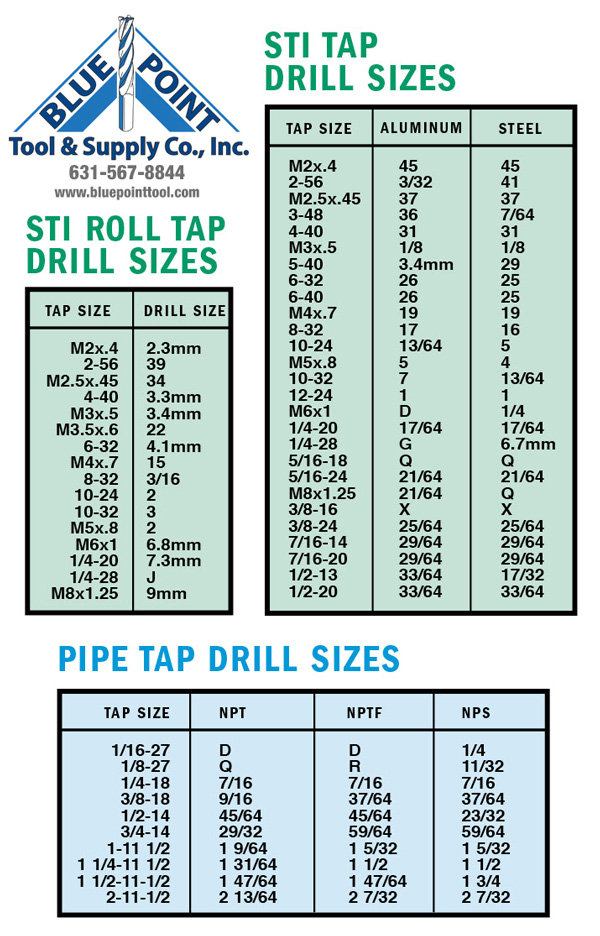
For an 8/32 UNC tap, the universally recommended drill size for approximately 75% thread engagement is a No. 29 drill bit.
- No. 29 Drill Bit: This drill bit has a diameter of 0.1360 inches (3.454 mm). Using this size ensures that the tap will cut strong, full threads without undue stress or the risk of stripping.
While the No. 29 drill is the standard, slight variations can occur based on material and specific application requirements:
| Tap Size | Standard Drill Bit | Decimal Equivalent (in) | Metric Equivalent (mm) | Approx. Thread Engagement | Notes |
|---|---|---|---|---|---|
| 8-32 UNC | No. 29 | 0.1360 | 3.454 | ~75% | Standard for optimal strength and tap life |
| 8-32 UNC | 3.4mm | 0.1338 | 3.400 | ~78% | Close metric alternative, slightly higher load |
| 8-32 UNC | 1/8″ | 0.1250 | 3.175 | ~85% | Too small for most applications, high risk of tap breakage |
| 8-32 UNC | 9/64″ | 0.1406 | 3.571 | ~69% | Slightly larger, easier tapping, reduced strength |
Important Note on Alternatives: While a 3.4mm drill bit is a close metric equivalent to a No. 29, it is slightly smaller. This means it will result in slightly higher thread engagement and thus require a bit more force to tap. A 1/8″ drill bit is significantly smaller and should generally be avoided for tapping 8/32 threads unless working with very soft materials and extreme caution, as it presents a high risk of tap breakage due to excessive material removal. Conversely, a 9/64″ drill is slightly larger, making tapping easier but at the cost of reduced thread strength. Always prioritize the No. 29 drill for reliability.
Metric vs. Imperial Considerations

In a globalized manufacturing landscape, it’s common to encounter both imperial (inch-based) and metric systems. While an 8/32 tap is an imperial standard, workshops often use metric drills. It’s vital to have a comprehensive set of both number and letter drills, alongside their decimal equivalents, to select the closest and most appropriate size. When forced to choose a metric equivalent, refer to a drill chart and select the metric drill that most closely matches the decimal equivalent of the recommended imperial drill. However, for critical applications, obtaining the exact recommended imperial drill bit (No. 29) is always the best practice.
Precision Tapping Techniques and Best Practices
Knowing the correct drill size is only half the battle. Executing the tapping process with precision ensures optimal thread quality and tool longevity.
Material Considerations and Lubrication
The type of material being tapped significantly impacts the process:
- Aluminum and Brass: These softer metals are relatively easy to tap but can produce long, stringy chips. A cutting oil specifically formulated for non-ferrous metals helps manage chips and improve finish.
- Steel: Harder steels require more force and generate more heat. A good sulfurized cutting oil or tapping fluid is essential to reduce friction, dissipate heat, and prolong tap life.
- Plastics and Composites: Some plastics can be tapped easily, but care must be taken to avoid cracking. Specialized taps designed for plastics or those with fewer flutes (e.g., two-flute taps) can be beneficial. Lubrication is often less critical but can still aid in chip evacuation.
Always use appropriate cutting fluid. It reduces friction, carries away heat, and helps clear chips, all of which extend tap life and improve thread quality.
Starting the Tap Straight
One of the most common causes of poor threads or broken taps is starting the tap off-center or at an angle.
- Tap Guide: A dedicated tap guide or a simple block with a perpendicular hole can ensure the tap starts perfectly straight.
- Drill Press: If tapping in a drill press, use the chuck to hold the tap (unpowered) and guide it into the hole, ensuring vertical alignment.
- Visual Alignment: For hand tapping, use a machinist’s square or simply visually check the tap from two perpendicular angles to ensure it’s straight before applying significant torque.
Chip Management and Breakthrough
Effective chip management is vital, especially in blind holes (holes that don’t go all the way through the material).
- Back and Forth Motion: When hand tapping, turn the tap forward for a half to full turn, then reverse it a quarter turn. This breaks the chips into smaller, manageable pieces, preventing them from jamming the flutes and causing excessive torque or tap breakage.
- Clearing Chips: In blind holes, periodically remove the tap to clear accumulated chips. A blast of compressed air (with safety glasses) or a pick can help. Without proper chip removal, chips can pack at the bottom of the hole, leading to tap breakage.
- Through Holes: While chip removal is easier in through holes, still practice the back-and-forth motion to ensure smooth cutting.
Post-Tapping Verification
After tapping, it’s good practice to verify the thread quality.
- Thread Gauge: Use a thread gauge to check the pitch and form.
- Test Screw: Run a matching 8/32 screw into the newly tapped hole by hand. It should turn smoothly without excessive force or play. If it binds, the hole might be slightly undersized or chips remain. If it feels too loose, thread engagement might be too low.
Beyond the Basics: Advanced Tapping Scenarios
Understanding the nuances of different tap types and hole configurations can elevate your tapping skills, particularly for complex tech projects.
Bottoming vs. Plug Taps
Hand taps typically come in sets of three:
- Taper Tap: Has 7-10 tapered threads, making it easy to start and suitable for through holes or starting blind holes.
- Plug Tap: Has 3-5 tapered threads, used after a taper tap to cut threads deeper into a blind hole. This is the most common general-purpose tap.
- Bottoming Tap: Has 1-1.5 tapered threads, used last to cut threads as close to the bottom of a blind hole as possible.
Selecting the right tap type ensures you get the maximum usable thread depth for your application.
Through Holes vs. Blind Holes
- Through Holes: The tap passes completely through the material. This is the easiest scenario as chips fall freely out the other side, and the tap is less likely to bind.
- Blind Holes: The tap does not pass all the way through. These require more attention to chip management, often necessitating the use of plug and bottoming taps in sequence to achieve full thread depth. Measuring the depth of the pilot hole and knowing the tap’s flute length are crucial to avoid hitting the bottom.
Power Tapping vs. Hand Tapping
- Hand Tapping: Offers maximum control and feel, ideal for precision work, harder materials, or when learning. It requires more time and effort.
- Power Tapping: Uses a machine (drill press, milling machine, specialized tapping machine) to drive the tap. It’s much faster and more consistent for high-volume work but requires careful setup, correct speeds, and proper lubrication. Power tapping with inadequate speed or lubrication can quickly lead to tap breakage.
Why Precision Matters in Tech Projects
In the realm of technology, where components are often compact and subjected to varied operational stresses, the quality of mechanical fastenings directly impacts overall product performance and longevity. Whether you are assembling a custom drone frame, securing a Raspberry Pi within a bespoke enclosure, or building a robotic arm, robust threads are non-negotiable.
Poorly tapped threads can lead to:
- Stripped Fasteners: Resulting in loose components, vibration-induced failures, and the inability to properly secure critical parts. This is particularly problematic in systems exposed to movement or resonance.
- Component Damage: A stripped screw or a broken tap can damage surrounding material or delicate electronic circuits, leading to costly rework or complete component replacement.
- Compromised Aesthetics and Functionality: Loose panels or misaligned parts detract from the professional appearance of a finished product and can hinder its intended function.
- Reduced Reliability: In mission-critical applications, a weak mechanical connection can be the single point of failure that brings down an entire system.
By diligently selecting the correct drill bit (the No. 29 for an 8/32 tap) and adhering to best practices in tapping, engineers, makers, and hobbyists ensure that their tech projects are not only functional but also mechanically sound, reliable, and durable, standing the test of time and operational demands. This foundational skill underpins the physical integrity of countless technological innovations.
aViewFromTheCave is a participant in the Amazon Services LLC Associates Program, an affiliate advertising program designed to provide a means for sites to earn advertising fees by advertising and linking to Amazon.com. Amazon, the Amazon logo, AmazonSupply, and the AmazonSupply logo are trademarks of Amazon.com, Inc. or its affiliates. As an Amazon Associate we earn affiliate commissions from qualifying purchases.