
Understanding Porcine Diets in Minecraft’s Digital Ecosystem
Within the expansive, block-based world of Minecraft, understanding the intricate behaviors and resource interactions of its various entities is crucial for efficient gameplay and resource management. Among the game’s passive mobs, pigs occupy a foundational role, primarily as a renewable food source and, in specific contexts, as a unique form of transportation. Their interaction dynamics, particularly concerning their dietary preferences, are governed by precise in-game mechanics designed into the software’s core. Far from a simple aesthetic detail, what pigs consume directly influences player progression, farm automation strategies, and the overall simulation of a living, breathing digital environment. The systematic approach to animal husbandry, beginning with their feeding, is a cornerstone of survival and creative construction within the game’s computational model.
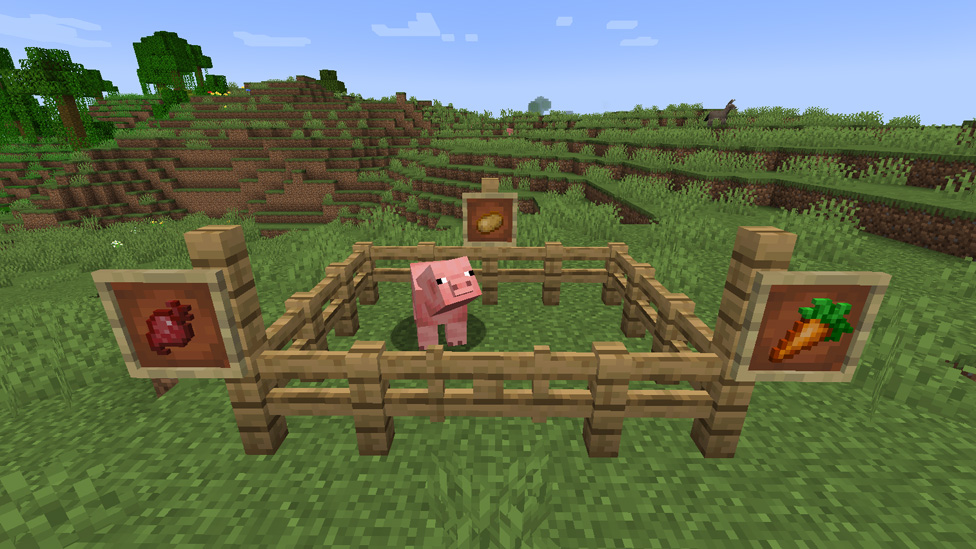
Pigs, characterized by their pink skin and distinct snout, are non-hostile mobs that roam most overworld biomes. Their primary utility stems from their ability to yield raw porkchops upon defeat, which can then be cooked for a highly efficient food source. However, maximizing this yield and establishing sustainable pig farms necessitates a clear understanding of their dietary requirements. The game’s programming dictates a narrow but specific range of food items that pigs recognize as edible inputs for breeding and growth acceleration protocols. This interaction is a fundamental element of the game’s livestock management system, impacting early-game sustenance and late-game resource consolidation.
The Core Nutritional Components: Carrots, Potatoes, and Beetroots
The algorithmic decision-making tree for a Minecraft pig’s diet is surprisingly constrained, focusing on three specific agricultural products. These items serve as the only viable inputs for eliciting specific behavioral responses, particularly breeding and growth. Understanding their acquisition and cultivation methods is integral to any player aiming to integrate pig farming into their digital infrastructure.
Carrots: One of the most common and versatile food items for pigs, carrots are a relatively easy crop to acquire and cultivate. In the game’s generation algorithm, carrots can frequently be found growing in village farms, offering an initial seed source. Alternatively, vanquishing certain zombie variants also presents a chance to obtain carrots as a drop. Once acquired, carrots can be planted on tilled farmland (hydrated with water) and harvested after a growth cycle. Their stackability and ease of mass production make them a primary choice for large-scale pig farms, providing a consistent, renewable resource for feeding protocols. The game’s internal data structures assign carrots a specific item ID that triggers the “feed pig” interaction.
Potatoes: Similar to carrots in terms of utility and acquisition, potatoes are another staple in the Minecraft pig’s diet. Like carrots, they are commonly found in village farms and can be dropped by zombies. Potato cultivation mirrors that of carrots, requiring tilled and hydrated farmland. A critical distinction, however, is the possibility of harvesting “poisonous potatoes” – a rare variant that, while technically edible by pigs for breeding, offers no practical advantage and can be a minor inventory nuisance for players. For automated systems, it is generally ignored as a design flaw since it doesn’t negatively impact the pigs. The game’s code distinguishes regular potatoes from their poisonous counterparts, though both function identically for pig feeding purposes, simplifying the algorithmic parsing for the pig mob’s AI.
Beetroots: Introduced in later versions of the game, beetroots expanded the agricultural options for players and, consequently, the dietary choices for pigs. Beetroot seeds are typically found in village chests, dungeon chests, or sometimes dropped by certain mob types. Cultivation follows the same principles as carrots and potatoes. While nutritionally identical to carrots and potatoes in terms of their effect on pigs, beetroots offer an alternative for players who might find them more accessible depending on their world’s generation and resource availability. From a technical perspective, the inclusion of beetroots demonstrates the modularity of the game’s design, allowing new items to be integrated into existing mob interaction frameworks with minimal code changes.
Mechanics of Interaction: Feeding for Breeding and Growth
The act of feeding pigs in Minecraft is not merely cosmetic; it triggers specific, programmed responses essential for player objectives. These responses are integral to the game’s animal husbandry mechanics, providing pathways for population growth and accelerated development.
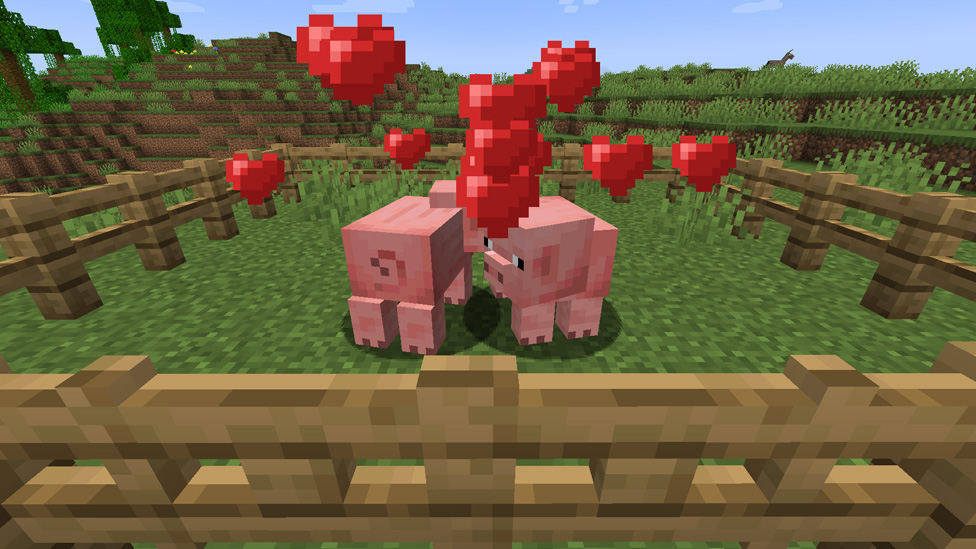
Breeding Protocol: The primary reason players feed pigs is to initiate the breeding process. When two adult pigs are individually fed one of the aforementioned dietary items (carrots, potatoes, or beetroots), the game’s breeding algorithm activates. Both pigs will enter a “love mode,” indicated by heart particles emanating from them. Following a brief animation, a piglet will instantly spawn. This mechanic is a direct input-output system: specific food items (input) lead to new offspring (output). There’s a cooldown period after breeding before the same pigs can breed again, a mechanism to prevent exponential growth from overwhelming game performance and resource balance. This cooldown is a critical system variable managed by the game server.
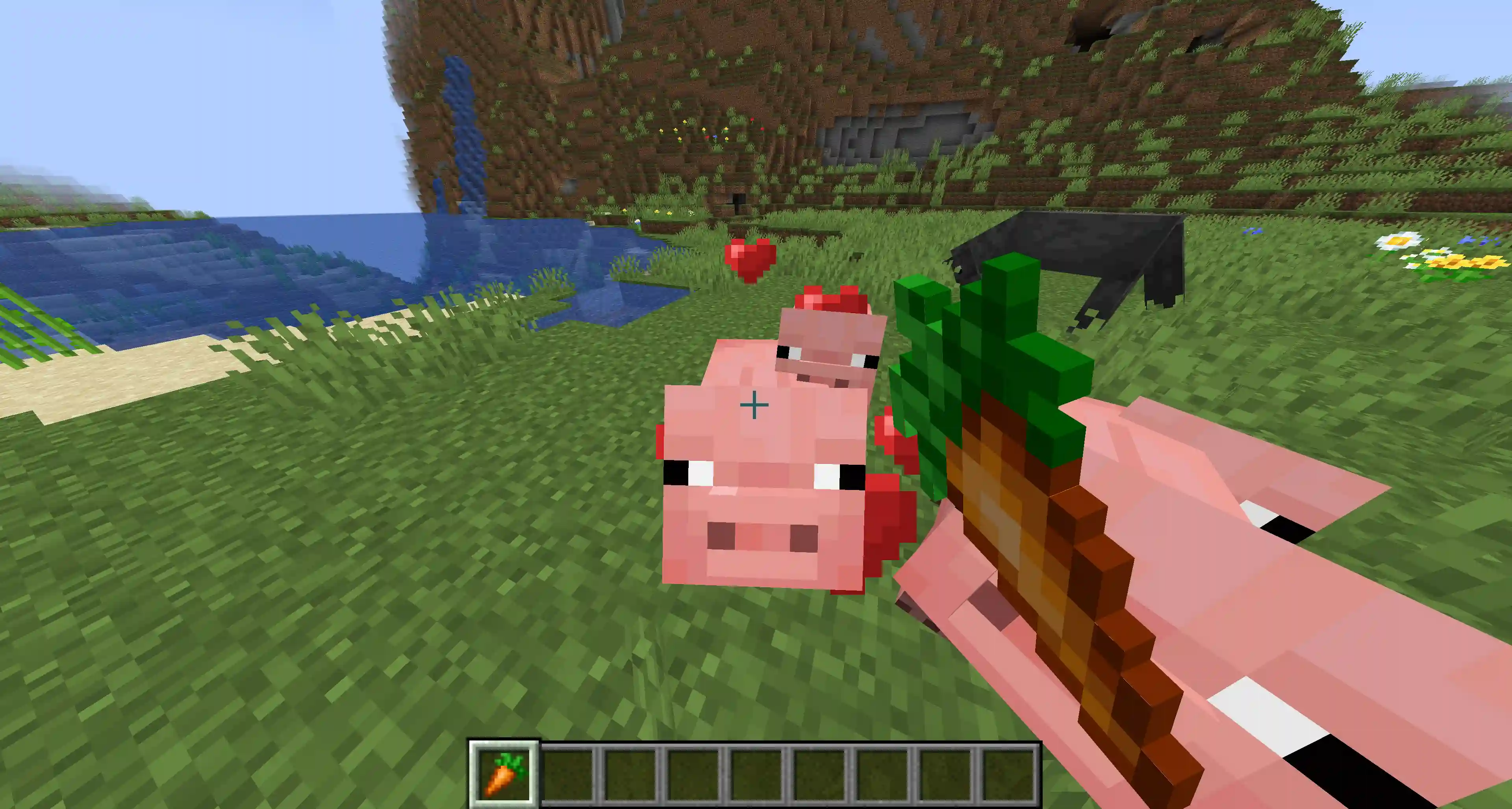
Growth Acceleration: Piglets, upon spawning, are in a juvenile state and take a certain amount of in-game time to mature into adults. Players can significantly accelerate this maturation process by feeding piglets the same dietary items. Each food item consumed by a piglet reduces its remaining growth time, effectively fast-forwarding its lifecycle. This is particularly useful for rapidly increasing the population of adult pigs for resource harvesting or breeding, representing an investment of player resources (food) for an accelerated return (adult animal). The game’s internal clock for mob growth is modified by this interaction, showcasing a dynamic variable manipulation based on player action.
While pigs technically regain a small amount of health when fed, this is rarely their primary function, as their health regeneration is generally passive and not a significant gameplay concern unless they are actively being damaged. The core utility lies strictly in breeding and growth. The player’s interaction model involves right-clicking an individual pig with the food item in hand, which sends a signal to the game’s logic engine to process the feeding event.
Automated Feeding Solutions and Farm Optimization
For players looking to scale their pig farming operations beyond manual intervention, understanding and implementing automated feeding systems becomes a critical aspect of technical ingenuity within the Minecraft environment. These solutions leverage the game’s redstone mechanics and item transportation systems to create efficient, low-maintenance livestock farms.
Dispenser-Based Automation: At the heart of automated feeding is the dispenser block, a redstone-activated device capable of ejecting items from its inventory. By loading dispensers with carrots, potatoes, or beetroots and strategically positioning them above or adjacent to a pig pen, players can programmatically feed their livestock. Redstone circuits, ranging from simple pressure plate triggers to complex clock mechanisms, can activate these dispensers at regular intervals, delivering food to the pigs below. Challenges include ensuring even distribution of food among multiple pigs and optimizing the activation timing to prevent excessive food waste or resource drain. The sophisticated interaction between redstone logic and mob AI is a key engineering challenge for players.
Integrated Farm Designs: The most advanced automated pig farms integrate crop cultivation with livestock management. For example, an automated potato farm using villagers, water streams, and hoppers can continuously harvest potatoes. These potatoes can then be routed via item pipes (hoppers, water elevators, droppers) directly into dispensers positioned over a pig pen. This creates a self-sustaining ecosystem where crop production directly fuels pig breeding, requiring minimal player input once the system is built. Such designs exemplify complex systems engineering within the game, optimizing input resource flow and output resource generation. Considerations include chunk loading for continuous operation, server performance impact from large numbers of entities and redstone components, and fail-safe mechanisms for resource overflows.
Efficiency Considerations: Optimizing automated pig farms involves more than just building functional redstone contraptions. It requires an understanding of stack sizes (64 items per slot), inventory management within hoppers and dispensers, and the rate at which pigs consume food and breed. Players must balance the rate of food production with the rate of consumption to avoid resource bottlenecks or surpluses. Furthermore, ensuring that the farm operates within loaded chunks (areas of the world actively processed by the game server) is vital for its continuous functionality, often requiring advanced chunk-loading techniques or integration into spawn chunks. These considerations directly tie into the game’s underlying computational performance and resource allocation algorithms.
The Strategic Role of Pigs in Minecraft’s Resource Economy
Beyond the immediate mechanics of feeding and breeding, pigs hold a distinct strategic position within Minecraft’s broader resource economy. Their utility extends to being a primary food source, a generator of experience points, and even an unconventional mode of transportation, each aspect driven by specific game systems.
Primary Food Source: The most straightforward utility of pigs is their yield of raw porkchops upon defeat. When cooked in a furnace or campfire, these become cooked porkchops, one of the most efficient food items in the game for restoring hunger and saturation. A cooked porkchop restores 8 hunger points and 12.8 saturation points, making it superior to many other early-game food options. This makes pig farming an excellent strategy for maintaining consistent food supplies, particularly for players engaged in extensive exploration, mining, or combat. The caloric value and saturation mechanics are internal variables that define the effectiveness of each food item, positioning cooked porkchops high on the player’s nutritional hierarchy.
Experience Point Generation: Like all other passive mobs, killing adult pigs yields a small amount of experience points (XP). While not the most efficient method for mass XP grinding, a large-scale pig farm designed for slaughter can contribute a significant, renewable source of experience, which is crucial for enchanting items or repairing tools and armor at an anvil. The game’s XP system rewards interaction with the environment and entities, with mob defeat being a direct input for XP accumulation. Automated slaughterhouses, often integrated into automated breeding farms, are prime examples of leveraging mob mechanics for resource and XP generation.
Saddles and Unique Transportation: A unique and often overlooked aspect of pig utility is their capacity to be ridden. By equipping an adult pig with a saddle (an item found in chests across the world or fished), players can mount them. To control the pig’s direction, a specific tool called a “carrot on a stick” is required. This item, crafted from a fishing rod and a carrot, acts as a digital interface for steering the pig. The pig will move in the direction the player points the carrot on a stick, making it a quirky, albeit slow, form of early-game transportation. This mechanic highlights the game’s creativity in linking seemingly disparate items (fishing rod, carrot, pig, saddle) into a functional system, providing a humorous yet viable alternative to traditional mounts or locomotion methods. The “carrot on a stick” acts as a control input device, translating player intent into mob movement through specific programmed conditions.
Technical Considerations and Game Version Nuances
A deeper dive into the technical underpinnings reveals how pigs and their dietary mechanics are embedded within the game’s broader software architecture, touching upon aspects of mob AI, performance, and version compatibility.
Mob AI and Item Recognition: The pig’s Artificial Intelligence (AI) routine is programmed to recognize carrots, potatoes, and beetroots as specific “edible” items. When a player interacts with a pig while holding one of these items, the game’s event handler processes this interaction. The pig’s AI then transitions into a “feeding state,” consuming the item and triggering subsequent states like “love mode” or “growth acceleration.” This demonstrates a sophisticated input-processing mechanism at the mob AI level, differentiating between various items and their associated actions. The underlying code likely uses item IDs or tags to classify these food types, ensuring consistency across different language localizations and texture packs.
Performance Implications: While individual pigs consume minimal processing power, large-scale automated pig farms with hundreds or thousands of entities can significantly impact game performance. Both client-side rendering (the visual display of mobs) and server-side logic (AI processing, physics calculations, item movement) are affected. Players designing massive farms must consider entity culling techniques, optimizing redstone circuits for minimal lag, and potentially segmenting farms across different loaded chunks to distribute the computational load. Monitoring server performance metrics, such as tick rate and entity count, becomes crucial for maintaining a stable gameplay experience in such advanced setups. The game engine’s ability to manage dynamic entity populations is a key factor in farm scalability.
Game Version Consistency and Modding: The core dietary requirements for pigs have remained remarkably consistent across numerous Minecraft Java and Bedrock edition updates. This stability indicates that it’s a fundamental, well-established mechanic within the game’s codebase, rarely requiring modification with new releases. This consistency simplifies long-term farm designs and tutorials, as players can rely on these mechanics remaining unchanged. However, the open-ended nature of Minecraft’s software allows for extensive modding. Community-developed modifications can entirely alter pig diets, introduce new pig variants with unique food preferences, or even integrate pigs into entirely new automated systems, showcasing the game’s extensibility and the power of its modding API. This highlights the adaptability of the game’s underlying architecture to player and developer innovation.
aViewFromTheCave is a participant in the Amazon Services LLC Associates Program, an affiliate advertising program designed to provide a means for sites to earn advertising fees by advertising and linking to Amazon.com. Amazon, the Amazon logo, AmazonSupply, and the AmazonSupply logo are trademarks of Amazon.com, Inc. or its affiliates. As an Amazon Associate we earn affiliate commissions from qualifying purchases.