
The Evolution and Core Principles of Data as a Service (DaaS)
In the rapidly expanding digital economy, data has become the lifeblood of organizations across all sectors. However, managing, integrating, and distributing this vast and diverse sea of information poses significant challenges. Traditional approaches often lead to data silos, integration nightmares, and slow access, hindering business agility and innovation. This is where Data as a Service (DaaS) emerges as a transformative paradigm. DaaS fundamentally redefines how businesses acquire, consume, and leverage data, moving it from a localized asset to a universally accessible, cloud-delivered utility.
Defining DaaS in the Modern Data Landscape
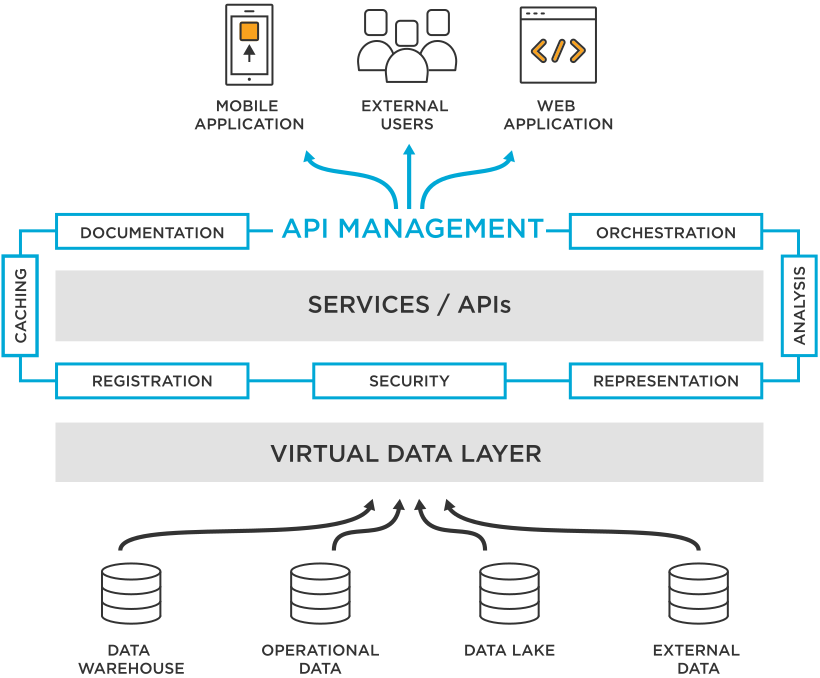
At its core, DaaS is a cloud-based strategy that provides users with on-demand access to data over a network, typically the internet. It abstracts the complexities of data storage, processing, and infrastructure management, presenting data as a readily consumable service. Think of it much like Software as a Service (SaaS) or Platform as a Service (PaaS), but specifically tailored for data. Instead of building and maintaining intricate data pipelines and storage systems, organizations can subscribe to a DaaS provider that handles these operational burdens. This allows businesses to focus on deriving insights and value from data rather than the underlying mechanics of its delivery. DaaS offerings can range from raw datasets to highly curated and transformed information, often delivered via APIs, enabling seamless integration into various applications and analytics platforms.
How DaaS Differs from Traditional Data Architectures
Traditional data management typically involves extensive on-premise infrastructure, manual data extraction, transformation, and loading (ETL) processes, and complex integrations between disparate systems. Data is often stored in various databases and warehouses, managed by internal IT teams, leading to rigid structures, high upfront costs, and significant maintenance overhead. Accessing data usually requires specific queries, skilled personnel, and often lengthy approval processes.
DaaS, by contrast, operates on a service-oriented architecture. Data providers host and manage the data infrastructure, including storage, processing, security, and access controls. Consumers access this data programmatically through well-defined APIs or web services. This shift brings several key distinctions: lower capital expenditure (no need for large hardware investments), increased scalability (providers handle infrastructure scaling), improved data freshness (real-time or near real-time data delivery), and reduced operational complexity for the consumer. It transforms data from a capital-intensive asset to an operational expenditure, making it more flexible and accessible for diverse business needs.
Architectural Foundations and Key Features
The power of Data as a Service lies in its robust architectural underpinnings, designed to deliver data efficiently, securely, and scalably. Understanding these foundations is crucial for appreciating its transformative potential in modern IT environments.
Cloud-Native Infrastructure and API Connectivity
A cornerstone of DaaS is its reliance on cloud-native infrastructure. DaaS providers leverage hyperscale cloud platforms (AWS, Azure, Google Cloud, etc.) to host and manage the entire data stack. This includes highly scalable storage solutions, powerful compute resources for data processing and transformation, and advanced networking capabilities. This cloud-native approach enables inherent elasticity, allowing DaaS solutions to dynamically scale resources up or down based on demand, ensuring consistent performance even during peak loads.
Crucially, access to DaaS is predominantly facilitated through Application Programming Interfaces (APIs). These APIs act as standardized interfaces, defining how external applications can request, receive, and interact with the data. APIs provide a secure, efficient, and programmatic way to integrate DaaS into enterprise applications, business intelligence tools, CRM systems, and custom software. This programmatic access eliminates the need for complex database connections or manual file transfers, streamlining data consumption and fostering interoperability across a diverse ecosystem of tools and platforms.
Data Aggregation, Transformation, and Governance
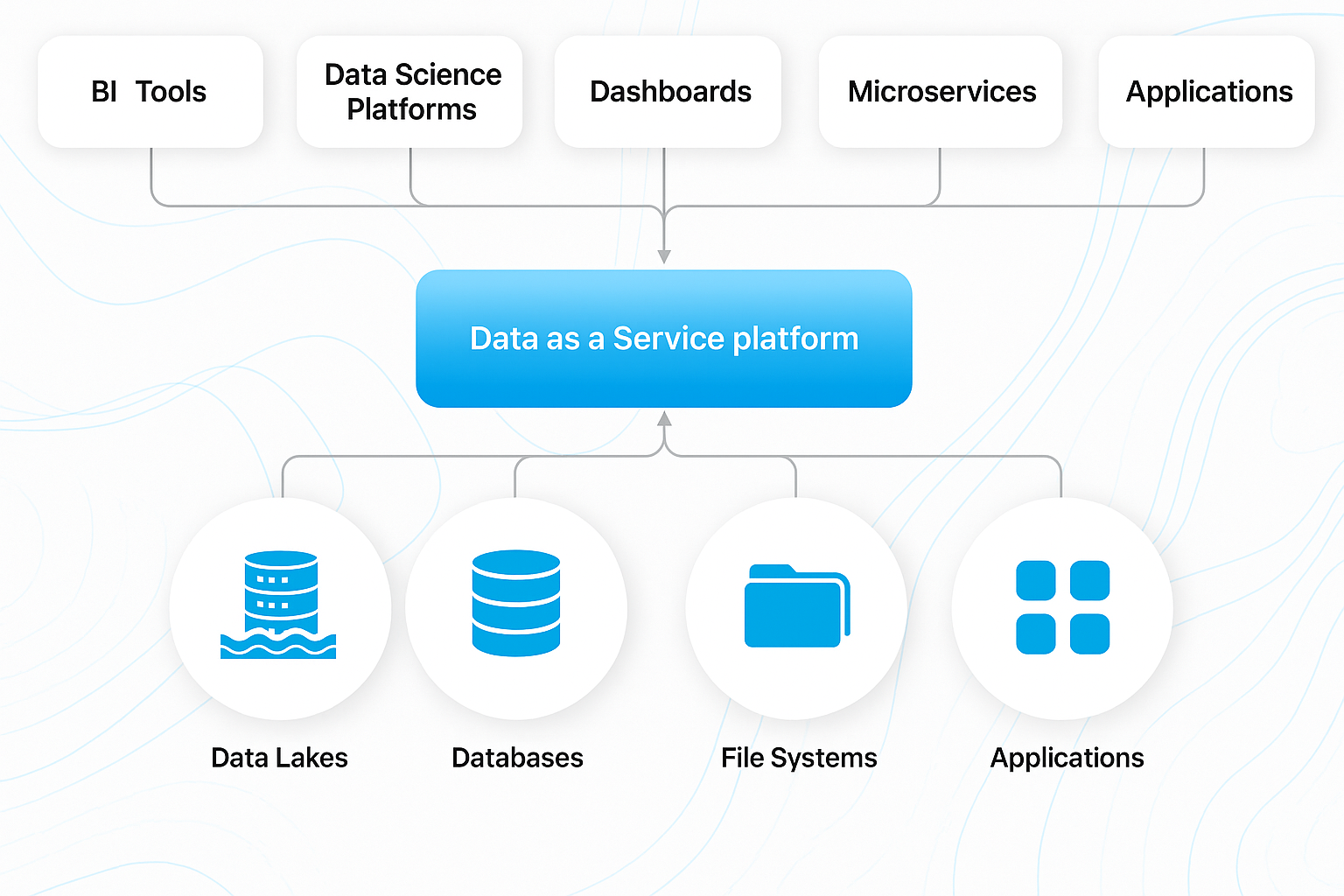
A significant value proposition of DaaS goes beyond mere data delivery; it often includes robust capabilities for data aggregation, transformation, and governance. DaaS providers can ingest data from a multitude of sources, both internal and external, aggregate it, and then apply various transformation rules to cleanse, enrich, standardize, and format the data according to consumer requirements. This pre-processing significantly reduces the burden on data consumers, who can receive “analytics-ready” data rather than raw, disparate feeds.
Furthermore, strong data governance is an inherent feature of mature DaaS offerings. This includes comprehensive metadata management, data lineage tracking (understanding the origin and journey of data), access control mechanisms (role-based access, data masking), and data quality monitoring. These governance features ensure that the data delivered is accurate, consistent, compliant with regulations, and trustworthy, which is paramount for critical business operations and decision-making.
Scalability, Reliability, and Performance
The cloud-native architecture inherently imbues DaaS solutions with superior scalability and reliability compared to on-premise setups. DaaS providers are responsible for managing the underlying infrastructure, including load balancing, redundancy, and disaster recovery. This ensures high availability and resilience, minimizing downtime and data loss. As data volumes grow or the number of consuming applications increases, the DaaS platform can scale seamlessly without requiring significant effort or investment from the user.
Performance is another critical aspect. DaaS providers invest heavily in optimizing data retrieval and delivery speeds. This often involves leveraging advanced caching mechanisms, distributed computing frameworks, and optimized database technologies. The goal is to provide data with low latency, enabling real-time or near real-time analytics and operational workflows. Consistent, high performance is essential for applications that rely on fresh data to drive immediate actions or insights, such as fraud detection, personalized customer experiences, or dynamic pricing.
Strategic Advantages for Businesses
Adopting Data as a Service can bring a multitude of strategic advantages, fundamentally altering how organizations manage their information assets and drive business value. These benefits span operational efficiency, innovation capabilities, and the overall quality of decision-making.
Cost Reduction and Operational Efficiency
One of the most immediate and tangible benefits of DaaS is significant cost reduction. By offloading data infrastructure, storage, and maintenance to a third-party provider, businesses can dramatically lower their capital expenditures (CAPEX) on hardware and software. Operational costs (OPEX) are also reduced as the need for extensive internal IT staff dedicated to data management, server maintenance, and patching diminishes. Organizations switch from a model of large upfront investments and continuous operational overhead to a more predictable subscription-based model. This shift allows internal teams to reallocate resources from routine data plumbing to more strategic, value-add activities like advanced analytics and business strategy.
Enhanced Data Accessibility and Democratization
DaaS inherently democratizes data access within an organization. By providing standardized, API-driven access points, DaaS breaks down data silos that often plague large enterprises. Different departments, applications, and even external partners can tap into a consistent, trusted source of data without needing specialized knowledge of complex backend systems. This ease of access empowers a broader range of users – from business analysts to data scientists and developers – to self-serve their data needs, fostering a data-driven culture and accelerating the pace of insight generation.
Improved Data Quality and Decision-Making
High-quality data is the bedrock of sound decision-making. DaaS providers typically offer robust data cleansing, validation, and enrichment services as part of their offering. They often employ sophisticated algorithms and data governance frameworks to ensure data consistency, accuracy, and completeness across various sources. This focus on data quality at the service level means that businesses are working with more reliable and trustworthy information, leading to more accurate analyses, more effective strategies, and ultimately, better business outcomes. Trustworthy data reduces the risk associated with critical business decisions.
Accelerating Innovation and Time-to-Market
The agility provided by DaaS is a powerful catalyst for innovation. Developers and data scientists can quickly access the data they need to build, test, and deploy new applications, features, and analytical models without waiting for complex data provisioning processes. This rapid access significantly shortens development cycles and accelerates time-to-market for new products and services. For instance, a company can quickly integrate external market data from a DaaS provider to develop a new pricing model or leverage customer behavior data to create personalized recommendations, all with minimal infrastructure setup time. This capability fosters a culture of experimentation and rapid prototyping, driving competitive advantage.
Diverse Applications and Industry Impact
The versatility of Data as a Service allows it to power a wide array of applications across virtually every industry, fundamentally transforming how businesses operate and strategize.
Powering Advanced Analytics and Business Intelligence
One of the most prevalent and impactful applications of DaaS is in bolstering advanced analytics and business intelligence (BI). Organizations can leverage DaaS to feed clean, integrated, and ready-to-use data directly into their BI dashboards, data visualization tools, and analytical platforms. This allows business users to generate real-time insights into sales performance, customer behavior, operational efficiency, and market trends. DaaS can aggregate data from disparate sources – CRM, ERP, social media, external market data – into a unified view, providing a comprehensive understanding of the business landscape and enabling more informed strategic decisions.
Facilitating AI/ML Model Training and Deployment
Artificial Intelligence (AI) and Machine Learning (ML) models are inherently data-hungry. DaaS provides a critical backbone for AI/ML initiatives by supplying high-quality, large-scale datasets required for training sophisticated models. Data scientists can access curated datasets for tasks like predictive analytics, natural language processing, or computer vision without spending significant time on data acquisition and pre-processing. Furthermore, DaaS can be used to feed real-time operational data into deployed ML models, enabling continuous learning and improving the accuracy of predictions or recommendations in live production environments, from fraud detection systems to personalized recommendation engines.
Enabling Data Monetization and Ecosystem Partnerships
DaaS opens up new avenues for data monetization. Companies with valuable proprietary data can package and offer this data as a service to other businesses, creating new revenue streams. For example, a financial institution might offer anonymized transaction data to market research firms, or a logistics company could provide real-time traffic and delivery data to urban planning agencies. Beyond direct monetization, DaaS facilitates ecosystem partnerships by simplifying data sharing between collaborators, suppliers, and customers, fostering innovation and creating mutual value within an extended business network.
Streamlining Compliance and Regulatory Reporting
In highly regulated industries like finance, healthcare, and government, managing data for compliance and reporting is a complex and resource-intensive task. DaaS can significantly streamline these processes. By centralizing data with robust governance, auditing capabilities, and metadata management, DaaS providers can help ensure that data used for regulatory reporting is accurate, traceable, and compliant with industry standards (e.g., GDPR, HIPAA, CCPA). This reduces the risk of non-compliance, simplifies audits, and frees up internal resources that would otherwise be dedicated to manual data collation and validation for reporting purposes.
Navigating the DaaS Landscape: Challenges and Best Practices
While Data as a Service offers compelling advantages, its successful implementation requires careful consideration of potential challenges and adherence to best practices. Organizations must navigate complexities related to security, integration, and vendor relationships to fully realize DaaS’s benefits.
Addressing Data Security, Privacy, and Compliance
Security and privacy are paramount concerns when outsourcing data management. When data resides with a DaaS provider, organizations must ensure that the provider adheres to stringent security protocols, including encryption (at rest and in transit), access controls, threat detection, and regular security audits. Compliance with data privacy regulations such as GDPR, CCPA, and HIPAA is non-negotiable, especially for sensitive data. Businesses need to meticulously vet DaaS providers for their certifications, data residency policies, and contractual commitments to data protection. Implementing robust data governance within the consuming organization, even for DaaS-provided data, remains critical to ensure responsible data usage.
Overcoming Integration Complexities and Vendor Dependencies
Although DaaS aims to simplify data access through APIs, integrating these services into existing IT ecosystems can still present challenges. Different DaaS providers may have varying API standards, data formats, and authentication mechanisms, requiring custom development or integration middleware. Organizations must plan for potential integration complexities, ensuring that DaaS can seamlessly connect with their existing applications, data warehouses, and analytics platforms. Furthermore, relying on a single DaaS provider can lead to vendor lock-in. Migrating data and applications from one DaaS provider to another can be costly and time-consuming, necessitating careful evaluation of exit strategies and a preference for providers that offer open standards and interoperability.
Ensuring Data Quality and Consistency
While DaaS providers often offer data cleansing and transformation services, the ultimate responsibility for data quality sometimes remains a shared burden. Organizations must have clear service level agreements (SLAs) with their DaaS providers that define expectations around data accuracy, completeness, freshness, and consistency. Establishing internal processes to validate incoming DaaS data and reconcile it with other internal data sources is crucial. Issues like data latency, schema changes from the provider, or inconsistent data updates can impact downstream analytics and applications. Proactive monitoring and robust error handling mechanisms are essential to maintain the integrity of data consumed through DaaS.
Future Trends: Real-time DaaS and AI Integration
The DaaS landscape is continuously evolving. A significant trend is the increasing demand for real-time DaaS, delivering data with minimal latency to power instantaneous decisions and highly dynamic applications. This involves leveraging streaming technologies and event-driven architectures. Another burgeoning trend is the deeper integration of AI and machine learning capabilities directly within DaaS offerings. This could include AI-powered data quality checks, automated data enrichment, intelligent data cataloging, or even DaaS providers offering predictive insights as a service. As data volumes explode and the need for immediate insights intensifies, DaaS will continue to evolve, becoming even more intelligent, responsive, and indispensable to the modern digital enterprise.
aViewFromTheCave is a participant in the Amazon Services LLC Associates Program, an affiliate advertising program designed to provide a means for sites to earn advertising fees by advertising and linking to Amazon.com. Amazon, the Amazon logo, AmazonSupply, and the AmazonSupply logo are trademarks of Amazon.com, Inc. or its affiliates. As an Amazon Associate we earn affiliate commissions from qualifying purchases.