
In the dynamic and ever-evolving landscape of modern gaming, few mechanics are as universally recognized and impactful as “critical damage,” often abbreviated by players as “crit dmg.” This pervasive system, a cornerstone in countless RPGs, action games, and even competitive titles, represents a moment of amplified power, a statistical spike that can turn the tide of a battle or dramatically accelerate player progression. Far more than a simple numerical boost, crit dmg embodies a sophisticated interplay of game design, player strategy, and underlying technological implementation, profoundly shaping how virtual worlds are experienced and mastered. Understanding its intricacies is essential not just for players seeking to optimize their builds, but also for developers striving to create engaging, balanced, and rewarding gameplay loops.
The Core Mechanic of Critical Damage
At its heart, critical damage is a mechanism designed to introduce an element of unpredictability and excitement into combat. It’s a moment where a standard attack or ability transcends its base effectiveness, delivering a significantly higher output.
Defining Critical Hits
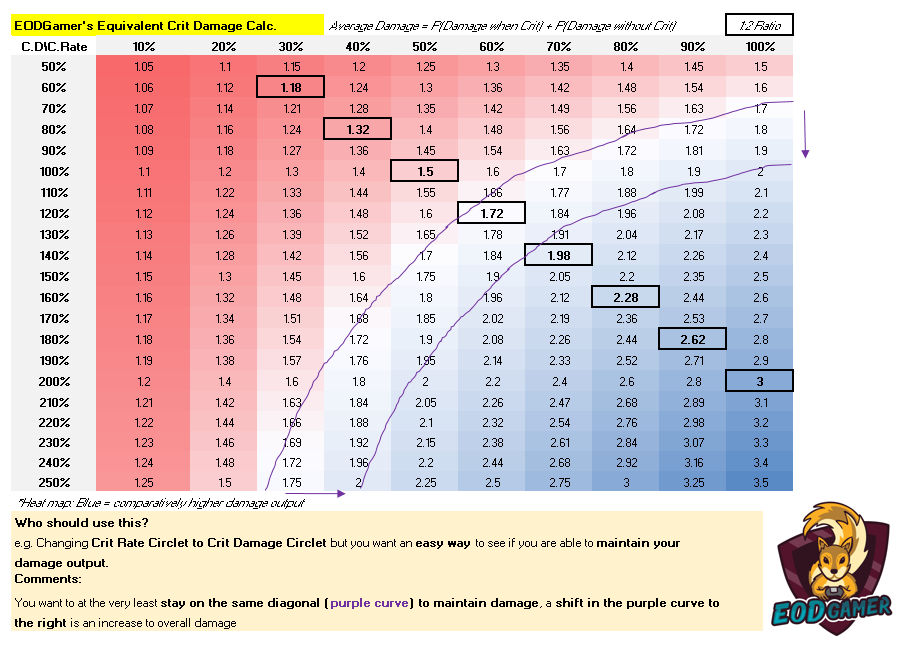
A critical hit, or “crit,” occurs when an attack, instead of dealing its regular amount of damage, triggers a special condition that causes it to inflict a multiplied amount. This multiplication is governed by a “critical damage multiplier,” a percentage or fixed value that dictates how much extra damage is dealt. For instance, if a character normally hits for 100 damage and has a 200% critical damage multiplier, a critical hit would result in 200 damage. This mechanic is typically paired with “critical chance,” which is the probability (expressed as a percentage) that any given attack will be a critical hit. These two stats work in tandem: high critical chance means more frequent crits, while high critical damage ensures those crits are impactful.
The Role of Critical Chance and Critical Damage Multipliers
The relationship between critical chance and critical damage is foundational to character building and combat strategy. A player might have a low critical chance (e.g., 5%) but an extremely high critical damage multiplier (e.g., 300%), leading to infrequent but devastating critical hits. Conversely, a high critical chance (e.g., 80%) with a moderate critical damage multiplier (e.g., 150%) results in more consistent, albeit less individually explosive, damage spikes. Game designers meticulously tune these values, often tying them to specific weapon types, character abilities, or gear sets, to offer diverse build paths and strategic choices. This balancing act ensures that critical hits feel rewarding without becoming so ubiquitous that they diminish the impact of regular attacks or trivialize encounters.
How Crit Dmg Elevates Gameplay
Beyond raw numbers, critical damage profoundly impacts the psychological and strategic dimensions of gameplay. For players, landing a critical hit provides a tangible sense of power and satisfaction, a visual and auditory cue often accompanying the amplified damage output. This instant feedback loop reinforces player agency and motivates continued engagement. From a strategic perspective, crit dmg introduces a layer of risk-reward. Players might choose to invest heavily in critical stats, sacrificing other attributes like survivability or utility, in pursuit of burst damage potential. This gamble adds excitement to combat, creating moments of sudden victory or dramatic comebacks. For developers, it’s a powerful tool to introduce variance, make encounters feel dynamic, and provide avenues for player progression and customization that extend beyond linear stat increases.
Technological Implementation and Game Design Considerations
The seamless integration of critical damage into a game environment relies on robust technological frameworks and thoughtful design principles. It’s not just a stat; it’s an interwoven system impacting numerous facets of game development.
Backend Algorithms and Random Number Generation (RNG)
At the core of critical hit calculation lies the game’s engine and its handling of random number generation (RNG). When an attack is initiated, the game’s backend executes an algorithm: a random number is generated within a defined range (e.g., 0-100), and if this number falls within the player’s critical chance threshold, a critical hit is registered. Sophisticated RNG implementations often use pseudo-random number generators (PRNGs) to ensure fairness and prevent predictable patterns. Some games even employ “deterministic critical chance” or “crit pity” systems, where the probability of a critical hit increases with each non-critical hit, ensuring that players don’t suffer excessively long streaks of bad luck. This adds a layer of complexity to ensure that the “random” element feels consistently fair and engaging for the player.
Balancing Crit Dmg for Player Engagement
From a game design perspective, balancing crit dmg is a delicate art. If critical hits are too frequent or too powerful, they can trivialize content, making enemies and challenges feel unimpactful. Conversely, if they are too rare or weak, they cease to be a meaningful part of the gameplay loop. Developers must consider the overall damage profile of a character, the duration of combat encounters, and the intended difficulty curve. Often, specific enemies might have resistances or immunities to critical hits, or unique mechanics that alter critical chance or damage in specific contexts, adding strategic depth to encounters. Balancing extends to the economy of the game, influencing how critical stats are distributed across gear, skill trees, and character upgrades to ensure a progressive and rewarding player journey.
UI/UX Feedback for Critical Hits

The impact of critical damage isn’t solely numerical; it’s a sensory experience meticulously crafted through user interface (UI) and user experience (UX) design. Visually, critical hits are often denoted by larger, differently colored damage numbers, unique hit animations, or special particle effects. Auditory cues, such as distinct sound effects or impactful thuds, further reinforce the significance of the critical strike. These immediate and clear forms of feedback are crucial for player immersion and satisfaction. They inform players in real-time about the effectiveness of their actions, allowing them to adapt their strategy and providing a satisfying “punch” that makes combat feel responsive and rewarding. Without effective UI/UX, the power of a critical hit might be overlooked, diminishing its impact on player engagement.
Strategic Impact for Players and Developers
Crit dmg is more than just a stat; it’s a fundamental element that shapes player choices, game meta, and competitive dynamics across a vast spectrum of genres.
Gear Optimization and Character Builds
For players, understanding and optimizing critical damage is paramount to crafting effective character builds. Gear pieces, enchantments, runes, and character attributes often feature specific bonuses to critical chance and critical damage. Players dedicate significant time to theorycrafting, calculating the optimal balance between these stats and others like attack speed, flat damage, or defensive attributes, to maximize their overall damage per second (DPS) or burst potential. This often involves intricate calculations and simulated combat scenarios to determine the most efficient progression paths and equipment combinations. The allure of high critical numbers drives a significant portion of the endgame grind in many titles, where players chase specific rare drops or crafting recipes to perfect their crit-focused setups.
PvE vs. PvP Dynamics
The role of crit dmg often differs significantly between Player versus Environment (PvE) and Player versus Player (PvP) scenarios. In PvE, consistent critical hits can accelerate the clear speed of dungeons, raids, and boss encounters, making character progression feel smoother and more powerful. Developers might design specific boss mechanics that reward critical damage, such as vulnerable phases. In PvP, however, critical damage can be a contentious stat. High critical chance combined with high critical damage can lead to “burst” gameplay, where opponents are defeated in a very short window, sometimes perceived as unfair or unengaging if not properly balanced. Developers often implement specific scaling changes or caps for critical stats in PvP to prevent one-shot scenarios, ensuring that competitive play remains skill-based and interactive rather than solely reliant on lucky critical streaks.
E-sports and Competitive Play
In the realm of e-sports, where competitive balance is paramount, critical damage introduces a fascinating layer of strategy and potential variance. While pro players strive for consistency, the random element of critical hits can create thrilling moments of clutch plays or unexpected upsets. Teams might draft compositions designed to maximize critical potential against specific opponents, or conversely, build defensively to mitigate incoming critical burst. Game commentators often highlight critical hits as pivotal moments, underscoring their impact on the flow of a match. Developers of e-sports titles dedicate extensive resources to fine-tuning critical damage mechanics, ensuring they contribute to strategic depth without introducing an excessive amount of unmanageable randomness that detracts from competitive integrity.
The Future of Crit Dmg in Gaming Tech
As gaming technology continues its rapid advancement, the concept of critical damage is also evolving, promising even more immersive and sophisticated implementations.
Evolution with Procedural Generation and Adaptive AI
Future iterations of crit dmg could integrate more deeply with procedural generation and adaptive AI systems. Imagine environments or enemies that dynamically adjust their critical vulnerabilities or resistances based on player build or combat context. AI-driven opponents might learn player attack patterns and strategically position themselves to minimize critical hit chances, or conversely, exploit player weaknesses that make them susceptible to critical strikes. Procedural generation could create weapon or armor enchantments with unique critical modifiers that adapt to the specific generated challenges, adding an unprecedented layer of complexity and replayability to character optimization around critical stats.
Immersive Feedback Technologies
With advancements in haptic feedback, virtual reality (VR), and augmented reality (AR), the sensory experience of landing a critical hit could become far more immersive. Instead of just visual and auditory cues, players might feel distinct vibrations through controllers, experience subtle environmental shifts in VR, or even see dynamic overlays in AR that truly convey the force and impact of a critical strike. These technologies could elevate the “punch” of critical damage from a purely visual spectacle to a multi-sensory event, deepening player engagement and making critical hits feel even more satisfying and impactful within the game world.

Cross-Genre Adaptations
While traditionally dominant in RPGs and action titles, critical damage mechanics are increasingly finding their way into diverse genres. Future adaptations might see crit dmg implemented in real-time strategy games, where specific unit abilities or leader perks could trigger critical effects; in sports games, where a perfectly timed shot might register as a “critical goal” with amplified effects; or even in puzzle games, where chained reactions could culminate in a critical bonus. As game developers continuously seek ways to add depth, reward player skill, and introduce exciting variance, the versatile framework of critical damage is poised to become an even more pervasive and creatively adapted mechanic across the entire spectrum of digital entertainment.
aViewFromTheCave is a participant in the Amazon Services LLC Associates Program, an affiliate advertising program designed to provide a means for sites to earn advertising fees by advertising and linking to Amazon.com. Amazon, the Amazon logo, AmazonSupply, and the AmazonSupply logo are trademarks of Amazon.com, Inc. or its affiliates. As an Amazon Associate we earn affiliate commissions from qualifying purchases.