
In the pursuit of sonic perfection, audio enthusiasts and professionals constantly explore new configurations and technologies to extract the absolute best from their sound systems. Among the myriad techniques designed to optimize audio reproduction, bi-amplification stands out as a sophisticated method promising significant improvements in clarity, dynamics, and overall sound quality. Far from being a mere buzzword, bi-amplification is a carefully engineered approach that fundamentally alters how amplifiers interact with speakers, leading to a more refined and controlled listening experience.
Understanding the Fundamentals of Audio Amplification
To fully grasp the essence of bi-amplification, it’s crucial to first understand the core components and processes involved in a traditional audio setup. A typical sound system comprises a source (e.g., a turntable, streaming device), a preamplifier (to control volume and switch inputs), an amplifier (to boost the signal), and speakers (to convert electrical signals into sound waves).
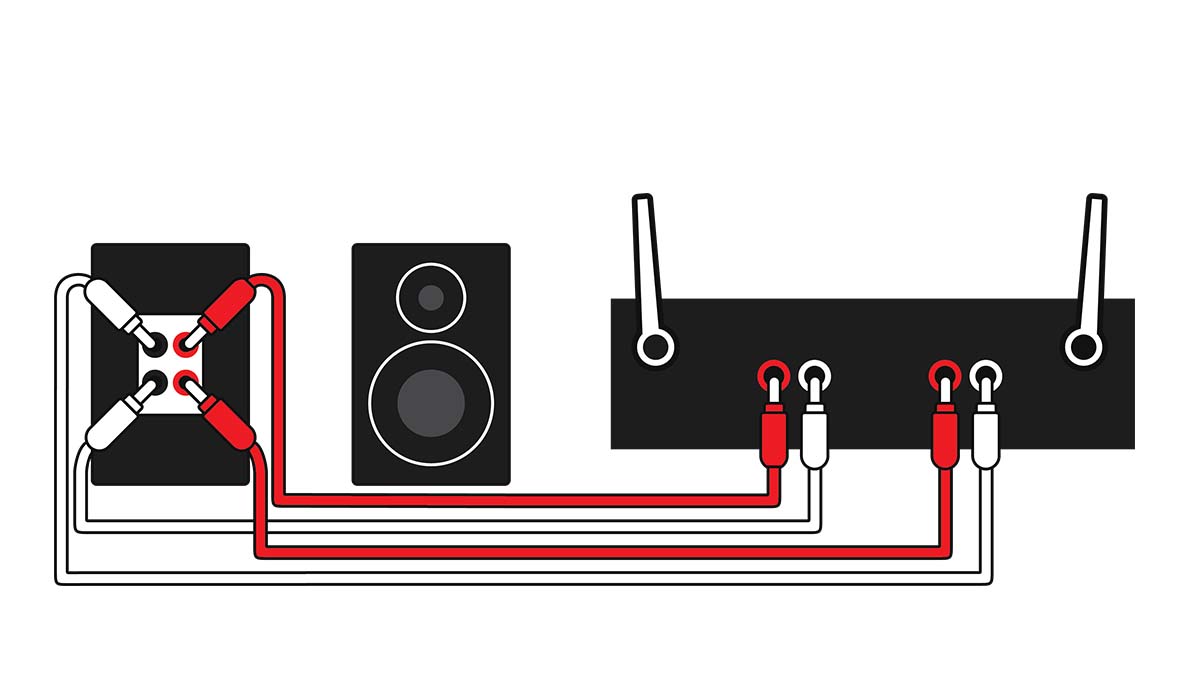
The Role of an Amplifier in a Sound System
An amplifier is the workhorse of any audio system, taking the low-level audio signal from a preamplifier and increasing its power sufficiently to drive the speaker cones. In a conventional setup, a single stereo amplifier receives the full-range audio signal, amplifying all frequencies—from the lowest bass notes to the highest treble. This single, amplified signal is then sent to each speaker.
Crossovers: Separating Frequencies
Speakers themselves are complex devices, often containing multiple drivers (woofers for low frequencies, mid-range drivers for vocal tones, and tweeters for high frequencies). Each driver is optimized to reproduce a specific range of frequencies more efficiently and accurately than others. To ensure that each driver receives only the frequencies it’s designed for, a component called a “crossover network” is employed.
Passive vs. Active Crossovers
Crossovers come in two primary types:
- Passive Crossovers: These are the most common and are built into the speaker cabinet itself, placed after the main amplifier. They consist of a network of capacitors, inductors, and resistors that filter the full-range amplified signal, directing low frequencies to the woofer, highs to the tweeter, and mids to the mid-range driver. While cost-effective and simple to integrate, passive crossovers consume some of the amplifier’s power (as heat) and can introduce minor phase shifts and impedance variations.
- Active Crossovers: Unlike passive crossovers, active crossovers operate before the main amplifier, at line-level signal strength. They take the full-range signal from the preamplifier and split it into separate frequency bands (e.g., low, mid, high). Each of these filtered, line-level signals is then sent to its own dedicated amplifier channel. This is where the concept of bi-amplification truly begins.
The Concept of Bi-Amplification Explained
Bi-amplification, or bi-amping, is the practice of using separate amplifier channels to drive different frequency ranges within a single speaker. Instead of one amplifier driving the entire speaker through its passive crossover, a bi-amplified system uses at least two amplifier channels for each speaker: typically one channel for the low frequencies (woofer) and another channel for the high frequencies (tweeter), bypassing the speaker’s internal passive crossover for those specific drivers.
Dual Amplification for Enhanced Performance
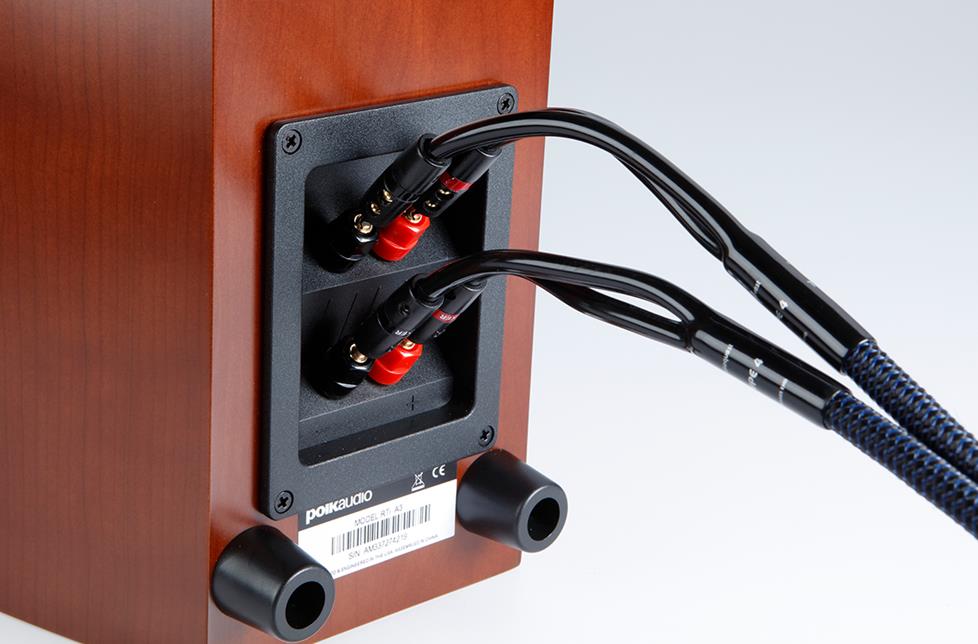
In a bi-amp setup, an active crossover first splits the audio signal into distinct frequency bands. For a two-way speaker, the signal is divided into low and high frequencies. Each of these filtered signals is then fed to its own dedicated power amplifier channel. The low-frequency amplifier drives only the woofer, and the high-frequency amplifier drives only the tweeter. This means the speaker’s internal passive crossover is either removed entirely or bypassed (if the speaker is “bi-wireable” or “bi-ampable” and has separate terminals for high and low frequencies).
Vertical Bi-Amping vs. Horizontal Bi-Amping
There are two main configurations for bi-amplification:
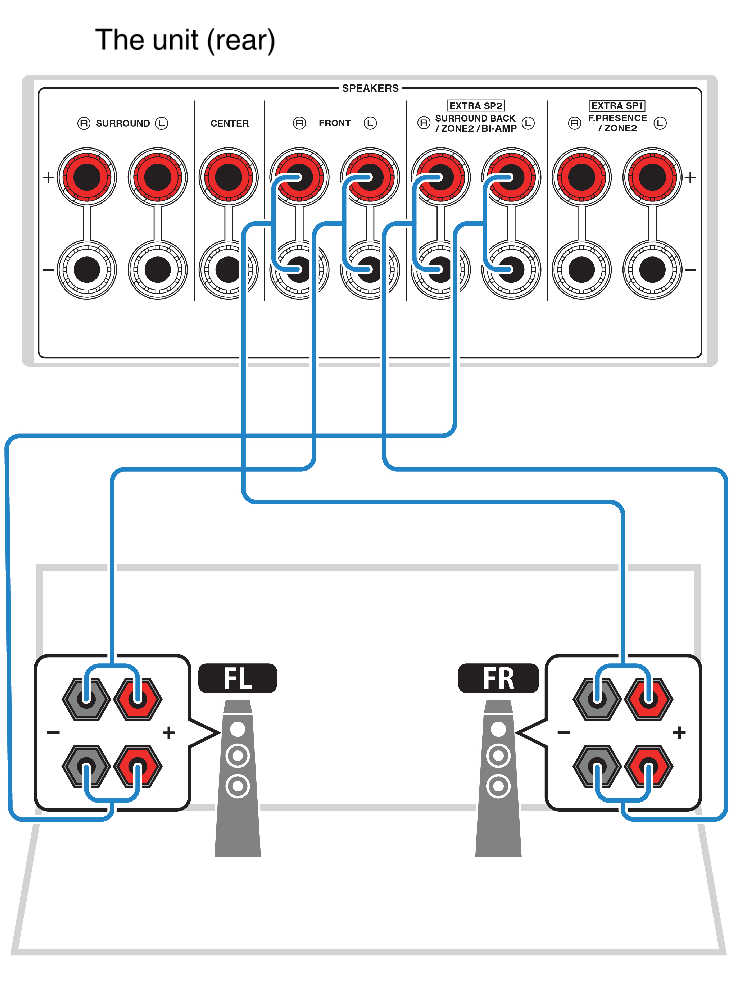
- Vertical Bi-Amping (Mono-Bloc Bi-Amping): This involves using two identical stereo amplifiers. One amplifier is dedicated to the left speaker, with one channel driving the woofer and the other channel driving the tweeter. The second identical amplifier does the same for the right speaker. This approach ensures perfect channel matching and often involves using identical amplifier models for all duties.
- Horizontal Bi-Amping (Stereo Bi-Amping): This uses one stereo amplifier for the high frequencies of both left and right speakers, and a second stereo amplifier for the low frequencies of both left and right speakers. The advantage here is potentially using different types of amplifiers tailored for specific frequency ranges (e.g., a powerful solid-state amp for bass and a warmer tube amp for treble).
Prerequisites for Bi-Amplification (Speakers, Amps, Crossovers)
To implement bi-amplification, several conditions must be met:
- Bi-Ampable Speakers: The speakers must have separate input terminals for the low-frequency and high-frequency sections (often labeled “LF” and “HF” or “Bass” and “Treble”). These speakers typically come with removable metal “jumpers” connecting these terminals, which must be removed for bi-amping.
- Multiple Amplifier Channels: You need at least two stereo amplifier channels per speaker (or two mono amplifiers) for a two-way speaker, totaling four amplifier channels for a stereo pair.
- Active Crossover: A dedicated active crossover is essential to split the line-level signal before amplification. Some high-end AV receivers or integrated amplifiers may have built-in active crossover functionality and multiple assignable amplifier channels, simplifying the setup.
Advantages of Bi-Amplification
The investment in additional equipment and complexity often yields significant auditory rewards, making bi-amplification a compelling upgrade for many audiophiles.
Improved Sound Quality and Clarity
By dedicating separate amplifiers to different frequency ranges, each amplifier works less strenuously across a narrower band. This results in less inter-driver interference and cleaner signal reproduction. The high-frequency amplifier doesn’t have to contend with large bass transients, allowing it to render delicate treble details with greater precision. Conversely, the low-frequency amplifier can focus its power on moving larger woofer cones effectively, leading to tighter, more controlled bass.
Enhanced Dynamic Range and Headroom
One of the most significant benefits is the increased dynamic headroom. In a single-amp setup, a loud bass transient can momentarily draw a huge amount of power, potentially “robbing” power from the higher frequencies and causing compression or distortion. With bi-amplification, the bass amplifier handles these demands independently, leaving the treble amplifier free to maintain its output without strain. This preserves the subtle dynamics and allows the system to play louder with less perceived effort and distortion.
Reduced Intermodulation Distortion
Intermodulation distortion (IMD) occurs when an amplifier tries to reproduce multiple frequencies simultaneously, leading to unwanted harmonic products that are not present in the original signal. By isolating the frequency bands, bi-amplification dramatically reduces IMD, as each amplifier works within a more defined frequency range. The result is a purer, more accurate sound with better separation between instruments and voices.
Better Speaker Control and Efficiency
Removing the passive crossover from the signal path for individual drivers is a major boon. Passive crossovers introduce impedance variations and consume power, effectively making the amplifier work harder. Active crossovers, operating at line level, are highly efficient. This means the dedicated amplifiers have a more direct and efficient connection to their respective drivers. The damping factor (an amplifier’s ability to control speaker movement) is also improved, leading to more precise, “snappier” bass response and better control over the driver’s motion.
Potential Drawbacks and Considerations
While the sonic benefits are clear, bi-amplification isn’t without its challenges. The decision to bi-amp involves weighing these factors carefully against the desired improvements.
Increased Cost and Complexity
The most obvious drawback is the increased financial investment. You need more amplifier channels (potentially more amplifiers), an active crossover, and appropriate cabling. The physical space required for additional components and the complexity of wiring and configuring the system also increase. This can be daunting for casual listeners.
Matching Components: A Critical Step
Achieving optimal results with bi-amplification often requires careful component matching. If you use different amplifier models, their gain structures, input sensitivities, and sonic characteristics must be considered. Mismatched amplifiers can lead to an unbalanced sound, where one frequency band overpowers another, or introduce phase issues. Even with identical amplifiers, careful gain matching of the active crossover output to the amplifier inputs is crucial.
Power Consumption and Heat
More amplifiers naturally mean increased power consumption and potentially more heat generated. This is a practical consideration for electricity bills and the need for adequate ventilation for the equipment. While each amplifier might be working less strenuously across its specific band, the overall power draw of a bi-amped system will be higher than a single-amp setup.
Is Bi-Amplification Right for You?
The appeal of bi-amplification lies in its promise of an uncompromised audio experience, but its suitability depends on individual priorities, budget, and system goals.
For Audiophiles and Home Theater Enthusiasts
For those deeply invested in high-fidelity audio reproduction, bi-amplification can be a transformative upgrade. It offers a noticeable leap in clarity, dynamics, and control that can elevate a good system to an exceptional one. Home theater enthusiasts might also benefit, especially in systems where powerful, articulate bass and clear dialogue are paramount. The ability to fine-tune the crossover points and levels with an active crossover provides unparalleled flexibility for room acoustics and personal preference.
Professional Audio Applications
In studio monitoring and professional sound reinforcement, bi-amplification (and even tri-amplification or quad-amplification) is standard practice. Active studio monitors are typically self-powered and internally bi-amped, as the precision and control offered by this configuration are essential for critical listening and accurate sound production. Live sound systems also commonly employ multi-amplified setups to maximize power, efficiency, and fidelity across large venues.
DIY Bi-Amping: A Rewarding Project
For the technically inclined and those who enjoy tinkering, setting up a bi-amplified system can be a rewarding DIY project. It provides a deeper understanding of audio electronics and the opportunity to tailor the sound precisely to one’s liking. However, it requires careful research, attention to detail, and a willingness to troubleshoot.
In conclusion, bi-amplification is a sophisticated audio technique that offers tangible benefits in sound quality, dynamics, and control by dedicating separate amplifier channels to specific speaker drivers. While it introduces additional cost and complexity, the resulting improvements in clarity and fidelity can be a worthy investment for serious audiophiles and anyone seeking to push the boundaries of their listening experience.
aViewFromTheCave is a participant in the Amazon Services LLC Associates Program, an affiliate advertising program designed to provide a means for sites to earn advertising fees by advertising and linking to Amazon.com. Amazon, the Amazon logo, AmazonSupply, and the AmazonSupply logo are trademarks of Amazon.com, Inc. or its affiliates. As an Amazon Associate we earn affiliate commissions from qualifying purchases.