
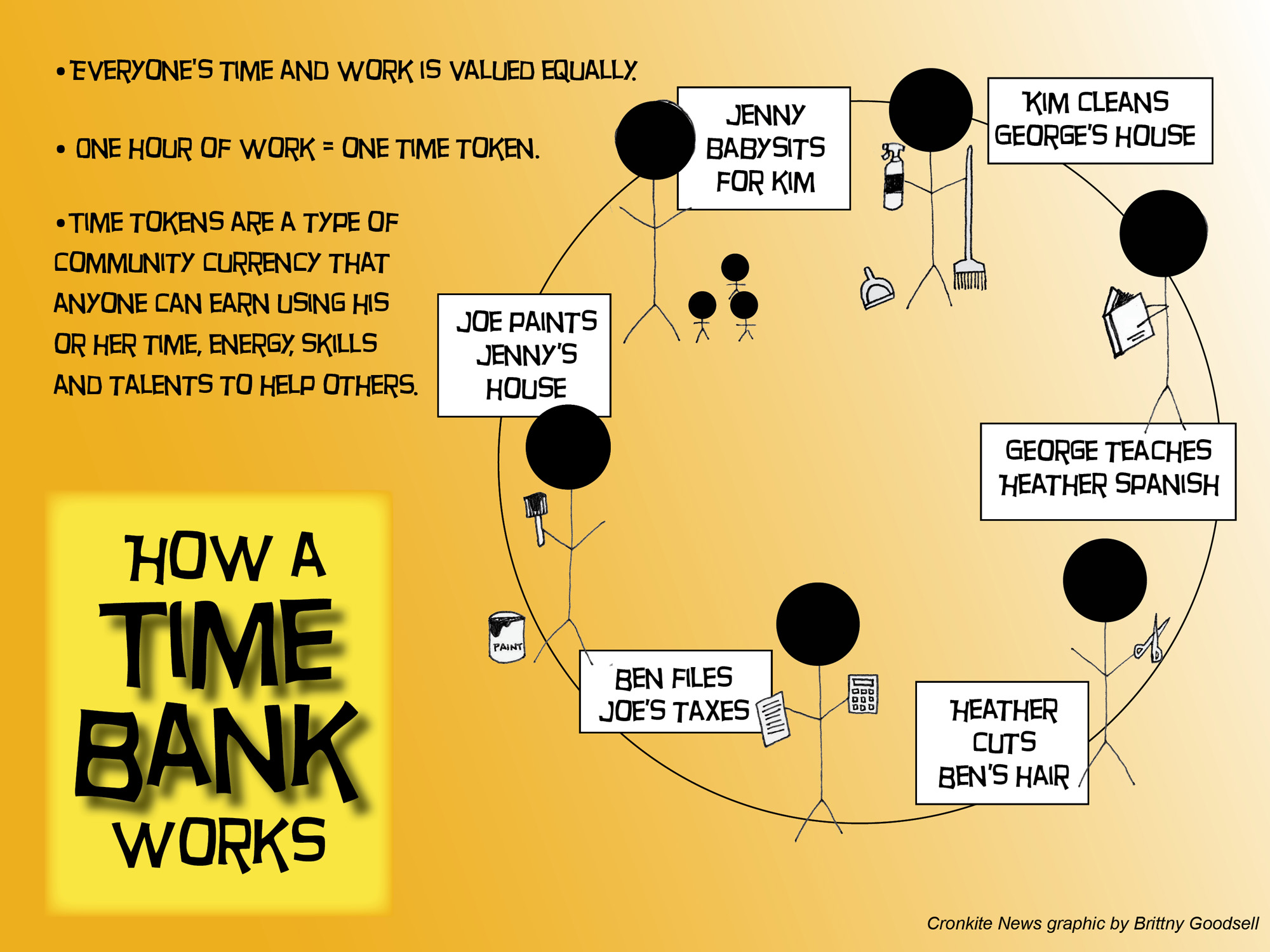
In an economic landscape often dominated by traditional monetary transactions, the concept of a timebank offers a compelling alternative – a system built on reciprocal service exchange, where time, not cash, is the primary currency. A timebank is, at its core, a community-based economic model designed to facilitate the exchange of services, skills, and support among individuals and organizations. It operates on a simple, yet profound, principle: every hour of service provided earns one time credit, which can then be redeemed for an hour of service from another member. This innovative approach to value exchange redefines wealth and empowers communities to harness their collective human capital, offering significant implications for personal finance, local economies, and broader financial resilience.
The Core Concept of Timebanking
Timebanking represents a fundamental shift away from conventional financial systems, challenging assumptions about value, labor, and economic participation. It’s not merely a bartering system, but a structured framework that elevates human connection and mutual support to an economic asset.
Beyond Traditional Currency
At its heart, a timebank functions as a complementary currency system. While national currencies like the dollar or euro are centralized and often subject to market fluctuations, time credits are inherently localized and stable. One hour equals one credit, regardless of the service provided or the skill level of the provider. This intrinsic equivalence dismantles the hierarchical valuation often found in traditional labor markets, where certain skills command higher monetary rates. Instead, a timebank acknowledges that all contributions of time, whether it’s tutoring, gardening, running errands, or offering companionship, hold equal value in supporting community well-being. This creates an inclusive economic environment where individuals who might be marginalized in conventional employment, such as the elderly, stay-at-home parents, or those with limited income, can actively participate and contribute.
The Principle of Equal Value
The cornerstone of timebanking is the principle of “one hour equals one credit.” This radical equality is what distinguishes it from direct bartering. In a barter system, two individuals directly negotiate the exchange of goods or services, often leading to subjective valuations and potential imbalances. A timebank, however, uses a universal unit of exchange – time – to create a liquid currency. If you spend an hour helping a neighbor with their computer, you earn one time credit. You can then spend that credit on an hour of someone else’s time, perhaps for help with home repairs, learning a new language, or even receiving a massage. This fungibility of time credits makes the system far more flexible and robust than one-to-one bartering, fostering a wider web of reciprocal relationships and diversified service access. It democratizes access to skills and assistance, ensuring that value is derived from the act of giving and receiving, rather than from market-driven pricing.
How Timebanks Operate: An Alternative Economy in Action
Understanding the operational mechanics of a timebank reveals how this alternative economic model translates into practical, community-level financial activity. It’s a structured system designed for efficiency and equity.
Membership and Service Exchange
Participation in a timebank typically begins with becoming a member of a local chapter. Members register their skills and needs, creating a pool of available services and demands. When a member requires a service, they browse the directory of available skills or post a request. Another member, seeing a request they can fulfill, offers their time. Once the service is rendered, the time spent is logged, and the service provider receives time credits in their account. This process is often facilitated by a central online platform or a dedicated coordinator. The beauty of this model is that the exchange doesn’t have to be direct; you don’t have to provide a service to the person from whom you receive one. This multi-directional exchange network ensures that credits circulate broadly, maximizing utility and fostering greater community cohesion.
The Role of the Coordinator and Technology
While the core exchanges are peer-to-peer, most successful timebanks benefit from a central coordinator or a robust technological platform. The coordinator acts as an administrator, facilitating matches, providing support to members, and ensuring the smooth operation of the system. In many modern timebanks, dedicated software platforms or mobile applications serve as the central ledger, tracking credits, managing member profiles, and listing available services and requests. These digital tools enhance efficiency, transparency, and scalability, making it easier for members to connect, log hours, and manage their time credit accounts. This integration of technology transforms a traditional concept into a modern, accessible financial tool, expanding its reach and impact within the community.
Earning and Spending Time Credits
The process of earning and spending time credits mirrors, in many ways, the management of a traditional bank account, albeit with a non-monetary currency. When a member provides an hour of service, their time credit balance increases. When they receive an hour of service, their balance decreases. Time credits are not subject to interest and do not expire, maintaining their stable value over time. Members are encouraged to both give and receive, ensuring a vibrant and active exchange. The objective is not to accumulate vast numbers of credits, but to engage in a continuous flow of reciprocal giving and receiving, fostering a dynamic alternative economy where everyone has the opportunity to be both a producer and a consumer of services.
Financial Implications and Benefits for Individuals
For individuals, timebanking offers a tangible pathway to enhance personal financial well-being and access essential services outside the conventional cash economy. It’s a practical strategy for resource management and resilience.
Reducing Out-of-Pocket Expenses
One of the most immediate and significant financial benefits of timebanking is the reduction in out-of-pocket expenses. By exchanging time credits for services that would otherwise require monetary payment – such as minor home repairs, tutoring, pet sitting, or IT support – individuals can conserve their cash income. This is particularly impactful for those on fixed or limited incomes, enabling them to stretch their budgets further and allocate scarce financial resources to other necessities like housing, food, or medical care. It provides a non-monetary safety net, allowing individuals to meet their needs without incurring debt or depleting savings.
Accessing Skills and Services Without Cash

Beyond cost savings, timebanking provides access to a diverse array of skills and services that might otherwise be financially out of reach. Perhaps someone needs help building a website for a small personal project but cannot afford professional web development fees. Through a timebank, they can connect with a member who has those skills and exchange hours. This democratizes access to expertise and support, enabling individuals to pursue personal development, maintain their homes, or improve their quality of life in ways that would be impossible within a purely cash-based system. It levels the playing field, making valuable human capital accessible to all members regardless of their financial status.
Building Social Capital as Economic Value
While not directly quantifiable in monetary terms, the social capital built within a timebank network has profound economic value. Strong social networks lead to increased trust, mutual aid, and shared resources. This translates into economic benefits by creating informal support systems that can reduce the need for market-based solutions. For instance, a network of timebank members might collectively offer childcare, reducing the financial burden on individual parents. The reciprocal relationships foster a sense of community ownership and collective responsibility, creating a resilient local ecosystem that can weather economic challenges more effectively than isolated individuals.
Financial Resilience and Community Support
Timebanking inherently builds financial resilience at both the individual and community levels. In times of economic downturn, job loss, or personal crisis, a timebank provides a vital lifeline. Individuals can continue to access necessary services and contribute their skills, maintaining a sense of purpose and productivity even when monetary income is scarce. For communities, a thriving timebank strengthens local economies by keeping value circulating locally rather than flowing out to large corporations. It acts as a form of social insurance, ensuring that essential human needs can still be met when traditional financial systems falter, fostering a robust and interdependent support network.
Timebanking as a Tool for Local Economic Development
The implications of timebanking extend beyond individual finance, positioning it as a powerful mechanism for fostering local economic development and community wealth building.
Stimulating Local Economies
By facilitating the exchange of services within a defined geographical area, timebanks inherently stimulate local economies. Every service provided and received represents economic activity that stays within the community. Instead of money being spent at national chains or on distant online services, the value created through timebanking circulates among local residents. This localization of economic activity supports community members directly, strengthens local networks, and builds a sense of collective prosperity. It creates a vibrant internal market for skills and labor that might otherwise go unutilized or be purchased from outside sources.
Supporting Small Businesses and Entrepreneurs
Timebanks can serve as an invaluable resource for budding entrepreneurs and small local businesses. A new business owner might need help with marketing, administrative tasks, or website design but lack the initial capital to pay for these services. By offering their own skills through the timebank, they can “earn” the assistance they need, effectively bootstrapping their venture without incurring significant financial debt. Similarly, established small businesses might use time credits to supplement their operations or reward employees, fostering loyalty and engagement without impacting their cash flow. This creates a supportive ecosystem where local businesses can thrive by leveraging community skills and mutual support.
Bridging Economic Disparities
One of the most compelling aspects of timebanking is its potential to bridge economic disparities. In traditional economies, wealth and access to services are often concentrated among those with greater financial means. Timebanks, by valuing everyone’s time equally, regardless of their profession or income level, create a more equitable distribution of resources. They empower individuals from all socioeconomic backgrounds to contribute their unique skills and access a wide range of services, fostering social inclusion and reducing the stratification often seen in purely cash-based systems. This contributes to a more balanced and just local economy where everyone has an opportunity to participate and benefit.
Integrating Timebanks into Broader Financial Strategies
Far from being a fringe activity, timebanking can be a strategic component of a holistic financial plan, complementing traditional monetary systems and enhancing overall financial well-being.
Complementing Personal Budgets
For individuals, integrating timebanking into personal budgeting involves recognizing time credits as a valuable, non-monetary asset. By consciously using time credits for certain needs, individuals can free up cash for other essential expenses, savings goals, or investments. For instance, if a person budgets a certain amount for home maintenance, they can choose to perform some maintenance themselves for time credits, or hire another member, thereby keeping their cash budget intact for other financial priorities. It’s an intelligent way to diversify one’s economic resources, adding another layer of financial security.
A Hedge Against Economic Volatility
In an unpredictable global economy, timebanks offer a degree of insulation from monetary fluctuations and financial downturns. When traditional markets falter, or cash flow becomes tight, a robust timebank provides a stable, alternative means of securing goods and services. The value of an hour remains constant, offering a reliable form of exchange that is independent of inflation or market crashes. This makes timebanking a practical strategy for building community-level financial resilience, acting as a buffer against external economic shocks and ensuring essential services remain accessible.

Future of Value Exchange and Local Currencies
Timebanking represents a frontier in the evolution of value exchange and the growing interest in local, complementary currencies. As communities increasingly seek sustainable and equitable economic models, timebanks stand out as a proven framework for harnessing collective human capital. They offer a vision of a future where wealth is measured not just in monetary terms, but in the richness of reciprocal relationships and the strength of mutual support. By challenging conventional notions of value and fostering decentralized economic activity, timebanks are poised to play an increasingly significant role in shaping financially resilient and socially cohesive communities worldwide.
aViewFromTheCave is a participant in the Amazon Services LLC Associates Program, an affiliate advertising program designed to provide a means for sites to earn advertising fees by advertising and linking to Amazon.com. Amazon, the Amazon logo, AmazonSupply, and the AmazonSupply logo are trademarks of Amazon.com, Inc. or its affiliates. As an Amazon Associate we earn affiliate commissions from qualifying purchases.