
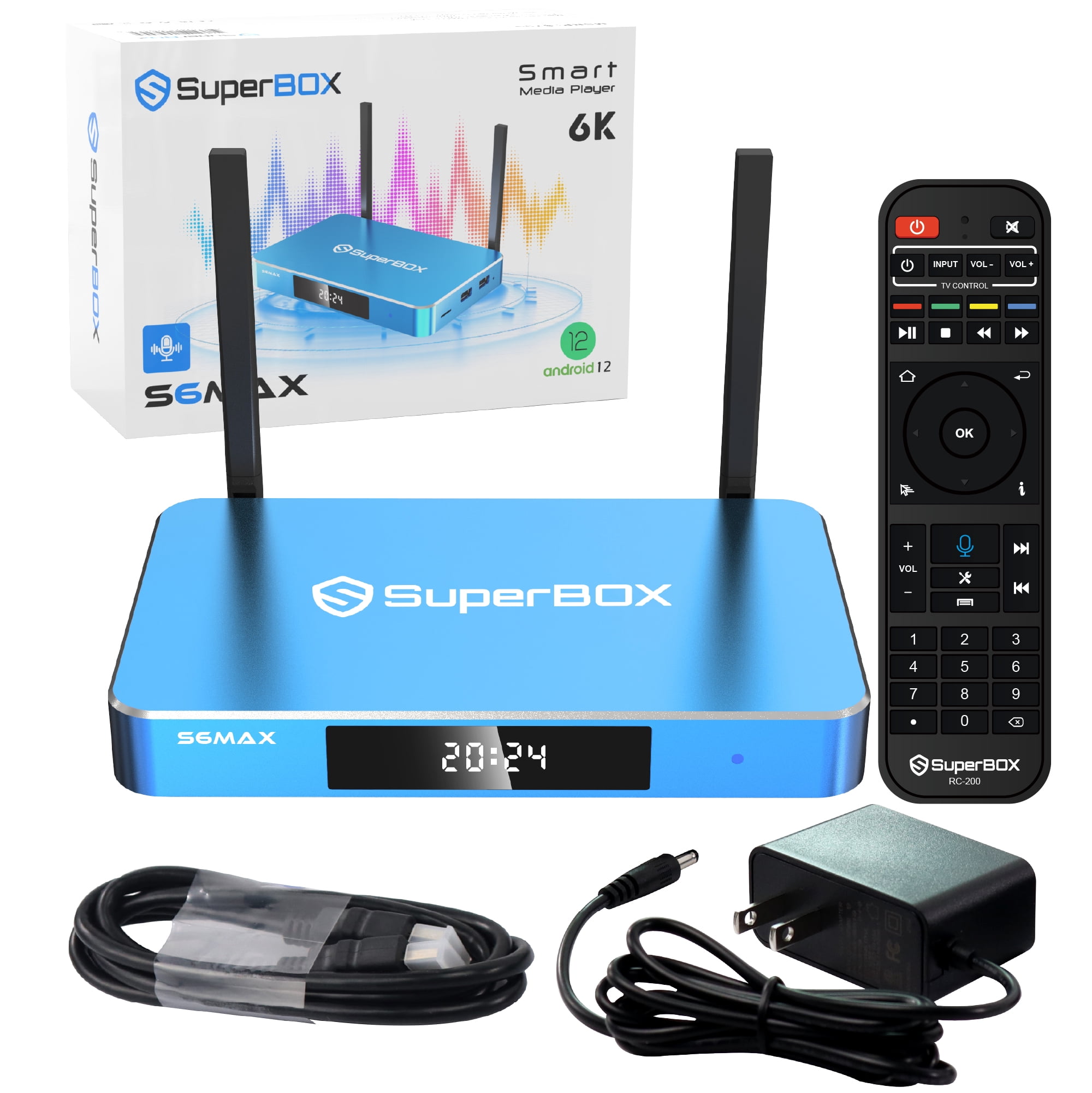
The landscape of television consumption has undergone a radical transformation over the past two decades. Gone are the days when a simple cable or satellite box was the sole gateway to content. Today, a new class of device has emerged, colloquially known as a “super box for TV.” This term, while not a formal industry standard, aptly describes advanced media streamers, smart set-top boxes, or hybrid media centers that consolidate diverse content sources, offer enhanced functionalities, and elevate the overall home entertainment experience far beyond traditional television receivers. Essentially, a super box is a sophisticated piece of technology designed to be the central hub for all your digital media, delivering streaming services, live TV, local media, and often much more, all through a unified and intuitive interface.

Defining the “Super Box”: More Than Just a Set-Top
At its core, a super box for TV is an evolution of the traditional set-top box, reimagined for the internet age. While classic set-top boxes primarily decode broadcast signals (cable, satellite, or terrestrial), a super box leverages broadband internet connectivity to access a vast array of digital content. It acts as a bridge, bringing the expansive world of online streaming, on-demand services, and even sophisticated computing capabilities directly to your biggest screen.
The Evolution from Basic Receivers to Media Hubs
The journey to the super box began with rudimentary digital video recorders (DVRs) and early streaming devices like the first generation Apple TV or Roku boxes. These initial devices offered limited app selections and focused on specific content types. However, as internet speeds increased and streaming services proliferated, the demand for a more integrated and powerful solution grew. Manufacturers responded by creating devices with more robust processors, increased memory, and operating systems capable of running a multitude of applications.
Today’s super boxes are characterized by their versatility. They are not merely pass-through devices; they are intelligent media computers that process, display, and manage content. They operate on dedicated operating systems, often derivatives of Android TV, tvOS, or proprietary platforms, allowing users to download and run applications much like a smartphone or tablet. This app-centric approach is fundamental to their “super” capabilities, enabling endless customization and access to an ever-expanding library of services.
Key Technological Capabilities and Features
The power of a super box lies in its advanced technological stack and the comprehensive features it offers. These devices are engineered to handle high-bandwidth media, provide seamless user interaction, and integrate with a wider digital ecosystem.
High-Fidelity Audiovisual Processing
Modern super boxes are built to deliver the highest quality audio and video available in consumer technology. This typically includes:
- 4K Ultra HD Support: The ability to stream and display content at 3840×2160 pixel resolution, offering four times the detail of Full HD. This requires powerful internal processing to decode these large video files in real-time.
- High Dynamic Range (HDR): Support for HDR formats like HDR10, Dolby Vision, and HLG significantly enhances contrast, color accuracy, and overall picture vibrancy. HDR processing is computationally intensive and relies on sophisticated chipsets.
- Immersive Audio Decoding: Compatibility with advanced audio formats such as Dolby Atmos and DTS:X provides multi-dimensional soundscapes, often requiring specialized audio hardware and software decoders within the device to pass through or decode these signals to compatible sound systems.
- High Frame Rate (HFR) and Variable Refresh Rate (VRR): While less common than 4K and HDR, some high-end super boxes, especially those with gaming capabilities, might support HFR (e.g., 4K at 60fps or even 120fps) and VRR for smoother motion and reduced screen tearing.
Robust Connectivity and Networking
Connectivity is paramount for a device designed to aggregate digital content. Super boxes typically feature:
- Dual-band Wi-Fi (2.4GHz and 5GHz): For reliable wireless internet access, with 5GHz offering faster speeds and less interference, crucial for 4K streaming. Wi-Fi 6 (802.11ax) is becoming more prevalent for even greater efficiency and speed.
- Gigabit Ethernet Port: Essential for consistent, high-bandwidth wired connections, particularly favored by enthusiasts and those with weaker Wi-Fi signals, ensuring uninterrupted 4K HDR streams.
- HDMI 2.0/2.1: The primary output for connecting to a TV or AV receiver. HDMI 2.1 is important for future-proofing, enabling features like higher resolutions (8K), higher frame rates, and enhanced audio return channel (eARC).
- USB Ports: For connecting external storage devices (to play local media), keyboards, game controllers, or other peripherals.
- Bluetooth: For pairing wireless accessories like remotes, headphones, gamepads, and even smart home devices.
Intelligent Software and User Experience
Beyond raw hardware, the software platform dictates the user experience.
- Intuitive Operating Systems: Operating systems like Android TV, tvOS, or Fire TV OS are designed for large-screen consumption, featuring customizable home screens, easy navigation, and integrated search functions across multiple apps.
- Voice Control Integration: Most super boxes include voice control capabilities, often through an integrated microphone in the remote or compatibility with smart assistants (Google Assistant, Amazon Alexa, Siri). This allows users to search for content, control playback, launch apps, and even manage smart home devices using natural language commands.
- Cross-Platform Search and Recommendation Engines: A key differentiator is the ability to search for a specific movie or show and see where it’s available across all subscribed services, often with personalized recommendations based on viewing history. This eliminates the need to jump between apps manually.
- App Ecosystem: Access to a vast app store allows users to download virtually any major streaming service (Netflix, Disney+, Hulu, HBO Max, Prime Video), live TV providers (YouTube TV, Sling TV), music apps, news channels, and even casual games.
- Local Media Playback: Support for various audio and video codecs allows users to play personal media files stored on USB drives, network-attached storage (NAS), or cloud services.

The Ecosystem of Content and Connectivity
A super box doesn’t exist in isolation; it thrives within an ecosystem of content providers, internet infrastructure, and increasingly, smart home devices. Its primary value proposition is its ability to centralize and simplify access to this diverse digital landscape.
Aggregating Streaming Services and Live TV
The proliferation of streaming services has led to content fragmentation, where users might subscribe to several platforms to access all their desired shows and movies. A super box addresses this by acting as a universal launcher. Users can install all their subscribed apps and switch between them effortlessly. Furthermore, many super boxes integrate with “cord-cutting” live TV services (e.g., YouTube TV, Sling TV, Hulu + Live TV), providing a viable alternative to traditional cable or satellite TV, complete with cloud DVR functionalities. Some advanced models can even integrate with digital over-the-air (OTA) antennas, offering a seamless experience for local broadcast channels alongside streaming content.
Interoperability with Smart Home Devices
As home technology converges, some super boxes are beginning to serve as central control points for smart home ecosystems. Through integrated voice assistants or dedicated apps, users can control smart lights, thermostats, security cameras, and other compatible devices directly from their TV screen. This enhances convenience, allowing users to dim lights for movie night or check who’s at the door without leaving the couch. This level of integration points to a future where the TV, powered by a super box, becomes a truly intelligent display for not just entertainment, but also for managing the home environment.
The Critical Role of Internet Bandwidth
The entire super box experience hinges on a stable and sufficiently fast internet connection. High-quality 4K HDR streaming, especially with multiple devices connected simultaneously, demands substantial bandwidth. While standard HD streaming might require 5-8 Mbps, 4K HDR content typically needs 20-25 Mbps, with some services recommending even higher. An unreliable or slow connection can lead to buffering, reduced picture quality, and a frustrating user experience, undermining the very purpose of a super box. Therefore, investing in a robust home network and adequate internet service is as crucial as choosing the right super box itself.
Benefits, Challenges, and the Future of TV Technology
The super box represents a significant leap forward in how we consume media, offering numerous advantages but also presenting certain considerations for users.
User Advantages: Convenience and Customization
The most immediate benefit is unparalleled convenience. All entertainment options are accessible from a single device, navigated by one remote or voice commands. This simplifies the user experience, reduces clutter, and eliminates the need to switch inputs constantly. Furthermore, the app-based nature allows for immense customization. Users only install the services they use, creating a personalized entertainment hub tailored to their preferences. The potential for cost savings, particularly for cord-cutters, is also a major draw, as the subscription costs for various streaming services can often be less than a traditional cable package, offering more flexibility without long-term contracts.
Considerations and Potential Drawbacks
Despite their advantages, super boxes come with their own set of considerations. The initial hardware cost can be an investment, especially for high-end models. Furthermore, while the device itself might be a one-time purchase, access to premium content often requires multiple ongoing subscriptions, which can accumulate. Dependence on a reliable internet connection is another factor; in areas with poor broadband infrastructure, the full potential of a super box cannot be realized. Finally, the rapid pace of technological change means that even advanced super boxes can become outdated as new codecs, connectivity standards (e.g., Wi-Fi 7, HDMI 2.2), and display technologies emerge.
The Road Ahead: AI, Cloud, and Beyond
The future of the super box is likely to be characterized by increasing intelligence and deeper integration. Artificial intelligence (AI) will play a more prominent role, enhancing recommendation engines, refining voice command capabilities, and potentially personalizing content delivery dynamically. Cloud-based processing could offload some of the heavy lifting from local hardware, allowing for thinner, more cost-effective devices. Further integration with smart home ecosystems, advanced gaming capabilities (cloud gaming), and augmented reality (AR) overlays could transform the TV from a passive display into an interactive, central home portal. As connectivity improves and content diversity grows, the “super box” will continue to evolve, pushing the boundaries of what home entertainment can be, cementing its place as a critical piece of modern technology for the television.
aViewFromTheCave is a participant in the Amazon Services LLC Associates Program, an affiliate advertising program designed to provide a means for sites to earn advertising fees by advertising and linking to Amazon.com. Amazon, the Amazon logo, AmazonSupply, and the AmazonSupply logo are trademarks of Amazon.com, Inc. or its affiliates. As an Amazon Associate we earn affiliate commissions from qualifying purchases.