
In the world of global finance, few tickers command as much attention as AMZN. Whether you are a seasoned institutional investor or a retail newcomer making your first foray into the markets, the question “how much is Amazon stock?” is often the starting point for a deeper dive into the health of the broader economy. Amazon.com Inc. has evolved from a niche online bookseller into a diversified behemoth spanning e-commerce, cloud computing, digital advertising, and artificial intelligence.
However, looking at the current price of a single share provides only a snapshot. To truly understand what Amazon stock is worth, one must look beneath the surface at market capitalization, valuation metrics, and the underlying growth engines that drive its price action. This article explores the financial intricacies of Amazon, providing a professional roadmap for those looking to understand its place in a balanced investment portfolio.

Understanding Amazon’s Valuation and Stock Price Mechanics
When an investor asks about the price of Amazon stock, they are often met with a number that fluctuates by the second during trading hours. However, the nominal share price is frequently misunderstood. To evaluate Amazon from a “Money” perspective, we must distinguish between the price per share and the total value of the company.
Market Capitalization vs. Share Price
The “price” of a stock is simply the market’s current consensus on the value of one unit of ownership. To understand the true scale of Amazon, investors look at Market Capitalization—calculated by multiplying the current share price by the total number of outstanding shares. Amazon consistently sits in the “Trillion Dollar Club,” a rarefied group of companies whose total value exceeds one trillion U.S. dollars. This massive scale means that even small percentage moves in the stock price can represent billions of dollars in shifting wealth.
The Impact of Stock Splits
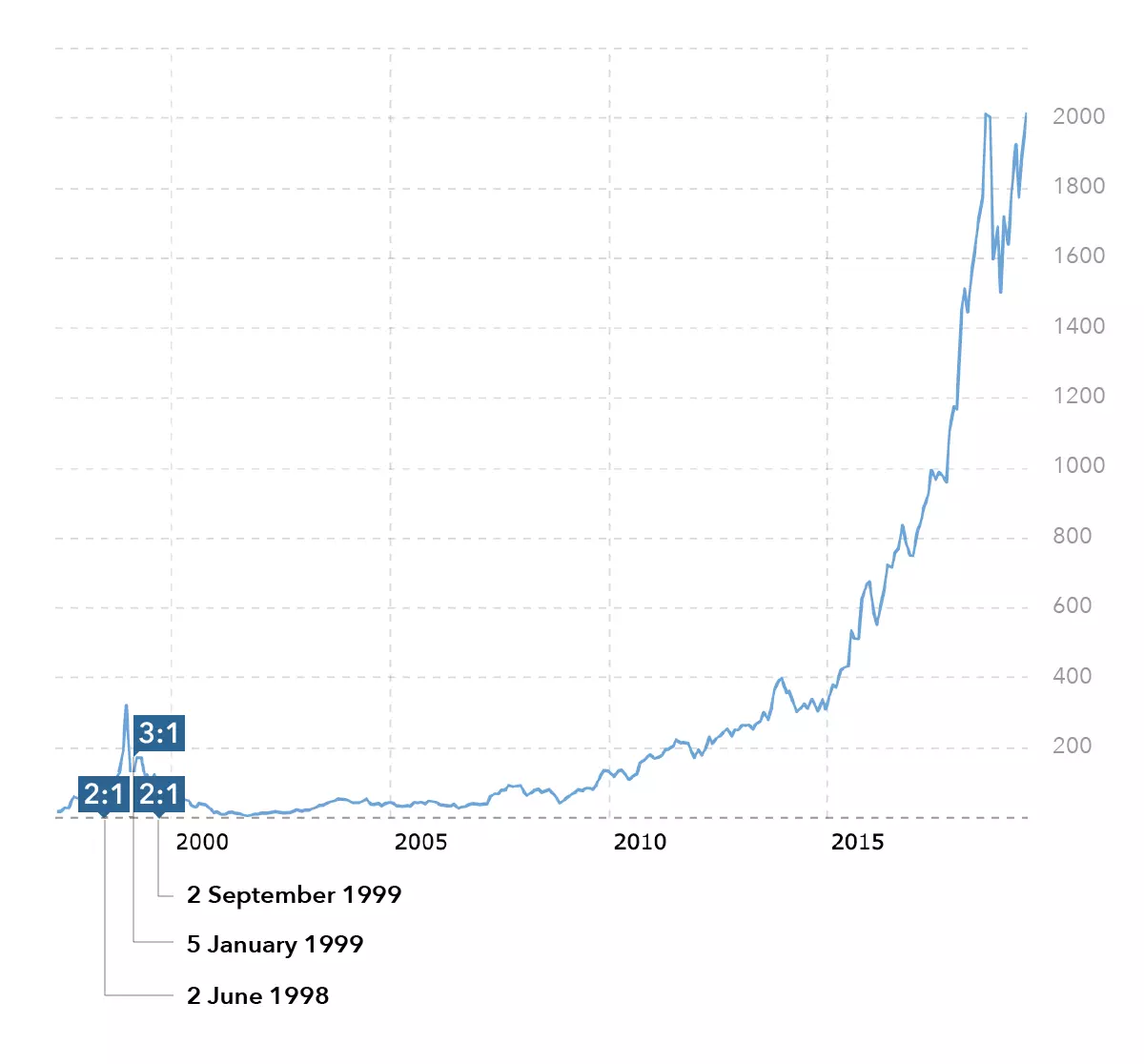
Historical context is vital when viewing Amazon’s price. For years, Amazon traded at several thousand dollars per share, making it difficult for small investors to purchase full shares. In June 2022, the company executed a 20-for-1 stock split. This did not change the intrinsic value of the company or the total value of an investor’s holdings; rather, it lowered the “per-share” price to make it more accessible and to increase liquidity in the market. When you see Amazon trading in the triple digits today, it is important to remember that on a pre-split basis, those shares would be valued in the thousands.
Why Nominal Price Matters to Retail Investors
While professional investors focus on market cap, the nominal price still matters for retail accessibility. Lower share prices facilitate the use of options strategies and make it easier for individuals to utilize “Dollar-Cost Averaging” (DCA) without needing to rely on fractional shares. Understanding this mechanic helps investors realize that a “cheaper” share price does not necessarily mean the company is “on sale” or undervalued; it is simply a matter of how the corporate pie is sliced.
Key Factors Influencing AMZN Performance
Amazon’s stock price does not move in a vacuum. It is a derivative of the company’s ability to generate cash and dominate specific market sectors. To understand why the stock is priced where it is, we must analyze the two primary cylinders of its corporate engine.
E-commerce Dominance and Logistics Efficiency
The core of Amazon’s identity remains its online marketplace. However, from an investment standpoint, the focus is less on the volume of goods sold and more on the margins. Amazon has spent decades and billions of dollars building a logistics network that rivals national postal services. Investors track “Shipping Costs” and “Third-Party Seller Services” closely. When Amazon optimizes its delivery routes or increases the fees charged to third-party merchants, its “bottom line” improves, typically leading to an appreciation in stock price.
AWS: The Profit Powerhouse
While the retail side provides the brand recognition, Amazon Web Services (AWS) provides the majority of the operating income. AWS is a leader in cloud infrastructure, providing the backbone for much of the internet. For investors, AWS is the “jewel in the crown.” It operates with much higher profit margins than the retail division. When analyzing if Amazon stock is a good buy, financial analysts look at the growth rate of AWS. If cloud spending among corporations slows down, Amazon’s stock often faces downward pressure, regardless of how many packages are being delivered to doorsteps.
The Emerging Advertising Frontier
A newer but increasingly significant driver of Amazon’s valuation is its advertising business. By leveraging the data of millions of shoppers, Amazon has built a high-margin advertising platform that competes with Google and Meta. Because advertising revenue requires very little overhead compared to physical shipping, it contributes disproportionately to the company’s net income, justifying a higher stock price in the eyes of many fundamental analysts.
Financial Metrics Every Investor Should Monitor
To determine if the current price of Amazon stock represents a fair value, investors utilize several key financial ratios. Unlike traditional retail companies, Amazon has historically been valued differently due to its habit of reinvesting almost all its profits back into growth.
Price-to-Earnings (P/E) Ratio and Forward Guidance
The P/E ratio is the most common metric used to judge if a stock is expensive. Historically, Amazon has maintained a very high P/E ratio compared to the S&P 500 average. This is because the market expects massive future growth. However, savvy investors also look at “Forward P/E,” which uses estimated future earnings. If the forward P/E is significantly lower than the trailing P/E, it suggests that analysts expect Amazon’s profits to catch up with its stock price soon.
Free Cash Flow (FCF)
In the “Money” niche, cash is king. Amazon’s management, particularly under founder Jeff Bezos and successor Andy Jassy, has always prioritized Free Cash Flow over accounting profits. FCF represents the cash a company generates after accounting for cash outflows to support operations and maintain its capital assets. A positive and growing FCF allows Amazon to acquire other companies (like Whole Foods or One Medical), pay down debt, or eventually initiate share buybacks—all of which are catalysts for a rising stock price.
Operating Margins by Segment
Investors shouldn’t just look at the total revenue; they should look at where the profit is coming from. By analyzing the operating margins of the North American, International, and AWS segments separately, an investor can see which parts of the business are “dragging” on the stock price and which are lifting it. Currently, the international retail segment often operates at a loss or thin margins as Amazon expands into new markets, while AWS maintains the healthy margins that keep the stock attractive to institutional funds.
How to Invest in Amazon: Strategies for Success
Deciding “how much” to pay for Amazon stock is only half the battle; the other half is determining “how” to enter the position. Investing in a high-growth tech giant requires a strategic approach to risk management.
Dollar-Cost Averaging (DCA)
Because the stock market is volatile, “timing the market” is notoriously difficult. Many financial advisors recommend Dollar-Cost Averaging. This involves investing a fixed dollar amount in Amazon stock at regular intervals (e.g., $200 every month), regardless of the share price. When the price is high, your $200 buys fewer shares; when the price drops, your $200 buys more. Over time, this lowers your average cost per share and reduces the emotional stress of price fluctuations.
The Role of Fractional Shares
For those who find the triple-digit share price still a bit high for their monthly budget, most modern brokerages offer fractional shares. This allows you to own a piece of Amazon for as little as $1 or $5. This democratization of investing ensures that “how much” Amazon stock costs is no longer a barrier to entry for building long-term wealth.
Diversification and Risk Management
No matter how bullish one feels about Amazon, it should rarely be the only stock in a portfolio. Professional wealth management dictates that an individual stock should typically occupy a controlled percentage of your total assets. Investors often gain exposure to Amazon through index funds or ETFs (Exchange-Traded Funds) like the QQQ or SPY, where Amazon is a top holding. This provides the benefits of Amazon’s growth while protecting the investor if the specific retail or cloud sectors face a downturn.

Conclusion: Looking Beyond the Ticker
When you search for “how much is Amazon stock,” you are looking at more than just a number; you are looking at the market’s real-time valuation of a global ecosystem. The price of AMZN is a reflection of consumer spending habits, the health of corporate IT budgets, and the cutting edge of artificial intelligence development.
For the disciplined investor, the current price is merely a entry point into a complex financial story. By focusing on market capitalization rather than just share price, monitoring the high-margin growth of AWS, and utilizing steady investment strategies like dollar-cost averaging, you can navigate the volatility of the market. Amazon remains a cornerstone of the modern financial landscape, and understanding its value is essential for anyone looking to master their personal finances and investment outcomes.
aViewFromTheCave is a participant in the Amazon Services LLC Associates Program, an affiliate advertising program designed to provide a means for sites to earn advertising fees by advertising and linking to Amazon.com. Amazon, the Amazon logo, AmazonSupply, and the AmazonSupply logo are trademarks of Amazon.com, Inc. or its affiliates. As an Amazon Associate we earn affiliate commissions from qualifying purchases.