
The Tricolour as Ireland’s Enduring National Brand Identity
A nation’s flag is far more than a simple piece of cloth; it is a meticulously designed emblem, a powerful symbol, and the most universally recognized visual representation of its brand identity. Like a corporate logo, a national flag condenses complex history, values, and aspirations into a single, potent image. For Ireland, the distinctive green, white, and orange tricolour is a masterclass in symbolic communication, embodying centuries of struggle, identity, and a profound hope for the future. Understanding its colours is not just a lesson in history, but an insight into the strategic articulation of a national brand that seeks to unify disparate elements into a cohesive whole.

Adopted officially in 1919 and enshrined in the Constitution of Ireland in 1937, the Irish flag, or Bratach na hÉireann, predates its official recognition by decades. First unfurled by Thomas Francis Meagher of the Young Irelanders in 1848, it was inspired by the French tricolour and intended from its inception to symbolize a new era of unity and peace on the island. Each stripe, meticulously positioned and coloured, tells a vital part of the national narrative, serving as a mnemonic for the country’s past divisions and its enduring aspiration for harmony. In the context of national branding, the flag performs several crucial functions: it provides immediate recognition, evokes emotional resonance among its citizens and the diaspora, and communicates core values to the global community. Its design is both simple and profound, a testament to the power of visual identity in shaping perception and fostering a sense of belonging.
Deciphering the Green: A Legacy of Heritage and Republicanism
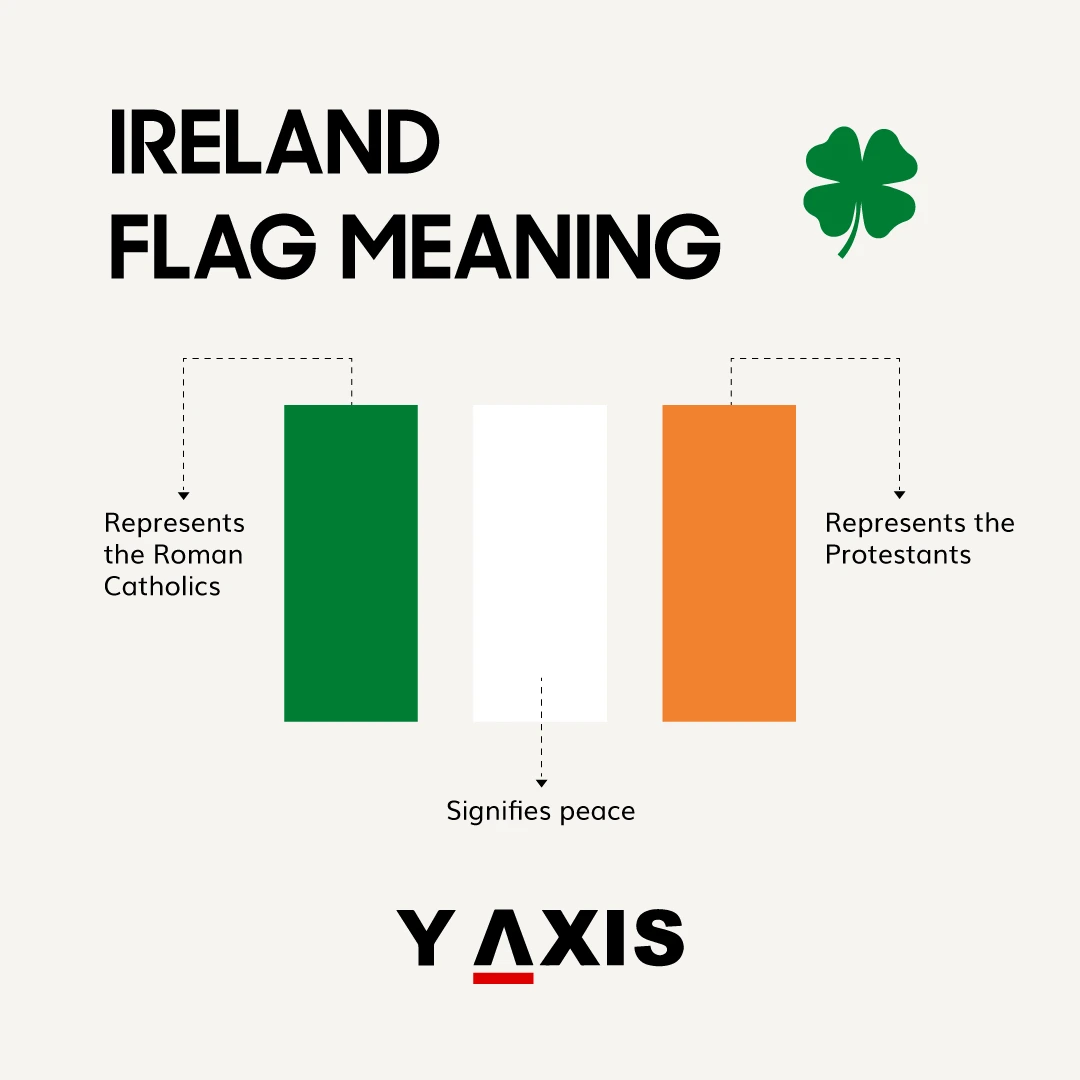
The vibrant green stripe, positioned at the hoist (the side closest to the flagpole), is perhaps the most immediately recognizable hue associated with Ireland. Its symbolic weight is deeply rooted in the island’s historical identity, geography, and political aspirations, serving as the foundational element of Ireland’s cultural brand.
The Emerald Isle and Gaelic Roots
Firstly, the green universally represents the lush landscape of Ireland, famously known as the “Emerald Isle.” This natural association immediately connects the flag to the land itself, its beauty, and its agricultural heritage. Beyond geography, green has long been the colour of the native people of Ireland and the island’s ancient Gaelic traditions. From the mythical tales of the Tuatha Dé Danann to the verdant fields of pre-colonial Ireland, green has been intrinsically linked to the indigenous identity and cultural heritage that predates external influences. This connection ensures that the flag speaks to a deep, inherent sense of belonging and continuity with a rich past.
A Symbol of Nationalism and Catholicism
Historically, green became strongly associated with Irish nationalism and republicanism. As far back as the 17th century, green ribbons were worn by supporters of the Irish Catholic Confederation. By the 18th century, with the rise of various independence movements, green flags, often emblazoned with a harp, became common emblems of defiance against British rule. Organizations like the United Irishmen in the late 1700s prominently adopted green to symbolize their revolutionary spirit and their desire for an independent Irish Republic. For many centuries, the majority Catholic population, who were largely disenfranchised, saw green as a direct representation of their faith and their struggle for religious and political freedom. In the context of national branding, this green stripe communicates a powerful message of resilience, self-determination, and an unwavering commitment to national sovereignty, resonating with a core segment of the Irish populace and their descendants worldwide. It establishes the historical bedrock upon which the modern Irish state’s identity is built.
Exploring the Orange: A Chapter of Historical Allegiance
In stark contrast to the verdant green, the bright orange stripe at the fly (the outer edge) represents a different, yet equally significant, facet of Ireland’s historical and demographic makeup. This colour acknowledges a specific community within the island, whose distinct heritage forms part of the broader national narrative, albeit one that has historically been in opposition to the ‘green’ tradition.
The Legacy of William of Orange
The orange stripe specifically represents the Protestant community in Ireland, particularly those who historically supported William of Orange, the Dutch Protestant Prince who became King of England, Scotland, and Ireland in 1689. William’s victory over the Catholic King James II at the Battle of the Boyne in 1690 solidified Protestant supremacy in Ireland for centuries. Therefore, orange became the symbolic colour of the Protestant ascendancy, particularly in Ulster (Northern Ireland), and their strong allegiance to the British Crown and the Protestant faith. Groups such as the Orange Order, a Protestant fraternal organization, adopted and continue to use orange as their primary symbol.
Integrating Divergent Identities
Including orange in the national flag was a deliberate and forward-thinking act of inclusion. When Thomas Francis Meagher first presented the flag, his intention was explicitly to symbolize the inclusion and respect for the Protestant minority within a future independent Ireland. This gesture sought to bridge the historical divide between the predominantly Catholic nationalists and the predominantly Protestant unionists/loyalists. From a brand strategy perspective, the inclusion of orange is a sophisticated move to create an umbrella brand identity that acknowledges and attempts to integrate historically divergent stakeholders. It communicates a message of aspiration: that the national identity is broad enough to encompass all its people, regardless of their historical allegiances or religious backgrounds. While the historical tensions have been profound and enduring, the flag’s design itself extends an olive branch, suggesting an overarching national identity that is greater than the sum of its opposing parts. It’s a challenge and a promise embedded in the very fabric of the nation’s visual identity.
Unifying White: The Promise of Peace and Reconciliation
Sandwiched precisely between the green and orange, the central white stripe carries arguably the most profound and aspirational message of the Irish flag. Its purity of colour and central placement signify a crucial element of the national brand: the enduring hope for unity and peace.
The Bridge Between Traditions
The white stripe is explicitly intended to symbolize the lasting truce and peace that is hoped for between the two traditions represented by green and orange – the Catholic/Nationalist/Republican and the Protestant/Unionist/Loyalist communities on the island of Ireland. It acts as a visual bridge, connecting and mediating between the two historical adversaries. In a nation often characterized by its complex and sometimes violent past, this stripe represents a foundational aspiration for reconciliation and mutual respect. It’s not merely a neutral space but an active declaration of intent: a commitment to dialogue, understanding, and the pursuit of a shared future free from sectarian strife.
An Aspirational Brand Message
From a brand strategy perspective, the white stripe is the flag’s core aspirational message, its unique selling proposition for national harmony. It communicates that despite historical divisions and ongoing challenges, the ultimate goal of the Irish nation is to foster a society where all citizens can coexist peacefully and contribute to a unified national identity. This message is not just for internal consumption, but also for international perception. It portrays Ireland as a nation that, while acknowledging its history of conflict, is fundamentally committed to peaceful resolution and inclusive governance. It’s a statement of national character, reflecting a desire to transcend past grievances and build a future based on common ground. The white stripe ensures that the Irish flag’s brand narrative is one of hope, progress, and a continuous striving for a more perfect union, defining a forward-looking aspect of the national identity.

The Tricolour’s Enduring Brand Message and Global Resonance
The combined narrative of green, white, and orange creates a powerful and multi-layered brand identity for Ireland. Each colour contributes to a holistic representation, telling a story that is both specific to Ireland’s unique history and universally resonant in its themes of struggle, identity, and the pursuit of peace.
The green speaks to the deep roots of Gaelic heritage, the resilient spirit of nationalism, and the enduring connection to the land. It’s the brand’s foundation, its historical authenticity, and its primary cultural differentiator. The orange acknowledges and includes a distinct, often contentious, part of the island’s demographic and historical tapestry, demonstrating an intent towards comprehensive representation. It reflects the challenge of diversity within unity, an often-complex element in national branding. Crucially, the white stripe offers the overarching brand promise: a commitment to peace, reconciliation, and the forging of a common future where all traditions can thrive in harmony. This makes the Irish flag not just a symbol of past struggles, but a dynamic emblem of ongoing aspiration.
Globally, the Irish tricolour is instantly recognizable and evokes a strong emotional response, particularly among the vast Irish diaspora. It serves as a visual touchstone, connecting millions worldwide to their heritage, culture, and homeland. This global resonance is a testament to the flag’s effectiveness as a brand asset. It communicates core values—resilience, cultural richness, and a hopeful outlook—that transcend geographical boundaries. In an increasingly interconnected world, a national flag like Ireland’s tricolour acts as a powerful, non-verbal ambassador, shaping international perceptions and fostering a sense of shared identity and goodwill. The flag’s simple yet profound design stands as a testament to the power of deliberate visual communication in establishing and maintaining a compelling and inclusive national brand identity.
aViewFromTheCave is a participant in the Amazon Services LLC Associates Program, an affiliate advertising program designed to provide a means for sites to earn advertising fees by advertising and linking to Amazon.com. Amazon, the Amazon logo, AmazonSupply, and the AmazonSupply logo are trademarks of Amazon.com, Inc. or its affiliates. As an Amazon Associate we earn affiliate commissions from qualifying purchases.