
In the landscape of modern finance, few stories are as polarizing or as significant as the transformation of MicroStrategy Incorporated. Once a relatively quiet business intelligence software firm, the company has reinvented itself as the world’s first “Bitcoin development company.” This pivot, spearheaded by Executive Chairman Michael Saylor, has turned MicroStrategy into a massive institutional proxy for Bitcoin. For investors and financial observers, the question “How much Bitcoin does MicroStrategy own?” is not just a query about balance sheets; it is a window into a radical new strategy for corporate treasury management.
The Current State of MicroStrategy’s Bitcoin Treasury
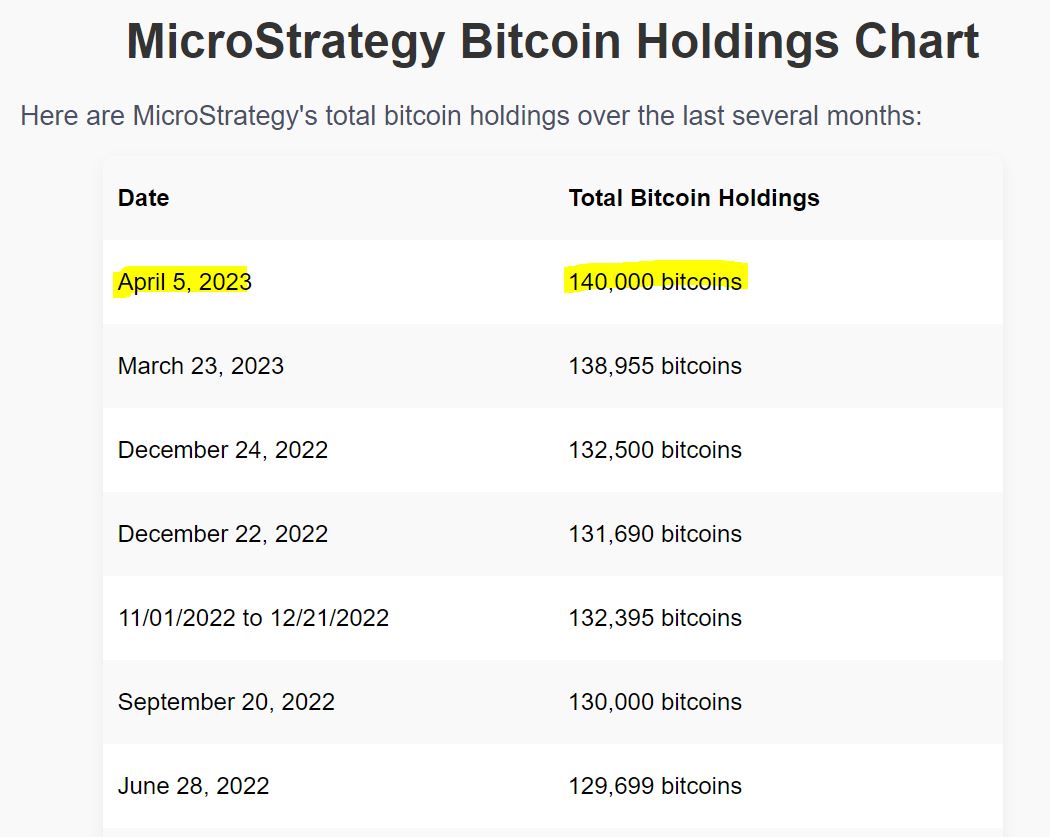
As of the latest official filings and public announcements in late 2024, MicroStrategy holds an astounding 252,220 Bitcoins. This figure represents more than 1% of the total 21 million Bitcoins that will ever exist. To put this in perspective, the value of these holdings fluctuates with the market, but at a Bitcoin price of $65,000, the company’s digital gold is worth approximately $16.4 billion.
Understanding the Acquisition History
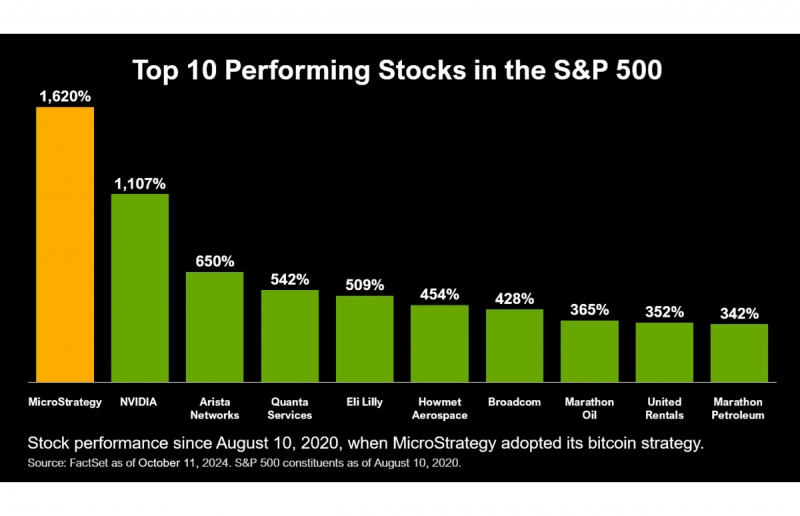
MicroStrategy began its Bitcoin journey in August 2020. At the time, the world was grappling with the economic fallout of the COVID-19 pandemic, and Michael Saylor viewed the traditional cash reserves of the company as a “melting ice cube” due to monetary inflation. The initial purchase of 21,454 BTC was a signal to the market that the company was moving away from fiat currency as its primary reserve asset. Since then, the company has consistently added to its holdings, regardless of whether the market was in a “crypto winter” or a bull run.
The Average Cost Basis
A critical metric for any investor following MicroStrategy is the “average cost basis.” Over its multi-year acquisition streak, MicroStrategy has spent billions of dollars. Currently, the company’s average purchase price sits at approximately $39,266 per Bitcoin. This means that as long as Bitcoin trades above this level, the company’s core investment strategy remains in the black. This cost basis is achieved through “dollar-cost averaging” on a corporate scale, allowing the firm to mitigate the impact of short-term price volatility.
The Concept of “BTC Yield”
In 2024, MicroStrategy introduced a new Key Performance Indicator (KPI) for its investors: BTC Yield. This is a unique financial metric that measures the percentage change over time in the ratio between the company’s total Bitcoin holdings and its assumed fully diluted shares outstanding. The goal is to demonstrate that the company is effectively increasing the “Bitcoin per share” for its stockholders, creating a value proposition that traditional software metrics cannot capture.
The Investment Thesis: Why a Software Company Chose Bitcoin
The decision to convert a corporate treasury into Bitcoin was not a whim; it was based on a rigorous macroeconomic thesis. In the “Money” niche, understanding this thesis is vital for anyone looking to comprehend why an enterprise would take on such significant volatility.
Bitcoin as “Digital Gold” and Property
Michael Saylor’s primary argument is that Bitcoin represents “digital property”—a superior form of collateral compared to cash, bonds, or even physical real estate. In an era of high government spending and currency debasement, MicroStrategy views Bitcoin as an apex predatory asset. Unlike fiat currency, which can be printed at will, Bitcoin has a fixed supply. This scarcity is the cornerstone of the company’s long-term financial strategy.
The Problem with Cash Reserves
Before 2020, MicroStrategy sat on hundreds of millions of dollars in cash. However, as global central banks increased the money supply, the purchasing power of that cash began to erode. From a business finance perspective, holding cash became a liability rather than an asset. By shifting to a Bitcoin standard, the company aimed to move its balance sheet from a “depreciating” currency to an “appreciating” asset class.
Institutional Adoption and Market Maturity
MicroStrategy’s entry into the market served as a catalyst for other institutions. By proving that a public company could successfully navigate the legal, accounting, and custodial hurdles of owning Bitcoin, they paved the way for others. The thesis suggests that as more institutions, and eventually nation-states, adopt Bitcoin, the demand will far outstrip the limited supply, leading to a long-term upward trajectory in value.
Financial Engineering: How MicroStrategy Funds Its Purchases

One of the most fascinating aspects of the MicroStrategy story is the sophisticated financial engineering used to acquire such a massive amount of Bitcoin. The company does not simply use its operating profits; it leverages the capital markets with surgical precision.
Convertible Senior Notes
The primary tool in MicroStrategy’s arsenal is the issuance of “convertible senior notes.” These are a type of debt security that can be converted into shares of the company’s stock at a later date. Because investors are often eager to gain indirect exposure to Bitcoin, MicroStrategy has been able to issue these notes at incredibly low interest rates—sometimes even at 0% or 0.625%. The company then takes the cash raised from these debt offerings and immediately purchases Bitcoin.
At-The-Market (ATM) Equity Offerings
In addition to debt, MicroStrategy utilizes “At-The-Market” equity programs. This allows the company to sell new shares of its common stock directly into the market at current prices. If the company’s stock is trading at a premium relative to the value of its Bitcoin holdings (often referred to as the “MSTR Premium”), the company can sell “expensive” shares to buy “cheap” Bitcoin. This process is accretive to shareholders, as it increases the amount of Bitcoin backing each remaining share.
Leveraging the Balance Sheet
Unlike a Bitcoin ETF, which is a passive vehicle, MicroStrategy is an active “operating company.” This status allows it to use its software business’s cash flows to service the interest on its debt. This creates a powerful synergy: the software business provides the stability and cash flow to maintain the debt, while the Bitcoin holdings provide the massive upside potential. This “infinite loop” of capital raising and Bitcoin acquisition has made MicroStrategy one of the most talked-about stocks on the Nasdaq.
Risks and the Reality of Corporate Volatility
While the MicroStrategy strategy has been immensely profitable during market upswings, it is not without significant risks. For any student of business finance, the risks associated with such a concentrated position are a critical part of the narrative.
Market Volatility and Margin Pressure
The most obvious risk is the price of Bitcoin itself. Because the company uses debt to acquire its holdings, a massive and sustained crash in the price of Bitcoin could theoretically put the company under financial pressure. While Michael Saylor has stated that the company’s debt is structured for the long term and that they have ample collateral to avoid “margin calls,” the market sentiment often turns bearish on MSTR when Bitcoin’s price drops significantly.
The “Proxy” Status vs. Spot ETFs
For years, MicroStrategy was the only way for institutional investors to gain exposure to Bitcoin through a traditional brokerage account. However, with the 2024 approval of Spot Bitcoin ETFs (like those from BlackRock and Fidelity), MicroStrategy faces new competition. Investors now have to decide whether they want the “pure” exposure of an ETF or the “leveraged” and “engineered” exposure provided by MicroStrategy.
Accounting and Regulatory Hurdles
Historically, accounting rules (specifically GAAP) required companies to treat Bitcoin as an “intangible asset.” This meant that if the price of Bitcoin dropped, the company had to take an impairment charge on its earnings, but if the price went up, they couldn’t report the gain until they sold. New shifts in FASB (Financial Accounting Standards Board) rules are moving toward “fair value” accounting, which will allow MicroStrategy to report its holdings at market value, potentially bringing more transparency and less earnings volatility to their financial statements.
The Future: MicroStrategy as a Bitcoin Development Company
As MicroStrategy continues to accumulate Bitcoin, its identity is evolving further. The company is no longer just a holder; it is becoming a developer and an advocate for the Bitcoin ecosystem.
Beyond the Treasury: Software Integration
The company is exploring ways to integrate Bitcoin’s “Lightning Network”—a layer-2 scaling solution—into its enterprise software products. This could include things like micro-payments for content, identity verification, and decentralized finance (DeFi) applications for the corporate world. This transition from “holder” to “developer” is intended to give the company intrinsic value beyond just the Bitcoin on its balance sheet.
The Long-Term Vision for 2030 and Beyond
Michael Saylor has frequently stated that he views MicroStrategy’s Bitcoin acquisition as a “forever” strategy. The goal is not to sell for a profit in the traditional sense, but to build a company that thrives on a sound-money standard. As long as the company can continue to access the capital markets and as long as Bitcoin maintains its status as a premier global asset, MicroStrategy will likely remain the largest corporate holder of Bitcoin in the world.
In conclusion, the 252,220 Bitcoins owned by MicroStrategy represent more than just a large investment; they represent a fundamental shift in how corporations view money, reserves, and the future of global finance. Whether this will be remembered as the greatest trade in corporate history or a cautionary tale of over-leverage remains to be seen, but for now, MicroStrategy stands as the undisputed titan of the corporate Bitcoin standard.
aViewFromTheCave is a participant in the Amazon Services LLC Associates Program, an affiliate advertising program designed to provide a means for sites to earn advertising fees by advertising and linking to Amazon.com. Amazon, the Amazon logo, AmazonSupply, and the AmazonSupply logo are trademarks of Amazon.com, Inc. or its affiliates. As an Amazon Associate we earn affiliate commissions from qualifying purchases.