
The humble substance of oil, in its myriad forms, is a silent yet pervasive driver of economic activity and personal wealth. From the global commodity markets to the engines powering our daily commutes, the industrial machinery fueling manufacturing, and even the cooking oils in our kitchens, oil plays a critical financial role. Far from being a mere aesthetic curiosity, the color of oil serves as an immediate, often vital, indicator of its quality, condition, and potential financial implications. For astute investors, diligent business managers, and fiscally responsible individuals, understanding the spectrum of oil colors translates directly into astute financial decisions, significant cost savings, and robust asset preservation.
The Palette of Performance: Oil Color as a Financial Indicator
Oil’s appearance offers a quick, albeit preliminary, diagnostic window into its state, with each hue holding specific financial relevance. Recognizing these visual cues can empower stakeholders to take timely action, safeguarding assets and optimizing expenditures.
Crude Oil: A Spectrum of Value
Crude oil, the foundational energy commodity, does not possess a uniform, deep black appearance. Its natural color varies significantly, ranging from very dark, almost opaque, to shades of brown, amber, or even a light reddish-yellow. These variations are not arbitrary; they are critical indicators of the oil’s composition, density, and impurity levels, all of which directly impact its market value and refining costs.
Lighter crude oils, often characterized by a more translucent amber or golden hue, typically signify a lower density (higher API gravity) and lower sulfur content (known as “sweet crude”). These characteristics make them easier and less expensive to refine into high-value products like gasoline, diesel, and jet fuel, commanding premium prices on global commodity markets such as Brent Crude and West Texas Intermediate (WTI). Conversely, darker, heavier crude oils usually indicate higher density (lower API gravity) and higher sulfur content (“sour crude”). Refining these grades requires more complex, energy-intensive processes, which translates to higher operational costs for refineries and, consequently, a lower market price for the raw material. Investors tracking energy futures, refiners making procurement decisions, and national economies reliant on oil exports must acutely understand these color-implied characteristics, as they fundamentally dictate revenue streams and infrastructure investments.
Motor Oil: The Lifeline of Your Assets
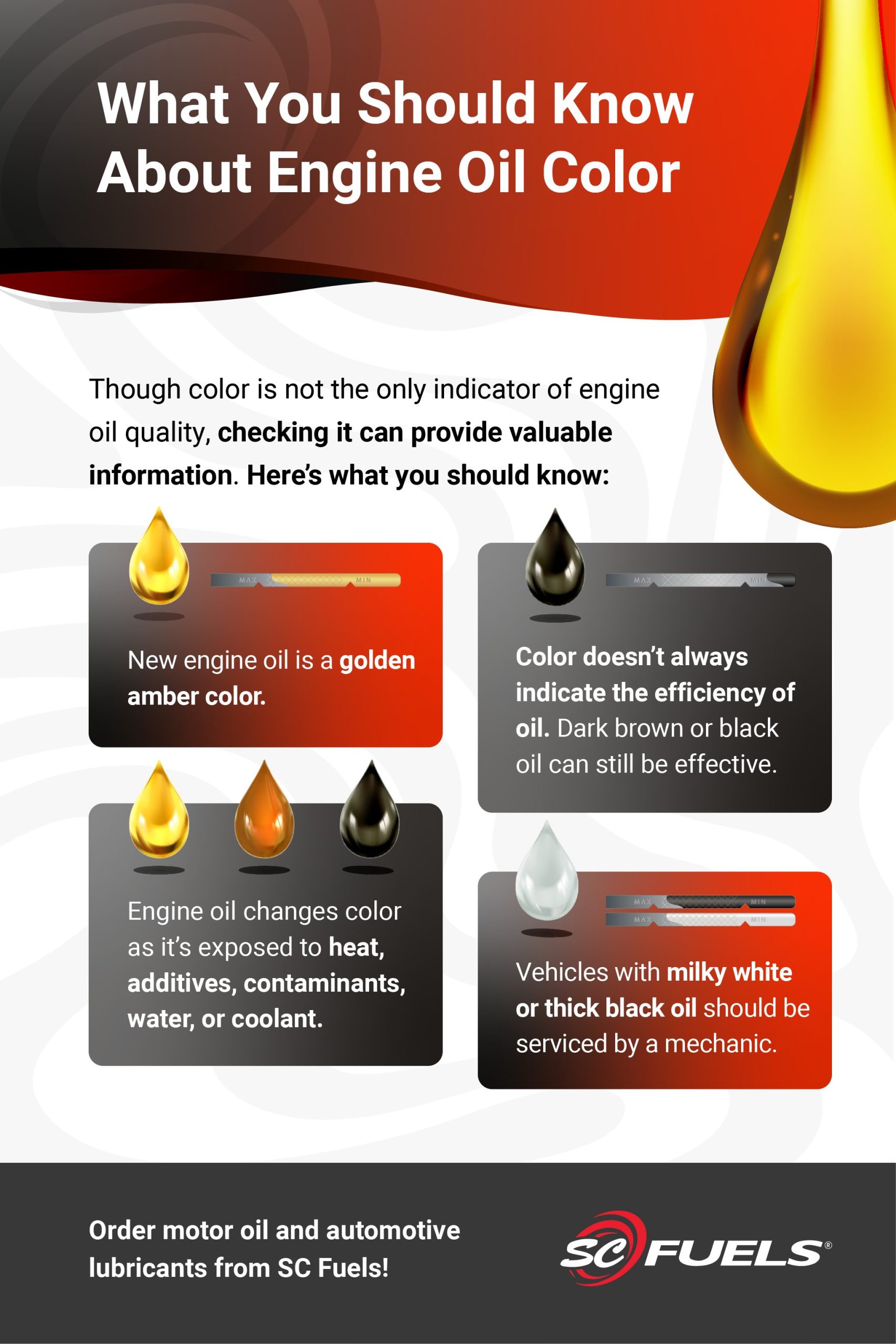
For personal vehicles, commercial fleets, and any machinery powered by internal combustion, motor oil is the lifeblood, lubricating, cooling, cleaning, and protecting critical components. New, unused motor oil typically presents as a clean, translucent amber or golden color, signifying its pristine chemical composition and full lubricating capabilities.
As motor oil circulates through an engine, it invariably darkens. This darkening is a normal and expected process, a sign that the oil is effectively performing its duties: absorbing combustion byproducts, soot, microscopic metal particles, and undergoing thermal degradation. For used oil, a dark brown or black color is generally acceptable, indicating it’s cleaning the engine as intended. The financial imperative arises when the color changes abnormally or at an unexpected rate. A sudden shift to a milky, frothy appearance often signals water or coolant contamination—a precursor to severe engine corrosion and lubrication failure. A greenish or bluish tint usually points to antifreeze leaks, which are highly detrimental to engine bearings and seals. Metallic flakes visible within the oil suggest critical internal wear, warning of impending catastrophic engine failure. Detecting these critical color changes early, through routine visual checks, can prevent extensive damage that could cost thousands in repairs or necessitate complete engine replacement, directly impacting an asset’s depreciation and an owner’s maintenance budget.
Cooking Oil: Quality on Your Plate and in Your Wallet
In the culinary world, oil color speaks volumes about freshness, quality, and processing. From extra virgin olive oil’s deep green to sunflower oil’s light yellow, each cooking oil possesses a characteristic initial hue that consumers associate with its purity and expected flavor profile.
For consumers, an unexpected cloudy appearance, an unusually dark shade, or a departure from the typical color of a specific cooking oil can indicate rancidity, spoilage, or even adulteration. Purchasing such oil represents wasted money and potentially introduces health risks. For businesses in the food industry—restaurants, caterers, and food manufacturers—maintaining the quality of cooking oils is paramount. Regular visual inspection of frying oils, for instance, is crucial. As cooking oil is repeatedly heated, it oxidizes and degrades, growing progressively darker and often developing a thicker consistency. This darkening signals a reduction in its performance, affecting the taste and quality of food, and indicating the need for replacement. Failing to replace degraded oil impacts product quality, customer satisfaction, and ultimately, a business’s reputation and profitability. Smart management of cooking oil, guided partly by color, ensures product integrity and minimizes costly waste.
Industrial Lubricants: Preserving Capital Assets
Industrial operations rely heavily on specialized lubricants—hydraulic fluids, gearbox oils, compressor oils, and more—to ensure the smooth, efficient, and extended operation of expensive machinery. These lubricants come in a variety of initial colors, from crystal clear to light amber, red, or even blue, depending on their base stock and additive packages.
As with motor oil, changes in the color of industrial lubricants are critical diagnostic signals with significant financial ramifications. Darkening, cloudiness, a milky appearance, or the presence of a metallic sheen in industrial oils are direct indicators of contamination (e.g., water ingress, coolant leaks, fuel dilution) or significant machinery wear. Ignoring these visual cues can lead to severe mechanical issues, unexpected equipment failure, and costly unscheduled downtime. In manufacturing, downtime can incur losses of thousands or even millions of dollars per day in lost production and repair costs. Proactive monitoring of lubricant color is a cornerstone of effective predictive maintenance programs, directly influencing operational expenditures and strategic capital expenditure planning for equipment replacement.
Decoding the Shades: What Different Colors Mean
A deeper understanding of specific color changes can offer more granular insights into the financial state and health of oil-dependent systems.
New vs. Used: The Expected Evolution
- New Oil: Always characterized by its specified, pristine color and clarity. This represents the oil at its peak performance potential, delivering maximum lubrication, protection, and operational efficiency, thereby providing the full financial value for its purchase price.
- Normally Used Oil: The natural darkening of oil over its service life is often a testament to its effectiveness. In an engine, for example, dark oil indicates it is successfully suspending and carrying away combustion byproducts and contaminants. In industrial settings, a gradual darkening can signify normal oxidation and wear particle absorption. As long as this darkening occurs within expected parameters for the oil’s age and operating conditions, it implies the oil is protecting the asset as intended, maximizing the return on the oil investment itself and deferring more significant expenditures.

Unfamiliar Hues: Warning Signs of Costly Issues
When oil exhibits colors outside its normal spectrum, it signals potentially severe underlying problems that demand immediate financial attention.
- Milky or Cloudy: This appearance almost invariably indicates water contamination. In engines or hydraulic systems, water compromises the oil’s lubricating film, promotes rust and corrosion, and can lead to catastrophic component failure, resulting in substantial repair or replacement costs. In cooking oil, cloudiness often signifies spoilage or bacterial growth, making it unfit for consumption and a direct financial loss.
- Metallic Sheen or Visible Specks: A glinting, metallic sheen or discernible metallic particles in the oil are severe warning signs. They indicate active and often critical wear of internal components (bearings, gears, piston rings). This foreshadows imminent mechanical failure, requiring extensive, expensive repairs, or even the complete write-off of the asset. The financial implications are massive, encompassing direct repair costs, lost productivity, and potential early capital expenditure on new equipment.
- Unusually Dark or Thick Too Quickly: If oil darkens or thickens much faster than expected, it can point to excessive heat, severe oxidation, or overwhelming contamination. This rapid degradation shortens the oil’s lifespan, reducing the financial return on the lubricant purchase and indicating undue stress on the engine or machinery, which accelerates component wear and eventually leads to costly repairs.
- Greenish or Bluish Tint (in motor oil/industrial lubricants): This unusual coloration typically points to coolant (antifreeze) contamination. Coolant is highly corrosive to engine bearings and seals, rapidly degrading them and leading to severe, often irreversible, engine damage. This represents a direct and immediate financial threat to the longevity and operational status of a vehicle or industrial asset.
- Fuel Contamination (in engine oil): While not always a distinct color, severe fuel dilution can lighten the oil’s appearance and significantly reduce its viscosity, rendering it less effective as a lubricant. This leads to accelerated wear of engine components, reduced fuel efficiency, and can even pose a fire hazard. Financially, it means increased operational costs, decreased asset lifespan, and potential safety liabilities.
The Financial Imperative: Proactive Monitoring and Maintenance
Integrating visual oil color checks into routine financial and operational management strategies offers tangible monetary benefits.
Preventing Costly Repairs and Downtime
Visual inspection of oil color stands as a primary, zero-cost, frontline diagnostic tool. The early detection of adverse changes in oil color allows for timely preventative action—whether it’s an immediate oil change, addressing a minor leak, or performing a targeted component inspection—before minor issues cascade into major, prohibitively expensive failures. For businesses reliant on heavy machinery or transport fleets, minimizing unexpected downtime is paramount, as every hour of idle equipment translates into lost revenue and increased operational expenditure. Proactive oil monitoring through simple visual cues is a critical strategy for mitigating these financial risks.
Optimizing Lifespan and Resale Value
Diligent maintenance, with proper oil management at its core, directly contributes to the extended operational lifespan of vehicles and machinery. Assets that are consistently well-maintained, as partly evidenced by healthy oil, suffer less wear and tear, deferring the need for costly capital expenditure on replacements. Furthermore, a robust maintenance history, often reflected in the condition of an asset’s fluids, significantly enhances its resale value. Prospective buyers are willing to pay more for assets demonstrably cared for, providing a higher return on investment when it’s time to upgrade or divest.
Informed Purchasing and Investment Decisions
The financial insights derived from oil color extend beyond maintenance.
- Commodities: For investors in the energy sector, understanding the nuances of crude oil grades, which are often inferred from properties like density and sulfur content (and sometimes visually linked to color), is fundamental to forecasting market movements and making informed investment decisions in oil futures and derivatives.
- Products: Consumers can leverage visual cues to verify the freshness and quality of cooking oils, ensuring they receive full value for their money and avoid purchasing spoiled or adulterated products.
- Used Assets: When acquiring used vehicles, machinery, or even property with oil-fired heating systems, inspecting the oil can offer invaluable insights into the previous owner’s maintenance practices and the current health of the asset. A clean, correctly colored oil suggests diligent care, potentially reducing future maintenance budgets, while problematic oil can inform negotiation tactics or signal a need to reconsider the purchase.
Beyond the Naked Eye: When Color Isn’t Enough
While oil color provides an excellent initial screening, its diagnostic capabilities have limits. Many critical changes in oil chemistry and contaminant levels are not discernible to the naked eye.
The Role of Laboratory Analysis
For a truly comprehensive financial management approach, visual inspection should be complemented by routine oil analysis from a specialized laboratory. These analyses provide precise data on critical parameters such as viscosity, elemental analysis (identifying wear metals like iron, copper, aluminum, and contaminants like silicon), total acid number (TAN), total base number (TBN), and particle counts. These detailed reports offer definitive insights into the oil’s remaining useful life, the wear rates of components, and the presence of microscopic contaminants.
The cost of a laboratory oil analysis is typically a minor expense compared to the potential financial benefits. It can prevent catastrophic equipment failure, enable the extension of oil drain intervals (saving on lubricant purchases and labor), and optimize maintenance schedules by transitioning from time-based to condition-based strategies. This data-driven approach significantly reduces operational costs and maximizes asset uptime and longevity.

Integrating Color Checks into Financial Planning
To fully leverage the financial insights provided by oil color, organizations and individuals should formalize its role within their financial planning and maintenance protocols. This involves establishing clear, standardized procedures for visual oil inspections across fleets, industrial equipment, and property assets. Training personnel to accurately recognize and interpret problematic oil colors is crucial, empowering them to initiate appropriate follow-up actions, such as immediate oil changes, targeted diagnostics, or submitting samples for lab analysis.
By integrating the findings from both routine visual checks and detailed laboratory analyses into budgeting processes for maintenance, spare parts procurement, and long-term capital expenditure planning, oil management transcends a simple operational task. It transforms into a strategic financial tool, underpinning robust asset management, minimizing unforeseen expenses, and ensuring optimal resource allocation. The color of oil, therefore, is not merely a visual characteristic but a powerful, accessible indicator of financial health and potential.
aViewFromTheCave is a participant in the Amazon Services LLC Associates Program, an affiliate advertising program designed to provide a means for sites to earn advertising fees by advertising and linking to Amazon.com. Amazon, the Amazon logo, AmazonSupply, and the AmazonSupply logo are trademarks of Amazon.com, Inc. or its affiliates. As an Amazon Associate we earn affiliate commissions from qualifying purchases.