
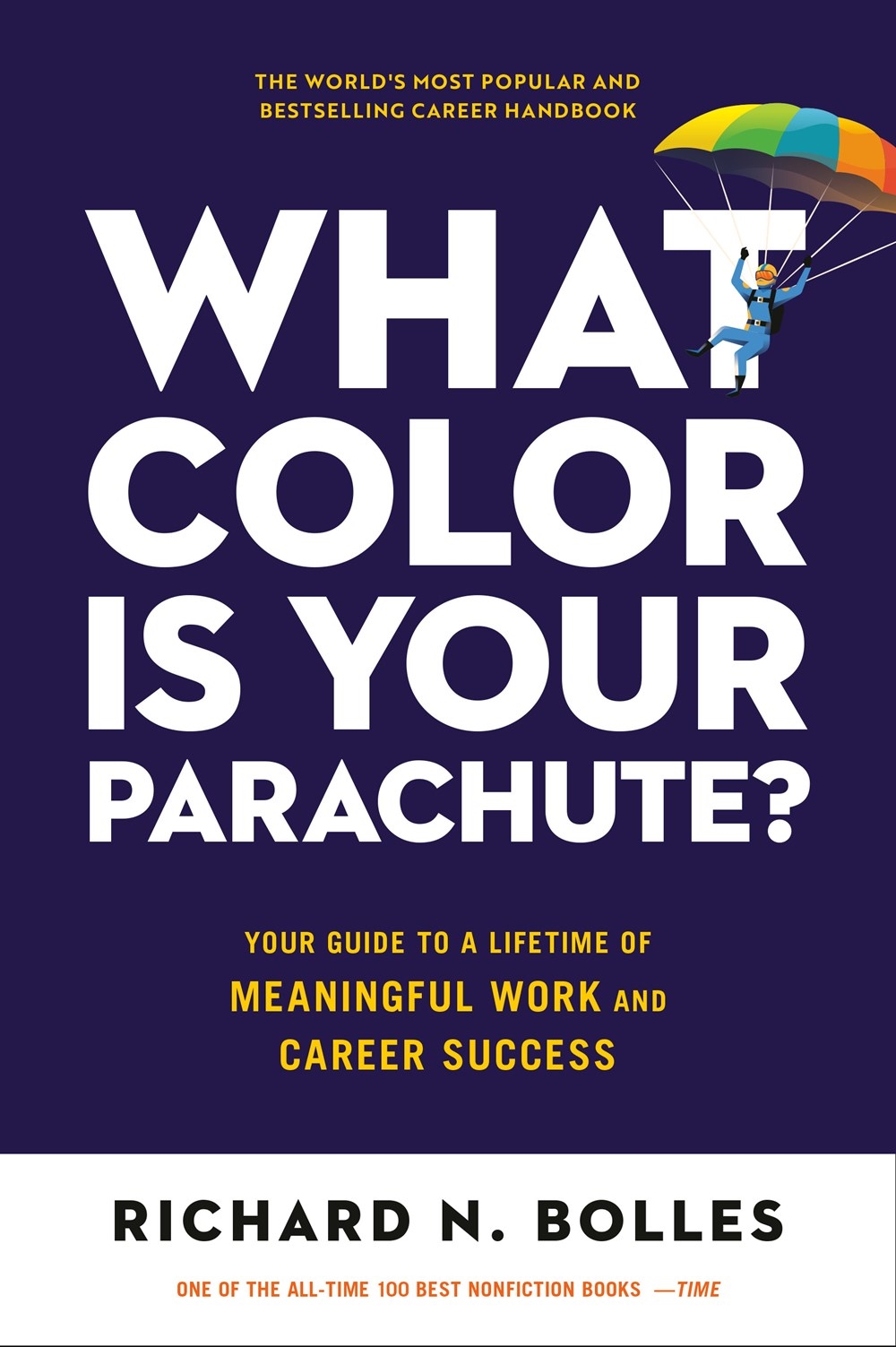
The enduring metaphor of “What Color Is Your Parachute?” speaks not merely to job hunting but to the profound journey of self-discovery and strategic presentation—a journey intrinsically linked to personal branding. In an increasingly competitive global marketplace, understanding and articulating your unique value proposition is paramount, whether you are an individual seeking career advancement or a corporation aiming to attract top talent. This exploration delves into how the core principles of identifying your “parachute color” translate directly into the sophisticated art and science of personal and corporate branding, offering a framework for designing and deploying a professional identity that resonates powerfully.

Beyond the Job Search: The Genesis of Your Personal Brand
The original intent of identifying one’s “parachute color” was to guide individuals toward fulfilling work by understanding their true skills, passions, and desired working conditions. In the realm of branding, this translates into the foundational phase of self-discovery, which is crucial for building an authentic personal brand. It’s an inward journey before an outward projection, ensuring that the brand you present is a true reflection of your capabilities and aspirations.
Self-Inventory as Brand Discovery
Before a brand can be designed, its core essence must be understood. For an individual, this means a thorough self-inventory, much like the rigorous exercises prescribed in the “Parachute” methodology. This involves systematically cataloging not just technical skills and experience, but also identifying transferable skills, innate talents, preferred work environments, and deeply held values. These elements form the raw material of a personal brand. What motivates you? What problems do you inherently enjoy solving? What unique perspectives do you bring to the table? Answering these questions creates a detailed profile, revealing the “colors” that define your professional palette. This intensive introspection prevents the creation of a superficial brand that lacks depth or authenticity, ensuring that the brand identity is built on a solid foundation of self-awareness.
Defining Your Unique Value Proposition (UVP)
From the self-inventory emerges the unique value proposition (UVP). Just as a company articulates why its product or service stands out, an individual’s UVP defines what makes them distinct and indispensable. It’s not just a list of skills; it’s the benefit of those skills to an employer, client, or collaborator. For example, instead of merely stating “I am a project manager,” a UVP might articulate, “I streamline complex projects with cross-functional teams, consistently delivering ahead of schedule and under budget, ensuring operational efficiency and stakeholder satisfaction.” This statement encapsulates the individual’s “color”—their specific blend of expertise, approach, and proven results. For a corporate brand, a clear UVP differentiates it from competitors, explaining precisely what unique advantage it offers to its target market. For personal branding, it answers the critical question: “Why choose me?”
Crafting Your Brand Narrative and Visual Identity
Once the core identity and UVP are established, the next step in personal branding, mirroring corporate identity development, is to craft a compelling narrative and translate it into a consistent visual and communicative style. This stage is about packaging the “color” of your parachute into a recognizable and memorable form.
Storytelling Your Professional Journey
Every strong brand has a compelling story. For an individual, this involves weaving together experiences, achievements, challenges overcome, and lessons learned into a coherent and engaging narrative that supports the UVP. This isn’t just a chronological resume; it’s a strategic communication of who you are, what you stand for, and where you’re headed. How did your diverse experiences shape your unique “color”? What moments exemplify your core values or problem-solving approach? This narrative is essential for interviews, networking conversations, and online profiles, allowing others to connect with your brand on an emotional and intellectual level. It moves beyond mere qualifications to create a human connection, making your brand more relatable and memorable.
The “Color” of Your Brand: Consistency in Presentation
The “color” of your parachute, once defined, must be consistently applied across all touchpoints. This is the essence of brand design. For an individual, this means ensuring that your LinkedIn profile, personal website, resume, cover letters, email signature, and even your professional attire and demeanor during virtual and in-person interactions all reflect a cohesive identity. Is your communication style consistent with your brand promise? Do your digital assets project the desired image of professionalism, innovation, or reliability? Just as a corporate brand maintains strict guidelines for logo usage, typography, and messaging to ensure instant recognition and trust, a personal brand demands meticulous attention to detail in presentation. Inconsistency dilutes impact and can undermine credibility, signaling a lack of clarity in one’s own identity.
Marketing Your Personal Brand in a Competitive Landscape
Having defined and designed your personal brand, the final stage is its strategic deployment and marketing. In a world saturated with information, merely having a strong brand isn’t enough; it must be actively promoted and positioned to reach the right audiences.

Strategic Networking and Digital Presence
Effective personal branding requires strategic outreach. Networking, both online and offline, becomes an act of brand ambassadorship. Each interaction is an opportunity to articulate your UVP and share your brand narrative. LinkedIn, personal websites, professional blogs, and targeted social media platforms are not just repositories of information but active channels for demonstrating expertise, engaging in industry discussions, and showcasing thought leadership. Regular content creation, strategic commenting, and active participation in relevant communities reinforce your brand identity and expand your reach. This proactive engagement positions you as an expert in your field, attracting opportunities rather than simply waiting for them to appear. The digital footprint must be curated to reflect and amplify the “color” of your parachute, making it visible to those who need your specific value.
Adapting Your Brand for Different Audiences
While consistency is key, intelligent adaptation is equally important. Just as a corporate brand might tailor its messaging for different market segments, an individual must learn to subtly adjust their brand presentation for various audiences. The “color” remains the same, but the emphasis might shift. When speaking to a potential employer, the focus might be on problem-solving skills and team collaboration. When addressing a client, it might be on innovation and return on investment. This doesn’t mean being inauthentic; it means understanding the audience’s needs and highlighting the aspects of your personal brand that are most relevant and compelling to them, without compromising your core identity. It’s about speaking their language while remaining true to your own brand essence.
Corporate Resonance: Aligning Personal Brand with Organizational Identity
The principles of “What Color Is Your Parachute?” extend beyond individual career strategy into the realm of corporate identity and talent management. Organizations are increasingly recognizing that the strength of their corporate brand is intricately linked to the collective personal brands of their employees.
Internal Branding and Value Alignment
For an organization, understanding the “color” of its employees’ parachutes is crucial for internal branding. When individual employees clearly understand their unique contributions and how these align with the company’s mission and values, they become powerful internal brand ambassadors. This alignment fosters a stronger corporate culture, increases employee engagement, and reduces turnover. Companies that invest in helping employees articulate their personal UVP and connect it to organizational goals create a workforce that is not only productive but also deeply committed to the corporate brand. This synergy ensures that the company’s external brand promise is consistently delivered through the actions and attitudes of its people.
The Impact on Corporate Culture and Recruitment
A clear understanding of personal brands within a corporate context significantly impacts recruitment and talent acquisition. Organizations can more effectively identify candidates whose personal “parachute color” aligns with the company’s culture and specific role requirements. This goes beyond matching skills to job descriptions; it involves assessing cultural fit, values alignment, and a candidate’s inherent drive and working style. By encouraging prospective employees to define their personal brand, companies can make more informed hiring decisions, leading to a more cohesive, high-performing workforce. Moreover, a company known for fostering individual growth and personal branding can enhance its employer brand, attracting top-tier talent seeking environments where their unique contributions are valued and cultivated.
The Evolving Parachute: Sustaining and Refreshing Your Brand
Just as career paths are rarely linear, personal and corporate brands are not static entities. They require continuous attention, adaptation, and occasional refreshment to remain relevant and impactful. The “color” of your parachute may deepen, gain new hues, or require re-evaluation as you grow and evolve.
Continuous Learning and Skill Development
Sustaining a strong personal brand means committing to lifelong learning and skill development. The world of work is constantly changing, and a brand that fails to adapt risks becoming obsolete. Regularly acquiring new knowledge, mastering new technologies, and refining existing skills adds new dimensions to your “parachute color,” enhancing your UVP and keeping your brand competitive. This continuous evolution should be strategically communicated through your brand narrative, demonstrating adaptability and a forward-thinking mindset. For corporate brands, this translates to continuous innovation, R&D, and employee training to ensure the company’s offerings remain leading-edge.
Measuring Brand Impact and Iteration
Finally, effective branding, whether personal or corporate, requires regular assessment and iteration. How is your personal brand being perceived? Are you attracting the right opportunities? Are your efforts yielding the desired results? This involves soliciting feedback, analyzing networking successes, and tracking engagement with your digital presence. Based on this feedback, adjustments can be made to your brand narrative, presentation, or outreach strategies. Just as a company conducts market research and adapts its products, an individual must be prepared to refine their personal brand to ensure it remains authentic, relevant, and powerful in guiding their professional trajectory. The “color” of your parachute is not a fixed destination but a dynamic, evolving reflection of your unique and valuable professional identity.
aViewFromTheCave is a participant in the Amazon Services LLC Associates Program, an affiliate advertising program designed to provide a means for sites to earn advertising fees by advertising and linking to Amazon.com. Amazon, the Amazon logo, AmazonSupply, and the AmazonSupply logo are trademarks of Amazon.com, Inc. or its affiliates. As an Amazon Associate we earn affiliate commissions from qualifying purchases.