
The Vehicle Identification Number (VIN) is more than just a serial number; it’s a meticulously structured digital fingerprint for every car, truck, and motorcycle. For owners, enthusiasts, or even potential buyers, understanding how to leverage this powerful identifier to access specific vehicle details, including its original factory color, is a prime example of accessible technology at work. In an era where data is paramount, the VIN serves as a sophisticated key to a vast digital repository of automotive information.
The Digital Backbone of Vehicle Identification: Understanding the VIN
At its core, the VIN is a 17-character alphanumeric code that uniquely identifies each vehicle. Standardized by the ISO 3779 in 1979, this code is a testament to the power of structured data in facilitating global commerce, regulation, and information retrieval. While its primary role is often associated with theft prevention and recalls, its technological utility extends to revealing a wealth of specific attributes, including the precise factory color.
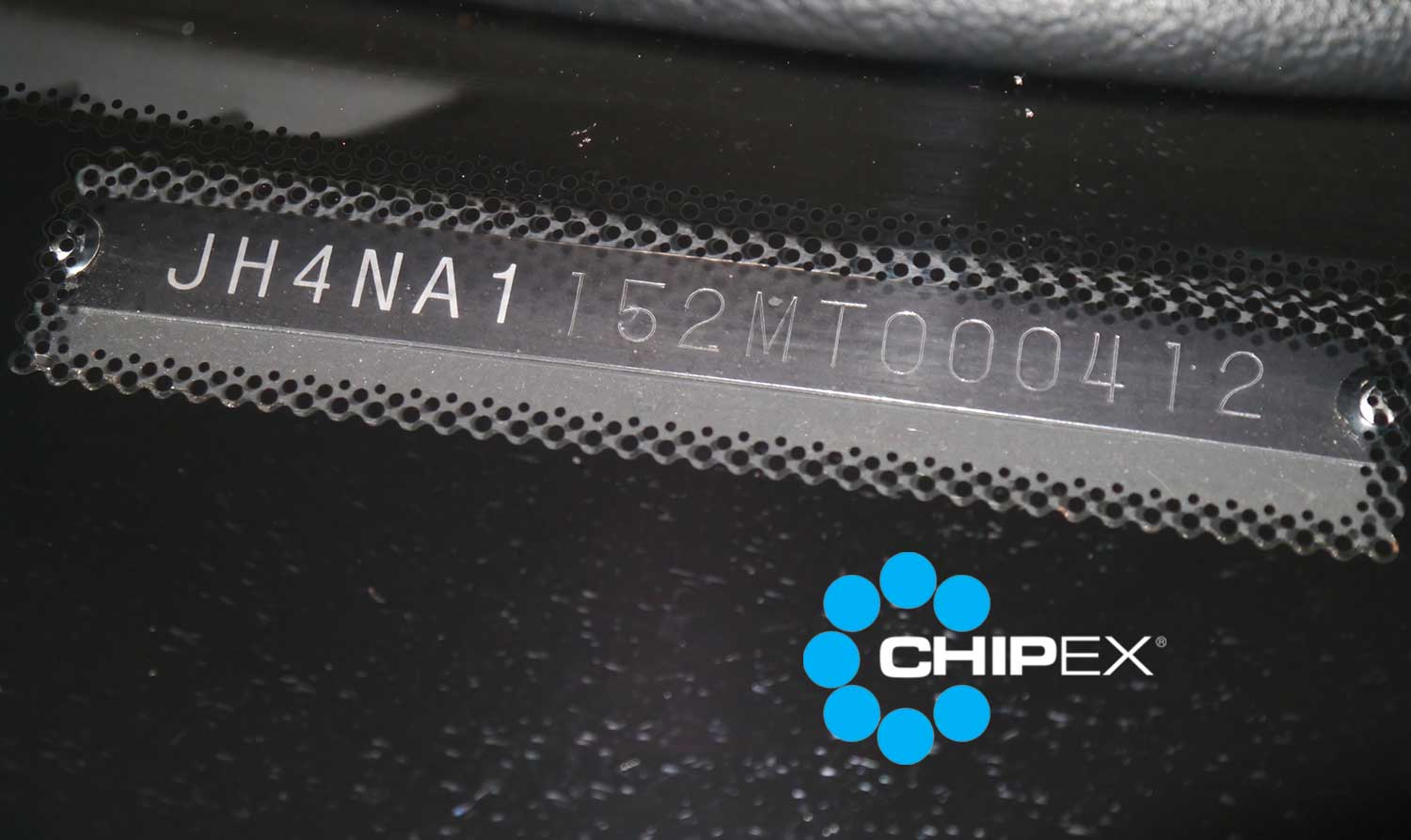
Decoding the VIN’s Structure
Each segment of the 17-character VIN holds specific information, meticulously encoded to represent different aspects of the vehicle’s origin and characteristics:
- World Manufacturer Identifier (WMI) – Characters 1-3: These three characters identify the country of origin, the manufacturer, and the type of vehicle. For example, a “1” or “4” might indicate the U.S.
- Vehicle Descriptor Section (VDS) – Characters 4-9: This section details the vehicle type, body style, engine type, model series, and restraint system. It’s a highly manufacturer-specific segment, often requiring access to proprietary decoding algorithms. Crucially, it’s within this section, or in conjunction with it, that the manufacturer often encodes information related to trim levels and other core specifications that might indirectly lead to color data.
- Vehicle Indicator Section (VIS) – Characters 10-17: This final section is the unique identifier for the specific vehicle, containing the model year, the assembly plant, and the sequential production number. The model year (character 10) is particularly important for historical data lookups, as paint codes often vary by year and model.
The ability to extract specific data like car color from the VIN relies on sophisticated databases that map these alphanumeric codes to descriptive attributes. These databases are maintained by manufacturers, regulatory bodies, and third-party data providers, creating an intricate web of interconnected information.
Why Color Data Matters Beyond Aesthetics
While the aesthetic appeal of a car’s color is undeniable, its digital representation and accurate identification hold significant practical implications powered by technology:
- Insurance Claims and Repairs: Accurate color identification is critical for paint matching during repairs after an accident. Using the VIN to retrieve the exact factory paint code ensures a seamless repair, leveraging digital precision to restore the vehicle’s original appearance.
- Resale Value and Authentication: Knowing the original factory color can influence a vehicle’s market value. A unique or popular original color might command a premium, and authenticating that the vehicle retains its original finish (or was professionally repainted to the original specification) adds credibility during sales transactions.
- Customization and Accessories: For owners looking to purchase color-matched accessories, touch-up paint, or even undertake a full repaint, the VIN provides the definitive starting point for accurate color formulation.
- Law Enforcement and Security: While less about color, the VIN’s role in identifying stolen vehicles, tracking ownership changes, and assisting in accident investigations is fundamental, highlighting its broader importance as a digital security tool.
Leveraging Online Tools and Databases for VIN Lookups
The digital age has democratized access to VIN decoding, moving it from specialized automotive departments to easily accessible online platforms. These tools, powered by robust databases and sophisticated search algorithms, allow anyone with a VIN to uncover a vehicle’s detailed specifications, including its color.
Official vs. Third-Party VIN Decoders
When searching for vehicle information via VIN, users typically encounter two main categories of digital tools:
- Manufacturer-Specific Portals: Many automotive manufacturers offer VIN lookup tools on their official websites. These portals often provide the most accurate and comprehensive data for their specific brands, drawing directly from their proprietary production databases. The information available might include original build sheets, warranty details, and, crucially, the precise paint code and color name. Access to these might sometimes require proof of ownership or be limited to certain types of information.
- Third-Party VIN Decoder Websites and Apps: A vast ecosystem of independent websites and mobile applications has emerged, offering VIN decoding services. These platforms aggregate data from various sources, including public records, regulatory databases, and partnerships with manufacturers or data providers. While often user-friendly and convenient, the depth and accuracy of the information can vary. Reputable third-party decoders typically link directly to manufacturer data or highly reliable historical archives. They often provide not just the color, but also detailed specifications, recall information, accident history, and sometimes even estimated market value.
Step-by-Step: Using a VIN Decoder
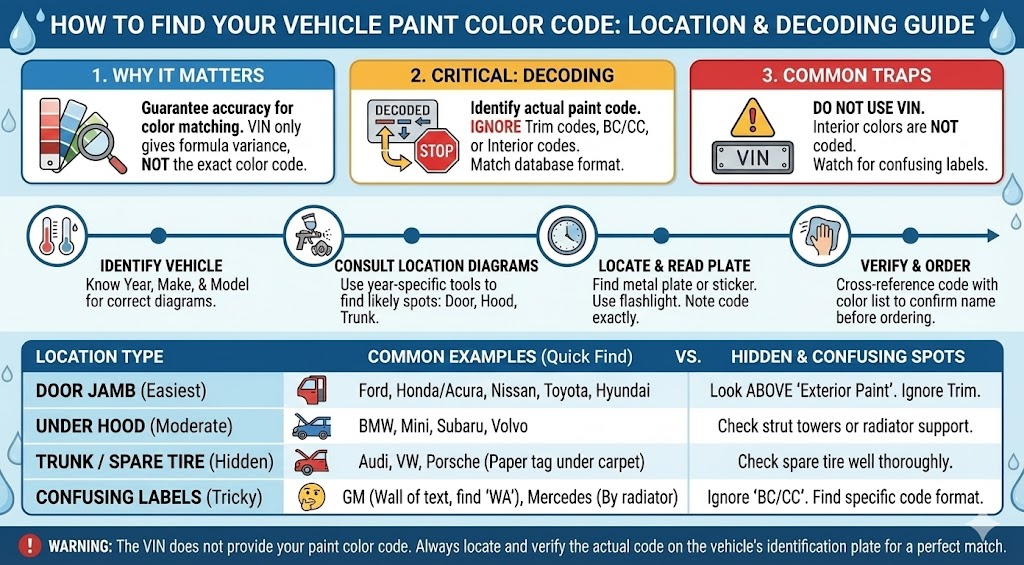
The process of using a digital VIN decoder is generally straightforward, embodying user-friendly interface design principles:
- Locate the VIN: The VIN is typically found on the driver’s side dashboard (visible through the windshield), on the driver’s side door jamb, or on the vehicle’s registration or insurance documents.
- Choose a Decoder: Select a reputable online VIN decoder. For the most accurate color information, starting with the manufacturer’s official site is often recommended if available. Otherwise, choose a well-reviewed third-party service.
- Enter the VIN: Input the 17-character VIN accurately into the designated field. Precision is key, as a single incorrect character can lead to erroneous results.
- Initiate Search: Click the “Decode,” “Search,” or “Submit” button. The system then queries its backend databases.
- Review Results: The decoder will present a comprehensive report. Navigate through the report to find the “Exterior Color,” “Paint Code,” or similar designation. The report may provide both the marketing name of the color (e.g., “Deep Ocean Blue”) and its alphanumeric paint code (e.g., “B52”).
The Technology Behind Color Data Retrieval
The ability to instantly retrieve a vehicle’s color from its VIN is a testament to sophisticated data management, database architecture, and secure API integrations. This process is far more complex than a simple text search.
OEM Databases and API Integrations
Automotive manufacturers maintain vast, proprietary databases that store the complete build specifications for every vehicle they produce. When a VIN is entered into a decoding system, an API (Application Programming Interface) request is typically sent to these backend databases (directly for manufacturer sites, or through licensed data providers for third-party tools). The API acts as a secure digital messenger, retrieving the specific data associated with that VIN, including the paint code, which is then translated into a human-readable color name. This ensures that the color information is retrieved directly from the source, minimizing potential errors.
Ensuring Data Accuracy and Digital Security
The integrity of VIN data is paramount. Technologies like robust encryption protocols, secure API gateways, and stringent data access controls are employed to protect this sensitive information. For users, it’s important to use reputable VIN decoding services that prioritize digital security and clearly outline their data privacy policies. While sharing a VIN generally doesn’t expose personal data, choosing secure platforms prevents potential data breaches or the misuse of aggregated vehicle information. Data accuracy is maintained through continuous updates from manufacturers and verification processes, ensuring that historical records align with current production data.
Advanced Applications and Future Trends in VIN Data
The technological landscape surrounding VIN data is continually evolving, moving beyond simple lookups to more integrated and intelligent applications. The future promises even more dynamic and proactive uses of this powerful identifier.
Integrating VIN Data with Smart Car Ecosystems
As vehicles become increasingly connected and integrated into broader smart ecosystems, the VIN will serve as a central identifier for a multitude of services. Imagine a future where:
- Proactive Maintenance: Your car’s onboard diagnostics system, linked to its VIN, proactively orders specific touch-up paint when it detects a scratch, knowing the exact color code.
- Personalized In-Car Experiences: Infotainment systems could offer color-coordinated themes or even suggest destinations based on the vehicle’s aesthetic profile, all triggered by VIN-derived data.
- Automated Services: Parking systems could recognize your vehicle by VIN, cross-reference its dimensions and color, and direct you to a perfectly sized, pre-booked spot, even suggesting complementary car wash services based on its finish.
These integrations leverage advanced data analytics and IoT (Internet of Things) principles, making the vehicle not just a mode of transport but an active participant in a connected digital world, all rooted in its unique VIN.

AI for Enhanced Vehicle History Reports
Artificial intelligence (AI) and machine learning (ML) are poised to revolutionize how VIN data is processed and interpreted. While current VIN decoders provide factual data, AI could:
- Predictive Analytics: Analyze patterns in VIN data to predict common issues for specific models and colors, offering proactive advice to owners.
- Anomaly Detection: Identify discrepancies in vehicle history reports that might suggest undisclosed modifications or damage, enhancing the due diligence process for buyers. For example, if a VIN indicates a specific original color, but photographic evidence or other data suggests a complete repaint that isn’t documented, AI could flag this as a potential inconsistency.
- Natural Language Processing (NLP): Improve the interpretation of unstructured data within service records, linking it more effectively to specific VIN attributes like color.
The VIN, a seemingly simple alphanumeric code, stands as a cornerstone of automotive technology. Its ability to unlock precise vehicle details, from engine specifications to the exact shade of paint, exemplifies the power of structured data and sophisticated digital tools in modern life. As technology continues to advance, the VIN’s role as a digital key will only grow, enabling smarter, more integrated, and more insightful interactions with our vehicles.
aViewFromTheCave is a participant in the Amazon Services LLC Associates Program, an affiliate advertising program designed to provide a means for sites to earn advertising fees by advertising and linking to Amazon.com. Amazon, the Amazon logo, AmazonSupply, and the AmazonSupply logo are trademarks of Amazon.com, Inc. or its affiliates. As an Amazon Associate we earn affiliate commissions from qualifying purchases.