
In the intricate ecosystem of modern automotive technology, every system plays a critical role in ensuring optimal performance and longevity. Among these, the engine’s cooling system stands as a silent guardian, preventing thermal overload and maintaining the delicate operational temperature range. When this vital system falters, a coolant leak is often the most visible—and critical—symptom. Identifying the color of this leaking fluid isn’t just a trivial observation; it’s a primary diagnostic clue, offering insights into your vehicle’s specific coolant type, potential compatibility issues, and the urgency of the repair. This guide delves into the various hues of automotive coolants, transforming a seemingly simple puddle into a powerful piece of information for troubleshooting your prized automotive gadget.

The Digital Diagnostics of Automotive Health: Understanding Your Coolant System
Think of your vehicle as a highly sophisticated, mobile computer running complex algorithms to manage power, efficiency, and safety. Within this system, the engine is the central processing unit, and just like any high-performance processor, it generates significant heat. The cooling system acts as its dedicated thermal management unit, circulating coolant through the engine block, cylinder head, and radiator to dissipate excess heat into the ambient air. Without proper cooling, your engine would quickly overheat, leading to catastrophic damage—a critical system failure that can render your vehicle unusable.
Modern vehicles often integrate sophisticated digital sensors that alert drivers to rising engine temperatures or low coolant levels. While these digital warnings are invaluable, a visible coolant leak provides a direct, tangible indication of a breach in the system’s integrity. Understanding the characteristics of the fluid leaking from your vehicle empowers you to make informed decisions, whether it’s a quick top-off or an immediate service appointment. Identifying the color of the leak is the first step in this analog diagnostic process, supplementing your vehicle’s onboard digital alerts with critical physical evidence.
Decoding the Rainbow: Common Coolant Colors and Their Meanings
The automotive industry has evolved to use a variety of coolant formulations, each engineered with specific additives and chemical properties tailored for different engine designs and materials. These variations are often distinguished by their color, a convention established to prevent accidental mixing of incompatible types, which can lead to chemical reactions, sludge formation, and severe damage to the cooling system.
Traditional Green (IAT – Inorganic Additive Technology)
Historically, green coolant has been the most common type, particularly in older vehicles manufactured before the mid-1990s. This formulation, known as Inorganic Additive Technology (IAT), uses silicates and phosphates as corrosion inhibitors. These additives create a protective layer on metal surfaces within the cooling system.
- Characteristics: Typically a vibrant lime green. It has a relatively shorter lifespan, generally requiring replacement every two to three years or 30,000–50,000 miles.
- Significance: If you see a bright green fluid leaking, it strongly suggests your vehicle is older or uses an older coolant specification. It’s crucial to ensure you replace it with green IAT coolant to avoid compatibility issues. A leak of this color might indicate a typical wear-and-tear issue in hoses, gaskets, or the radiator, common in older systems where seals may have hardened.
Orange/Red/Pink (OAT – Organic Acid Technology)
As engine technologies advanced, particularly with more aluminum components, Organic Acid Technology (OAT) coolants emerged. These formulations use organic acids as corrosion inhibitors, offering a longer service life and better protection for aluminum components compared to IAT coolants.
- Characteristics: Often found in shades of orange, red, or sometimes pink (as seen with Honda/Acura Type 2 coolant, which is blue when new but can appear pinkish when diluted or older). Dex-Cool is a well-known orange OAT coolant used by General Motors. These coolants typically last much longer, up to five years or 150,000 miles.
- Significance: An orange or red leak often points to a vehicle from the late 1990s onward, particularly many GM, Ford, and Chrysler models, and some import brands. If you’re seeing this color, it’s vital to refill or replace with a compatible OAT coolant. Mixing OAT with IAT coolants can lead to gelling, clogging, and severe damage. The longer life of OAT coolants means a leak might indicate a more sudden component failure rather than gradual degradation.
Blue/Purple/Turquoise (HOAT – Hybrid Organic Acid Technology)
Hybrid Organic Acid Technology (HOAT) coolants represent a bridge between IAT and OAT formulations, incorporating both inorganic silicates and organic acids. This hybrid approach offers the benefits of both—quick-acting silicate protection and the long-lasting corrosion inhibition of organic acids.
- Characteristics: Commonly found in blue, turquoise, or sometimes purple hues. Many European manufacturers (like BMW, Mercedes-Benz, Volkswagen) and some Asian manufacturers (like Hyundai, Kia, Mazda, Ford with their “Motorcraft Gold”) specify HOAT coolants. These also boast an extended service life, similar to OAT coolants.
- Significance: A blue or purple leak generally indicates a modern vehicle, often European or certain Asian models, that requires a HOAT formulation. These coolants are designed for modern engine alloys and cooling system materials. A leak of this color demands immediate attention to prevent engine damage, and the replacement fluid must be a compatible HOAT type. The blend of protective chemistries in HOAT coolants suggests a leak could stem from various points, from radiator end tanks to hose connections, where system integrity might have been compromised.
Yellow/Clear (Universal or Dex-Cool Compatible)
The automotive aftermarket has introduced “universal” or “all-makes, all-models” coolants, often colored yellow or sometimes appearing nearly clear. These are marketed as compatible with various coolant types.
- Characteristics: Can range from a translucent yellow to almost colorless. While convenient, the term “universal” can be misleading. Many are essentially OAT or HOAT formulations with specific additives to broaden their compatibility.
- Significance: If you observe a yellow or clear leak, it’s particularly important to verify the exact type of coolant previously used in your vehicle. Relying solely on “universal” claims without understanding the original coolant’s specification can lead to problems. In some cases, a very clear leak might simply be water, especially if someone has recently topped off the system with distilled water without adding the proper coolant concentrate. Always cross-reference with your vehicle’s owner’s manual for the precise coolant specification to avoid costly errors.
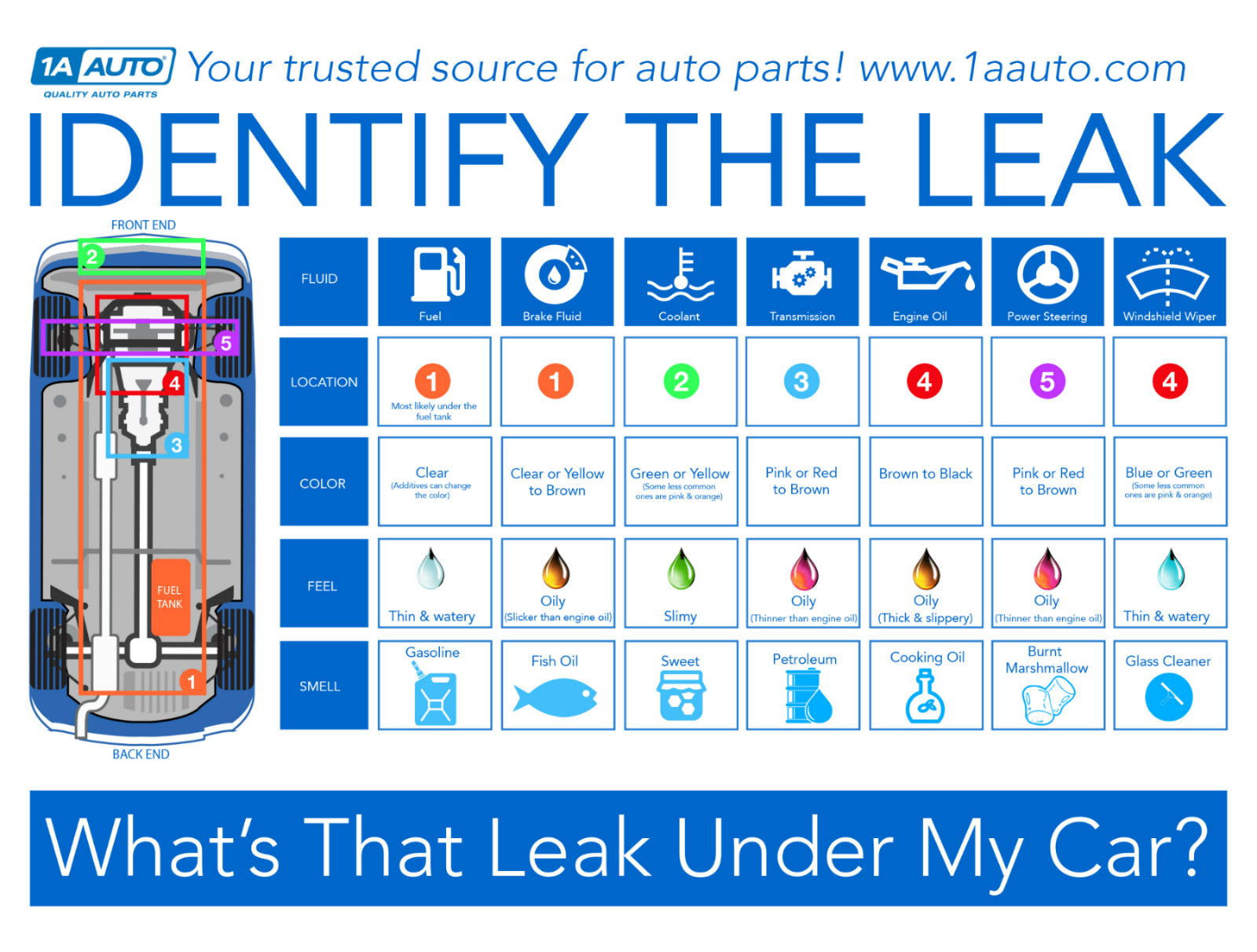
Pinpointing the Problem: Beyond Color to Location and Texture
Once you’ve identified the color of the leak, the next crucial step in your diagnostic process is to determine its source. The location of the puddle, combined with the fluid’s texture and smell, can provide further invaluable clues. This systematic approach is key to accurate troubleshooting, much like debugging a complex software application by tracing error messages to their origin.
Location, Location, Location
The exact spot where the coolant is pooling can narrow down the potential culprit components:
- Under the Hood (Top Front): A leak from the radiator cap, upper radiator hose, or the radiator’s top tank is likely. Check for cracks, loose clamps, or a faulty cap.
- Under the Hood (Engine Side): Leaks near the engine block could indicate issues with the water pump (often identified by a weep hole), thermostat housing, or various engine gaskets. Valve cover gaskets can sometimes leak fluid that appears similar, but a coolant leak typically has a sweet smell.
- Under the Car (Central/Front): A puddle under the engine area suggests a leak from the radiator, lower radiator hose, water pump, or a main coolant pipe. Look for drips directly beneath these components.
- Under the Car (Rear): While less common, a leak further back might point to a heater hose or a heater core issue, though these are more likely to manifest inside the cabin.
- Inside the Cabin: If you notice a sweet smell inside your car, steamy windows, or a damp carpet on the passenger side floor, it’s a strong indicator of a leaking heater core—a component that uses engine coolant to heat the cabin. This is a more involved repair but is crucial for climate control and defogging.
Texture and Smell: Additional Diagnostic Cues
Beyond color and location, the physical properties of the fluid itself offer further distinction:
- Slippery Feel: Coolant typically feels somewhat slippery or oily to the touch, distinct from water. This is due to its ethylene glycol or propylene glycol base.
- Sweet Smell: Coolant has a distinct, sweet odor. This is perhaps one of the strongest indicators that the leaking fluid is indeed coolant. Be cautious, however, as inhaling too much can be harmful.
- Dried Residue: After evaporating, coolant often leaves behind a powdery, crusty, or crystalline residue, especially around the edges of a leak source. This is a tell-tale sign of a persistent, even if slow, leak. This residue can be white, pinkish, green, or orange, matching the original coolant color.
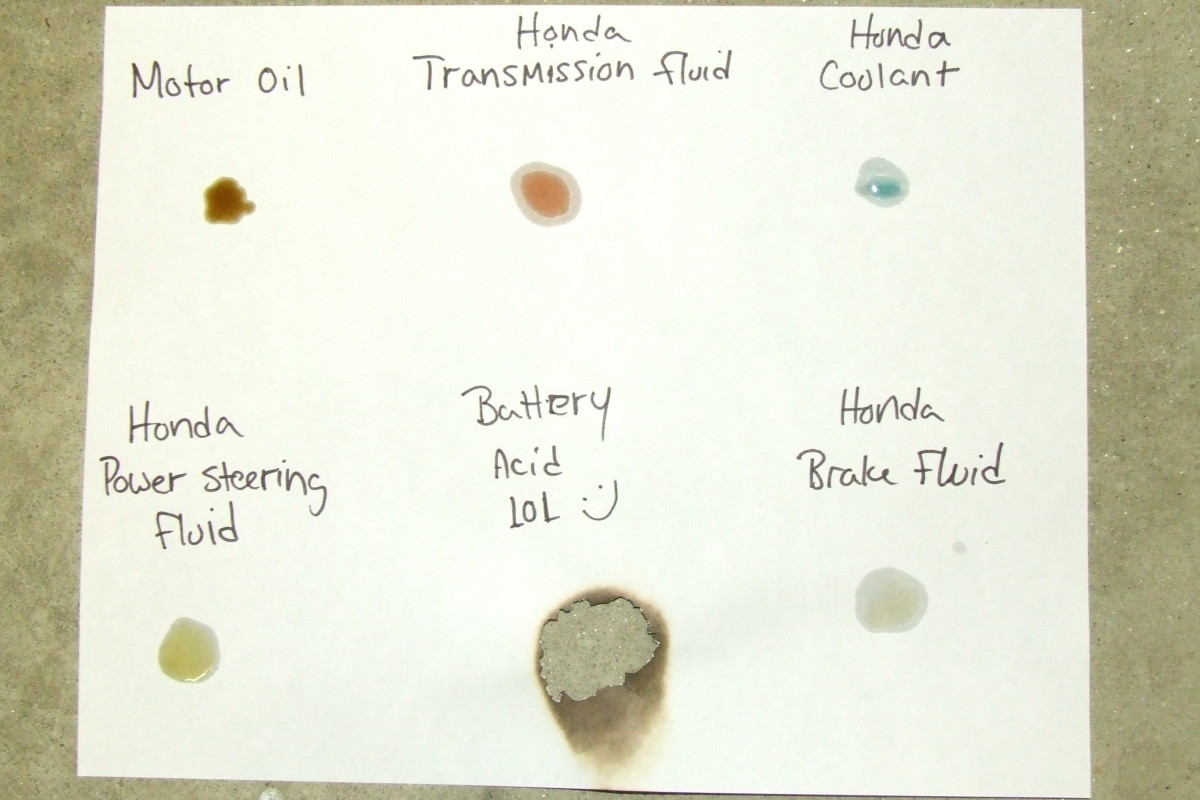
- Distinguishing from Other Fluids: It’s essential not to confuse a coolant leak with other automotive fluids. Engine oil is thick and dark, with a distinct petroleum smell. Transmission fluid is typically red or brownish-red, also has a petroleum smell, and is very slick. Brake fluid is usually clear to yellowish and has a strong chemical smell. Power steering fluid is often reddish or yellowish but has a thinner, hydraulic oil consistency.
The Significance of “No Color”: Distilled Water Leaks
In some instances, you might observe a clear, odorless liquid. This could simply be condensation from the air conditioning system, which is normal and harmless. However, if the leak is persistent and appears when the AC is off, or if you’ve recently topped off your coolant reservoir with plain water, it could signify a leak of diluted coolant or even just water. While water helps dissipate heat, it lacks the corrosion inhibitors and freeze protection of proper coolant, making it an inadequate long-term solution and potentially damaging to the cooling system over time. If a “clear” leak is accompanied by a rapidly decreasing reservoir level, it’s still a cause for concern, as it points to a breach that needs attention.
Action Plan: Mitigating Damage and Seeking Professional Help
Identifying a coolant leak through its color, location, and texture is a powerful diagnostic step. However, it’s just the beginning. The next phase involves taking appropriate action to prevent further damage to your vehicle’s engine and ensuring the integrity of its cooling system.
Immediate Steps
- Do Not Ignore It: A coolant leak, no matter how small, should never be ignored. Even a slow leak can quickly lead to critically low coolant levels and engine overheating, resulting in extremely expensive repairs.
- Check Coolant Levels: Regularly monitor your coolant reservoir level. If it’s consistently low after detecting a leak, you are losing fluid. Do not open the radiator cap when the engine is hot, as pressurized hot fluid can cause severe burns.
- Temporary Fixes (Use with Caution): Products like “coolant stop leak” or “radiator stop leak” are available. While they can offer a temporary solution for minor leaks by sealing small cracks, they are generally not recommended as a permanent fix. Some formulations can clog heater cores or other critical components, potentially creating more problems. Use them only as a short-term measure to get to a repair facility.
- Avoid Driving with a Severe Leak: If the leak is significant, or if your engine temperature gauge starts to climb, pull over immediately. Driving with a rapidly overheating engine can warp cylinder heads, blow head gaskets, and cause irreversible damage, effectively totaling your engine.
When to Consult a “Tech Specialist” (Mechanic)
While you’ve performed a valuable initial diagnosis, the actual repair of a coolant leak often requires specialized tools, parts, and expertise.
- Complex Diagnostics: A mechanic can perform pressure tests on your cooling system to pinpoint the exact location and severity of the leak, even hard-to-find ones. They can also use specialized dyes that glow under UV light to trace the leak.
- Component Replacement: Replacing components like radiators, water pumps, heater cores, or specific hoses requires technical knowledge and the correct parts to ensure a lasting repair.
- Coolant Flush and Refill: After a repair, a full cooling system flush is often recommended to remove any contaminants and ensure the system is refilled with the correct type and concentration of coolant, often using a vacuum fill system to prevent air pockets.
Proactive maintenance and prompt attention to warning signs like a colored puddle under your vehicle are key to preserving the operational health and extending the lifespan of your automotive technology. By understanding the language of your coolant leaks, you empower yourself to act decisively, transforming a potential crisis into a manageable repair, ensuring your vehicle remains a reliable and efficient gadget for years to come.
aViewFromTheCave is a participant in the Amazon Services LLC Associates Program, an affiliate advertising program designed to provide a means for sites to earn advertising fees by advertising and linking to Amazon.com. Amazon, the Amazon logo, AmazonSupply, and the AmazonSupply logo are trademarks of Amazon.com, Inc. or its affiliates. As an Amazon Associate we earn affiliate commissions from qualifying purchases.