
The Material Science Behind Resorbable Suture Hues
The simple question of “what color are dissolvable sutures?” opens a fascinating window into the advanced material science and manufacturing technology that underpins modern surgical practice. Unlike their non-resorbable counterparts, which often come in distinct, persistent colors to aid identification during potential removal procedures, dissolvable (or resorbable) sutures are designed to degrade and be absorbed by the body over time. Their coloration is not merely aesthetic; it’s a critical aspect of their functionality, visibility, and, crucially, the underlying polymer technology.
At their core, dissolvable sutures derive their properties from biocompatible polymers. These can largely be categorized into natural and synthetic types, each with specific degradation profiles and inherent color characteristics, or receptiveness to dyeing. The choice of polymer, and subsequent manufacturing processes, dictates not only the suture’s strength and absorption rate but also its visual attributes.

Natural vs. Synthetic Biodegradable Polymers
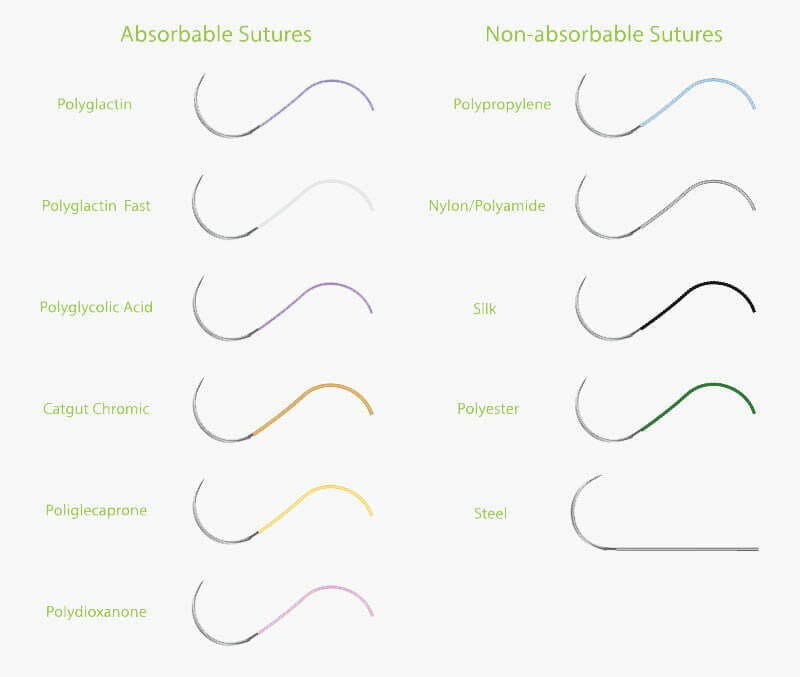
Historically, natural polymers like purified collagen (chromic gut sutures) were among the first resorbable materials. These sutures typically present a brownish or yellowish hue, often due to the chromium salts used in their processing to extend absorption time. This inherent coloration is a direct result of their organic origin and chemical treatment. While still used, their variable absorption rates and inflammatory responses have led to a preference for synthetic alternatives in many applications.
Synthetic resorbable sutures represent a significant leap in medical technology. They are primarily composed of polymers such as polyglycolic acid (PGA), polylactic acid (PLA), poly-p-dioxanone (PDS), and their copolymers (e.g., PGA-co-PLA, known as Polyglactin 910 or Vicryl®). These materials are synthesized in controlled laboratory environments, offering precise control over their molecular structure, leading to predictable strength retention and absorption profiles. In their pure, undyed state, most synthetic resorbable sutures appear either off-white, beige, or entirely colorless (monofilament PDS is often clear or violet). The absence of inherent color allows manufacturers greater flexibility in introducing specific dyes for enhanced visibility.
Dyeing Techniques and Biocompatibility
The introduction of color into synthetic resorbable sutures is a meticulous technological process. Medical-grade dyes must meet stringent biocompatibility standards, ensuring they do not elicit adverse reactions in the patient or interfere with the healing process. Common colors for synthetic dissolvable sutures include violet (for Vicryl®, Monocryl®), green (for Maxon®), and un-dyed (clear or beige).
The dyeing process typically involves incorporating the dye into the polymer matrix during the extrusion phase of fiber manufacturing. This ensures that the color is integral to the suture material, preventing leaching of the dye into surrounding tissues post-implantation. For instance, D&C Violet No. 2 is a widely accepted dye used in many PGA and PGLA sutures. This violet color serves a specific purpose, primarily enhancing visibility against the typically red background of surgical tissues, making placement and knot tying easier for surgeons. The technology here is not just about adding color, but about ensuring the dye is stable, non-toxic, and maintains its integrity throughout the suture’s functional life within the body. Advances in polymer science also focus on developing self-coloring polymers or dyes that indicate the suture’s degradation stage through color change, pushing the boundaries of smart material applications in surgery.
Functional Aesthetics: Color as a Diagnostic and Surgical Aid
The coloration of dissolvable sutures extends far beyond mere identification; it’s a sophisticated application of engineering and design principles aimed at improving surgical outcomes and patient safety. In the complex, often high-stakes environment of an operating room, every visual cue counts. The precise choice of suture color is a deliberate technological decision, optimizing for visibility, differentiation, and even, in advanced concepts, for diagnostic feedback.
Visibility in Complex Surgical Fields
One of the primary reasons for coloring dissolvable sutures is to enhance their visibility. Surgical fields are typically rich in shades of red, pink, and white from tissues and blood. An un-dyed (clear) suture, while aesthetically appealing, can be extremely difficult to see, especially in deep cavities or during laparoscopic procedures where lighting might be suboptimal. By contrast, a distinct color like violet or green provides a strong visual contrast, making it easier for surgeons to precisely place sutures, tie knots, and verify the integrity of their closures.
This enhanced visibility is critical for minimizing operative time and reducing the risk of surgical errors. The chosen colors are often those that stand out most effectively against biological backdrops without being overly distracting or causing visual fatigue for the surgeon. This consideration leverages principles of human perception and color theory, applied rigorously to medical device design.
Identification of Suture Types and Sizes
In a busy operating room, multiple types and sizes of sutures may be used during a single procedure. While packaging clearly labels each suture, the ability to visually distinguish between different materials or sizes once removed from their sterile packets is invaluable. While there isn’t a universally mandated color-coding system for all suture types across all manufacturers, certain conventions have emerged. For example, the violet hue is strongly associated with Polyglactin 910 (Vicryl®), a common braided resorbable suture. PDS, a monofilament resorbable suture, is also often violet or clear.
This informal standardization, driven by established product lines and surgeon familiarity, aids in quick identification, reducing the chance of mistakenly using the wrong suture type. For instance, if a surgeon needs a rapidly absorbing suture versus a long-term resorbable one, a distinct color helps confirm the correct choice without having to re-examine the packaging, especially when multiple sutures are laid out on a sterile tray. This practical application of color facilitates efficiency and safety, acting as a crucial element in the sterile instrumentation landscape.
Monitoring Degradation and Healing (Emerging Concepts)
While current dissolvable suture colors are primarily for intraoperative visibility, technological advancements are exploring their role in post-operative monitoring. Future innovations could see sutures engineered with smart dyes or material science adaptations that change color as they degrade, or in response to changes in the wound environment (e.g., pH shifts indicating infection).
Imagine a suture that subtly changes its hue from vibrant violet to a lighter shade as it loses tensile strength, or one that emits a fluorescent signal under specific light if an infection begins to manifest. Such “smart sutures” would provide real-time, non-invasive diagnostic information, potentially allowing for earlier intervention and improved patient outcomes. This cutting-edge research merges materials science, sensor technology, and bio-optics, turning a seemingly simple attribute like color into a powerful diagnostic tool.
Innovations in Suture Technology: Beyond Basic Coloration
The trajectory of medical technology demonstrates a relentless pursuit of improvement, and dissolvable sutures are no exception. Beyond merely providing visibility, modern research and development are transforming sutures into sophisticated therapeutic and diagnostic tools. The evolution of their coloration and material design reflects this broader technological revolution, moving towards “smart” functionalities.
Smart Sutures with Integrated Sensors
The concept of a “smart suture” pushes the boundaries of traditional medical devices. Researchers are developing dissolvable sutures embedded with microscopic sensors that can monitor various physiological parameters directly at the wound site. These sensors, often fabricated using nanotechnology, can detect indicators such as temperature fluctuations, pH changes, glucose levels, or even early signs of infection.
For example, a suture could contain a minute sensor that transmits data wirelessly to an external device, providing clinicians with real-time feedback on the healing process. The color of such a suture might itself be functional, indicating the presence of an active sensor or a specific operational mode. Alternatively, future designs might integrate electrochromic materials that change color in response to electrical signals or biochemical markers, offering a visual alert for specific conditions without needing external equipment. This convergence of biomechanics, electronics, and advanced materials represents a paradigm shift in post-operative care.
Bioactive Coatings and Drug Delivery
Another significant area of innovation involves developing dissolvable sutures with bioactive coatings. These coatings can be impregnated with antimicrobial agents, growth factors, anti-inflammatory drugs, or other therapeutic compounds. As the suture dissolves, it delivers these substances locally and directly to the wound, potentially enhancing healing, preventing infection, or mitigating pain.
The color of these sutures might be indicative of the specific drug payload or the release mechanism. For instance, a particular hue could signify the presence of an antibiotic, while another might denote a growth factor. The technology here lies not just in the coating itself, but in controlling the release kinetics of the embedded drug – ensuring it’s delivered effectively over the required therapeutic window. Furthermore, some coatings could be designed to change color upon depletion of the drug, providing a visual cue regarding the completion of its therapeutic action. This intricate engineering transforms a passive material into an active therapeutic agent, directly impacting patient recovery.
Advanced Manufacturing and Personalization
The future of dissolvable sutures also involves highly advanced manufacturing techniques, including 3D printing and electrospinning, which allow for unprecedented customization and personalization. Imagine sutures printed on demand with specific tensile strengths, degradation rates, and even bespoke designs tailored to an individual patient’s wound geometry or tissue type.
In such a personalized medical landscape, suture coloration could also become more tailored. Instead of standard violet or green, sutures might be manufactured in colors optimized for specific imaging modalities (e.g., for better visualization under ultrasound or MRI), or even designed to subtly blend in or stand out based on a surgeon’s preference for complex procedures. The ability to precisely control the material composition, structure, and dye distribution at a microscopic level through additive manufacturing techniques opens up a vast array of possibilities for creating truly bespoke surgical tools.
The Future Landscape of Surgical Thread Design
The evolution of dissolvable sutures from simple closing devices to sophisticated biomedical tools is an ongoing testament to technological ingenuity. The role of color, while seemingly minor, is intricately linked to the ambitious future of surgical thread design, driven by interdisciplinary advancements.
AI-Driven Material Discovery
The development of new polymers and composites for dissolvable sutures is poised for revolution through Artificial Intelligence (AI) and machine learning. AI algorithms can rapidly analyze vast datasets of material properties, simulate molecular interactions, and predict the performance of novel polymer structures. This accelerates the discovery of materials with ideal tensile strength, degradation rates, biocompatibility, and even inherent optical properties.
AI could design polymers that naturally exhibit specific colors or allow for more efficient, non-toxic dye incorporation, minimizing manufacturing steps and costs. It could also optimize the molecular structure to create “intelligent” polymers that change color in response to physiological cues, fulfilling the promise of smart sutures without complex embedded electronics. This AI-powered materials science will lead to an unprecedented generation of surgical threads.
Nanotechnology and Enhanced Performance
Nanotechnology is another frontier significantly impacting suture design. Nanofibers, nanoparticles, and nanocoatings can dramatically improve suture performance. For instance, sutures fabricated from nanofibers can mimic the extracellular matrix, promoting better cell adhesion and tissue regeneration. Nanoparticles can be used to precisely deliver drugs, enhance antimicrobial properties, or create sutures with increased strength-to-weight ratios.
The integration of nanotechnology can also influence suture color and visibility. Nanostructures can be engineered to interact with light in specific ways, creating iridescent or chromogenic properties that might allow sutures to change color based on light exposure or physical stress. This could lead to sutures that are highly visible during surgery but become transparent as they degrade, or sutures that signal mechanical stress before failure, adding a critical layer of safety and functional insight.

Sustainability and Next-Gen Biopolymers
As technology advances, so does the imperative for sustainability. The future of dissolvable sutures will increasingly focus on next-generation biopolymers derived from renewable resources or engineered for enhanced biodegradability with minimal environmental impact. While current synthetic polymers are often derived from petroleum, research is moving towards plant-based or microbe-produced polymers that maintain superior mechanical and biological properties.
The coloration of these sustainable sutures will also be a key technological consideration. This includes developing natural dyes that are equally biocompatible and stable, or engineering biopolymers that inherently possess desired optical properties. The goal is to create sutures that are not only technologically advanced in their function within the body but also align with global efforts to reduce the ecological footprint of medical devices, ensuring that innovation serves both patient well-being and planetary health.
aViewFromTheCave is a participant in the Amazon Services LLC Associates Program, an affiliate advertising program designed to provide a means for sites to earn advertising fees by advertising and linking to Amazon.com. Amazon, the Amazon logo, AmazonSupply, and the AmazonSupply logo are trademarks of Amazon.com, Inc. or its affiliates. As an Amazon Associate we earn affiliate commissions from qualifying purchases.