
The inclusion of jokers in a standard deck of cards fundamentally shifts game dynamics, introducing an element of wild card unpredictability that skilled players can strategically leverage for significant monetary advantage. Far from mere random chance, the presence of a joker demands a deeper understanding of probability, risk assessment, and adaptable strategy, all of which are critical for those aiming to derive financial benefits, whether through professional play, competitive tournaments, or simply maximizing returns in games played for stakes.
The Joker’s Financial Leverage in Game Strategy
In the realm of card games played for money, every decision is an investment, and the joker acts as a catalyst that can either multiply potential returns or exacerbate losses if not handled astutely. Its wild card nature means it can substitute for almost any other card, drastically altering the value and potential of a hand. This introduces a heightened level of strategic complexity, requiring players to continually reassess their equity in a hand and the associated financial risk.

Wild Cards and Risk Assessment
The presence of one or more jokers injects a variable into the game that can dramatically swing outcomes. For players engaged in monetary stakes, this means the landscape of risk assessment changes. Calculating the odds of forming a particular set, sequence, or combination becomes more nuanced. A player must not only consider the cards they hold and those drawn but also the statistical probability of a joker appearing and its potential impact on their own hand or an opponent’s. Mastering this involves a keen understanding of conditional probability and the ability to make rapid, financially informed decisions under pressure. Savvy players learn to identify situations where a joker grants them a significant edge, allowing them to bet more aggressively, or conversely, when its absence (or likely presence elsewhere) signals a need for caution and disciplined folding, thereby preserving their bankroll.
Strategic Investment in Hand Building
For many card games, the ultimate goal is to build the highest-scoring or most advantageous hand. The joker acts as a flexible asset, a capital injection that can transform a mediocre hand into a powerhouse. Players must strategically “invest” their card draws and discards, always evaluating how a joker could complete a crucial sequence, form a high-value set, or prevent an opponent from achieving their objective. This isn’t merely about forming combinations; it’s about optimizing the financial return on each hand. For instance, in games where points translate directly into monetary payouts, a joker can significantly boost a hand’s score, turning a small win into a substantial profit. The ability to anticipate where a joker can be most effectively deployed, or how an opponent might use one, is a strategic investment in itself, often separating casual players from those consistently profiting from their play.
Popular Joker Games with Monetary Stakes
Numerous card games incorporate jokers, and many of these are frequently played for monetary stakes, demanding a blend of skill, strategy, and financial acumen from their participants. Understanding the specific rules regarding jokers in these games is paramount to success and maximizing financial returns.
Rummy Variations and Their Payout Structures
Rummy games, particularly popular in various Asian and European countries, are often played for significant cash stakes. In many versions, like Indian Rummy, jokers are central to the game’s strategy and payout structure.
- Indian Rummy (Joker Rummy): This highly popular cash game relies heavily on jokers. Players aim to form sets and sequences, and jokers can be used as substitutes for any missing card to complete these combinations. The financial strategy here involves knowing when to declare a hand, balancing the risk of waiting for better cards against the potential for higher scores (and thus payouts) from completing more complex sets with jokers. The game often has a fixed value per point, and players with an invalid hand or higher unmelded points pay more to the winner. A joker can drastically reduce a player’s points by completing sequences, directly impacting the financial outcome of the round.
- Canasta: While often played for points, Canasta can easily be adapted for monetary stakes. Here, jokers (alongside deuces) are wild cards crucial for forming “canastas” – seven or more cards of the same rank. Completing red (natural) or black (mixed with wild cards) canastas offers substantial bonus points, which directly translate to larger payouts in a money game. The strategic use of jokers to build these high-scoring combinations, or to prevent opponents from doing so, is a core element of the game’s financial strategy.
Euchre and the Bowie (Joker)
Euchre is a trick-taking game popular in parts of North America and Europe. In many versions, a joker, often called the “Bowie” or “Best Bower,” serves as the highest trump card. This makes the joker an incredibly powerful asset. The financial implications are clear:
- Bidding and “Going Alone”: Players bid to choose the trump suit. With the Bowie in hand, a player might confidently “go alone” (play without their partner) to attempt to take all five tricks, which often doubles their points. In a money game, this means doubling their potential winnings for that hand. The decision to go alone with a joker requires astute judgment of the remaining cards and the opponent’s likely holdings—a direct calculation of risk versus reward. The Bowie provides immense leverage, but misjudging its impact can lead to a significant financial setback.
Crazy Eights/Uno-like Games (with Joker variants)
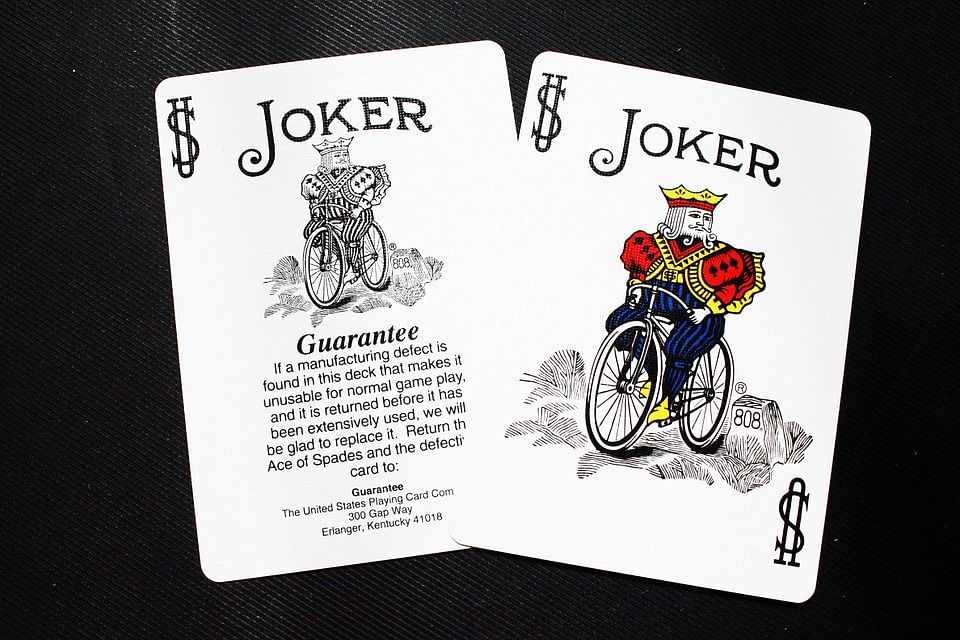
While often considered casual, variations of Crazy Eights or Uno that include a joker (or wild cards that function similarly) can be adapted for small stakes. The joker’s ability to change suit or act as a powerful action card dictates the flow of play and can lead to strategic wins. In a game played for small wagers per round, the player who strategically deploys their joker to force opponents to draw multiple cards or skip turns effectively controls the financial outcome of the hand.
Professional Play and Online Income from Joker Games
The strategic depth introduced by jokers in card games has paved the way for professional play and avenues for online income generation. For those with a mastery of these games, the ability to consistently win can transition from a hobby to a lucrative side hustle or even a primary income source.
The Rise of Online Card Game Platforms
The digital age has brought card games to a global audience, with numerous online platforms facilitating cash games for popular joker-inclusive titles like Indian Rummy. These platforms operate as sophisticated marketplaces where players can compete for real money, turning skill into tangible financial assets. Professional players treat these platforms as a business, meticulously tracking their win rates, managing their bankroll, and continuously refining their strategies to maintain profitability. The business model for these players involves a consistent return on their investment of time and skill.
Strategic Skill as an Asset
In games where jokers are present, raw luck is mitigated by superior strategic play. The ability to adapt to unforeseen circumstances, accurately assess probabilities with wild cards in play, and make optimal decisions under pressure becomes a highly valuable asset. This skill set is akin to an investment that appreciates over time, yielding consistent financial dividends for dedicated practitioners. Players who understand how to manipulate the game state with jokers, create traps for opponents, or minimize losses when the odds are unfavorable are those who build sustainable income streams from their play.
Content Creation and Side Hustles
Beyond direct monetary wins in games, the expertise developed in joker-inclusive card games can be monetized through content creation. Professional players and strategists create tutorials, live stream their gameplay, analyze complex hands, and offer coaching services. These activities generate income through advertising revenue, subscriptions, donations, and direct fees. For instance, a detailed video explaining optimal joker usage in a specific Rummy variant can attract a significant audience, turning strategic insight into a profitable side hustle or even a full-time endeavor, further demonstrating the financial value inherent in mastering these games.
Mitigating Risk and Maximizing Returns in Joker-Enhanced Play
Success in card games with jokers, particularly when money is on the line, is not merely about understanding the rules but about applying sound financial principles to gameplay. Managing risk and maximizing potential returns are paramount for long-term profitability.
Bankroll Management
Crucial for any form of monetary play, bankroll management is especially vital in games with jokers due to the increased variance they can introduce. Players must set strict limits on how much they are willing to wager per session or game, never exceeding a predetermined percentage of their total bankroll. This discipline prevents catastrophic losses during unlucky streaks and ensures that a player can continue to participate and leverage their skill over the long term. A well-managed bankroll is the foundation of sustainable financial engagement in card games.
Mastering Positional Play and Counting
Understanding positional play – how one’s position relative to the dealer or other players affects strategic options – is financially impactful. Similarly, while outright card counting might be restricted or difficult in some games, developing an awareness of which key cards (including jokers) have been played or are still likely in the deck provides a significant advantage. This knowledge allows players to make more informed betting and playing decisions, improving their overall expected value per hand. By minimizing guesswork and maximizing informed choices, players enhance their long-term financial outcomes.

The Long-Term Investment in Skill
Ultimately, consistent financial success in card games that use jokers is an investment in personal skill. Continuous learning, reviewing past games, studying probabilities, and adapting to new strategies are all forms of human capital investment. Over time, this dedication translates into a higher win rate, better decision-making under pressure, and a more robust ability to capitalize on the unique opportunities presented by wild cards. The joker, therefore, is not just a card; it’s a strategic variable that, when mastered, can unlock significant financial value for the astute player.
aViewFromTheCave is a participant in the Amazon Services LLC Associates Program, an affiliate advertising program designed to provide a means for sites to earn advertising fees by advertising and linking to Amazon.com. Amazon, the Amazon logo, AmazonSupply, and the AmazonSupply logo are trademarks of Amazon.com, Inc. or its affiliates. As an Amazon Associate we earn affiliate commissions from qualifying purchases.