
The quest for the largest brake calipers is more than just a search for an impressive aesthetic; it’s a deep dive into the cutting edge of automotive engineering, where physics meets performance. While a definitive single “biggest” can be elusive due to variations in measurement, design, and purpose, understanding the vehicles that push the boundaries of braking technology reveals much about the demands of extreme speed and power. This exploration ventures into the hyper-specialized world of hypercars, supercars, and high-performance vehicles where stopping with authority is as critical as accelerating with ferocity.
The Engineering Imperative Behind Massive Calipers
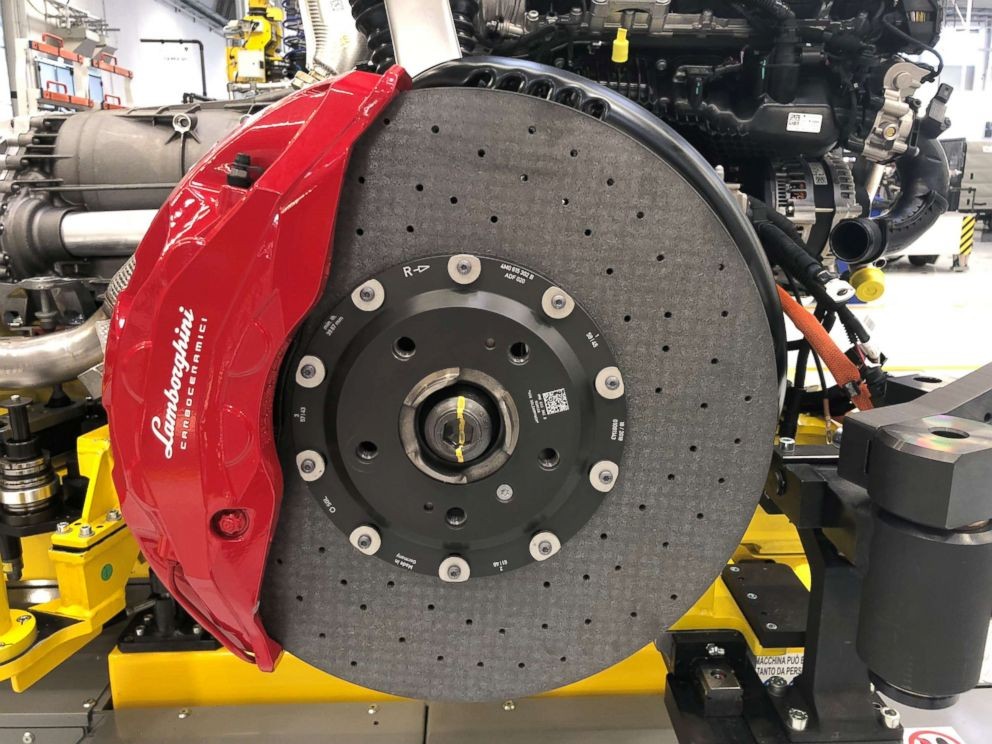
The sheer size of a brake caliper is a direct response to fundamental engineering challenges inherent in high-performance vehicle dynamics. It’s not merely about stopping a car; it’s about doing so repeatedly, reliably, and rapidly, under conditions that push materials and systems to their absolute limits.
The Physics of Stopping Power
At its core, braking is about converting kinetic energy into thermal energy through friction. The amount of energy that needs to be dissipated grows exponentially with speed. A car traveling at 200 mph possesses four times the kinetic energy of the same car at 100 mph. To arrest this immense energy quickly, a braking system requires significant mechanical advantage and robust friction surfaces. Larger brake calipers, often paired with larger brake discs, provide a greater lever arm, enabling more effective clamping force and a larger contact area for the brake pads. This increased surface area distributes the force more efficiently across the pad and rotor, enhancing friction generation. The larger piston count often found in massive calipers (e.g., 6-piston, 8-piston, or even 10-piston setups) allows for a more even distribution of pressure across the pad, maximizing its effectiveness.
Heat Dissipation and Fade Resistance
The conversion of kinetic energy into thermal energy generates extreme heat. Temperatures in brake systems can exceed 1000°C during aggressive use. Sustained high temperatures lead to “brake fade,” a dangerous reduction in braking efficiency as the friction materials overheat and gases are released. Larger calipers, by their very nature, have more mass and surface area, which contributes to better heat sink capabilities. They are often crafted from specialized alloys like aluminum, which dissipates heat more effectively than traditional cast iron. Furthermore, their larger internal volume allows for more cooling fins and channels, facilitating airflow and reducing thermal stress. Paired with large, often vented or cross-drilled rotors, these systems are engineered to manage and shed heat rapidly, ensuring consistent performance lap after lap or during repeated high-speed decelerations.
High Performance Demands
The demand for massive calipers originates from the performance envelope of the vehicles they serve. Hypercars, designed for top speeds exceeding 250 mph and incredibly rapid acceleration, require braking systems capable of shedding velocity with equally breathtaking efficiency. Supercars, while slightly more road-focused, still operate at performance levels far beyond conventional vehicles. Even high-performance SUVs and luxury sedans, despite their considerable weight, incorporate advanced braking technologies to provide drivers with confidence and control matching their powertrain capabilities. These vehicles necessitate not just sheer stopping power, but also precise modulation, exceptional pedal feel, and unwavering reliability—qualities heavily influenced by caliper design and size.
Contenders for the Caliper Crown: A Deep Dive into Automotive Engineering
Identifying the “biggest” brake caliper requires examining the vehicles at the pinnacle of automotive performance, where custom-engineered solutions are the norm. These are not off-the-shelf components but bespoke systems tailored to extraordinary specifications.
Hypercars and Their Bespoke Braking Systems
Hypercars represent the ultimate expression of automotive engineering, and their braking systems are no exception. Companies like Bugatti, Koenigsegg, and Rimac develop braking solutions that are as advanced as their powertrains.
- Bugatti Chiron: As a vehicle capable of speeds well over 260 mph, the Chiron’s braking system is monumental. Its front calipers are typically 8-piston units, though some special editions have featured even larger or more advanced configurations. These calipers grasp massive carbon-ceramic discs, often exceeding 420mm (16.5 inches) in diameter at the front. The sheer surface area and robust construction are vital for bringing 1500+ horsepower to a halt from extreme velocities.
- Koenigsegg Jesko/Regera: Koenigsegg is renowned for pushing technological boundaries. Their vehicles often feature bespoke 6-piston front and 4-piston rear calipers, sometimes made from lightweight monobloc aluminum or even incorporating 3D-printed titanium components for reduced unsprung mass and increased rigidity. These are paired with large ceramic discs, frequently around 410mm (16.1 inches) at the front, engineered for incredible heat resistance and stopping power suitable for their multi-million dollar, record-breaking machines.
- Rimac Nevera: As an electric hypercar, the Nevera faces the unique challenge of managing immense torque instantly. While it leverages regenerative braking heavily, its physical braking system is still phenomenal. It typically employs 6-piston calipers gripping 390mm carbon-ceramic discs, engineered not only for raw stopping power but also for seamless integration with its complex electronic braking-by-wire system.
Supercars: Bridging Track and Road
Supercars, while often produced in higher volumes than hypercars, still feature immensely capable braking systems. Manufacturers like Porsche, Ferrari, McLaren, and Lamborghini invest heavily in proprietary braking technology.
- Porsche 911 GT2 RS/GT3 RS: Porsche’s track-focused models are legendary for their braking performance. They frequently feature 6-piston front and 4-piston rear calipers, with optional or standard carbon-ceramic brakes (PCCB) on many high-end variants. The front PCCB discs often measure 410mm (16.1 inches), and the calipers are designed for exceptional stiffness and heat management, reflecting Porsche’s racing pedigree.
- McLaren Senna/720S: McLaren’s ethos of lightweighting and aerodynamic efficiency extends to their braking systems. The Senna, built specifically for track dominance, utilizes advanced carbon-ceramic brakes with 6-piston front calipers. The entire system is optimized for minimal unsprung mass and superior thermal management, reflecting its extreme performance goals.
- Ferrari (e.g., SF90 Stradale): Ferrari’s supercars consistently employ powerful Brembo-sourced calipers, often with 6-piston front configurations gripping large carbon-ceramic discs (frequently 398mm or larger). Their braking systems are engineered for the exquisite balance of feel, power, and durability required by their high-revving engines and dynamic chassis.
High-Performance SUVs and Luxury Sedans
Even in the realm of larger, heavier vehicles, the pursuit of extreme performance demands colossal braking hardware. The increased mass of these vehicles places an even greater strain on their braking systems.
- Porsche Cayenne Turbo GT: Given its weight and incredible performance (0-60 mph in under 3.0 seconds), the Cayenne Turbo GT requires immense stopping power. It often features 10-piston front calipers clamping vast carbon-ceramic discs, sometimes up to 440mm (17.3 inches) in diameter. These are among the largest calipers found on production SUVs, necessitated by the physics of bringing such a substantial, powerful vehicle to a rapid halt.
- Mercedes-AMG GLE 63 S/GT 63 S: AMG’s high-performance SUVs and sedan variants also feature substantial braking systems. They commonly use 6-piston front calipers on steel or optional carbon-ceramic discs, often exceeding 400mm (15.7 inches) in diameter. The engineering focus here is on managing the momentum of heavy vehicles with high horsepower, requiring robust and fade-resistant components.
Aftermarket Solutions and Their Technological Edge
Beyond factory installations, the aftermarket industry offers extreme braking solutions for enthusiasts. Companies like Brembo, AP Racing, and Alcon produce high-performance kits that often feature calipers even larger than some OEM offerings. These systems are designed for highly modified street cars or dedicated track machines, offering customizable piston counts, material choices, and extreme cooling capabilities, often featuring 6-piston, 8-piston, or even 10-piston configurations with specialized monobloc designs.
Beyond Size: Advanced Materials and Design Innovations
While size is a significant factor, the “biggest” calipers are often coupled with a suite of advanced technologies that amplify their effectiveness, demonstrating a holistic approach to braking system design.
Carbon-Ceramic Matrix (CCM) Brakes
The proliferation of CCM brakes is arguably the most significant advancement in high-performance braking. Unlike traditional cast iron, carbon-ceramic composite materials offer superior thermal stability, significantly lighter weight (reducing unsprung mass), and exceptional resistance to fade. This allows for even larger disc diameters without a prohibitive weight penalty, thereby enabling the use of commensurately larger calipers to fully utilize the friction surface. CCM systems are found on nearly all hypercars and are a high-performance option on many supercars and top-tier performance vehicles.
Monobloc vs. Two-Piece Caliper Designs
The construction of the caliper itself is critical. Many high-performance calipers, especially the larger ones, utilize a “monobloc” design. This means the caliper body is machined from a single block of material (typically aluminum billet). This single-piece construction offers significantly greater rigidity compared to two-piece calipers (where two halves are bolted together). Increased rigidity minimizes flex under extreme braking forces, ensuring consistent pedal feel and preventing uneven pad wear. This precision translates directly into more reliable and powerful stopping.
Multi-Piston Architectures
The number of pistons within a caliper directly impacts the clamping force and the evenness of pressure distribution. Larger calipers often feature a higher piston count—6, 8, or even 10 pistons—arranged to apply uniform pressure across the entire surface of a large brake pad. This optimized pressure distribution ensures that the pad wears evenly and maximizes the friction generated, contributing to superior stopping power and longevity of the braking components.
Integrating Braking with Vehicle Dynamics
Modern braking systems are not isolated components but are deeply integrated into a vehicle’s overall technological ecosystem. Anti-lock Braking Systems (ABS), Electronic Brakeforce Distribution (EBD), and sophisticated stability control systems (ESC) work in conjunction with large, powerful calipers. These electronic aids modulate braking pressure on individual wheels, preventing lock-up, optimizing bias, and maintaining vehicle stability during aggressive deceleration, allowing drivers to exploit the full potential of these massive braking setups safely. The calipers are the mechanical execution of complex algorithms, turning digital commands into physical force.
The Future of Braking Technology
The evolution of braking systems continues, driven by new vehicle architectures and performance demands. While the quest for the physically largest calipers may plateau, the refinement of braking technology is an ongoing endeavor within the tech space.
Electrification and Regenerative Braking’s Role
Electric vehicles (EVs) and hybrids are changing the dynamics of braking. Regenerative braking, where the electric motors act as generators to slow the vehicle and recharge the battery, significantly reduces the workload on the traditional friction brakes. This could lead to a reassessment of friction brake sizing in some contexts, potentially allowing for smaller, lighter conventional components for daily driving. However, for extreme performance EVs like the Rimac Nevera, the immense power and instant torque still necessitate incredibly robust physical brakes for emergency stops and sustained high-performance driving where regenerative capacity might be overwhelmed or insufficient.
Smart Braking Systems and Autonomous Vehicles
The advent of autonomous vehicles and advanced driver-assistance systems (ADAS) is pushing braking technology towards even greater sophistication. “Brake-by-wire” systems, which replace mechanical linkages with electronic signals, offer finer control, faster response times, and easier integration with AI-driven vehicle control systems. Future calipers may incorporate integrated sensors for real-time wear monitoring, temperature analysis, and predictive maintenance, communicating directly with the vehicle’s central processing unit.
Weight Reduction and Performance Enhancement
The relentless pursuit of lightweighting will continue to drive innovation. Expect to see further advancements in exotic materials for calipers and rotors, including composites, advanced ceramics, and potentially even next-generation metallic alloys with superior strength-to-weight ratios and thermal properties. Caliper designs will become even more optimized through computational fluid dynamics (CFD) for airflow and Finite Element Analysis (FEA) for structural integrity, achieving maximum performance with minimum mass.
Advanced Cooling and Aerodynamics
As performance envelopes expand, managing heat remains paramount. Future braking systems will likely feature even more sophisticated cooling solutions, potentially including active aerodynamics that direct airflow specifically to the brakes, or even advanced liquid or phase-change cooling systems for extreme applications. Integrated aero-shrouds and intelligent ducting will become standard on the highest-performing vehicles, ensuring optimal thermal conditions for the colossal calipers and rotors.
In conclusion, while pinpointing a single “biggest” caliper is challenging due to ongoing innovation and bespoke applications, the cars that contend for this title—hypercars and high-performance machines from manufacturers like Bugatti, Porsche, Koenigsegg, and AMG—showcase the pinnacle of automotive braking technology. Their massive calipers are not just large; they are engineered marvels, embodying advanced physics, material science, and design to provide unparalleled stopping power and control in the face of extraordinary speeds. The future promises even more intelligent and integrated braking systems, continually redefining what’s possible in vehicle deceleration.
aViewFromTheCave is a participant in the Amazon Services LLC Associates Program, an affiliate advertising program designed to provide a means for sites to earn advertising fees by advertising and linking to Amazon.com. Amazon, the Amazon logo, AmazonSupply, and the AmazonSupply logo are trademarks of Amazon.com, Inc. or its affiliates. As an Amazon Associate we earn affiliate commissions from qualifying purchases.