
The fundamental building blocks of matter often appear in surprisingly complex arrangements, even at their simplest. Diatomic elements are a prime example: elements whose stable molecular form consists of two atoms bonded together. While seemingly basic, these seven elements are far from mundane; they are indispensable workhorses across the technological landscape, silently powering innovation from microchips to sustainable energy solutions. Understanding their properties and applications is crucial for anyone keen on the foundational science underpinning modern tech.
The Foundational Role of Diatomic Molecules in Modern Technology
Atoms rarely exist in isolation, particularly highly reactive nonmetals. When two atoms of the same element covalently bond, they form a diatomic molecule. This stable configuration is common for several elements under standard conditions. Far from being mere academic curiosities, the specific chemical and physical properties of these diatomic forms make them critical raw materials, process enablers, and performance enhancers in a vast array of technological applications. Their significance spans from the fabrication of advanced semiconductors and the development of next-generation energy systems to ensuring the safety and longevity of electronic devices.

Defining Diatomic Molecules: A Quick Primer
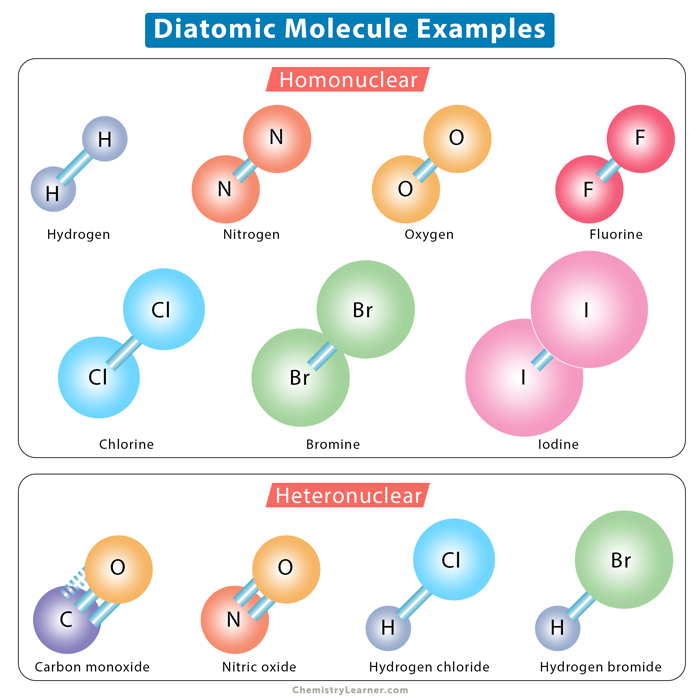
A diatomic molecule is simply a molecule composed of only two atoms, of the same or different chemical elements. When these two atoms are of the same element, they form a diatomic element. The stability of these pairings arises from the atoms achieving a more favorable electron configuration by sharing electrons. For instance, two oxygen atoms bond to form O₂, a molecule distinctly different in its properties from a single oxygen atom. The seven elements that commonly exist as diatomic molecules in their elemental form at standard temperature and pressure are hydrogen (H₂), nitrogen (N₂), oxygen (O₂), fluorine (F₂), chlorine (Cl₂), bromine (Br₂), and iodine (I₂). These elements, often overlooked in the glare of more complex compounds, are foundational to the very fabric of our technological world.
Why Diatomic Elements Matter in Tech
The relevance of these seemingly simple molecular structures in technology cannot be overstated. Their distinct chemical reactivity, inertness, or physical properties are leveraged across countless industries:
- Semiconductor Manufacturing: Ultra-pure diatomic gases are essential for creating inert atmospheres, etching patterns onto silicon wafers, and doping materials to alter electrical properties.
- Energy Generation and Storage: Diatomic hydrogen is at the forefront of clean energy research, while oxygen is critical for combustion and advanced battery chemistries.
- Advanced Materials: Halogens are integral to synthesizing high-performance polymers, specialized ceramics, and optical fibers.
- Digital Displays and Photonics: Elements like iodine play a role in liquid crystal displays (LCDs), and various diatomic gases are used in laser systems and lighting technologies.
- Cooling and Cryogenics: Diatomic nitrogen is a primary agent for cooling sensitive electronic components and in scientific research requiring extremely low temperatures.
- Safety and Environmental Tech: Certain diatomic elements are key components in fire retardants for electronics and in water purification systems that support industrial infrastructure.
Each of the seven diatomic elements brings a unique set of attributes to the table, driving advancements and enabling functionalities that are central to modern technological progress.
The Seven Key Players and Their Technological Footprint
Let’s delve into the specific contributions of each of the seven diatomic elements, highlighting their indispensable roles in the technology sector.
Hydrogen (H₂): The Fuel of Tomorrow
Hydrogen is the lightest and most abundant element in the universe. As a diatomic molecule (H₂), it holds immense promise and current utility in technology.
- Fuel Cells and Clean Energy: H₂ is the cornerstone of hydrogen fuel cell technology, generating electricity with water as the only byproduct. This is critical for zero-emission vehicles, backup power systems for data centers, and grid-scale energy storage, pushing forward the sustainable tech agenda.
- Semiconductor Manufacturing: Ultra-high purity hydrogen gas is used as a carrier gas, reducing agent, and in etching processes for the fabrication of integrated circuits, ensuring the integrity and performance of microprocessors.
- Advanced Materials: It’s used in the production of amorphous silicon for thin-film solar cells and in various hydrogenation processes to synthesize specialized materials for electronic components.
Nitrogen (N₂): The Inert Guardian
Comprising about 78% of Earth’s atmosphere, diatomic nitrogen (N₂) is renowned for its inertness, a property that makes it invaluable in many high-tech applications.
- Semiconductor Fabrication: In chip manufacturing, N₂ provides an inert atmosphere to prevent oxidation and contamination during critical processes like chemical vapor deposition (CVD), photolithography, and annealing, crucial for producing defect-free microchips.
- Cryogenic Cooling: Liquid nitrogen is widely used for cryogenic cooling of supercomputers, scientific instruments, and sensitive electronic components, ensuring optimal performance and preventing overheating.
- Thermal Management: Nitrogen gas can be used in heat dissipation systems for high-power electronics, enhancing their reliability and lifespan.
- Lasers: Used as a buffer gas in excimer lasers and other industrial laser systems, nitrogen helps stabilize the laser medium.

Oxygen (O₂): The Reactive Essential
Vital for life, diatomic oxygen (O₂) is also a potent oxidizing agent, which is leveraged in various industrial and technological processes.
- Combustion and Power Generation: While often associated with traditional energy, controlled combustion (fueled by O₂) is still a primary method for power generation that supports the entire technological infrastructure, from data centers to manufacturing plants.
- Material Processing: Oxygen plays a role in the production of high-purity glass for optical fibers and display screens, and in the manufacturing of various metal alloys used in electronics and machinery.
- Advanced Battery Technologies: Oxygen electrochemistry is fundamental to certain types of advanced batteries, including metal-air batteries, which promise high energy densities for portable electronics and electric vehicles.
- Water Treatment for Tech Industries: Oxygenation processes are critical in treating water used in semiconductor fabrication and other sensitive industrial operations to prevent contamination.
Fluorine (F₂): The Precision Etchant
The most reactive chemical element, diatomic fluorine (F₂) is a powerful oxidizing agent whose extreme reactivity is harnessed for precision applications in high technology.
- Semiconductor Etching: Fluorine-containing gases (often derived from F₂) are indispensable in plasma etching techniques for silicon wafers, enabling the creation of intricate patterns and microscopic features essential for modern integrated circuits.
- High-Performance Polymers: Fluorine is the key constituent in fluoropolymers like PTFE (Teflon), which are used for their non-stick, chemical-resistant, and dielectric properties in wiring insulation, printed circuit boards, and specialized seals in tech devices.
- Optical Fibers: Fluorinated silica is used in specialized optical fibers to modify their refractive index, crucial for high-speed data transmission in telecommunications.
- Lithium-Ion Batteries: Fluorinated compounds are critical components in electrolytes for lithium-ion batteries, enhancing their stability and performance.
Chlorine (Cl₂): The Versatile Industrial Workhorse
Diatomic chlorine (Cl₂) is a highly reactive halogen used in vast quantities across numerous industrial sectors, including those supporting technology.
- PVC Production: Chlorine is a primary ingredient in polyvinyl chloride (PVC), a ubiquitous plastic used for electrical cable insulation, data cables, and housing for various electronic devices due to its durability and insulating properties.
- Semiconductor Processing: Chlorine-containing gases are utilized as etchants and cleaning agents in semiconductor manufacturing, particularly for aluminum and other metal layers, playing a crucial role in microchip fabrication.
- Metal Purification: Cl₂ is involved in the purification of various metals used in electronics, ensuring the high purity levels required for device performance.
- Water Treatment Infrastructure: While not directly in tech products, chlorine’s role in purifying water for municipal and industrial use indirectly supports all technology industries by ensuring clean water for manufacturing processes and personnel.
Bromine (Br₂): The Fire Retardant and Beyond
Diatomic bromine (Br₂) is a less reactive but still potent halogen, known for its applications in flame retardants and specialized chemical synthesis.
- Fire Retardants in Electronics: Brominated flame retardants (BFRs), derived from bromine, have historically been crucial additives in plastics for circuit boards, connectors, and cable insulation to prevent fire spread in electronic devices. While facing environmental scrutiny and being replaced by alternatives in some applications, their role in enhancing the safety of electronics has been significant.
- Specialty Chemicals: Bromine is used in the synthesis of various specialty chemicals and catalysts that might find application in producing high-tech materials or components.
- LCDs and Displays: Certain bromine compounds are used in the manufacturing processes for liquid crystal displays (LCDs) and other advanced display technologies.
Iodine (I₂): The Niche Enabler
The heaviest of the common diatomic halogens, diatomic iodine (I₂) exhibits distinct properties that lend themselves to specific technological niches.
- LCD Polarizers: Iodine is a crucial component in the polarizing films used in liquid crystal displays (LCDs). These films manipulate light waves to create the images we see on screens, making iodine indispensable for televisions, computer monitors, and smartphone displays.
- Specialized Lighting: Iodine is used in certain types of halogen lamps to improve light output and extend bulb life, though these are being phased out by more energy-efficient LED technologies.
- Catalysis: Iodine and its compounds can act as catalysts in various organic synthesis reactions, which may be employed in the production of complex molecules for advanced materials.
- Medical Imaging (Indirect Tech): While primarily medical, iodine compounds are used as contrast agents in X-ray imaging and CT scans, showcasing its role in enabling sophisticated diagnostic technologies.
Diatomic Elements: Driving Innovation and Sustainability
The pervasive influence of these seven diatomic elements underscores a fundamental truth: innovation in technology often hinges on a deep understanding and clever application of basic chemistry. From controlling the micro-scale precision of silicon wafers to powering the macro-scale demands of data centers, H₂, N₂, O₂, F₂, Cl₂, Br₂, and I₂ are indispensable. Their continued relevance in rapidly evolving fields ensures ongoing research into more efficient, sustainable, and novel ways to harness their unique properties.
Beyond the Basics: Future Tech Horizons
As technology progresses, the demands on materials and processes intensify. Diatomic elements will continue to be at the forefront of these advancements:
- Quantum Computing: Controlling elemental gases at ultra-low temperatures, particularly nitrogen for creating qubits or hydrogen for precision material synthesis, could be crucial for future quantum systems.
- Advanced Materials for AI: Developing novel materials with enhanced electrical, thermal, or optical properties using precise atomic-level control facilitated by diatomic gases will be key for AI hardware.
- Sustainable Manufacturing: Leveraging hydrogen for green energy, nitrogen for inert environments to reduce waste, and exploring fluorine-based chemistries for more environmentally benign etching processes are all active areas of research aimed at making tech production more sustainable.
The Material Science Imperative
Ultimately, the story of diatomic elements in technology is a testament to the imperative of material science. Every gadget, every AI algorithm, and every network infrastructure relies on physical components whose properties are meticulously engineered. The seven diatomic elements, in their simplicity, represent powerful tools in the material scientist’s arsenal, continuously shaping the future of technology by enabling breakthroughs that often start at the molecular level. Their ongoing study and innovative application are central to the relentless march of technological progress.
aViewFromTheCave is a participant in the Amazon Services LLC Associates Program, an affiliate advertising program designed to provide a means for sites to earn advertising fees by advertising and linking to Amazon.com. Amazon, the Amazon logo, AmazonSupply, and the AmazonSupply logo are trademarks of Amazon.com, Inc. or its affiliates. As an Amazon Associate we earn affiliate commissions from qualifying purchases.