
The pursuit of accurate prayer times, particularly for a specific location like Chicago, has been profoundly transformed by advancements in technology. What once relied on almanacs, local mosque announcements, or manual calculations, is now seamlessly delivered through sophisticated digital tools. From mobile applications that pinpoint exact geographical coordinates to smart devices integrated with global astronomical databases, technology has become indispensable for Muslims worldwide seeking precise prayer schedules, including the crucial Maghrib prayer which signals the breaking of fast and the start of the evening prayers. This technological evolution not only offers convenience but also ensures a level of accuracy unprecedented in prior eras.
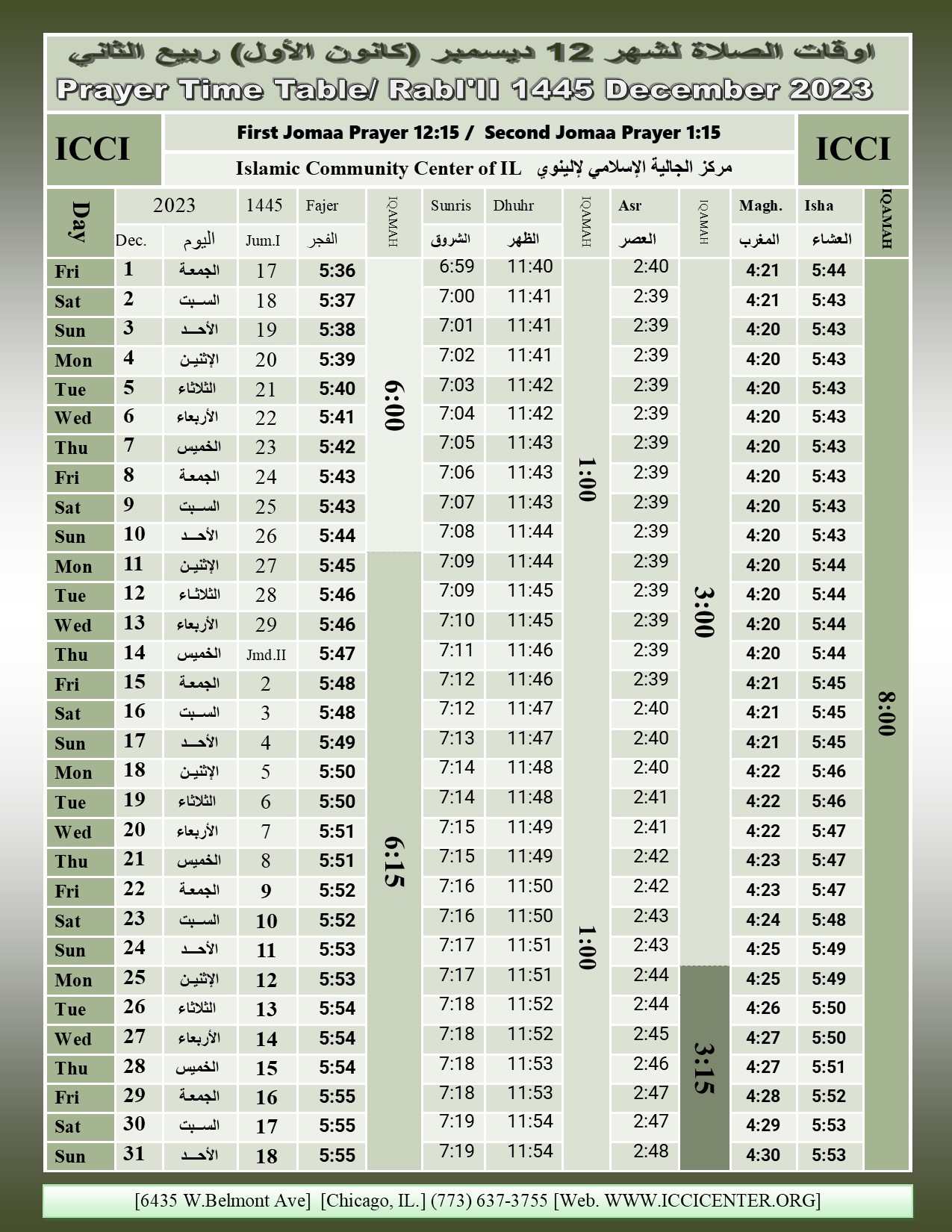
The Digital Revolution in Islamic Prayer Time Calculations
The foundation of any prayer time application or service lies in complex astronomical calculations. These calculations determine the exact moments of sunrise, sunset, and other celestial phenomena critical for defining the five daily prayers. Technology has digitized and standardized these methods, making highly precise prayer times accessible to billions.
Astronomical Algorithms and Their Evolution
Modern prayer time applications leverage well-established astronomical algorithms, many of which have roots in centuries-old Islamic scholarship but are now executed with computational speed and precision. Key to these calculations are factors like the Earth’s rotation, tilt, and orbit around the sun, alongside the observer’s exact geographic coordinates (latitude and longitude). Different schools of thought within Islam employ slightly varied methods for determining specific prayer times, particularly Fajr (dawn) and Ishā (night). For instance, methods vary in their definitions of the angles of the sun below the horizon for Fajr and Ishā, or the ‘one-seventh’ rule for areas with extreme latitudes.
Digital platforms must incorporate multiple calculation methods (e.g., Muslim World League, Islamic Society of North America (ISNA), University of Islamic Sciences, Karachi, Umm al-Qura University, Makkah, Egyptian General Authority of Survey) allowing users in Chicago, or any city, to select the one that aligns with their preferred jurisprudential school or local mosque’s practice. The computational power of modern processors allows these intricate calculations to be performed in milliseconds, providing instantaneous, custom schedules based on user-selected criteria. Furthermore, these algorithms are robust enough to account for daylight saving time (DST) adjustments, leap years, and other calendar anomalies, ensuring continuous accuracy without manual intervention.
Geographic Specificity and Data Integration
The precision of prayer times for Chicago, or any urban center, hinges on accurate geographic data. Global Positioning System (GPS) technology, complemented by Wi-Fi and cellular triangulation, allows mobile devices to pinpoint a user’s exact location with remarkable accuracy. This location data (latitude and longitude) is the primary input for the astronomical algorithms. Without precise location, the calculated times would be generalized and potentially inaccurate for specific neighborhoods within a large metropolitan area like Chicago.
Beyond static coordinates, advanced applications integrate dynamic data streams. These include real-time adjustments for local weather conditions (though less impactful on celestial calculations than on visibility), and importantly, the integration of established “city lists” or “prayer time databases” that may have local corrections or consensus timings for specific regions. For example, while the underlying algorithm provides a baseline, some cities or large communities might have adopted a slightly adjusted calculation for communal harmony, which leading apps might incorporate as an optional override or a pre-set for users in Chicago. This level of data integration ensures that the technology respects both universal astronomical principles and localized religious practices.
Essential Apps and Platforms for Prayer Timings
The digital ecosystem for prayer times is rich with diverse applications and platforms, each offering a unique set of features designed to enhance a Muslim’s daily religious practice. For residents and visitors in Chicago, these tools provide unparalleled access to accurate and timely information.
Top Mobile Applications for Muslim Users
Mobile apps have become the primary interface for accessing prayer times. Applications like “Muslim Pro,” “Athan,” “Salat Time,” and “Prayer Now” consistently rank among the most popular. These apps don’t just display prayer times; they are comprehensive spiritual toolkits. Key features include:
- Customizable Calculation Methods: Users can select from various international calculation methods to match local Chicago mosque practices or personal preference.
- Adhan Notifications: Automated calls to prayer (Adhan) at specified times, often with a selection of Muezzin voices, serving as an audible reminder for Maghrib and other prayers.
- Qibla Finder: Utilizing the device’s compass and GPS, these apps accurately point towards the Kaaba in Mecca, irrespective of the user’s location in Chicago.
- Islamic Calendar: Integration of the Hijri calendar, often alongside the Gregorian calendar, for tracking important Islamic dates and events.
- Quran Integration: Full digital Quran with multiple translations, recitations, and bookmarking features.
- Duas and Supplications: Collections of prayers for various occasions.
- Mosque Locator: A map-based feature to find nearby mosques, invaluable for travelers or newcomers to Chicago.
- Widgets: Home screen widgets provide at-a-glance prayer times without opening the app.
The user interface (UI) and user experience (UX) design of these apps are continually refined to ensure ease of use, visual clarity, and responsiveness, making them indispensable daily companions for millions.
Web-Based Services and Smart Speaker Integration
Beyond mobile applications, web-based platforms and smart speaker integration offer alternative avenues for accessing prayer times. Websites like IslamicFinder.org or time.is/Maghrib provide quick access to prayer schedules for any location, including Chicago, often with options to view monthly calendars. These platforms are particularly useful for desktop users or those who prefer not to download additional apps.
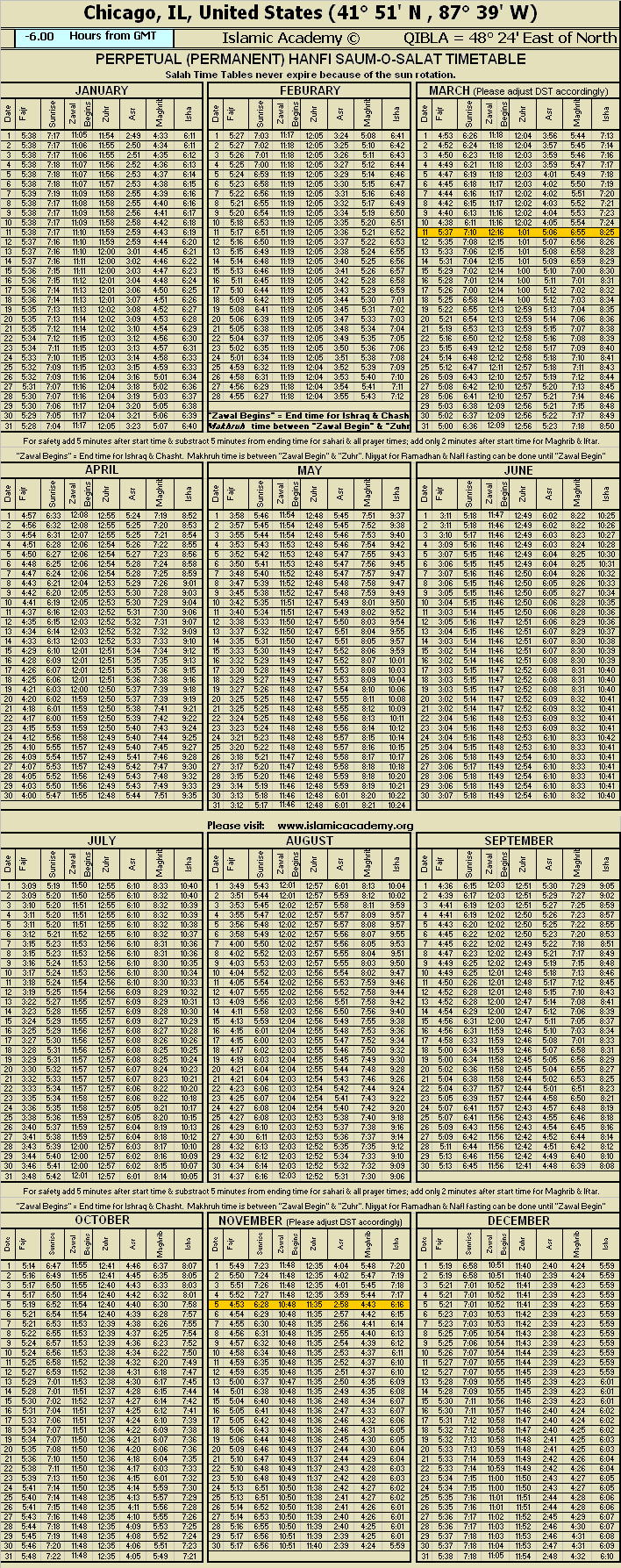
The rise of smart home technology has also extended to religious services. Voice assistants like Amazon Alexa and Google Assistant can be configured with “skills” or “actions” that provide prayer times. A simple voice command, “Alexa, what time is Maghrib in Chicago today?” or “Hey Google, when is the next prayer?”, will instantly retrieve the relevant information. This hands-free access integrates prayer time information directly into the ambient computing environment of modern homes, offering convenience, especially for those who are busy or have mobility challenges.
Ensuring Accuracy and Reliability in Digital Prayer Tools
While technology offers immense advantages, the reliability and accuracy of digital prayer tools are paramount. Users in Chicago and elsewhere depend on these systems for fulfilling their religious obligations, necessitating rigorous attention to data integrity and system design.
Challenges of Data Synchronization and User Input
One significant challenge lies in ensuring that the underlying astronomical data and calculation methods are consistently updated and correctly applied across all platforms. Discrepancies can arise from outdated algorithms, incorrect geographical coordinates, or errors in accounting for local anomalies like extreme latitude adjustments or daylight saving changes. For a city spanning multiple time zones, or one with complex urban geography, a high level of precision is crucial.
User input also plays a role in potential inaccuracies. Incorrectly entered location data, or the selection of an inappropriate calculation method for a given region, can lead to skewed prayer times. Robust apps mitigate this through automatic location detection, clear guidance on calculation method selection, and user-friendly interfaces that minimize the chance of input errors. Furthermore, the absence of a universally agreed-upon singular prayer time authority globally means that apps must accommodate variations and educate users on their choices rather than imposing a single standard.
Community-Driven Updates and Verification
To enhance reliability, many popular prayer time applications incorporate community-driven features and robust verification processes. This can include:
- Feedback Mechanisms: Users can report discrepancies or suggest improvements, which are then reviewed by app developers or a community moderator team.
- Partnerships with Religious Institutions: Collaborations with local mosques, Islamic centers, or scholarly bodies help validate calculation methods and provide localized adjustments where necessary. For instance, an app might feature the official prayer schedule of a prominent mosque in Chicago as a verified option.
- Open-Source Initiatives: Some projects leverage open-source models, allowing a broader community of developers and Islamic scholars to review, audit, and contribute to the underlying code and data, thereby enhancing transparency and accuracy.
- API Integrations: Reputable apps often integrate with well-maintained APIs (Application Programming Interfaces) from trusted sources that specialize in astronomical calculations, reducing the risk of internal calculation errors.
These measures contribute significantly to building user trust and ensuring that the Maghrib prayer time displayed on a phone in Chicago is as accurate and reliable as possible, reflecting both astronomical truths and community consensus.
Future Innovations in Prayer Time Technology
The trajectory of technological advancement suggests even more sophisticated and integrated solutions for prayer times in the future. Innovations in artificial intelligence, Internet of Things (IoT), and wearable technology are poised to further personalize and embed religious practice into daily life.
AI-Powered Personalization and Predictive Analytics
Future prayer time applications could harness AI to offer highly personalized experiences. AI algorithms could learn a user’s habits, preferred Adhan reciters, and even their daily schedules to provide intelligent, non-intrusive reminders. For example, an AI could subtly nudge a user about an approaching Maghrib time based on their calendar, location, and past activity patterns, rather than just a fixed alert.
Predictive analytics could also play a role. Beyond just displaying current times, AI might forecast the impact of future astronomical events or even suggest optimal times for prayers during travel, adjusting proactively for time zone changes and geographical shifts. This would move beyond static time display to dynamic, anticipatory spiritual assistance.

Wearable Tech and Immersive Experiences
The integration of prayer times with wearable technology like smartwatches is already a reality, but future iterations could be more seamless and feature-rich. Imagine haptic feedback on a smartwatch gently vibrating for the Adhan, or a subtle visual cue integrated into smart glasses displaying the Qibla direction.
Augmented Reality (AR) and Virtual Reality (VR) could offer immersive experiences. While finding Maghrib time might seem mundane for AR/VR, these technologies could create engaging educational content about prayer rituals, visualize celestial alignments, or even provide virtual mosque tours. The goal would be to blend the spiritual aspect of prayer with the digital realm, making knowledge and practice more accessible and deeply integrated into the fabric of modern, tech-enabled living, ensuring that questions like “what time is Maghrib prayer in Chicago” are not just answered, but seamlessly anticipated and supported by an intelligent digital companion.
aViewFromTheCave is a participant in the Amazon Services LLC Associates Program, an affiliate advertising program designed to provide a means for sites to earn advertising fees by advertising and linking to Amazon.com. Amazon, the Amazon logo, AmazonSupply, and the AmazonSupply logo are trademarks of Amazon.com, Inc. or its affiliates. As an Amazon Associate we earn affiliate commissions from qualifying purchases.