
The Dawn of CVT in the Nissan Altima Lineup
The automotive landscape has undergone significant technological shifts over the past few decades, particularly concerning powertrain design. Among these innovations, the Continuously Variable Transmission (CVT) stands out as a departure from traditional geared automatic transmissions. Nissan has been a prominent pioneer and advocate for CVT technology, integrating it across a vast majority of its model lineup, including its popular mid-size sedan, the Altima.
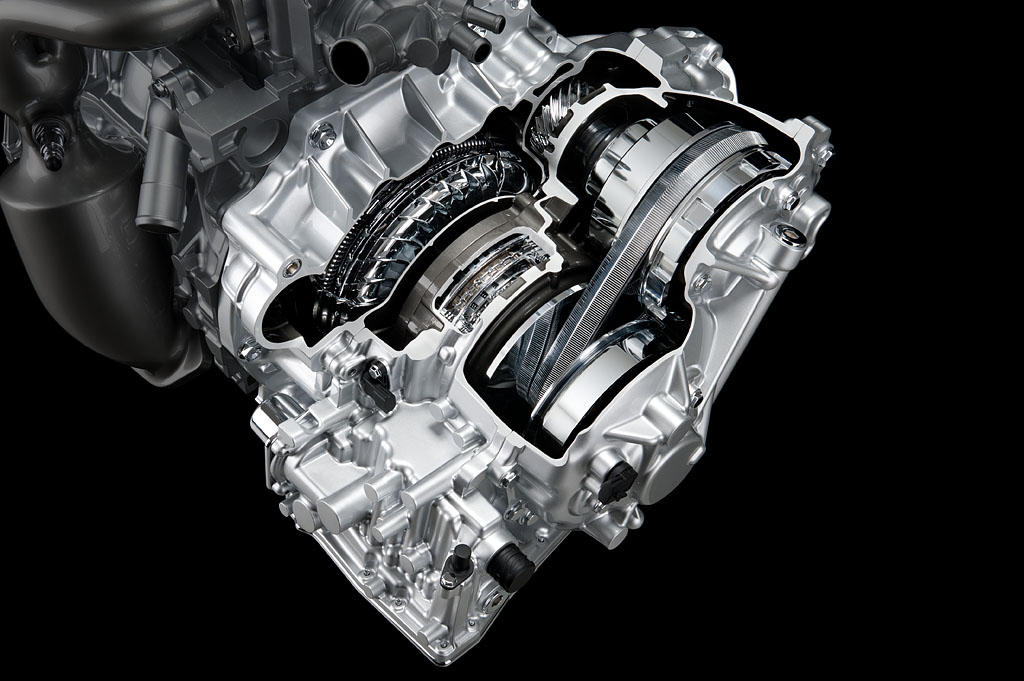
A CVT fundamentally differs from conventional automatics by eliminating fixed gear ratios. Instead, it utilizes a system of pulleys and a belt or chain to provide an infinite number of gear ratios within a specific range. This design allows the engine to operate at its most efficient RPM for a given speed, theoretically optimizing both fuel economy and power delivery. Nissan’s specific iteration of this technology is known as “Xtronic CVT,” a brand name that has become synonymous with the Altima’s transmission system.
Early Adoption and the Shift from Traditional Automatics
Nissan began its aggressive push into CVT technology in the early 2000s, initially with models like the Murano and Maxima. The company recognized the potential for improved fuel efficiency and smoother acceleration that CVTs offered, aligning with evolving consumer demands and stricter environmental regulations. The decision to transition from conventional automatic transmissions to CVTs was a strategic move aimed at differentiating Nissan vehicles in a highly competitive market segment. The promise of seamless acceleration, devoid of the noticeable shifts inherent in geared transmissions, was a key selling point.
Identifying the Initial CVT Years
For the Nissan Altima specifically, the widespread adoption of the Xtronic CVT began with the 2007 model year. This marked the introduction of the fourth generation (L32) Altima. Prior to 2007, Altima models featured conventional four-speed or five-speed automatic transmissions, or a five-speed manual transmission. With the 2007 redesign, Nissan made the Xtronic CVT standard across both the 2.5-liter four-cylinder and the 3.5-liter V6 engine options. This integration solidified the CVT as a core technological component of the Altima moving forward, aiming to deliver class-leading fuel economy and a smooth, uninterrupted driving experience that conventional automatics of the era struggled to match.
The Evolution and Pervasiveness of Nissan’s Xtronic CVT
Once the Xtronic CVT was introduced in 2007, it rapidly became a defining characteristic of the Nissan Altima. Nissan committed to refining and enhancing this technology across subsequent generations, embedding it deeply into the Altima’s engineering DNA.
Generational Integration
The 2007 model year, which kicked off the fourth generation, was the pivotal point. Every Altima produced from that year onward, whether equipped with the 2.5L four-cylinder or the 3.5L V6 engine, utilized an Xtronic CVT as its automatic transmission option. Manual transmissions were phased out for the Altima after the 2013 model year, making the CVT the sole transmission choice for new Altima buyers.
- Fourth Generation (L32, 2007-2012): All automatic Altima models were equipped with the Xtronic CVT. This generation saw significant strides in fuel efficiency over its predecessors.
- Fifth Generation (L33, 2013-2018): Nissan continued its commitment to the CVT, making it the exclusive automatic transmission across all trims and engine choices. For this generation, Nissan introduced “D-Step Shift Logic,” an enhancement designed to simulate traditional gear shifts under specific driving conditions, addressing some driver feedback about the linear feel of earlier CVTs.
- Sixth Generation (L34, 2019-Present): The latest iteration of the Altima also exclusively features the Xtronic CVT. This generation introduced further refinements, particularly in conjunction with the available all-wheel-drive system (a first for the Altima) and the innovative Variable Compression Turbo (VC-Turbo) engine offered in some trims. The CVT was engineered to handle the varying power outputs and provide seamless power delivery to all four wheels when equipped.
Technical Enhancements and Iterations
Nissan’s Xtronic CVT is not a static technology; it has undergone continuous development. Early CVTs were sometimes criticized for a “rubber band” effect, where engine RPM would rise and stay high without a proportional increase in speed, and for a general lack of engagement. Nissan addressed these concerns through several technical enhancements:
- Improved Efficiency: Later iterations of the Xtronic CVT feature reduced internal friction, lighter components, and more precise electronic control, contributing to better fuel economy figures.
- Reduced Noise and Vibration: Nissan invested in improved dampening technologies and refined internal components to minimize the characteristic “drone” sometimes associated with CVTs, particularly under hard acceleration.
- D-Step Tuning and Simulated Gear Changes: As mentioned, the fifth generation introduced software logic that simulates distinct gear ratios during acceleration. This provides a more familiar driving experience for those accustomed to conventional automatics, making the power delivery feel more connected and less linear, especially during spirited driving.
- Wider Ratio Spread: Modern Xtronic CVTs boast a wider ratio spread than older versions, allowing the engine to operate more efficiently at both low and high speeds, further enhancing fuel economy and acceleration. This wider range essentially gives the engine more flexibility to stay in its optimal power band.
Why Nissan Chose CVT
Nissan’s decision to heavily invest in and integrate CVT technology was driven by several compelling technical advantages:
- Superior Fuel Economy: By allowing the engine to consistently operate at its most efficient RPM, CVTs inherently offer better fuel economy compared to multi-gear automatics, especially in city driving cycles.
- Smooth, Continuous Acceleration: The absence of gear changes means acceleration is remarkably smooth and linear, with no perceptible shift shock, enhancing passenger comfort.
- Optimal Power Delivery: A CVT can always select the ideal “gear” ratio for the current driving conditions, ensuring that power is delivered efficiently to the wheels, whether cruising or accelerating aggressively.
- Packaging Efficiency: CVTs can often be more compact and lighter than complex multi-speed automatic transmissions, contributing to overall vehicle design flexibility and reduced curb weight.
Understanding CVT Performance and User Experience
The integration of CVT technology fundamentally alters the driving experience compared to vehicles equipped with traditional geared transmissions. For Nissan Altima owners, understanding these characteristics is key to appreciating the vehicle’s engineering.
The Drive Feel: Pros and Cons
The unique operational principle of a CVT translates into a distinct driving sensation:
- Pros:
- Seamless Acceleration: The most immediate benefit is the absence of shift shock. As you press the accelerator, the vehicle glides forward with a smooth, continuous surge of power, making for a remarkably refined and comfortable ride, especially in stop-and-go traffic.
- Optimal Engine RPM: The CVT’s ability to keep the engine at its most efficient RPM for a given speed is beneficial for both fuel economy and quiet cruising. At highway speeds, the engine typically runs at lower RPMs than in many traditional automatics, contributing to a quieter cabin.
- Instantaneous Power Delivery (when needed): When demanding quick acceleration, the CVT can instantly put the engine into its peak power band, rather than waiting for a downshift.
- Cons:
- “Rubber Band” Effect: Under hard acceleration, particularly in earlier CVT iterations, the engine RPM would often rise quickly and stay high while the vehicle speed caught up more slowly, creating a disconnected feeling akin to a rubber band stretching. While modern CVTs, including Nissan’s Xtronic, have largely mitigated this with D-Step tuning, it can still be noticeable to some drivers.
- Engine Drone: Related to the rubber band effect, the engine holding a consistent high RPM during heavy acceleration can sometimes lead to a monotonous engine drone that some drivers find less engaging or pleasant than the varied engine notes of a shifting geared transmission.
- Different Tactile Feedback: Drivers accustomed to the distinct feel of gear changes might initially find the CVT’s linear power delivery less “sporty” or less engaging, lacking the auditory and physical cues of traditional shifts.
Fuel Efficiency Benchmarks
One of the primary motivations for Nissan’s widespread CVT adoption was fuel efficiency. The Altima, with its Xtronic CVT, consistently ranks among the most fuel-efficient vehicles in its class, especially for non-hybrid variants. For example, a modern 2.5-liter Nissan Altima with a CVT can achieve EPA estimates in the high 20s for city driving and mid-30s for highway, figures that are highly competitive. The CVT’s ability to maintain the engine’s optimal operating range directly translates to fewer trips to the pump, providing a tangible economic benefit to owners. This efficiency gain is a significant technical advantage over many competitors employing conventional geared automatics, which often struggle to match the CVT’s ability to keep the engine in its “sweet spot.”
Longevity and Maintenance Considerations for CVT
Concerns about CVT durability have been a recurring topic of discussion within the automotive community. While early generations of CVTs across various manufacturers faced challenges, modern Nissan Xtronic CVTs have seen significant improvements in reliability. However, proper maintenance remains critical for ensuring their longevity.
- Fluid Changes: Unlike some “sealed for life” traditional automatics, CVTs often require specific fluid changes at manufacturer-recommended intervals. Nissan specifies its proprietary NS-2 or NS-3 CVT fluid, and using the correct fluid is paramount. Incorrect fluid can lead to premature wear and failure. Checking the owner’s manual for the exact service schedule (typically every 60,000 to 100,000 miles, but dependent on driving conditions) is essential.
- Operating Temperatures: CVTs can be sensitive to excessive heat, which can degrade the fluid and internal components. Proper cooling system maintenance is important.
- Driving Habits: While modern CVTs are robust, consistently aggressive driving, particularly towing heavy loads (which the Altima is generally not designed for), can put undue stress on the transmission. Regular, smooth driving helps extend its life.
Adhering to Nissan’s prescribed maintenance schedule, using genuine Nissan CVT fluid, and understanding the nuances of CVT operation are the best ways to ensure an Altima’s Xtronic CVT performs reliably over its lifespan.
The Future of CVT in Automotive Technology
As the automotive industry continues its rapid evolution, particularly towards electrification, the role of the CVT is also being redefined. While its core advantages remain relevant for internal combustion engine (ICE) vehicles, its future integration involves new challenges and opportunities.
Hybridization and Electrification
For traditional gasoline engines, the CVT remains a highly effective solution for optimizing efficiency and smoothness. Its ability to keep the engine within a narrow, efficient RPM band is particularly valuable in hybrid powertrains. While the Nissan Altima Hybrid (briefly offered from 2007-2011) utilized a hybrid system derived from Toyota, which employed an electronically controlled CVT (eCVT) integrated with the hybrid transaxle, this is distinct from the Xtronic CVT found in mainstream gasoline Altimas.
However, the principles of continuously variable power delivery are evident in many hybrid and fully electric vehicle architectures. For instance, single-speed transmissions in EVs essentially provide an infinite “gear” ratio within their operating range, much like a CVT. As hybrid technology progresses, variations of CVT-like systems will likely continue to play a role in optimizing the power flow between internal combustion engines and electric motors. For Nissan’s own e-POWER system (available in other markets and models), the gasoline engine primarily acts as a generator, highlighting a different approach to powertrain integration that deviates from a traditional mechanical CVT for propulsion.

Ongoing Development and Competitor Approaches
Nissan continues to invest in the Xtronic CVT, refining its hardware and software to improve durability, efficiency, and driver engagement. Future iterations may see further integration with advanced driver-assistance systems and even more sophisticated D-Step logic to mimic the feel of multi-speed automatics. Innovations like multi-ratio CVTs, which effectively layer a small planetary gearset over the CVT, can further extend the overall ratio spread, combining the best aspects of both CVT and traditional geared transmissions.
While Nissan has been a staunch proponent of the CVT, other manufacturers have adopted different strategies. Many have opted for highly sophisticated multi-speed automatic transmissions (8, 9, or even 10 speeds) or dual-clutch transmissions (DCTs) to achieve similar goals of efficiency and performance. These technologies each have their own set of advantages and disadvantages in terms of cost, complexity, performance, and drive feel. Nissan’s continued commitment to the Xtronic CVT for the Altima underscores its belief in the technology’s inherent advantages, particularly its ability to balance fuel economy, smooth operation, and manufacturing cost-effectiveness in the mid-size sedan segment. The technological trajectory for CVTs will likely focus on even greater integration with electronic control systems, enhanced material science for components, and further refinements to deliver a more engaging and responsive driving experience without sacrificing efficiency.
aViewFromTheCave is a participant in the Amazon Services LLC Associates Program, an affiliate advertising program designed to provide a means for sites to earn advertising fees by advertising and linking to Amazon.com. Amazon, the Amazon logo, AmazonSupply, and the AmazonSupply logo are trademarks of Amazon.com, Inc. or its affiliates. As an Amazon Associate we earn affiliate commissions from qualifying purchases.