
Non-slip shoes are a remarkable convergence of material science, engineering principles, and ergonomic design, engineered to provide enhanced traction and stability on various challenging surfaces. Far more than just a pair of shoes with a textured sole, their efficacy stems from a sophisticated interplay of physical properties and design innovations that actively combat the forces leading to slips and falls. Understanding what truly makes a shoe “non-slip” involves delving into the nuanced world of friction, material composition, and intricate sole geometries.
The Science of Friction: The Foundation of Grip
At its core, a non-slip shoe’s primary objective is to maximize friction between the sole and the walking surface. Friction is the force that resists motion when two surfaces are in contact. In the context of shoes, it’s the force that prevents the foot from sliding. Non-slip technologies manipulate both the coefficient of friction and the contact area to achieve superior grip, particularly in the presence of contaminants like water, oil, or grease. This manipulation occurs at both macro and micro levels.
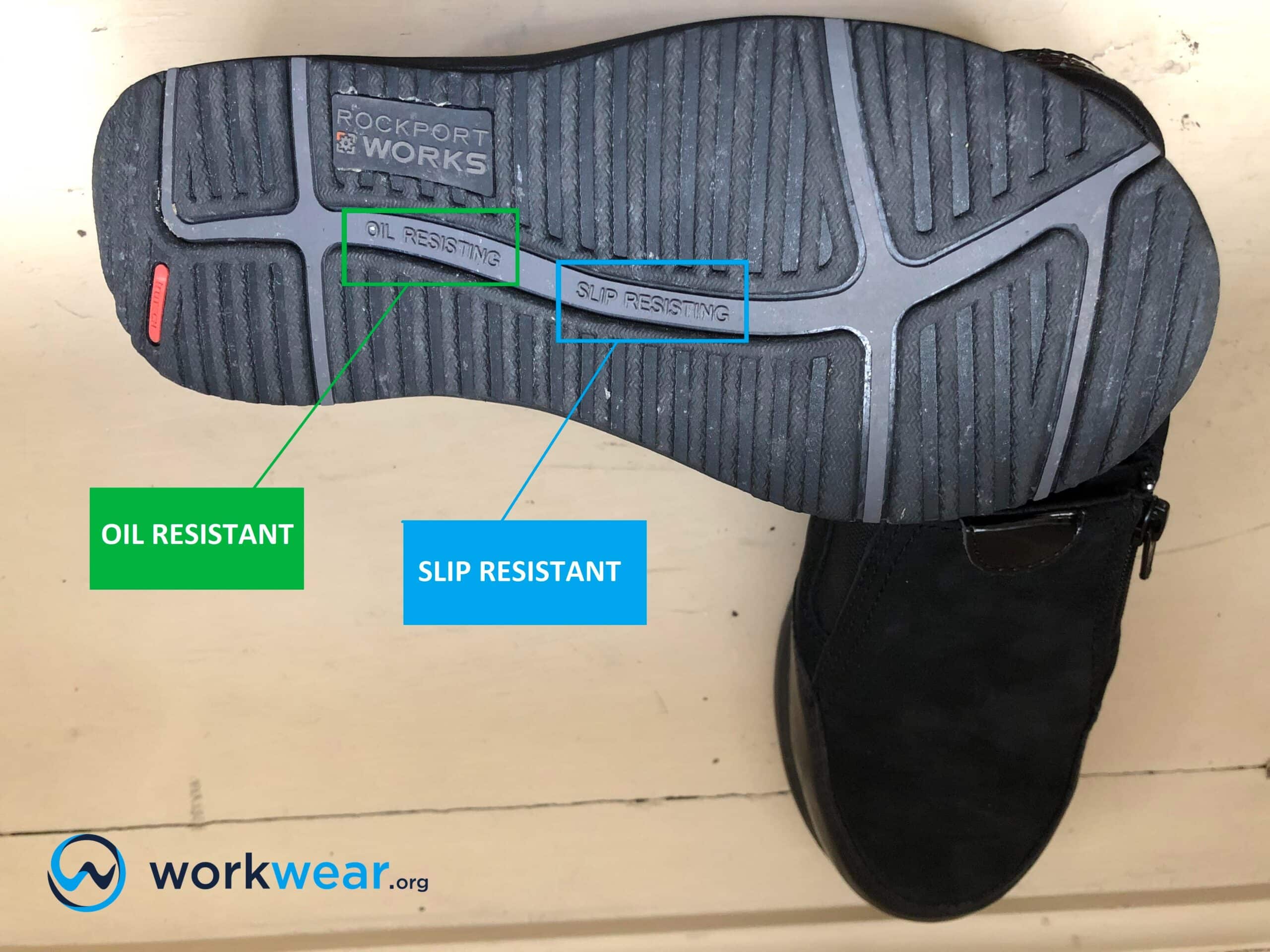
Macro-Level Design: Tread Patterns and Siping
The visible design elements of a shoe’s sole, known as the tread pattern, are critical in establishing macro-level grip. Unlike conventional shoes with aesthetic or simple patterns, non-slip shoes feature deliberately engineered patterns designed to displace liquids and create robust contact points.
- Open and Multi-Directional Treads: Non-slip soles often incorporate wide, multi-directional channels and lugs. These patterns serve a dual purpose: they increase the surface area available for grip and, more importantly, act as conduits to channel liquids away from the immediate point of contact. This prevents hydroplaning, similar to how car tires are designed, by ensuring the sole can physically touch the dry surface beneath the liquid film. The multi-directional nature ensures grip is maintained regardless of the direction of movement, which is crucial in dynamic work environments.
- Siping: A key feature in many high-performance non-slip soles is siping. These are thin, razor-cut slits or grooves integrated into the tread blocks. Siping significantly enhances traction, particularly on wet or icy surfaces. When pressure is applied, the sipes open up, creating numerous small “edges” that bite into the surface, drastically increasing the effective contact area and improving grip. Furthermore, like larger channels, sipes help to wick away thin layers of liquid, preventing them from forming a continuous film that could reduce friction.
Micro-Level Design: Material Composition and Durometer
Beyond the visible tread, the very material of the sole, along with its specific properties, plays an equally critical role in micro-level friction. This involves the science of material compounds and their physical characteristics.
- Material Selection: The choice of material for the sole is paramount. While many materials can provide some level of friction, non-slip shoes almost exclusively utilize specialized rubber compounds or synthetic polymers. These materials are chosen for their high coefficient of friction, inherent flexibility, and resilience.
- Durometer (Hardness): The hardness of the sole material, measured by its durometer, is a finely tuned characteristic. Non-slip soles typically feature a softer durometer than standard shoe soles. A softer material allows the sole to conform more effectively to the microscopic irregularities of the walking surface. This deformation increases the intimate contact between the sole and the ground, leading to stronger intermolecular forces (adhesion) and greater mechanical interlocking, both of which contribute to enhanced friction. However, there’s a delicate balance: a material that is too soft might wear out too quickly or lack sufficient support. Engineers optimize durometer to achieve maximum grip without compromising durability or comfort.
Advanced Materials: Engineering for Enhanced Traction
The evolution of non-slip footwear is largely driven by advancements in polymer chemistry and material science. Manufacturers invest heavily in research and development to formulate proprietary rubber blends and synthetic compounds that offer superior slip resistance under specific conditions.
Rubber Compounds: The Unsung Heroes
Natural and synthetic rubbers are the bedrock of non-slip sole technology. Their inherent elasticity, resilience, and molecular structure make them ideal for creating high-friction surfaces.
- Synthetic Rubber Blends: Modern non-slip soles often employ complex synthetic rubber blends, such as nitrile rubber or specialized styrene-butadiene rubber (SBR) compounds. These blends are formulated to optimize properties like oil resistance, abrasion resistance, and temperature stability, in addition to superior grip. For instance, nitrile rubber is highly resistant to oils and chemicals, making it excellent for kitchen or industrial environments where such contaminants are prevalent.
- Polymer Additives: To further enhance performance, various additives are incorporated into the rubber compounds during manufacturing. These can include silica, carbon black, or other specialized polymers that modify the material’s viscoelastic properties. Silica, in particular, is known for its ability to improve wet grip by increasing the molecular interaction between the rubber and the wet surface, disrupting the water film and enhancing micro-texture adhesion.
Polymer Blends and Additives: Customizing Performance
Beyond pure rubber, engineers often create sophisticated polymer blends that combine the best properties of different materials. This allows for customization of the sole’s performance for specific environments.
- Thermoplastic Polyurethanes (TPU): While often used for support and durability in other parts of a shoe, certain TPU blends can be integrated into sole designs or used as part of multi-density outsoles to provide specific grip characteristics, particularly when combined with softer rubber elements.
- Specialized Resins: Some manufacturers incorporate unique resins or other synthetic materials that can further enhance friction or provide resistance to extreme temperatures or caustic chemicals, tailoring the shoe for highly specialized industries. The goal is always to create a material that remains flexible and grippy across a wide range of temperatures and surface conditions, without becoming overly sticky or quickly degrading.
Innovative Sole Geometries and Manufacturing Techniques
The design of a non-slip sole is a highly sophisticated process, blending aesthetic considerations with precise engineering to achieve optimal performance. The geometry extends beyond simple tread patterns, involving complex contours and strategically placed elements.
Multi-Directional Treads: Adapting to Diverse Surfaces
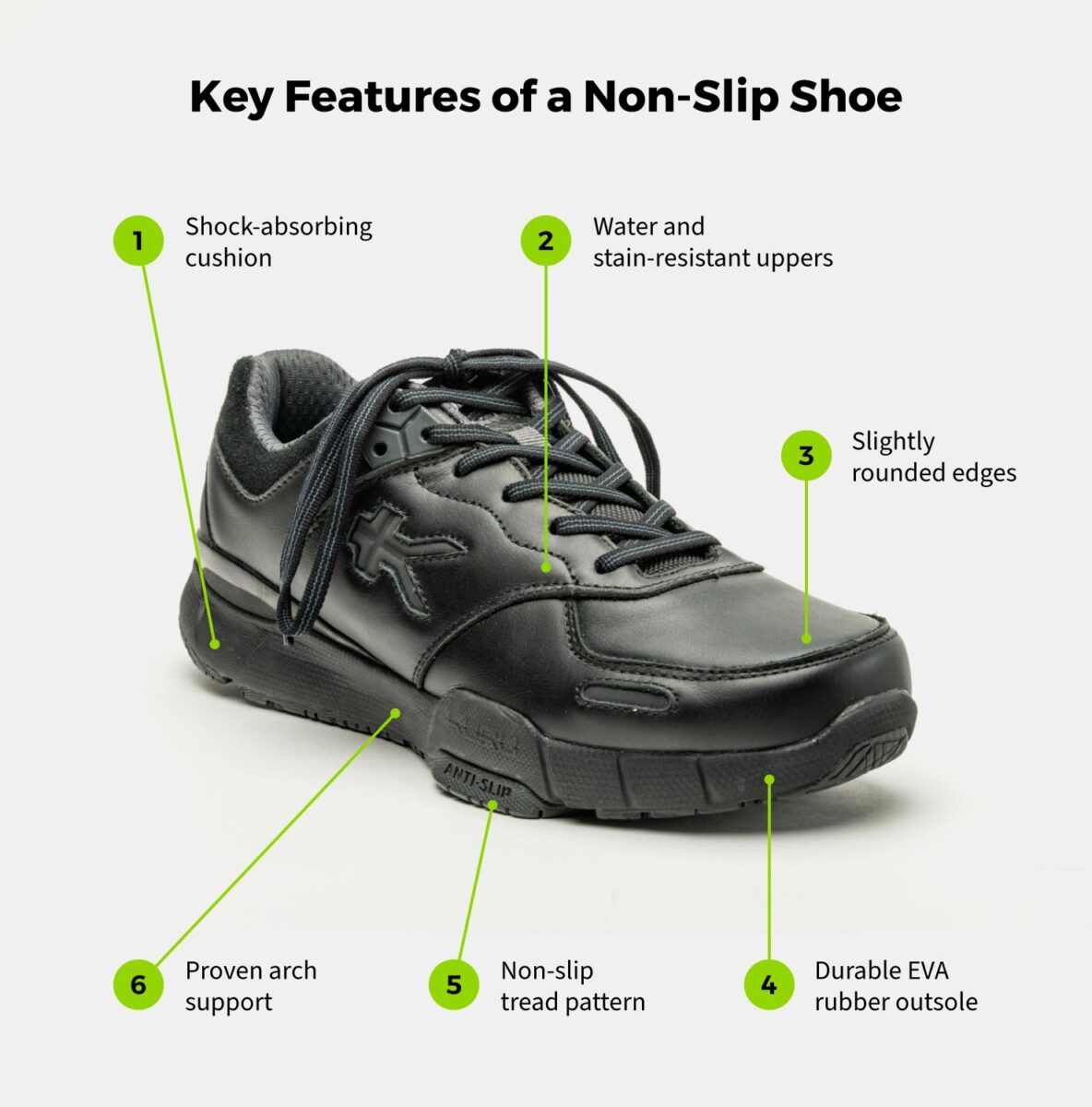
The most effective non-slip soles feature tread patterns that are not merely decorative but functional and multi-directional.
- Omni-Directional Grip: Instead of linear grooves that only provide traction in one direction, non-slip soles often have intricate, interlocking patterns that create grip in all directions. This is crucial for environments where workers are constantly pivoting, turning, and moving laterally, such as in restaurants or healthcare facilities. The tread blocks are designed to “catch” the surface from multiple angles, preventing slips regardless of the force exerted.
- Segmented Sole Design: Some advanced soles incorporate segmented designs, where different areas of the sole have distinct tread patterns or material properties. This allows for optimized grip during various phases of the walking gait, with different segments engaging the ground depending on whether the foot is landing, rolling, or pushing off.
Siping and Channels: Dispersing Liquids Effectively
The strategic integration of siping and larger channels is paramount for displacing liquids and preventing the reduction of friction.
- Hydrodynamic Design: The channels are not simply grooves; they are often designed with specific angles and depths to efficiently pump water, oil, or grease away from the contact patch. This “hydrodynamic” design prevents contaminants from getting trapped between the sole and the surface, which would otherwise create a lubricating film. The efficiency of this displacement is a major factor in determining a shoe’s wet grip performance.
- Varied Siping Depths and Angles: Siping can vary in depth, width, and angle across different parts of the sole. Deeper sipes might be used for heavy liquid displacement, while shallower, denser sipes might offer more edge grip on smoother, wet surfaces. The specific combination is often optimized through extensive testing and simulation.
Beyond the Sole: The Role of Overall Shoe Design
While the sole is undeniably the star of the show for non-slip properties, the overall design and construction of the shoe contribute significantly to its stability and effectiveness in preventing slips. A non-slip sole is only as good as the platform it’s attached to.
Stability and Support: Preventing Slips Before They Happen
A well-designed non-slip shoe extends its protective qualities beyond mere sole-to-ground contact.
- Secure Fit and Ankle Support: A shoe that fits poorly or allows the foot to slide around internally can compromise balance and increase the risk of a slip, even with a superior sole. Non-slip shoes often feature a secure lacing system, snug fit, and adequate ankle support to keep the foot firmly in place, ensuring stability and precise foot placement.
- Midsole Cushioning and Stability Plates: While cushioning is important for comfort, too much softness can reduce stability. Non-slip shoes often incorporate balanced cushioning with stability features, such as rigid shanks or plates within the midsole. These elements prevent excessive twisting of the foot and provide a stable platform for the foot, allowing the wearer to maintain balance even on uneven or slippery surfaces.
Weight Distribution and Flexibility: Maintaining Contact
The way weight is distributed and how the shoe flexes are critical for continuous ground contact.
- Flexibility in Key Areas: The sole needs to be flexible enough to conform to uneven surfaces and allow the foot to move naturally. However, excessive flexibility can compromise stability. Non-slip shoes are engineered with strategic flex points that allow for natural foot movement while maintaining maximum sole-to-surface contact throughout the gait cycle.
- Low Profile and Wide Base: Many non-slip shoes feature a relatively low profile and a wide base. A low profile brings the foot closer to the ground, improving stability and reducing the leverage that can lead to falls. A wider base provides a larger footprint, enhancing overall balance and contact area.
Testing and Standards: Ensuring Performance and Safety
The claims of “non-slip” are not merely marketing rhetoric; they are backed by rigorous scientific testing and adherence to industry standards. These processes ensure that shoes truly deliver on their promise of enhanced safety.
Slip Resistance Testing Methods: Quantifying Grip
Manufacturers employ various standardized tests to quantify the slip resistance of their footwear. These tests often involve measuring the coefficient of friction (CoF) between the shoe sole and various contaminated surfaces.
- Static Coefficient of Friction (SCOF): Measures the force required to initiate movement from a standstill.
- Dynamic Coefficient of Friction (DCOF): Measures the force required to maintain movement once it has begun. DCOF is often considered a more accurate predictor of real-world slip risk, as most slips occur when a foot is already in motion.
- Testing Equipment: Specialized machines, such as tribometers, are used to simulate walking conditions on controlled surfaces (e.g., quarry tile with water, vinyl with oil). The shoe sole is pressed against the surface at a specific force, and the machine measures the resistance to sliding.
- Common Standards: Various regional and international standards exist, such as ASTM F2913 (for footwear on flooring), EN ISO 20345 (European safety footwear standards), and NFSI (National Floor Safety Institute) standards. These benchmarks help consumers and industries evaluate and compare the performance of different non-slip footwear.

Industry Standards and Certifications: A Mark of Reliability
For a shoe to be officially classified as non-slip or slip-resistant, it typically needs to meet or exceed specific performance thresholds set by recognized industry bodies.
- Certification Labels: Look for certifications like “SR” (Slip Resistant) often found on safety footwear, or specific ratings indicating performance on ceramic tiles with soap (SRA), steel with glycerol (SRB), or both (SRC). These labels provide an objective measure of a shoe’s slip resistance performance under defined conditions.
- Manufacturer Guarantees: Reputable manufacturers often stand behind their non-slip technology with specific guarantees or extensive performance data, demonstrating their confidence in their product’s technical capabilities. Adherence to these standards is critical, especially in occupational settings where safety is paramount and regulatory compliance is often required.
Ultimately, what makes non-slip shoes effective is a harmonious blend of innovative material science, intelligent engineering of tread patterns and sole geometry, careful consideration of overall shoe mechanics, and rigorous testing against established standards. This multi-faceted approach transforms a basic necessity into a crucial piece of safety equipment, significantly reducing the risk of slips and falls in challenging environments.
aViewFromTheCave is a participant in the Amazon Services LLC Associates Program, an affiliate advertising program designed to provide a means for sites to earn advertising fees by advertising and linking to Amazon.com. Amazon, the Amazon logo, AmazonSupply, and the AmazonSupply logo are trademarks of Amazon.com, Inc. or its affiliates. As an Amazon Associate we earn affiliate commissions from qualifying purchases.