
The mechanisms by which nations engage on the global stage profoundly shape the landscape of international finance, trade, and investment. For businesses, investors, and economists, understanding the distinction between a treaty and an executive agreement is not merely an academic exercise in constitutional law but a critical dimension of financial planning, risk assessment, and market strategy. These instruments, despite their different legal origins and approval processes, are powerful tools that can create, alter, or dismantle economic opportunities and regulatory frameworks across borders. From trade tariffs and intellectual property rights to investment protections and financial sanctions, their implications resonate deeply within the world of money.

The Foundations of International Financial Commitments
At their core, both treaties and executive agreements are formal pacts between the United States and foreign entities. However, their pathways to becoming binding law within the U.S. — and thus their perceived stability and implications for financial stakeholders — differ significantly. This distinction dictates how enduring a financial commitment might be and the level of confidence international partners or domestic businesses can place in it.
Defining Treaties in a Financial Context
A treaty, in the U.S. constitutional system, is a formal agreement ratified by the President with the “advice and consent” of the Senate. This requires a two-thirds vote in the Senate, making it a rigorous and often lengthy process. Once ratified, a treaty becomes the “supreme Law of the Land,” equivalent to federal statutes.
From a financial viewpoint, treaties represent the highest level of commitment and stability in international economic relations.
- Trade Treaties: These are perhaps the most common financial treaties. Agreements like the North American Free Trade Agreement (NAFTA), now USMCA, establish complex frameworks for tariffs, customs procedures, quotas, and non-tariff barriers, directly impacting import/export costs, market access, and supply chain logistics for businesses. They offer long-term predictability that allows for significant capital investment and strategic planning.
- Bilateral Investment Treaties (BITs): BITs are specifically designed to protect foreign investments. They typically guarantee fair and equitable treatment, protection from expropriation without prompt and adequate compensation, and access to international arbitration for dispute resolution. For multinational corporations, BITs reduce political risk, making foreign direct investment (FDI) in signatory countries more attractive and predictable, thereby influencing capital flows and asset allocation decisions.
- Tax Treaties: These agreements prevent double taxation of income earned by residents of one country from sources in another. They often include provisions for reduced withholding tax rates on dividends, interest, and royalties, and mechanisms for information exchange between tax authorities. For businesses with international operations and individuals with cross-border investments, tax treaties are essential for optimizing tax liabilities and ensuring compliance, directly impacting profitability and personal financial planning.
- International Financial Regulatory Agreements: Treaties can also underpin broader efforts to standardize financial regulations, combat money laundering, or coordinate responses to global financial crises. These frameworks provide a level playing field for financial institutions and reduce systemic risks, indirectly benefiting all market participants through enhanced stability.
The extensive approval process for treaties implies a broader political consensus and a higher degree of legislative buy-in, suggesting greater durability and less susceptibility to unilateral shifts by subsequent administrations. This perceived stability is a significant factor for long-term financial planning and large-scale investment.
Executive Agreements and Economic Leverage
An executive agreement, in contrast, is an agreement made by the President with a foreign head of state or government without requiring Senate advice and consent. There are different types:
- Congressional-Executive Agreements: Authorized by prior legislation or approved by simple majority vote of both houses of Congress.
- Sole Executive Agreements: Made by the President based purely on inherent constitutional authority (e.g., as commander-in-chief or chief diplomat).
While not requiring Senate ratification, executive agreements are nonetheless binding under international law. In U.S. domestic law, their status can be more complex, generally having the same legal force as a treaty or federal statute for congressional-executive agreements, but potentially less so for sole executive agreements.
Financially, executive agreements offer flexibility and speed, often used for more immediate or less permanent arrangements.
- Trade Facilitation and Enforcement: Many day-to-day trade arrangements, such as specific product import quotas, customs cooperation, or temporary tariff adjustments, are handled via executive agreements. These can rapidly respond to changing economic conditions, supply chain disruptions, or political pressures, providing immediate financial relief or imposing new costs on specific industries.
- Sanctions and Asset Freezes: Executive agreements or presidential executive orders (often based on existing statutory authority) are frequently used to impose financial sanctions on foreign entities, individuals, or nations. These can freeze assets, restrict financial transactions, and sever access to global financial systems, directly impacting the finances of targeted entities and creating compliance burdens for financial institutions globally.
- Debt Restructuring and Aid Packages: Agreements related to foreign debt relief, rescheduling, or specific financial aid packages are often concluded as executive agreements, allowing for a quicker response to economic crises or development needs in partner countries. These directly influence sovereign debt markets and international development finance.
- Temporary Investment Pacts: While BITs are typically treaties, some more limited or temporary investment understandings, especially regarding specific projects or sectors, might be structured as executive agreements. These offer a degree of investment protection or market access, though potentially with less long-term assurance than a treaty.
The primary financial distinction for executive agreements lies in their potentially lower threshold for establishment and, consequently, their potential for quicker modification or termination by a subsequent presidential administration. This can introduce a degree of political risk that requires careful consideration in financial forecasting and investment due diligence.
Economic Impact and Business Strategy
The choice between a treaty and an executive agreement carries tangible financial consequences for nations and individual economic actors. Their differing legal standing and political durability impact long-term capital allocation, market stability, and the cost of doing business internationally.
Trade Agreements: Tariffs, Markets, and Supply Chains
For global trade, the distinction can be stark. Treaties like the USMCA provide a comprehensive, multi-decade framework for North American trade, allowing businesses to plan extensive cross-border supply chains, invest in new production facilities, and develop long-term market entry strategies with a high degree of confidence regarding tariffs, intellectual property protections, and regulatory alignment. The significant capital expenditures involved in such ventures demand the stability that a ratified treaty offers.
Executive agreements, while also impactful, tend to address more focused or dynamic aspects of trade. For instance, an executive agreement might temporarily lift tariffs on certain goods in response to a global shortage or impose retaliatory duties. While offering immediate financial relief or imposing sudden costs, these agreements may not guarantee the same long-term stability for businesses that rely on predictable trade environments for their profitability and growth. Companies must integrate scenarios where such agreements might be unilaterally altered or terminated into their financial risk models.
Investment Protection and Capital Flows

The existence of a BIT (a treaty) provides significant comfort to investors contemplating substantial foreign direct investment. Knowing that their assets are protected by international law, enforceable through arbitration, reduces the political risk premium on investments. This can lead to lower capital costs, increased FDI, and ultimately, greater economic growth in host countries. Businesses can model long-term returns more confidently, factoring in protections against expropriation or discriminatory practices.
Conversely, reliance on less formal investment understandings or the general investment climate, potentially shaped by executive policy rather than a treaty, introduces greater uncertainty. A change in administration or foreign policy priorities could rapidly alter the investment landscape, impacting asset valuations, repatriation of profits, and the security of invested capital. Financial due diligence for FDI must critically evaluate the legal basis of any investment protections.
Financial Sanctions and Regulatory Compliance
Executive agreements, often enacted via presidential executive orders under existing statutory authority, are the primary mechanism for imposing financial sanctions. These can have profound financial repercussions. For financial institutions, compliance with complex sanctions regimes is a major operational cost and risk. Non-compliance can lead to massive fines, reputational damage, and loss of market access. For companies engaged in international trade or investment, sanctions can sever supply chains, close off markets, and freeze assets, directly impacting revenue streams and balance sheets.
The speed and relative ease with which executive agreements can impose or modify sanctions regimes require constant vigilance from financial sector compliance teams and risk managers. While treaties might establish frameworks for international cooperation on anti-money laundering or counter-terrorism financing, the immediate, targeted financial impact often stems from executive actions.
The Role in Global Financial Stability and Risk
Both types of agreements play a role in shaping global financial stability, albeit through different mechanisms and with varying degrees of long-term commitment.
Debt Restructuring and International Lending Pacts
Treaties can establish long-term frameworks for international lending, debt relief, and financial stability mechanisms, such as those related to the International Monetary Fund (IMF) or regional development banks. These provide predictable structures for sovereign financing, crucial for managing global financial crises and ensuring stability in emerging markets. Such treaties create multilateral commitments that foster collective financial security.
Executive agreements, on the other hand, are often employed for specific, bilateral debt restructuring deals or emergency financial assistance packages. While critical for immediate crisis management and preventing contagion, their bilateral nature and potential for quicker alteration mean that financial markets may perceive a different level of long-term assurance compared to a multilateral treaty.
Currency Agreements and Monetary Policy Coordination
While explicit currency pegging or deeply integrated monetary policy usually falls under complex multilateral treaties or international bodies (like the Eurozone structure), executive agreements can facilitate cooperation on currency stability, exchange rate interventions, or information sharing between central banks. These can have immediate, albeit often short-term, impacts on foreign exchange markets and capital flows. Investors and traders in currency markets must monitor such announcements closely, as they can directly influence asset prices and trading strategies.
Navigating the Legal and Economic Implications for Businesses
For businesses and investors operating across international borders, understanding the financial implications of treaties versus executive agreements is paramount for strategic planning and risk management.
Certainty vs. Flexibility in International Business Deals
The stability afforded by a treaty provides a high degree of certainty for long-term investments and commitments. A business deciding to build a factory in a foreign country under the umbrella of a trade and investment treaty can rely on predictable market access, tariff structures, and legal protections for decades. This certainty reduces the cost of capital and allows for longer planning horizons.
Executive agreements, while offering flexibility and responsiveness to dynamic economic conditions, introduce a higher degree of policy risk. While they can open new markets quickly or offer rapid relief from economic pressures, their vulnerability to changing political winds requires businesses to build in contingency plans and higher risk premiums into their financial models.
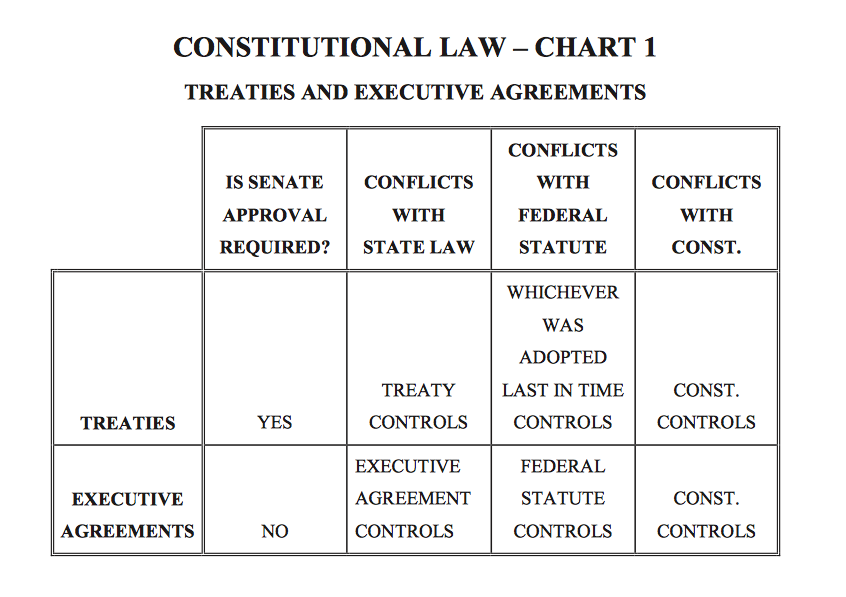
Due Diligence and Risk Management
Financial institutions, multinational corporations, and international investors must conduct thorough due diligence that extends beyond market conditions and operational risks to encompass the geopolitical and legal landscape shaped by these agreements.
- Treaty Analysis: For long-term projects, analyze the specific provisions of relevant treaties (trade, investment, tax) regarding market access, capital repatriation, dispute resolution, and intellectual property. Understand the domestic legal mechanisms for treaty enforcement.
- Executive Agreement Monitoring: For more immediate or politically sensitive ventures, continuously monitor executive orders and agreements for changes in sanctions, trade policy, or regulatory cooperation that could rapidly impact profitability, supply chain viability, or compliance costs.
- Scenario Planning: Develop financial models that incorporate scenarios where key executive agreements might be altered or terminated, assessing the potential impact on revenue, costs, and asset values. Conversely, understand how new executive agreements might create opportunities.
In conclusion, while treaties and executive agreements both serve as critical instruments of international relations with profound financial consequences, their differing approval processes and legal durability create distinct risk profiles for economic actors. Navigating the global financial landscape effectively requires a nuanced understanding of these distinctions, integrating them into strategic decision-making, financial forecasting, and robust risk management frameworks. For those engaged in international finance, trade, and investment, differentiating between these legal mechanisms is not just about law; it’s fundamentally about money.
aViewFromTheCave is a participant in the Amazon Services LLC Associates Program, an affiliate advertising program designed to provide a means for sites to earn advertising fees by advertising and linking to Amazon.com. Amazon, the Amazon logo, AmazonSupply, and the AmazonSupply logo are trademarks of Amazon.com, Inc. or its affiliates. As an Amazon Associate we earn affiliate commissions from qualifying purchases.