
The modern kitchen is a hub of technological innovation, where appliances are more than mere tools; they are integrated systems designed to enhance daily life. Among the myriad specifications that define these essential gadgets, appliance depth stands as a critical, yet often overlooked, dimension impacting both functionality and aesthetic integration. Specifically, understanding the distinction between “counter depth” and “standard depth” is paramount for any homeowner or designer seeking to optimize their kitchen’s technological ecosystem. This difference extends beyond a few inches, influencing layout, capacity, performance, and overall user experience.

Understanding Appliance Dimensions in Modern Kitchen Tech
At its core, the differentiation between counter depth and standard depth revolves around how an appliance, typically a refrigerator, aligns with standard kitchen cabinetry and countertops. This seemingly simple measurement has profound implications for kitchen flow, design coherence, and the practical usability of the space.
Defining Counter Depth
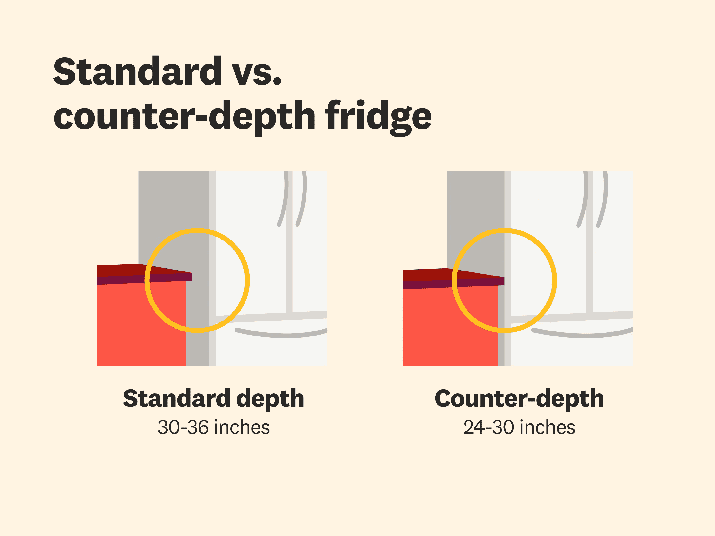
Counter-depth appliances are engineered to sit nearly flush with standard kitchen countertops, which typically measure around 24 to 25 inches deep. For a refrigerator, this means the main body of the unit, excluding the doors and handles, will not protrude significantly beyond the edge of the countertop. The actual depth of a counter-depth refrigerator often ranges from 24 to 27 inches, allowing for some variation and the necessary clearance for doors to open fully without hitting adjacent cabinetry or walls. This design philosophy prioritizes a sleek, built-in look, mimicking the appearance of custom cabinetry and creating an uninterrupted visual line throughout the kitchen. From a technological perspective, counter-depth units represent a design choice that optimizes aesthetic integration, turning the appliance into a seamless component of the kitchen’s architecture rather than a standalone gadget. Their slimmer profile often necessitates a different internal configuration to maximize storage, sometimes employing vertical space more efficiently or integrating advanced compartment designs.
Defining Standard Depth
Standard-depth appliances, conversely, are designed with a primary focus on maximizing internal capacity. These units typically extend beyond the front edge of standard countertops, with depths ranging from 30 to 35 inches or more, including the doors and handles. While their protrusion is more noticeable, it grants significantly larger internal volumes, allowing for greater food storage, wider shelves, and more expansive door bins. For many households, particularly those with larger families or those who buy groceries in bulk, the expansive storage capabilities of a standard-depth refrigerator are a significant technological advantage, providing ample space for diverse food items and specialized storage solutions. The design implicitly acknowledges that some protrusion is an acceptable trade-off for superior internal real estate, focusing on utility and volume over flush integration. This type of appliance is a workhorse, designed for maximum efficiency in storage and often found in more traditionally designed kitchens where sheer capacity is a top priority.
The Impact on Kitchen Design and Integration
The choice between counter-depth and standard-depth appliances has a ripple effect on the entire kitchen’s technological and aesthetic framework. It dictates the perceived spaciousness, the flow of movement, and how seamlessly other smart home components can be integrated.
Seamless Aesthetics vs. Functional Capacity
The primary driver for choosing a counter-depth appliance is often its ability to create a high-end, custom-built appearance. In smart kitchens where design coherence is paramount, a refrigerator that sits flush with cabinets contributes to a minimalist, uncluttered aesthetic. This is particularly appealing in open-concept living spaces where the kitchen is a visual extension of the living area. The “built-in” look achieved by counter-depth models can elevate the perceived value and sophistication of the entire kitchen, making the appliance feel less like a separate gadget and more like an architectural feature. However, this aesthetic advantage often comes with a trade-off in raw storage capacity. While manufacturers employ clever internal designs to maximize space in counter-depth models, a standard-depth unit will almost always offer more cubic feet of storage due to its deeper footprint. For those prioritizing an expansive digital inventory of fresh produce and meal prep, the functional capacity of a standard-depth model often outweighs the aesthetic benefit of a flush fit.
Installation Challenges and Considerations
Beyond aesthetics, the depth of an appliance profoundly impacts installation and kitchen layout. Counter-depth units, while designed for a flush look, still require careful consideration of clearances. Their doors typically need to swing wide enough to clear adjacent cabinets or walls, meaning the unit might still need to pull forward slightly from the absolute flush line, or specific hinge designs are required. Planning for utilities like water lines for ice makers and electrical outlets is also crucial; these often need to be recessed or strategically placed to avoid adding extra inches to the appliance’s overall depth. For standard-depth models, installation is generally more straightforward regarding clearances for the main body, as protrusion is expected. However, the deeper profile can impact kitchen workflow, potentially narrowing walkways in smaller kitchens or making it harder to access adjacent cabinets or drawers if the appliance extends too far. Both types require precise measurement of existing spaces and consideration of potential future kitchen renovations or appliance upgrades to ensure compatibility and ease of integration into the existing home tech infrastructure.
Performance, Features, and User Experience
While the core function of an appliance like a refrigerator remains constant, its depth can subtly influence its performance characteristics, the features it can house, and the overall user experience.
Capacity and Storage Efficiency
The most immediate impact of depth is on capacity. Standard-depth refrigerators typically offer 20-30 cubic feet of storage, while counter-depth models often range from 18-25 cubic feet. This difference isn’t just about total volume; it affects the configuration of internal compartments. Standard-depth units can have deeper shelves and larger door bins, allowing for easier storage of wide platters, large beverage containers, and bulkier items. Counter-depth models, to compensate for their shallower profile, often feature taller and narrower compartments, adjustable shelving systems, and sometimes more sophisticated door-in-door designs or specialized drawers (e.g., for deli items or fresh produce) to maximize every inch. From a tech perspective, this means different approaches to organizing and accessing your “digital inventory” of food. Consumers need to evaluate their grocery habits and storage needs to determine which configuration provides a more efficient and user-friendly experience for their specific lifestyle.
Advanced Features and Smart Integration
The depth of an appliance can also influence the integration of advanced features and smart technology. While both types of appliances now come equipped with smart features like internal cameras, touchscreen displays, and Wi-Fi connectivity for remote control and diagnostics, the physical form factor can affect how these features are experienced. For instance, a larger surface area on a standard-depth model might allow for a more expansive smart display, or deeper doors could house more sophisticated internal water/ice dispensers with advanced filtration systems. Counter-depth models, by virtue of their design constraint, push manufacturers to innovate in compact ways, perhaps integrating touch controls more subtly or utilizing space-saving sensors. The choice isn’t necessarily about having smart features, but how those features are physically manifested and interact with the user within the context of the appliance’s dimensions.
Energy Efficiency and Operational Noise
Energy efficiency ratings (like Energy Star) are determined by various factors, including compressor technology, insulation, and smart algorithms, not solely by depth. However, a larger capacity standard-depth unit may consume more energy simply due to its greater volume needing cooling, though modern efficiency standards mitigate this significantly. Similarly, operational noise levels are primarily a function of compressor design, fan technology, and insulation rather than depth. High-end models of both depths often incorporate advanced noise reduction technologies. Nevertheless, the tighter integration of a counter-depth unit within cabinetry might, in some instances, subtly alter sound resonance or provide better sound dampening due to enclosure, though this is highly dependent on specific installation. Ultimately, consumers should review the specific energy guide and decibel ratings for individual models regardless of depth.
Making the Right Tech Choice for Your Home
Selecting between counter-depth and standard-depth appliances is a decision that blends practical utility with aesthetic aspirations, deeply impacting the technological heart of your kitchen.
Assessing Your Kitchen Layout and Workflow
The dimensions of your kitchen are the most critical factor. In smaller kitchens or those with narrow aisles, a standard-depth refrigerator can obstruct movement and create an awkward workflow. A counter-depth unit, by offering a more streamlined profile, can significantly improve traffic flow and make the space feel larger and more organized. Conversely, in expansive kitchens, the protrusion of a standard-depth model might be less noticeable, and its added capacity could be a greater asset. Consider where the refrigerator will be placed relative to other appliances (oven, sink, dishwasher) and walking paths to ensure a cohesive and ergonomic layout. Think about how many people regularly use the kitchen and how often they move around the appliance.
Budget vs. Design Priorities
Historically, counter-depth appliances have often carried a higher price tag than their standard-depth counterparts, primarily due to the engineering challenges involved in compacting advanced features and maintaining capacity within a shallower footprint. While prices have become more competitive, a premium can still exist. Your budget is a practical constraint, but it should be weighed against your design priorities. If a sleek, integrated look is a non-negotiable aspect of your smart kitchen vision, the investment in a counter-depth model might be justified. If maximizing storage and keeping costs down are paramount, a standard-depth model offers excellent value. It’s important to view this as an investment in your home’s functionality and aesthetic, aligning financial outlay with long-term satisfaction in your kitchen’s technological capabilities.
Future-Proofing Your Appliance Ecosystem
When making this decision, also consider future plans for your home. Are you likely to remodel your kitchen within the next decade? Are you planning to sell your home? Counter-depth appliances can appeal to buyers looking for modern, integrated kitchens and might enhance resale value. Furthermore, consider the evolution of smart home technology. As appliances become more interconnected, their physical integration into the living space becomes increasingly relevant. A visually harmonious kitchen with seamlessly integrated appliances can provide a better foundation for future smart home upgrades and expansions, making the kitchen feel like a truly integrated digital environment rather than a collection of disparate gadgets.

Beyond Refrigerators: Other Appliances
While the counter-depth versus standard-depth discussion is most prominent for refrigerators, similar considerations apply to other kitchen appliances, albeit with different nuances. Dishwashers, for instance, are almost universally designed to be counter-depth, fitting flush under standard countertops. Ranges and cooktops also come in various depths, affecting how they align with countertops and cabinetry, particularly for slide-in models. Microwaves, whether built-in or over-the-range, are also designed with specific depths to integrate seamlessly. For a truly cohesive and technologically advanced kitchen, it’s crucial to consider the depth of all major appliances to ensure they complement each other both visually and functionally, creating a unified and efficient home tech experience.
aViewFromTheCave is a participant in the Amazon Services LLC Associates Program, an affiliate advertising program designed to provide a means for sites to earn advertising fees by advertising and linking to Amazon.com. Amazon, the Amazon logo, AmazonSupply, and the AmazonSupply logo are trademarks of Amazon.com, Inc. or its affiliates. As an Amazon Associate we earn affiliate commissions from qualifying purchases.