
In the intricate world of business finance, where every transaction contributes to the overall financial health of an enterprise, “posting” stands as a cornerstone process. Far from a mere clerical task, posting is the systematic transfer of financial data from initial records into the main accounting books, ultimately forming the bedrock of financial reporting. Understanding what posting entails, its mechanics, and its pivotal role is indispensable for anyone navigating the complexities of business finance, from small business owners to seasoned financial analysts.
The Foundational Role of Posting in Financial Record-Keeping
Posting is the critical bridge that connects individual financial events to the comprehensive financial picture of a business. It’s the process by which specific entries recorded in subsidiary books, known as journals, are transferred to the individual accounts within the general ledger. Without this meticulous transfer, the aggregated financial data required for generating meaningful reports like the income statement and balance sheet would simply not exist.

From Transactions to the General Ledger
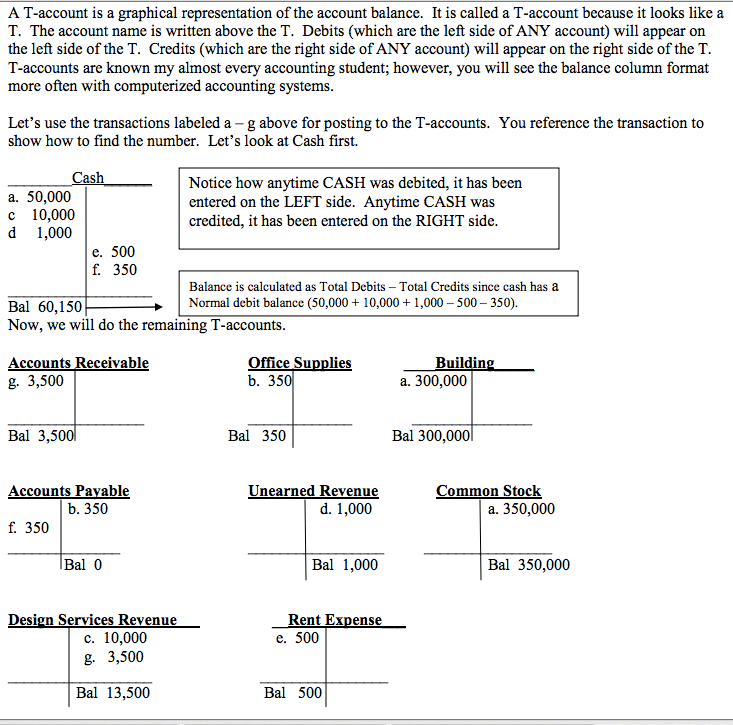
Every financial event a business engages in—be it a sale, a purchase, a payment, or a receipt—is first recorded in chronological order within a journal. This initial recording is often referred to as journalizing. For instance, a cash sale would be recorded in the sales journal, while a utility payment would find its place in the cash disbursements journal. These journals provide a detailed, day-to-day log of transactions. However, to understand the cumulative impact of all these transactions on a specific account, such as “Cash” or “Accounts Receivable,” these individual entries must be moved. This movement is precisely what posting accomplishes. It takes the debits and credits from the various journals and systematically places them into their respective T-accounts within the general ledger, consolidating all activity for each financial account.
The Double-Entry System Principle
At the heart of posting lies the fundamental principle of the double-entry accounting system. This system mandates that every financial transaction affects at least two accounts, with one account being debited and another credited for an equal amount. This ensures that the accounting equation (Assets = Liabilities + Equity) remains in balance. When transactions are posted, this dual effect is preserved. For every debit entry posted to one account, a corresponding credit entry of an equal value is posted to another account, maintaining the equilibrium. This methodical approach is crucial for preventing errors and providing an inherent check-and-balance mechanism throughout the financial record-keeping process.
The Mechanics of Posting: A Step-by-Step Process
The actual process of posting, while now heavily automated in many modern accounting systems, follows a distinct series of logical steps that reflect its manual origins. Grasping these steps provides clarity on how financial data flows through an organization’s accounting infrastructure.
Identifying Debits and Credits
Before posting can occur, the financial transaction must be analyzed to determine which accounts are affected and whether they are to be debited or credited. For example, when a company pays rent, the “Rent Expense” account would be debited (as expenses increase with a debit), and the “Cash” account would be credited (as assets decrease with a credit). This initial analysis is performed during the journalizing stage, and the resulting debit and credit entries are clearly noted in the journal entry.
Transferring Entries from Journals
Once a transaction is journalized, the next step is to transfer these debit and credit amounts from the journal to the relevant accounts in the general ledger. Each general ledger account has its own page or digital record, often structured as a ‘T-account’ with a debit side (left) and a credit side (right).
For each line item in a journal entry:
- Locate the General Ledger Account: The specific general ledger account affected by the journal entry (e.g., Cash, Accounts Payable, Sales Revenue) is identified.
- Enter the Date: The date of the transaction is recorded in the ledger account.
- Enter the Journal Page Reference: A reference to the journal page from which the entry was posted is added. This allows for an audit trail, making it easy to trace an entry back to its original record.
- Enter the Amount: The debit or credit amount from the journal entry is placed on the appropriate side of the ledger account.
- Calculate the New Balance: After each entry, the new running balance of the ledger account is updated.
- Enter the Ledger Account Number: In the journal, the general ledger account number to which the entry was posted is typically written next to the amount. This indicates that the posting has been completed for that specific line item.
Maintaining Ledger Account Balances
A vital aspect of posting is the continuous maintenance of current balances for all general ledger accounts. As each debit or credit is posted, the balance of that account is recalculated. This real-time or near real-time balance provides an up-to-date summary of the financial standing of each asset, liability, equity, revenue, and expense account. These continuously updated balances are crucial for preparing a trial balance at the end of an accounting period, which is a list of all general ledger accounts and their balances, used to ensure the total debits equal the total credits before financial statements are prepared.
Why Posting Matters: Accuracy, Insight, and Compliance
The seemingly mundane act of posting is, in fact, integral to the entire financial reporting ecosystem. Its correct execution directly impacts the reliability of financial data, the quality of business decisions, and adherence to regulatory requirements.
Ensuring Financial Statement Reliability
The general ledger, the direct outcome of the posting process, is the ultimate source for preparing a company’s financial statements. If transactions are incorrectly posted—whether through transposition errors, omitted entries, or mischaracterizations—the balances in the ledger accounts will be flawed. Consequently, the income statement will misrepresent profitability, the balance sheet will provide an inaccurate picture of assets, liabilities, and equity, and the cash flow statement will present a distorted view of liquidity. Accurate posting is therefore non-negotiable for producing financial statements that genuinely reflect the financial position and performance of the business.
Facilitating Managerial Decision-Making
Beyond mere compliance, reliable financial data derived from accurate posting is a critical tool for management. By having access to up-to-date and correct account balances, managers can:
- Monitor expenses: Identify areas where costs are escalating unexpectedly.
- Track revenue streams: Understand which products or services are performing best.
- Assess liquidity: Determine if there’s enough cash on hand to meet short-term obligations.
- Evaluate asset utilization: Make informed decisions about investments or divestments.
- Budgeting and forecasting: Base future financial plans on solid historical data.
Poorly posted transactions lead to misleading financial reports, which can result in flawed strategic decisions, ultimately hindering business growth and stability.
Adhering to Accounting Standards
Businesses are typically required to adhere to specific accounting standards, such as Generally Accepted Accounting Principles (GAAP) or International Financial Reporting Standards (IFRS). These standards dictate how transactions should be recorded, classified, and reported. Accurate and consistent posting is fundamental to ensuring that all financial data is processed in a manner that complies with these standards. Failure to comply can lead to audit failures, legal repercussions, and a loss of trust from investors and stakeholders. Posting, therefore, isn’t just an internal process; it’s a vital link in the chain of financial accountability and transparency.
Evolution of Posting: Manual to Digital Paradigms
Historically, posting was a laborious, manual task performed by bookkeepers with ledgers, pens, and paper. The advent of technology has dramatically transformed this process, leading to increased efficiency, accuracy, and accessibility of financial data.
The Era of Manual Ledgers
In the not-so-distant past, accountants meticulously maintained physical journals and ledgers. Each entry involved handwriting figures, calculating running balances, and ensuring that debits and credits matched. This manual process was inherently prone to human error, such as transposing numbers or posting to the wrong account. Correcting these errors required painstaking detective work, often involving hours of cross-referencing and reconciliation. The sheer volume of transactions for a larger business meant a significant investment in clerical staff and office space dedicated to record-keeping.
Automated Posting with Accounting Software
The introduction of accounting software revolutionized the posting process. Modern accounting systems, such as QuickBooks, Xero, SAP, or Oracle Financials, automate the vast majority of posting. When a user enters a transaction (e.g., recording an invoice, paying a bill, making a sale), the software automatically identifies the affected accounts and simultaneously posts the appropriate debits and credits to the digital general ledger.
Key features of automated posting include:
- Real-time updates: Account balances are updated instantaneously as transactions are entered.
- Error reduction: The software minimizes manual entry errors and ensures that the double-entry principle is always maintained.
- Audit trails: Digital systems automatically create detailed audit trails, making it easy to trace any transaction from the general ledger back to its original source document.
- Automated reports: Financial statements can be generated at the click of a button, pulling data directly from the up-to-date general ledger.
Benefits of Digitalization in Posting
The shift to digital posting has yielded immense benefits for businesses of all sizes. It has dramatically reduced the time and effort required for record-keeping, allowing financial personnel to focus on analysis rather than data entry. Accuracy has significantly improved, leading to more reliable financial reports. Furthermore, the ability to generate real-time financial insights empowers management with better information for decision-making, improving agility and responsiveness in a dynamic economic environment. Digitalization has also enhanced financial security through access controls and automated backups, safeguarding critical financial data.
Common Pitfalls and Best Practices in Posting
Despite the automation, challenges in posting can still arise, particularly in how data is initially captured or when manual adjustments are made. Recognizing these pitfalls and implementing best practices is crucial for maintaining the integrity of financial records.
Errors to Avoid
Even with sophisticated software, errors can occur if the initial data input is flawed or if processes are not followed correctly. Common posting errors include:
- Incorrect Account Selection: Posting a transaction to the wrong general ledger account (e.g., posting office supplies to ‘travel expense’).
- Transposition Errors: Swapping digits in an amount (e.g., $540 instead of $450). While less common with automated systems for calculation, it can happen during initial data entry.
- Omission Errors: Failing to post a transaction entirely.
- Duplicate Posting: Posting the same transaction multiple times.
- Incorrect Debit/Credit: Debiting an account that should have been credited, or vice-versa. This will always throw the trial balance out of whack.
These errors, if undetected, can lead to significant discrepancies in financial statements and complicate the audit process.
Implementing Robust Internal Controls
To mitigate these risks, businesses should implement strong internal controls over the posting process. These controls can include:
- Segregation of Duties: Ensuring that one person is not responsible for both recording transactions and reconciling accounts.
- Authorization Procedures: Requiring managerial approval for significant transactions before they are recorded and posted.
- Regular Review and Reconciliation: Periodically checking ledger account balances against subsidiary ledgers or external statements (e.g., bank reconciliations, accounts receivable aging).
- Standardized Procedures: Documenting clear, step-by-step procedures for recording and posting various types of transactions.
- User Access Controls: Limiting access to accounting software to authorized personnel only.
The Importance of Reconciliation
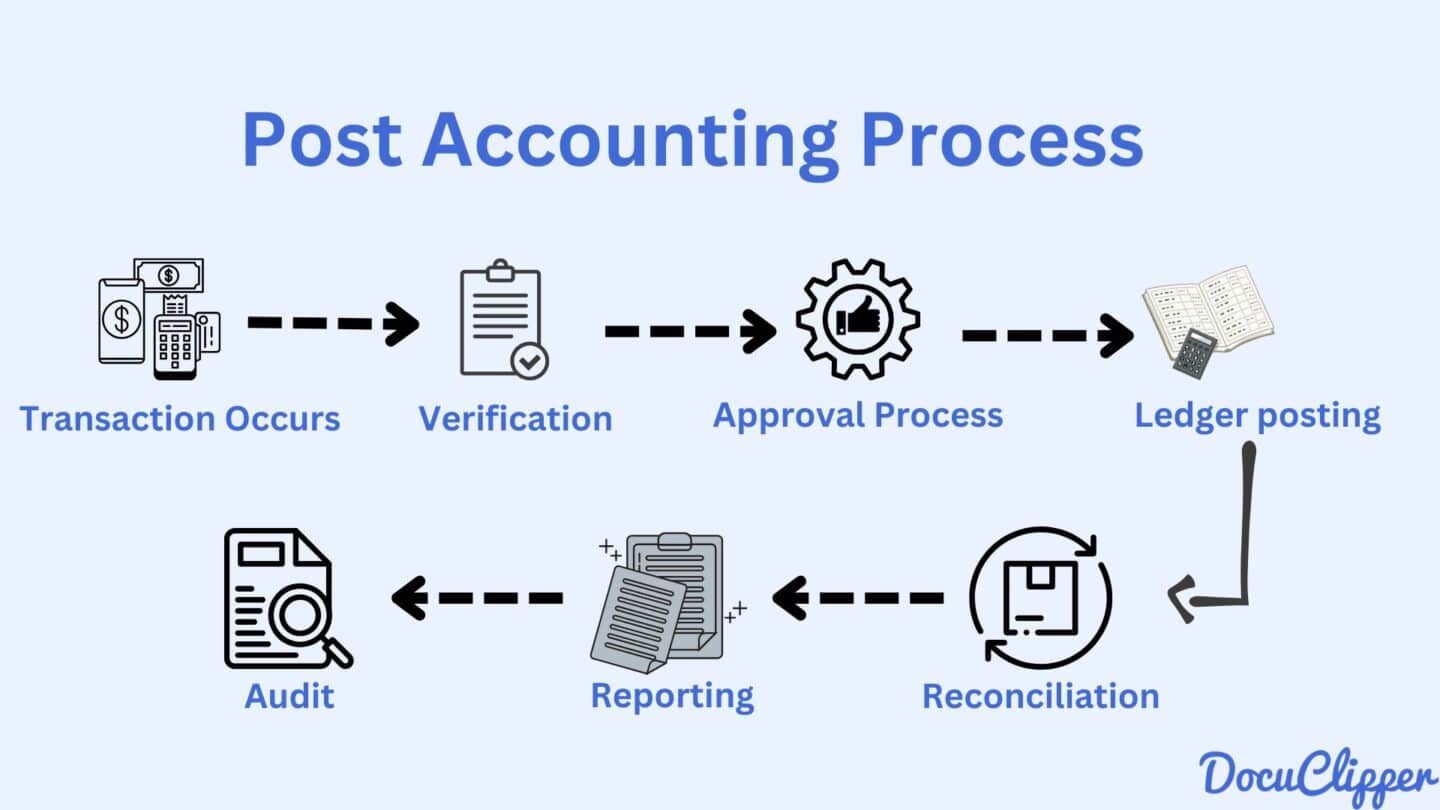
Reconciliation is the process of ensuring that two sets of records match. In the context of posting, it involves comparing the balances in the general ledger accounts with other independent records. For example, the “Cash” general ledger account balance should be reconciled with the bank statement. Similarly, “Accounts Receivable” balances should match the sum of individual customer balances in the subsidiary ledger. Regular and thorough reconciliation is a critical best practice that acts as a final check on the accuracy of posted transactions, helping to identify and rectify errors promptly before they propagate through the financial system and compromise the reliability of financial reports.
aViewFromTheCave is a participant in the Amazon Services LLC Associates Program, an affiliate advertising program designed to provide a means for sites to earn advertising fees by advertising and linking to Amazon.com. Amazon, the Amazon logo, AmazonSupply, and the AmazonSupply logo are trademarks of Amazon.com, Inc. or its affiliates. As an Amazon Associate we earn affiliate commissions from qualifying purchases.