
In the realm of outdoor power equipment, especially when discussing leaf blowers, you’ll frequently encounter the acronym “CFM.” It stands for Cubic Feet per Minute, and it is arguably the most critical specification for understanding a leaf blower’s core capability: how much air it moves. While often accompanied by Miles Per Hour (MPH), which measures air speed, CFM quantifies the volume of air expelled by the device. Grasping the significance of CFM is fundamental for selecting the right tool for your specific needs, ensuring efficient and effective yard maintenance.
Understanding CFM: The Core Metric of Air Volume
At its heart, CFM is a direct measure of an air blower’s power to displace material. Imagine a steady stream of air flowing into a large, imaginary cube. If that cube measures one foot on each side, representing one cubic foot, then CFM tells you how many of these cubic feet of air are being pushed out of the blower’s nozzle every minute. A higher CFM rating indicates a greater volume of air moved, which directly translates to the ability to clear larger quantities of debris more quickly.

CFM vs. MPH: A Crucial Distinction
While both CFM and MPH are vital specifications for leaf blowers, they measure different aspects of performance, and understanding their individual roles is key.
- CFM (Cubic Feet per Minute): This is about volume. A higher CFM means the blower can move a wider swath of leaves or clear a larger area with each pass. Think of it as the “width” of the air stream or the sheer “pushing power” of the air mass. For general debris clearing, especially large piles or wet, heavy leaves, a high CFM is often more advantageous as it provides the broad force needed to lift and propel material.
- MPH (Miles Per Hour): This is about speed. A higher MPH means the air is traveling faster out of the nozzle. Faster air excels at dislodging stubborn, stuck-on debris, separating wet leaves from pavement, or moving small, dense objects. Think of MPH as the “cutting power” or “penetration” of the air stream.
In practical terms, a blower with high CFM but relatively lower MPH will be excellent for sweeping dry leaves across a wide lawn, creating large piles efficiently. Conversely, a blower with high MPH but lower CFM might be better for peeling wet leaves off a driveway or blasting pine needles out of decorative gravel, but it might take more passes to clear a large area. The ideal leaf blower often strikes a balance, possessing both sufficient CFM to move volume and adequate MPH to dislodge debris effectively. However, for sheer clearing efficiency over large areas, CFM often takes precedence as the primary indicator of overall performance.
How CFM Relates to Leaf Blower Performance
The direct correlation between CFM and performance is straightforward: more CFM generally means more effective and efficient clearing. A leaf blower with a higher CFM can push more material, such as leaves, grass clippings, or light snow, over a greater distance and in a shorter amount of time. This is particularly beneficial for:
- Covering Large Areas: Less back-and-forth movement is required, as each pass clears a wider path.
- Moving Heavier or Wet Debris: The increased air volume provides the necessary force to lift and propel damp leaves or small branches that a lower CFM blower might struggle with.
- Building Large Piles: High CFM makes quick work of consolidating dispersed debris into manageable piles for disposal.
Essentially, a higher CFM directly translates to reduced effort and faster completion of yard work, making it a key metric for evaluating a leaf blower’s raw capability.
Why CFM Matters for Different Tasks and Environments
The ideal CFM rating for a leaf blower isn’t universal; it largely depends on the specific tasks you’ll be undertaking and the environment in which you’ll be working. Understanding these nuances helps in selecting a tool that is neither underpowered nor excessively powerful for your needs.
Light Duty: Patios, Driveways, and Dry Leaves
For smaller properties, such as urban yards, apartment balconies, patios, or short driveways, and primarily dealing with dry, lightweight debris, a lower CFM leaf blower is typically sufficient.
- Typical CFM Range: 100-350 CFM.
- Characteristics: These are often electric corded or smaller battery-powered models. They are lightweight, relatively quiet, and easy to maneuver. Their air volume is adequate for tidying up small areas, blowing grass clippings off concrete, or gently moving a thin layer of dry leaves. Overpowering these tasks with a high CFM blower can be overkill, potentially blowing debris too far or even damaging delicate garden features.
Medium Duty: General Yard Work, Wet Leaves, Small Branches
Most suburban homeowners will find their sweet spot in the medium-duty CFM range. This category handles a wider variety of tasks common in average-sized yards with a moderate number of trees.
- Typical CFM Range: 350-550 CFM.
- Characteristics: This range encompasses many popular battery-powered models and smaller to mid-sized gas-powered blowers. They offer a good balance of power and maneuverability. With this CFM, users can effectively tackle larger accumulations of dry leaves, begin to manage damp leaves, and move small twigs or grass clippings from flower beds and lawns. They provide enough force to clear a significant path without being overly cumbersome or noisy.
Heavy Duty: Large Properties, Commercial Use, Tough Debris
When facing extensive properties, professional landscaping demands, or challenging debris conditions, a high-CFM leaf blower becomes indispensable.
- Typical CFM Range: 550-900+ CFM.
- Characteristics: This category is dominated by powerful gas-powered backpack blowers and high-end handheld gas or commercial-grade battery units. Their substantial air volume is designed to move vast quantities of leaves, including matted-down, wet leaves, pine cones, and small branches, across large areas like multi-acre properties, golf courses, or commercial landscapes. The sheer force makes quick work of difficult jobs, significantly reducing labor time and effort, which is crucial for professionals.
Beyond Leaves: Other Applications Where CFM Shines
While named “leaf blowers,” the utility of these devices extends far beyond autumn foliage, thanks to their ability to move significant air volume.
- Clearing Light Snow: In regions with light, powdery snow, a high-CFM leaf blower can effectively clear driveways, walkways, and patios without the need for shoveling.
- Drying Surfaces: After washing a car, motorcycle, or outdoor furniture, a leaf blower can rapidly dry surfaces, preventing water spots.
- Construction Site Clean-up: For construction professionals, high-CFM blowers are invaluable for quickly clearing sawdust, dirt, and light debris from job sites.
- Garage and Workshop Cleaning: Clearing sawdust, metal shavings, and general dust from workshops and garages is a quick task with a moderate-CFM blower.
Factors Influencing a Leaf Blower’s Effective CFM
The CFM rating listed on a leaf blower’s packaging represents its theoretical maximum air volume output. However, several design and operational factors can influence how that CFM is effectively delivered and perceived by the user in real-world conditions.
Engine Type and Power Source
The power source plays a significant role in determining a leaf blower’s potential CFM.
- Gas-Powered: Generally offer the highest CFM ratings, especially in the professional-grade backpack models. Their internal combustion engines provide sustained, high power output, allowing for powerful airflow suitable for heavy-duty tasks and large properties. However, they come with maintenance requirements, fuel costs, noise, and emissions.
- Electric Corded: Offer consistent power delivery and often respectable CFM ratings for their category, typically in the light to medium-duty range. Their limitation is the need for an electrical outlet and the tether of an extension cord, which restricts mobility.
- Battery-Powered (Cordless): These have seen significant advancements in recent years, with high-voltage battery systems delivering impressive CFM figures that rival some gas models, especially in the medium to heavy-duty handheld categories. While providing unparalleled mobility and lower noise, their run-time is limited by battery capacity and charger availability.
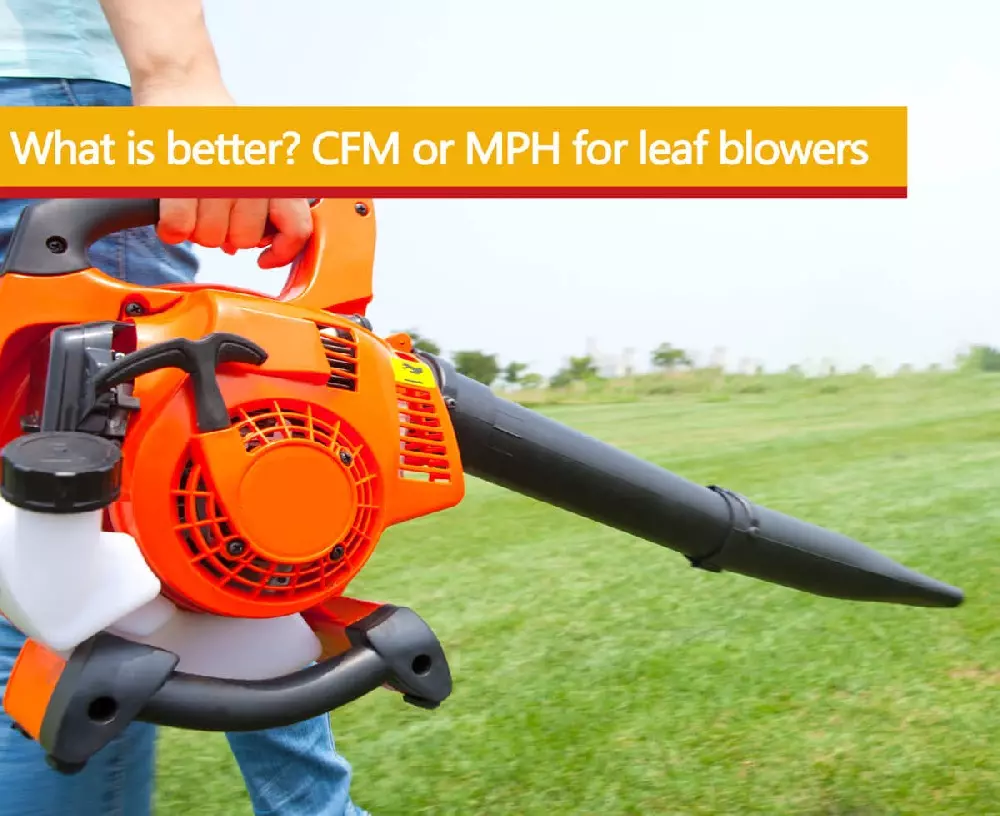
Blower Design and Nozzle Shape
The engineering of the blower’s fan and the design of its air outlet significantly impact how CFM translates into effective work.
- Axial vs. Centrifugal Fans:
- Axial Blowers: Air moves in a straight line through the fan and out the nozzle. They generally excel at generating high CFM and are often found in handheld models.
- Centrifugal (Impeller) Blowers: Air is drawn in at the center of the fan and expelled outwards by centrifugal force, then redirected through a tube. These often produce higher air speeds (MPH) and are common in backpack models, effectively combining strong CFM with high velocity.
- Nozzle Shape and Size:
- Wider Nozzles: Disperse air over a larger area, often associated with higher overall CFM but potentially lower effective MPH at the point of contact. Good for sweeping large, dry areas.
- Narrow or Concentrator Nozzles: Constrict the airflow, increasing the velocity (MPH) at the nozzle tip. While the total CFM remains the same as it leaves the fan, the concentrated force makes it more effective for dislodging stubborn or wet debris, or for precision work. Many blowers come with interchangeable nozzles to optimize for different tasks.
Airflow Resistance and Obstructions
The real-world environment presents resistance that can diminish a blower’s effective CFM.
- Debris Type and Wetness: Dense, wet leaves or heavy debris require more force to move, effectively reducing the perceived efficiency of a given CFM compared to light, dry leaves.
- Terrain: Blowing uphill or against obstructions like fences and walls can redirect airflow and reduce the effective reach and power of the air stream.
- User Technique: Holding the blower too high or at an inefficient angle can waste air volume, preventing the maximum CFM from being applied directly to the debris. Optimizing technique, such as sweeping in broad, overlapping strokes close to the ground, maximizes the effectiveness of the blower’s CFM.
Choosing the Right CFM for Your Needs: A Practical Guide
Selecting a leaf blower isn’t just about picking the highest CFM number. It’s about a thoughtful assessment of your specific requirements, balancing power with practicality, and considering how the tool will integrate into your routine.
Assessing Your Property Size and Landscape
The scale of your property is a primary determinant for CFM needs.
- Small Urban Yards/Patios (under 1/4 acre): A blower with 100-300 CFM is often adequate. These are usually handheld electric (corded or battery) models, perfect for quick tidy-ups without excessive power.
- Average Suburban Yards (1/4 to 1 acre): Look for 300-550 CFM. This range covers most handheld battery-powered units and smaller gas-powered models, offering a good balance for general leaf removal.
- Large Properties/Rural Homes (1+ acre): You’ll need 550+ CFM, typically found in powerful gas backpack blowers or high-end battery systems. The substantial air volume is essential for efficient clearing over vast areas. Consider the number of trees and dense foliage; more trees mean more leaves and potentially higher CFM requirements.
Identifying Common Debris Types
The nature of the debris you’re clearing profoundly impacts the CFM required.
- Dry Leaves and Light Grass Clippings: Easily moved by lower to medium CFM blowers (100-400 CFM).
- Wet Leaves, Pine Needles, Small Twigs: Require higher CFM (400-600 CFM) combined with good MPH to dislodge and move. The additional air volume provides the necessary pushing force.
- Heavy, Matted Debris, Small Branches, Acorns: Demands high-end CFM (600+ CFM) to effectively clear. These tasks often benefit most from the sustained power of gas backpack blowers.
Considering Your Physical Capabilities and Preferences
Beyond raw power, the ergonomics and usability of the leaf blower are critical for a positive user experience.
- Weight: Handheld blowers are lighter (typically 5-10 lbs) but can cause fatigue during prolonged use, especially powerful ones. Backpack blowers distribute weight across your shoulders and back, making even heavy units (20-30+ lbs) feel more manageable for extended periods.
- Noise Level: Gas blowers are significantly louder than electric models, necessitating hearing protection. Battery-powered units are generally the quietest. Check decibel ratings (dB) if noise is a major concern for you or your neighbors.
- Starting Method: Electric corded and battery models start instantly with a button or trigger. Gas models require pulling a recoil cord, which can sometimes be challenging, though modern engines are much easier to start.
- Maintenance: Gas blowers require fuel mixing, oil changes, spark plug checks, and air filter cleaning. Electric and battery models are virtually maintenance-free beyond cleaning.
Balancing CFM with MPH, Weight, and Runtime
Choosing the right leaf blower is a holistic decision, not solely based on the highest CFM.
- CFM and MPH Synergy: For effective clearing, look for a balance. High CFM moves volume; high MPH dislodges stubborn debris. Many top-tier blowers offer strong numbers in both categories.
- Weight and Comfort: A powerful blower that’s too heavy or uncomfortable to use for the duration of your task is counterproductive. Prioritize a model you can comfortably operate for the time needed.
- Runtime (for battery models): A high-CFM battery blower might have a shorter run-time. Consider if the battery life is sufficient for your entire yard or if you’ll need spare batteries or charging breaks. For corded models, consider the range of your extension cord. For gas, think about fuel capacity.
By carefully evaluating these factors, you can select a leaf blower with an optimal CFM rating that perfectly aligns with your specific yard care requirements, enhancing efficiency and making outdoor maintenance a more manageable task.
Maintaining Optimal CFM Performance
To ensure your leaf blower continues to deliver its rated CFM and performs efficiently throughout its lifespan, proper maintenance is crucial. Neglecting these simple steps can lead to diminished power, reduced airflow, and even premature equipment failure.
Regular Cleaning and Inspection
Debris accumulation is the enemy of consistent airflow.
- Impeller/Fan Blades: Periodically inspect and clean the impeller or fan blades. Grass, leaves, and dirt can get caked onto the blades, creating imbalance and reducing the efficiency of air movement. Use a brush or compressed air to remove buildup. Always disconnect power (remove battery or unplug cord, ensure gas engine is off and cool) before inspecting or cleaning this area.
- Air Intake Vents: Ensure the air intake vents are clear of obstructions. Blocked vents restrict the amount of air the blower can draw in, directly impacting its CFM output.
- Exhaust Nozzle: Keep the nozzle clean and free of debris. Any blockage here will restrict airflow and reduce effective CFM.
Proper Fuel and Battery Management
The power source directly dictates performance.
- Gas Models:
- Fuel Quality: Always use fresh, clean gasoline. Stale fuel can cause engine issues, leading to reduced power and inconsistent CFM. If using a 2-stroke engine, ensure the correct oil-to-gasoline mixing ratio is strictly followed.
- Fuel Storage: Store fuel in approved containers in a cool, dry place. For longer storage, consider using a fuel stabilizer to prevent ethanol separation and degradation.
- Air Filter: Regularly clean or replace the air filter. A clogged filter starves the engine of air, reducing power and, consequently, CFM.
- Spark Plug: Inspect and clean the spark plug periodically. A fouled spark plug can lead to poor combustion and reduced engine performance.
- Battery-Powered Models:
- Charging: Follow manufacturer guidelines for charging and discharging batteries. Overcharging or fully discharging lithium-ion batteries too frequently can reduce their lifespan and ability to deliver consistent power.
- Storage: Store batteries in a cool, dry place, ideally at a partial charge (around 50-60%) for extended periods. Avoid extreme temperatures.
- Battery Health: If you notice a significant drop in run-time or power, it might be time to replace an aging battery pack.

Storage and Winterization Tips
Proper off-season storage preserves components and ensures readiness for the next use.
- Gas Models: Before long-term storage, either run the fuel tank dry or drain the fuel and add a fuel stabilizer according to product instructions. Clean the exterior thoroughly.
- Electric/Battery Models: Clean the unit and store it in a dry, protected area. Remove batteries from the tool if storing for extended periods.
- General Cleaning: Regardless of power type, a thorough cleaning before storage prevents grime from hardening and making future maintenance more difficult. Check all fasteners and components for wear or damage and address them before storage.
By adhering to these maintenance practices, you not only prolong the life of your leaf blower but also ensure that it consistently delivers the optimal CFM needed to keep your property tidy and well-maintained season after season.
aViewFromTheCave is a participant in the Amazon Services LLC Associates Program, an affiliate advertising program designed to provide a means for sites to earn advertising fees by advertising and linking to Amazon.com. Amazon, the Amazon logo, AmazonSupply, and the AmazonSupply logo are trademarks of Amazon.com, Inc. or its affiliates. As an Amazon Associate we earn affiliate commissions from qualifying purchases.