
Understanding the zip codes of any major metropolitan area, especially one as dynamic and economically complex as Detroit, goes far beyond mere postal convenience. For residents, investors, businesses, and policymakers, a zip code acts as a financial identifier, encapsulating a wealth of data that shapes everything from property values and insurance premiums to market opportunities and access to capital. In the context of the Motor City, where revitalization efforts run alongside entrenched economic disparities, dissecting the financial implications tied to its various zip codes offers a crucial lens through which to comprehend its ongoing transformation and diverse financial landscapes.

The Financial Geography of Detroit: More Than Just an Address
Detroit’s history of industrial boom, subsequent decline, and recent resurgence has sculpted a variegated financial geography. Each zip code area represents a distinct micro-economy, reflecting demographic composition, income levels, property conditions, and local amenities. For individuals and businesses alike, grasping this spatial economic segmentation is fundamental for informed financial decisions.
Defining Economic Clusters
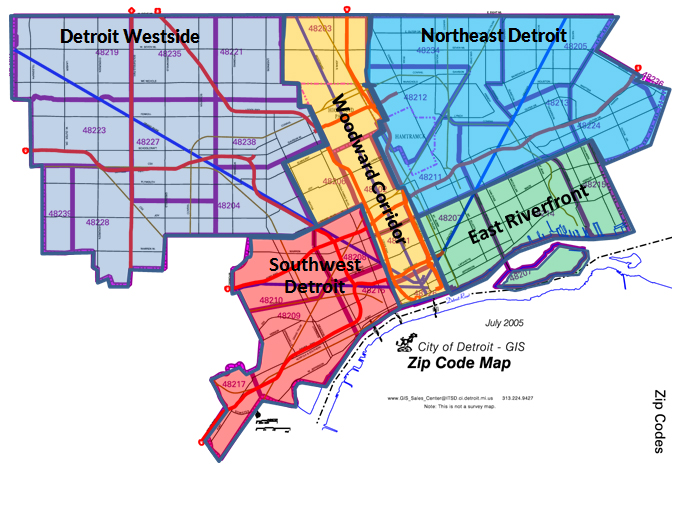
Detroit’s zip codes delineate distinct economic clusters, each with unique financial characteristics. Areas like 48202 (New Center) and 48226 (Downtown) are experiencing significant commercial and residential investment, boasting higher property values, a thriving business environment, and a growing population of young professionals. These areas attract significant capital and offer distinct investment opportunities. In contrast, other zip codes, often in historically underserved neighborhoods, may still grapple with lower property values, higher vacancy rates, and a greater need for community development funding. Understanding these clusters allows investors to target specific types of development (e.g., luxury condos vs. affordable housing) and enables residents to assess cost of living and potential for appreciation.
Understanding Property Value Disparities
Perhaps no financial metric is as starkly differentiated by zip code in Detroit as property values. The vast divergence across the city is a critical factor for real estate investors, homeowners, and those considering relocating. A property in a revitalized zip code like 48201 (Midtown/Cass Corridor) might command premium prices, reflecting demand, new construction, and proximity to cultural institutions and employment hubs. Conversely, similar-sized properties in zip codes still recovering from the economic downturn may be significantly more affordable, presenting both potential for future appreciation and greater risks regarding market liquidity and neighborhood stability. This disparity influences everything from mortgage availability and property tax assessments to the overall wealth accumulation potential for residents in different areas.
Impact on Personal Finance: Navigating Costs and Opportunities
For individual Detroiters, their zip code can profoundly influence their personal financial landscape, affecting recurring expenses, access to financial products, and long-term wealth building.
Insurance Premiums: Auto, Home, and Health
One of the most immediate and tangible financial impacts of a Detroit zip code is on insurance premiums. Auto insurance rates, notoriously high in the city, can vary significantly between neighborhoods, often influenced by claims rates, traffic density, and perceived risk factors tied to specific areas. Similarly, homeowners’ insurance premiums are calculated based on a property’s location, susceptibility to certain risks (e.g., crime rates, proximity to fire services), and rebuild costs, all of which are localized by zip code. While health insurance premiums are typically less localized by zip code within a metropolitan area, access to affordable healthcare providers and facilities can certainly vary, impacting out-of-pocket expenses and overall health-related financial planning.
Cost of Living and Disposable Income
Beyond housing, the cost of living—including groceries, utilities, and local services—can fluctuate across Detroit’s zip codes. Areas with more amenities, newer infrastructure, or a higher concentration of businesses might present a different spending profile than those with fewer commercial options. These variations directly influence residents’ disposable income. Understanding these micro-level economic differences is crucial for budgeting, saving, and making decisions about where to live based on one’s financial goals. A lower cost of living in one zip code might allow for greater savings or investment, while a higher cost in another might necessitate a larger income to maintain a desired lifestyle.
Access to Financial Services and Lending
Financial inclusion and access to lending institutions can also be heavily stratified by zip code. Historically, some underserved areas in Detroit have been “bank deserts,” lacking physical branches of mainstream banks, leading residents to rely on alternative (and often more expensive) financial services like check-cashing stores or payday lenders. While efforts are underway to address this, the availability of traditional banking services, credit unions, and affordable lending products can still vary. This disparity impacts everything from the ease of opening a savings account to securing a mortgage or a small business loan, directly affecting residents’ ability to build credit and wealth.
Business Strategy and Investment: Leveraging Zip Code Data
For businesses looking to operate or invest in Detroit, zip code-level analysis is an indispensable tool for strategic planning, market penetration, and risk assessment. It enables a granular understanding of local markets, consumer behavior, and operational costs.
Market Analysis and Consumer Demographics

Businesses use zip codes to conduct sophisticated market analysis. By correlating zip code data with demographic information (income levels, age, household composition, purchasing habits), companies can identify prime locations for specific products or services. A retail chain might target a zip code with a high concentration of young families for a new grocery store, while a luxury goods provider might focus on areas with higher median incomes. This hyper-local segmentation is critical for effective marketing campaigns, inventory management, and maximizing return on investment in a diverse urban market.
Site Selection and Operational Costs
The choice of a business location, heavily influenced by zip code, directly impacts operational costs and logistical efficiency. Rent or property purchase prices vary widely, as do local taxes and utility costs. Furthermore, proximity to target customers, transportation infrastructure, and skilled labor pools are all factors localized by zip code. For example, a manufacturing facility might prioritize a zip code with access to major highways and industrial zoning, while a tech startup might seek out a zip code in a downtown innovation hub, even if rent is higher, due to its access to talent and networking opportunities. Understanding these geographically variable costs is paramount for a sustainable business model.
Local Tax Implications and Incentives
Detroit offers various tax incentives and abatement programs aimed at encouraging development and investment in specific areas, often defined by geographic boundaries that correlate with zip codes. Businesses considering establishing or expanding operations need to meticulously research these local tax implications. Understanding which zip codes qualify for abatements, enterprise zone benefits, or other financial incentives can significantly impact a project’s financial viability and long-term profitability. Navigating the complex landscape of local taxation and economic development programs is a critical component of business finance in Detroit.
Data-Driven Financial Decisions: Tools and Resources
Making informed financial decisions in Detroit, whether personal or business-related, relies heavily on leveraging available data and analytical tools.
Geographic Information Systems (GIS) for Financial Mapping
Geographic Information Systems (GIS) provide powerful platforms for visualizing and analyzing financial data by zip code. Investors can map property values, rental yields, demographic trends, and crime rates to identify investment hotspots or areas of risk. Businesses can use GIS to optimize supply chains, analyze customer distribution, and plan marketing territories. These tools transform raw data into actionable insights, making complex spatial relationships understandable for financial planning and strategic decision-making.
Utilizing Public Data for Investment Insight
A wealth of public data, often aggregated and searchable by zip code, is available for financial analysis. Sources include U.S. Census Bureau data on income and demographics, local government records on property assessments and sales, and community development reports. Analyzing trends in population shifts, income growth, and housing development within specific Detroit zip codes can provide invaluable insights for real estate investors, entrepreneurs, and individuals seeking to understand the economic trajectory of their neighborhoods.
The Role of Financial Advisors in Hyper-Local Planning
Given the intricate financial nuances tied to Detroit’s zip codes, engaging financial advisors who possess hyper-local market knowledge is increasingly valuable. These professionals can help individuals navigate insurance options, property investments, and retirement planning tailored to their specific geographical context. For businesses, advisors with expertise in local economic development, tax incentives, and market segmentation can provide strategic guidance that leverages the unique financial characteristics of specific Detroit zip code areas.
The Future Landscape: Economic Shifts and Revival
Detroit’s economic narrative is one of ongoing transformation, with significant implications for its financial geography and the role of zip codes in defining opportunity.
Gentrification and Changing Financial Dynamics
As investment pours into certain Detroit zip codes, particularly those adjacent to downtown and Midtown, gentrification becomes an important consideration. While bringing new businesses, amenities, and increased property values, it can also lead to displacement pressures for long-term residents and a shift in the local financial ecosystem. Understanding these dynamics is crucial for sustainable financial planning and for ensuring equitable growth across the city’s diverse neighborhoods.
Investment Opportunities in Emerging Neighborhoods
Beyond the already established revitalized areas, many Detroit zip codes in historically overlooked neighborhoods present significant investment opportunities for those with a long-term vision. These areas, often characterized by lower entry costs and a strong sense of community, are ripe for targeted development in housing, small businesses, and community services. Identifying these emerging financial frontiers requires diligent research into local development plans, community engagement, and a nuanced understanding of potential growth drivers within each specific zip code.
In essence, understanding “what is Detroit zip code” transcends a simple address query; it opens a portal to the city’s intricate financial tapestry, revealing a landscape of opportunities, challenges, and the profound economic narratives unfolding across its many distinct communities.
aViewFromTheCave is a participant in the Amazon Services LLC Associates Program, an affiliate advertising program designed to provide a means for sites to earn advertising fees by advertising and linking to Amazon.com. Amazon, the Amazon logo, AmazonSupply, and the AmazonSupply logo are trademarks of Amazon.com, Inc. or its affiliates. As an Amazon Associate we earn affiliate commissions from qualifying purchases.