
Estate planning often conjures images of significant financial portfolios, real estate holdings, and complex trusts. However, a frequently overlooked, yet profoundly important, aspect involves the distribution of personal items. These are the tangible possessions that carry not only monetary value but often immense sentimental worth, reflecting a lifetime of memories, passions, and connections. Understanding what constitutes “personal items” in the context of a will is crucial for ensuring your final wishes are honored, minimizing family disputes, and streamlining the estate administration process.
Defining “Personal Items” in Estate Planning
In the realm of estate planning, “personal items” typically refers to tangible personal property (TPP). This category encompasses physical assets that can be moved and are not considered real estate (immovable property) or financial assets (intangible holdings like bank accounts or investments). The definition is broad and covers a vast array of possessions.
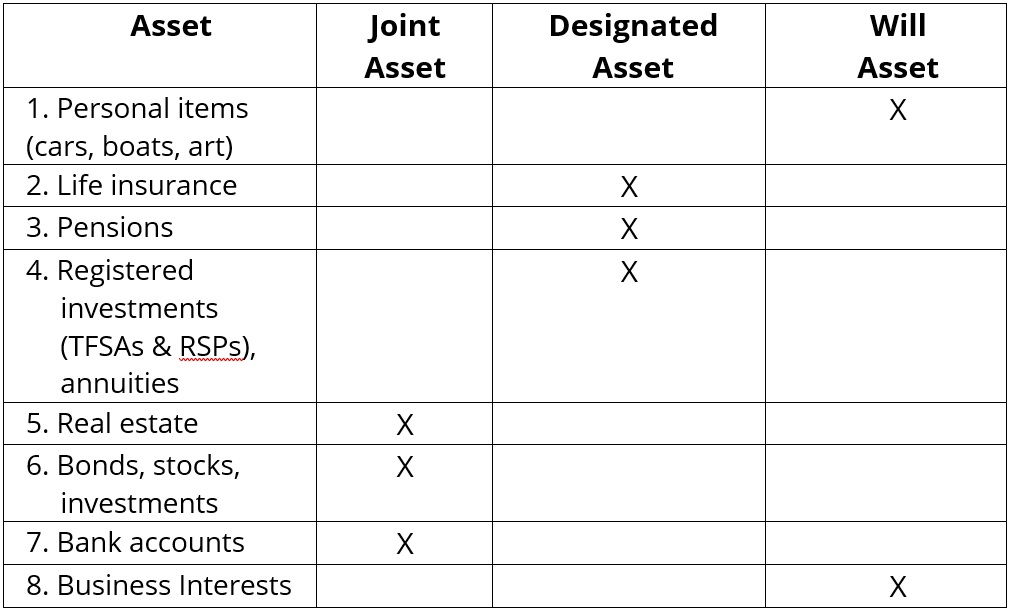
Common examples of tangible personal property include:
- Household Furnishings: Furniture, appliances, decorative items, rugs, and general home contents.
- Art and Collectibles: Paintings, sculptures, antiques, rare books, stamps, coins, sports memorabilia, and other collections.
- Jewelry: Rings, necklaces, watches, bracelets, and other ornaments, whether heirloom or recently acquired.
- Vehicles: Cars, motorcycles, boats, recreational vehicles, and aircraft. While these often have titles, they are generally classified as TPP for estate purposes unless they are part of a business inventory.
- Personal Effects: Clothing, accessories, musical instruments, tools, sports equipment, and other items used for personal enjoyment or utility.
- Heirlooms and Sentimental Items: Photographs, family albums, diaries, letters, awards, and any other items imbued with personal or family history, regardless of their market value.
It’s important to note that the term “personal items” typically excludes items directly related to a business (which would be business assets) or certain types of intellectual property, although the rights to such property can be bequeathed. The key differentiator is tangibility and portability, distinct from land or financial instruments.
The Crucial Distinction: Personal vs. Real Property and Financial Assets
A fundamental aspect of effective estate planning is understanding the legal distinctions between various types of assets. Misclassifying assets can lead to confusion, delays, and unintended outcomes in the distribution process.
Real Property
Real property, often called real estate, refers to land and anything permanently attached to it, such as houses, buildings, and other structures. When you bequeath “my house” in a will, you are dealing with real property, which is subject to different legal rules regarding transfer of title, taxation, and sometimes probate procedures compared to tangible personal property. Deeds, property taxes, and specific real estate laws govern these assets.
Financial Assets (Intangible Personal Property)
Financial assets, or intangible personal property, are assets that derive their value from a claim to future benefits rather than their physical existence. These include:
- Bank Accounts: Checking, savings, money market accounts.
- Investment Accounts: Stocks, bonds, mutual funds, exchange-traded funds (ETFs), brokerage accounts.
- Retirement Accounts: 401(k)s, IRAs, pensions.
- Life Insurance Policies: The proceeds are typically paid directly to designated beneficiaries.
- Business Interests: Shares in a corporation, partnership interests, or sole proprietorship assets (excluding tangible business equipment).
- Intellectual Property: Copyrights, patents, trademarks.
These assets are typically distributed through designated beneficiaries (for accounts with “payable-on-death” or “transfer-on-death” clauses, and life insurance) or through the residuary clause of a will if no specific beneficiary is named or if the beneficiary predeceases the owner. Their distribution often involves financial institutions and specific tax considerations, which differ from the direct transfer of tangible personal items.
Why the Distinction Matters
The clear separation of these asset categories is vital for several reasons:
- Legal Formalities: Transferring real property often requires deeds and recordings, while distributing financial assets involves working with banks or investment firms. Tangible personal property, on the other hand, can often be transferred with less formal documentation, though specific bequests in a will provide clear legal authority.
- Tax Implications: While tangible personal property generally does not trigger significant estate tax issues unless it’s extremely valuable and contributes to a very large estate, real estate and financial assets can have substantial tax implications (e.g., capital gains, estate taxes) that require careful planning.
- Probate Process: While most assets passing through a will are subject to probate, the specific steps for different asset types can vary. Assets with named beneficiaries (like life insurance or retirement accounts) often bypass probate entirely.
- Clarity for Beneficiaries: Clearly defining which assets fall into which category helps prevent confusion among heirs about what they are inheriting and how they can claim it.
Legal Mechanisms for Distributing Personal Items
Wills provide several mechanisms for directing the distribution of tangible personal property, each with its own advantages and considerations.
Specific Bequests
The most straightforward method is through specific bequests in the will itself. This involves explicitly naming an item and the individual who will receive it. For example: “I give my antique grandfather clock to my nephew, David Miller,” or “I give my collection of rare coins to my daughter, Sarah Chen.”
- Advantages: Provides absolute clarity and legal certainty for highly valued or sentimental items.
- Disadvantages: Can make the will long and cumbersome if there are many items. It also requires an amendment (codicil) to the will every time you wish to change a specific bequest, which can be inconvenient and costly. If the named item is no longer part of the estate at the time of death (e.g., sold, lost, stolen), the bequest may lapse, and the beneficiary receives nothing in its place (unless alternative provisions are made).
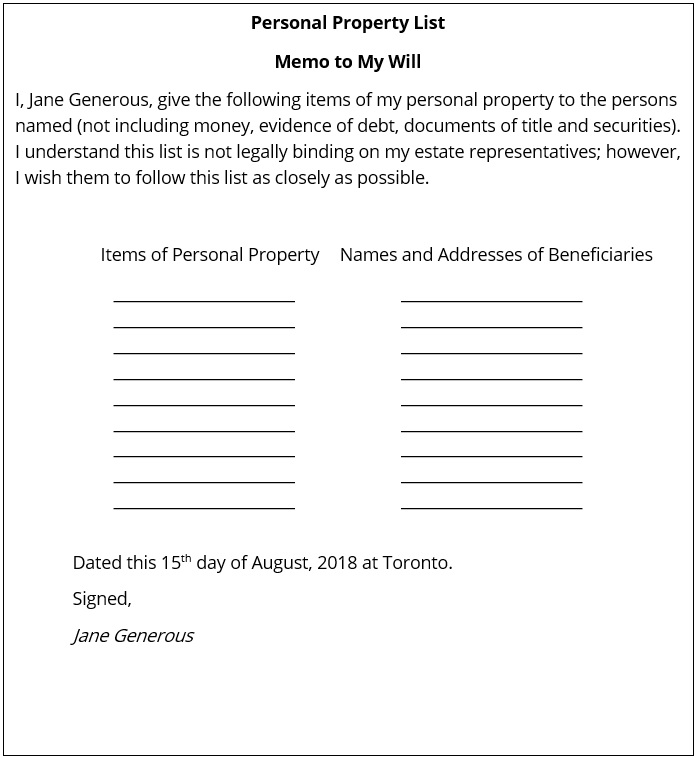
Personal Property Memorandum (PPM)
Many jurisdictions allow for a separate document, known as a Personal Property Memorandum (PPM), to dispose of tangible personal property. This document is referenced in the will but is not part of the will itself. It typically lists specific items and the beneficiaries designated to receive them.
- Requirements: To be legally effective, the PPM must be mentioned in the will, signed by the testator (the person making the will), and describe the items and beneficiaries with reasonable certainty. It often does not require the same formal witnessing as a will, making it easier to update.
- Advantages: Offers flexibility. You can update your PPM as often as you like without needing to amend your entire will. This is particularly useful for items that may change over time or for minor adjustments to distributions. It keeps the will concise.
- Disadvantages: Not all jurisdictions recognize PPMs, or they may have specific requirements for their validity (e.g., limiting the value of items that can be distributed this way). It also needs to be carefully maintained and stored with the will to ensure it’s found and honored.
Residuary Clause
If specific items are not bequeathed in the will or a PPM, they fall into the “residue” of the estate. The residuary clause of a will typically directs how all remaining assets, after specific bequests, payment of debts, and taxes, should be distributed. For instance, a residuary clause might state, “I give all the rest, residue, and remainder of my property, both real and personal, to my spouse, Jane Doe.”
- Advantages: Catches all unspecified items, preventing “intestacy” (dying without a valid will) for those items.
- Disadvantages: If many beneficiaries share the residue, it can lead to disputes over who gets which personal item, especially those with sentimental value. It lacks the specificity desired for certain cherished possessions.
Common Pitfalls and How to Avoid Them
Failing to plan for the distribution of personal items can create significant problems for your loved ones.
Family Disputes
Perhaps the most common issue is family conflict. Siblings or other heirs may have different perceptions of an item’s value, or multiple individuals may desire the same sentimental piece. Without clear guidance, these disputes can strain relationships and prolong the estate settlement process.
- Avoidance: Clearly document your wishes. If you anticipate a specific dispute, consider including a clause that details how disagreements should be resolved (e.g., through mediation, or by granting a specific person the authority to make final decisions).
Items Not Found or Identified
If your will or PPM refers to items that are no longer part of your estate (e.g., you sold a specified painting), or if items are vaguely described and cannot be definitively identified, it creates ambiguity. Similarly, if your beneficiaries cannot locate the items, your wishes may not be fulfilled.
- Avoidance: Keep your will and any PPM updated. Create an inventory of your significant personal items, including photographs, and ensure your executor knows where everything is located. Consider including alternative provisions in your will for items that may no longer be available.
Lack of Detail or Specificity
General statements like “all my personal belongings to my children” can be problematic. Who gets the antique clock, and who gets the sterling silver? Without specific instructions, the children might have to divide items among themselves, often leading to arguments.
- Avoidance: Be as specific as possible. If you want to leave an item to a particular person, name both the item and the person. For items of lesser value or general categories, you might stipulate a method of distribution (e.g., “my children shall divide my books by mutual agreement, and if they cannot agree, they shall draw lots”).
Neglecting Digital Assets
In the modern era, “personal items” can extend beyond physical objects to include digital assets. Photographs stored on cloud services, social media accounts, email accounts, cryptocurrency, and online gaming profiles all hold personal and sometimes financial value. While not tangible in the traditional sense, access to these assets after your death is critical.
- Avoidance: While wills often govern tangible and financial assets, special provisions or digital asset management plans are increasingly necessary for digital property. Include a list of digital accounts, usernames, and instructions for access in a secure location, and designate a digital executor if your jurisdiction allows.
Best Practices for Itemizing and Gifting Personal Property
Thoughtful planning for your personal items can provide peace of mind and simplify matters for your loved ones.
1. Inventory and Appraise Valuables
Create a detailed inventory of all significant personal items. For high-value items (e.g., fine art, expensive jewelry, rare collectibles), consider obtaining professional appraisals. This establishes their market value, which can be important for estate tax purposes and for ensuring fair distribution, especially if you plan to equalize distributions among beneficiaries.
2. Be Specific and Clear
When making specific bequests, describe items clearly enough that there can be no mistake about which item you mean. Instead of “my watch,” write “my grandfather’s gold pocket watch, engraved with the initials ‘J.M.K.’ and the date ‘1920’.”
3. Consider a Personal Property Memorandum (PPM)
For most people, a PPM is the most flexible and practical way to distribute numerous personal items. Keep it updated and ensure your will properly references it. Make sure it is stored in a secure location with your will.
4. Discuss with Beneficiaries (If Appropriate)
While it might seem uncomfortable, discussing your wishes regarding specific items with potential beneficiaries can be incredibly helpful. This can uncover existing sentiments or desires for particular items, allowing you to incorporate them into your plan. It also preemptively addresses potential misunderstandings.
5. Plan for the Residue
Even if you use specific bequests or a PPM, always include a clear residuary clause to ensure that any items not specifically mentioned are still distributed according to your overall plan. You might also provide instructions on how disagreements should be settled among residuary beneficiaries regarding the division of items.
6. Review and Update Regularly
Life circumstances change. You might acquire new treasured possessions, sell others, or alter your relationships with beneficiaries. Review your will and any personal property memoranda periodically (e.g., every 3-5 years, or after major life events like marriage, divorce, birth of a child, or death of a beneficiary) to ensure they still reflect your current wishes.
By carefully considering what constitutes “personal items” and employing the appropriate legal and practical strategies, you can ensure that your cherished possessions are passed on according to your intentions, preserving family harmony and your legacy.
aViewFromTheCave is a participant in the Amazon Services LLC Associates Program, an affiliate advertising program designed to provide a means for sites to earn advertising fees by advertising and linking to Amazon.com. Amazon, the Amazon logo, AmazonSupply, and the AmazonSupply logo are trademarks of Amazon.com, Inc. or its affiliates. As an Amazon Associate we earn affiliate commissions from qualifying purchases.