
The Foundation of Financial Commitment
In the complex world of finance and business, an “executed agreement” represents a pivotal moment: the transformation of a proposal or understanding into a legally binding obligation. It’s far more than just signing a piece of paper; it signifies that all conditions precedent have been met, all parties have agreed to the terms, and the agreement is now fully valid and enforceable. This concept underpins nearly every financial transaction, investment, and business operation, providing the essential framework for trust and accountability.
Defining “Executed” in a Legal and Financial Context
To say an agreement is “executed” means it has been brought into full effect. In legal parlance, it implies that the instrument has been completed, giving it legal validity. This goes beyond a mere draft or a proposed set of terms. An executed agreement has crossed the threshold from negotiation and deliberation to concrete commitment. From a financial perspective, this means the rights and obligations, assets and liabilities, and revenue and expense recognition specified within the document are now firmly established and will begin to impact the financial standing and operations of the involved parties. It is the definitive documentation of a financial commitment, be it a loan, an investment, a sale, or a partnership.

The Transition from Negotiation to Obligation
Every agreement typically follows a lifecycle: initial discussions, negotiation of terms, drafting of the document, and finally, the act of signing. The point of execution marks the culmination of this process. It is the moment when the “meeting of the minds” is formally recorded and acknowledged by all signatories. Prior to execution, parties might walk away without legal consequence. Post-execution, however, they become legally bound to uphold the terms and conditions. This transition from informal understanding to formal obligation is critical for financial planning, risk assessment, and ensuring that promised financial outcomes can be legitimately expected or enforced.
Key Elements of a Valid Executed Agreement
For an agreement to be truly executed and legally binding, it must typically satisfy several fundamental criteria. These elements ensure that the agreement is formed fairly, intentionally, and with the capacity for enforcement, protecting all parties involved in financial transactions.
Offer and Acceptance
At the heart of any contract is a clear offer made by one party and an unequivocal acceptance of that offer by another. For an executed agreement, this means there was a mutual assent – a “meeting of the minds” – on all material terms. The offer must be specific, and the acceptance must mirror those terms without significant modification. In financial contexts, this could be an offer to lend money at a certain interest rate and its acceptance by the borrower, or an offer to sell a stake in a company for a specific price and its acceptance by an investor.
Consideration
Consideration is what each party gives up or promises to give up in exchange for the other party’s promise. It’s the “bargained-for exchange” and something of value that is exchanged between the parties. This doesn’t always have to be money; it can be goods, services, a promise to perform an action, or even a promise to refrain from an action. Without consideration, an agreement is often deemed a gratuitous promise and is typically not legally enforceable, which is critical for understanding the validity of financial pledges.
Legal Capacity
For an agreement to be executed, all parties must have the legal capacity to enter into a contract. This means they must be of sound mind, of legal age, and not under duress or undue influence. If an agreement is being made on behalf of an entity, such as a corporation, the individual signing must have the proper authority (e.g., a duly authorized officer) to bind that entity. Agreements signed by individuals lacking capacity or authority can be voided, posing significant financial risk.
Lawful Purpose
The objective or purpose of the agreement must be legal and not contrary to public policy. An agreement to engage in illegal activities, such as fraud or money laundering, would never be considered a valid executed agreement, regardless of signatures. This element is a fundamental safeguard against illicit financial arrangements.
Proper Form and Signature
While some agreements can be oral, many significant financial and business contracts are required by law (e.g., under the Statute of Frauds for real estate or agreements not performable within a year) to be in writing to be enforceable. The final step of execution involves the genuine signature of all parties, indicating their assent to the written terms. These signatures can be “wet-ink,” electronic, or digital, provided they meet legal requirements for authenticity. In some cases, witnesses or notarization may also be required to further authenticate the execution.
Why Executed Agreements are Critical in Finance and Business
Executed agreements are the backbone of modern commerce and finance. Their presence provides certainty, reduces risk, and enables the complex transactions that drive economic growth.
Risk Mitigation and Clarity
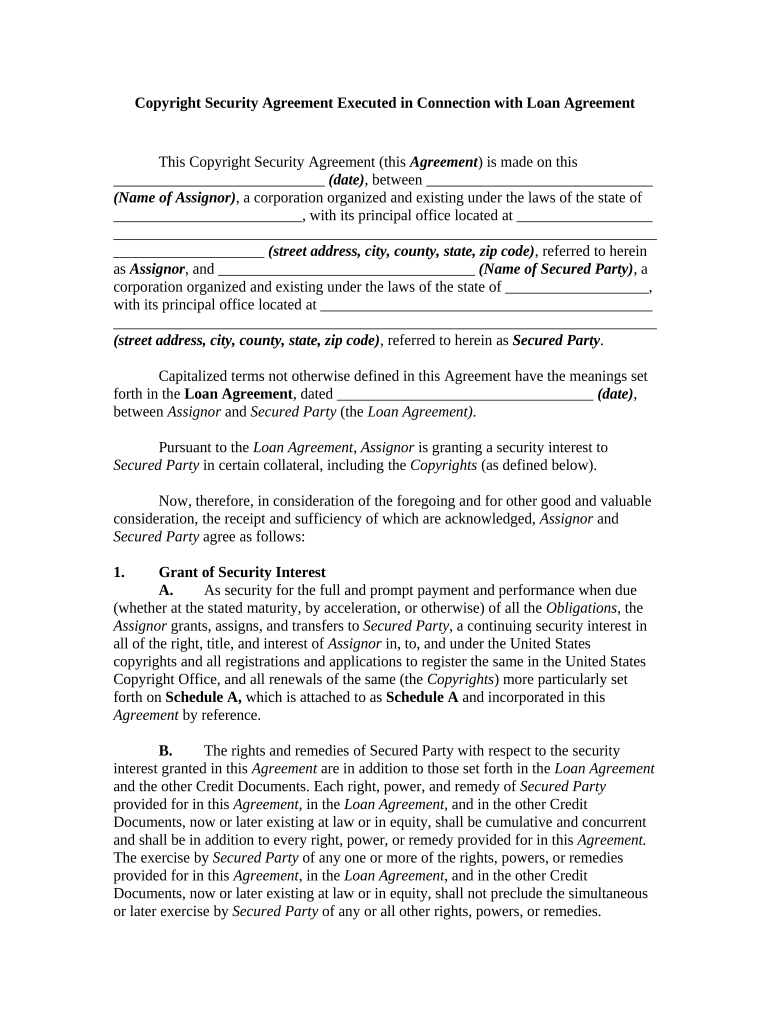
Executed agreements serve as a definitive record of the parties’ intentions and obligations. They articulate specific terms, conditions, performance metrics, payment schedules, and remedies for breach. This clarity significantly mitigates financial and operational risks by setting clear expectations and reducing ambiguity. For investors, lenders, and business partners, a thoroughly executed agreement is their primary safeguard against misunderstanding and potential disputes, protecting their capital and interests.
Enforceability and Legal Recourse
The primary value of an executed agreement lies in its enforceability. Should one party fail to uphold their end of the bargain, the non-breaching party has a legal basis to seek remedies through courts or arbitration. This legal recourse is fundamental to ensuring that financial commitments, whether for loans, investments, or service provisions, are honored. Without executed agreements, the financial system would lack the trust and accountability necessary for robust operation, hindering everything from international trade to individual borrowing.
Facilitating Transactions and Growth
From multi-billion-dollar mergers and acquisitions to small business loans and personal mortgages, executed agreements are indispensable. They enable parties to commit to complex, long-term financial relationships with confidence. Investment funds flow based on executed subscription agreements, supply chains operate under executed vendor contracts, and joint ventures thrive on executed partnership agreements. These documents facilitate capital formation, resource allocation, and the expansion of businesses, directly contributing to economic growth.
Accounting and Audit Implications
For businesses, executed agreements have direct and significant implications for financial reporting. They dictate when revenue can be recognized, when expenses are accrued, how assets are valued, and how liabilities are recorded on balance sheets. Auditors heavily rely on executed agreements to verify the accuracy and compliance of financial statements. Without them, the integrity of a company’s financial disclosures would be compromised, affecting investor confidence and regulatory compliance.
Types of Executed Agreements and Their Financial Impact
Executed agreements manifest in various forms, each tailored to specific financial or business relationships, and each carrying distinct financial implications.
Loan Agreements and Debt Instruments
Executed loan agreements are fundamental to both personal and business finance. These include mortgages, personal loans, lines of credit, and corporate bonds. Once executed, they legally bind the borrower to repay the principal amount along with interest, according to a specified schedule. They define collateral, covenants (conditions the borrower must meet), and default clauses. For the lender, it solidifies an asset (the loan receivable) and a stream of income (interest). For the borrower, it creates a liability that impacts their balance sheet and cash flow.
Investment Contracts
Investment contracts, such as share purchase agreements, venture capital funding rounds, limited partnership agreements, and subscription agreements, are executed to formalize equity investments. These agreements specify the amount of capital invested, the ownership stake acquired, investor rights (e.g., voting rights, anti-dilution provisions), valuation, and potential exit strategies. Their execution directly impacts the capital structure of the company receiving the investment and the equity holdings and potential future returns for the investor.
Business Operating Agreements
A vast array of executed agreements governs day-to-day business operations. These include service agreements, supply chain contracts, distribution agreements, and intellectual property licenses. They define terms of trade, payment terms, performance standards, indemnities, and intellectual property ownership. Properly executed operating agreements ensure smooth operations, consistent cash flow, management of receivables and payables, and protection of critical business assets. Their terms can directly affect a company’s profitability, efficiency, and competitive standing.
Employment and Consulting Contracts
While often seen through a human resources lens, executed employment contracts and consulting agreements have significant financial implications. They detail compensation structures (salary, bonuses, equity options), benefits, non-disclosure agreements (NDAs), non-compete clauses, and intellectual property assignment. For businesses, these agreements define payroll costs, manage human capital risk, and protect proprietary information and innovations. For individuals, they secure income streams and define the terms of their professional engagement.
The Digital Evolution of Agreement Execution
The method of executing agreements has evolved significantly, embracing technology to enhance efficiency and accessibility while maintaining legal rigor.
Electronic Signatures and E-Contracts
The advent of electronic signatures (e-signatures) and the broader concept of e-contracts has revolutionized how agreements are executed. Laws such as the ESIGN Act in the U.S. have provided legal validity to electronic signatures, making them as binding as traditional “wet-ink” signatures in many contexts. This digital transformation allows for agreements to be drafted, reviewed, signed, and stored entirely electronically, accelerating transaction times, reducing administrative costs, and facilitating global business operations, particularly in finance where speed and security are paramount.

Blockchain and Smart Contracts (Emerging)
Looking ahead, blockchain technology and “smart contracts” represent the next frontier in agreement execution. A smart contract is a self-executing contract with the terms of the agreement directly written into lines of code. The code and the agreements contained therein exist across a distributed, decentralized blockchain network. Once the conditions programmed into the smart contract are met, the agreement automatically executes without the need for intermediaries. While still an evolving area, smart contracts hold immense potential for increasing transparency, immutability, and efficiency in financial transactions, from escrow services to automated loan repayments and complex derivatives. They promise to reduce fraud and enforcement costs, fundamentally altering the landscape of executed agreements in the financial sector.
aViewFromTheCave is a participant in the Amazon Services LLC Associates Program, an affiliate advertising program designed to provide a means for sites to earn advertising fees by advertising and linking to Amazon.com. Amazon, the Amazon logo, AmazonSupply, and the AmazonSupply logo are trademarks of Amazon.com, Inc. or its affiliates. As an Amazon Associate we earn affiliate commissions from qualifying purchases.