
An assignment of rents is a crucial financial and legal instrument, particularly within the realm of real estate and commercial finance. At its core, it’s an agreement that grants a lender (or assignee) the right to collect rent payments directly from a property’s tenants under specific circumstances, typically when a borrower (or assignor) defaults on a loan secured by that property. This mechanism serves as a significant layer of security for lenders, providing a direct revenue stream to mitigate potential losses and facilitate debt recovery, distinct from the ultimate act of foreclosure. Understanding its nuances is paramount for anyone involved in property investment, mortgage lending, or business finance.
Understanding the Core Concept
The assignment of rents clause or agreement is a common feature in real estate financing, especially for income-generating properties like apartment buildings, commercial offices, or retail centers. Its primary purpose is to protect the lender’s interest by ensuring a source of repayment should the primary loan falter.
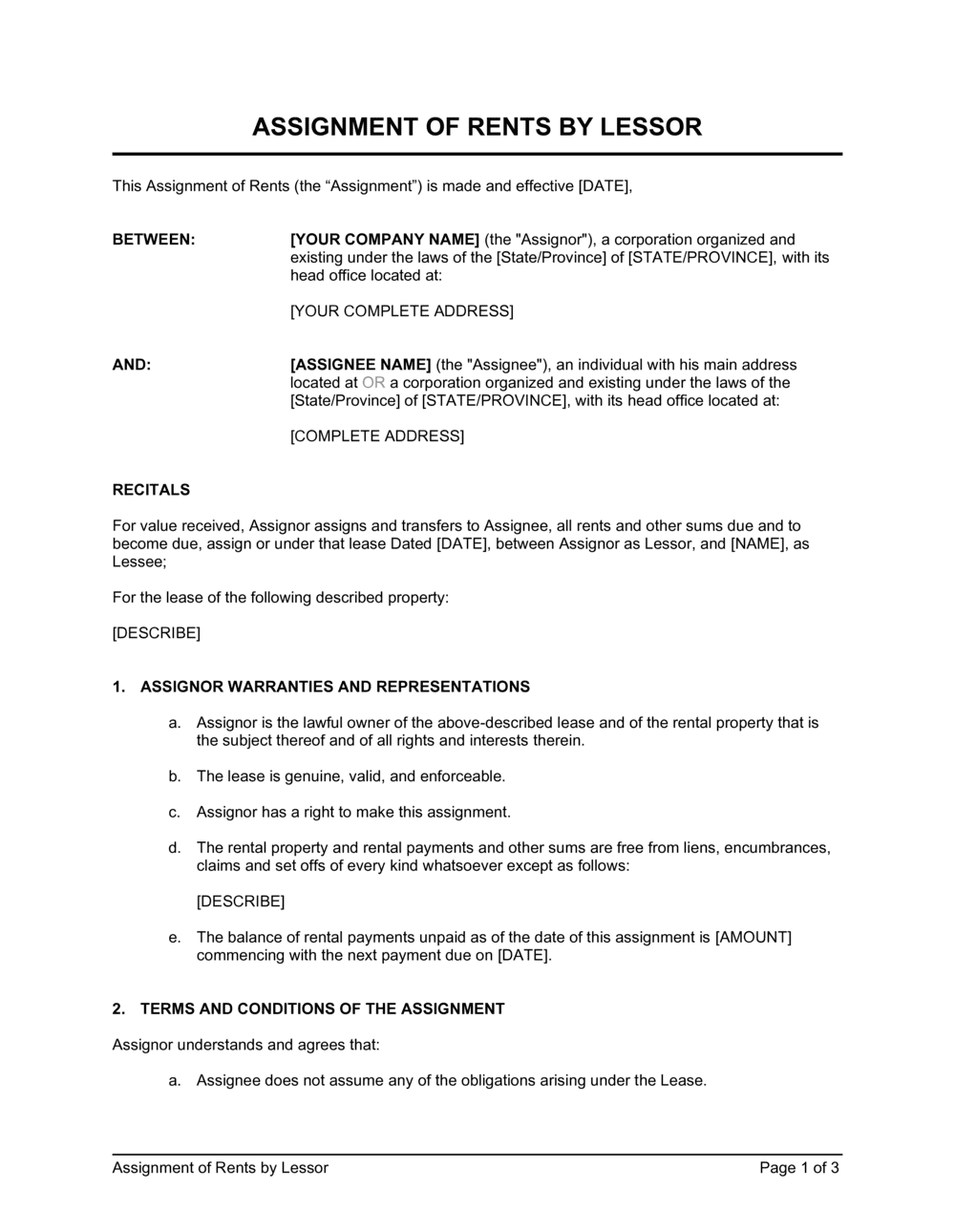
Defining an Assignment of Rents
An assignment of rents is a legal provision or separate agreement through which a property owner (the assignor) transfers their right to collect present and future rental income derived from their property to another party (the assignee), usually a lender. This transfer of rights is almost always contingent upon the occurrence of a specific event, such as a loan default. Prior to such an event, the property owner typically retains the right to collect and utilize the rents. Once the specified condition is met, the lender can then step in to collect those rents directly from tenants, applying them towards the outstanding debt. It essentially creates a pre-arranged conduit for cash flow to the lender, bypassing the defaulting owner.
The Parties Involved
Two primary parties are central to an assignment of rents agreement:
- The Assignor: This is the property owner, who is also the borrower in the underlying loan agreement. They are the party assigning their right to collect rents. For example, a landlord who takes out a mortgage on an apartment building is the assignor.
- The Assignee: This is typically the lender or creditor. They are the party receiving the right to collect the rents. A bank providing a commercial real estate loan would be the assignee.
Why It Matters in Finance
For lenders, an assignment of rents is a powerful risk management tool. Real estate loans, particularly for income-producing properties, are often underwritten based on the property’s ability to generate cash flow sufficient to cover debt service. If a borrower defaults, the property’s income stream is the most immediate source of funds that can be diverted to the lender, often more quickly and with less legal overhead than initiating a full foreclosure process. It provides a more robust security package than just a mortgage lien on the physical asset, offering access to the property’s liquid income.
For borrowers, understanding this clause is vital because it dictates what happens to their property’s revenue stream if they fall into financial distress. While it doesn’t impact their ability to collect rents in good standing, it significantly alters their financial landscape during a default, potentially removing a critical source of funds needed to operate the property or cure the default.
Types and Mechanisms of Assignment
While the fundamental concept remains consistent, assignments of rents can be structured in different ways, each with distinct legal and practical implications. The distinction between conditional and absolute assignments is particularly important.
Conditional vs. Absolute Assignments
- Conditional Assignment of Rents (or Collateral Assignment): This is the most common form. In a conditional assignment, the borrower (assignor) retains the right to collect and use rents as long as they are not in default on their loan obligations. The lender’s right to collect rents only “springs into action” or becomes enforceable upon the occurrence of a specified trigger event, almost always a loan default. Until that default, the lender’s interest is dormant, acting as a contingent right. This structure is favored because it allows borrowers to manage their properties and cash flow without interference as long as they meet their loan terms.
- Absolute Assignment of Rents (with License Back): Less common but legally distinct, an absolute assignment immediately transfers all rights to collect rents from the borrower to the lender upon the execution of the loan documents. However, concurrently with this transfer, the lender typically grants the borrower a “license” to continue collecting and using the rents as long as no default occurs. If a default happens, the license is revoked, and the lender’s pre-existing right to collect rents becomes fully active and enforceable. The key difference here is that the transfer of rights is immediate, not conditional. This distinction can be significant in bankruptcy proceedings, as some courts may view an absolute assignment as placing the rents outside of the borrower’s bankruptcy estate from the outset, potentially giving the lender a stronger claim.
The choice between conditional and absolute assignments often depends on state law, lender preference, and the specific risk profile of the loan and property. Regardless of the type, clear language within the loan documents is essential to define the terms, conditions, and triggers for activation.
How It Is Implemented
An assignment of rents is typically documented in one of two ways:
- As a Clause within a Mortgage or Deed of Trust: Most frequently, the assignment of rents is included as a specific paragraph or section within the main loan security instrument (mortgage or deed of trust). This integrates it directly into the property lien.
- As a Separate Standalone Document: In some cases, particularly in more complex commercial transactions or where specific state legal requirements necessitate it, the assignment of rents may be a completely separate agreement, cross-referenced with the main loan documents.
Crucially, to ensure enforceability against third parties (such as subsequent buyers, other creditors, or even tenants), the assignment of rents document (whether embedded in a mortgage or standalone) must be properly recorded in the public land records of the county where the property is located. Recording provides constructive notice to the world that the lender has a claim on the property’s rental income. Without proper recording, the lender’s claim could be challenged or subordinated to others.
The Role in Real Estate Financing and Distress
The assignment of rents plays a critical role in managing risk in real estate finance and becomes a potent tool during periods of financial distress for a borrower.
Security for Lenders
From a lender’s perspective, the assignment of rents provides a vital layer of security that goes beyond the physical asset itself. While a mortgage allows a lender to foreclose on and sell the property to recover debt, this process can be lengthy, costly, and subject to market fluctuations. During foreclosure, the property may continue to generate income, but without an assignment of rents, that income typically belongs to the defaulting borrower until the foreclosure is complete.
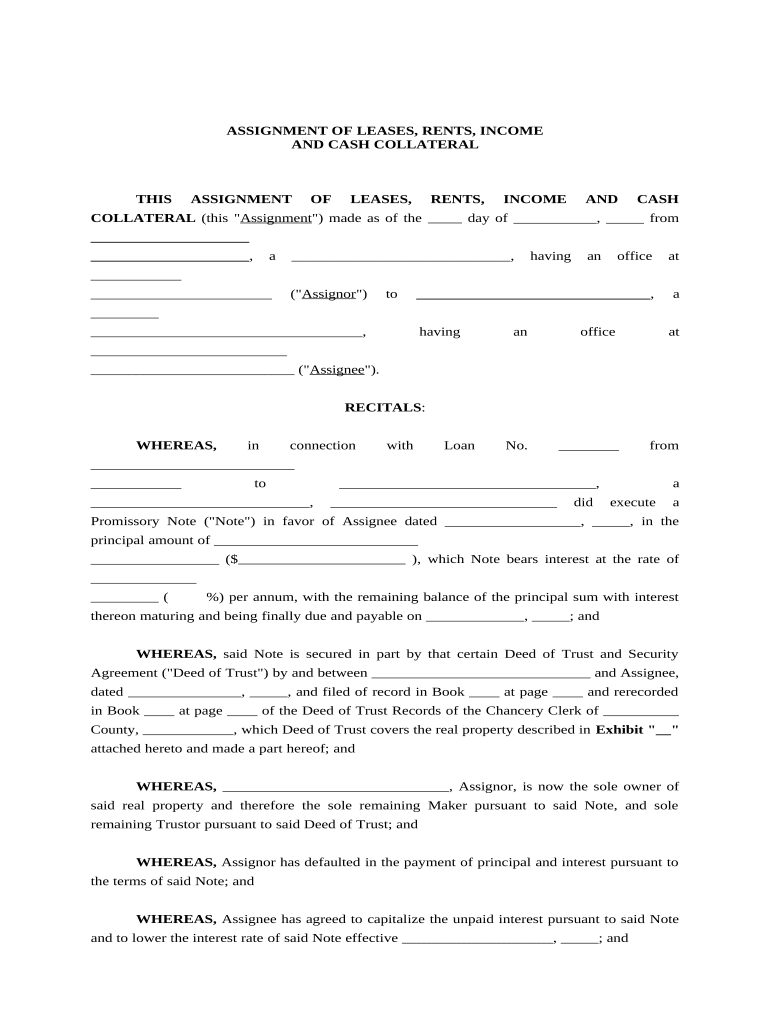
The assignment allows the lender to intercept this income stream, providing immediate cash flow that can be used to:
- Cover missed loan payments.
- Pay for property expenses (taxes, insurance, maintenance) that the defaulting borrower might neglect, thereby preserving the asset’s value.
- Reduce the overall principal balance owed.
- Help prevent property deterioration during the foreclosure period, which can significantly impact its eventual sale price.
This direct access to cash flow makes the assignment a powerful mechanism for loss mitigation, often preventing further escalation of financial problems.
Borrower Implications
For borrowers, the implications of an activated assignment of rents are significant. Once the lender enforces the assignment, the borrower loses control over the property’s most immediate and often only source of income. This can severely impact their ability to:
- Maintain the property (pay utilities, repairs, management fees).
- Meet other financial obligations related to the property.
- Generate the funds necessary to cure the loan default.
The diversion of rental income can accelerate the borrower’s financial distress, making it harder for them to recover from a default. It underscores the importance for property owners to fully understand the terms of their loan agreements and the potential consequences of default.
Triggers and Enforcement
The activation of an assignment of rents is contingent upon a specific “trigger event,” almost always a default under the loan agreement. This default can include:
- Failure to make timely principal and interest payments.
- Failure to pay property taxes or insurance premiums.
- Breach of other covenants in the loan agreement (e.g., failure to maintain the property, unauthorized sale of the property).
Once a default occurs, the enforcement process typically involves:
- Notice to Borrower: The lender usually provides formal notice to the borrower that a default has occurred and that the assignment of rents will be enforced.
- Notice to Tenants: The lender then notifies the property’s tenants to direct their future rent payments directly to the lender or a designated property manager, rather than the original landlord. This notice is critical, as tenants are generally protected if they continue to pay the original landlord without proper notice of the assignment.
- Property Management: In many cases, the lender will engage a third-party property management company to take over rent collection and property operations, ensuring rents are collected efficiently and applied correctly.
Enforcement, while generally straightforward, can sometimes face challenges, such as uncooperative tenants, legal disputes initiated by the borrower, or existing property management contracts that need to be addressed. State laws vary considerably regarding the specific procedures required for proper enforcement.
Legal and Financial Considerations
The legal framework surrounding assignments of rents is complex and jurisdiction-specific. Parties must navigate these intricacies carefully to protect their financial interests.
State Law Variations
It is imperative to recognize that the enforceability and interpretation of assignments of rents vary significantly from state to state within the United States. Some states are “lien theory” states, where the mortgage creates a lien on the property, and the borrower retains title. Others are “title theory” states, where the lender theoretically holds title until the loan is repaid. These fundamental differences can impact how an assignment of rents is viewed and enforced.
Additionally, states have different statutory requirements for what constitutes a valid assignment, when it can be enforced, and the procedures for doing so. Some states may require court intervention, while others permit lenders to self-help collect rents after providing notice. It is crucial to consult with legal counsel specializing in real estate finance in the relevant jurisdiction to ensure compliance and effective enforcement.
Impact on Property Valuation and Investment
For potential real estate investors or buyers, understanding existing assignments of rents is a critical component of due diligence. An existing, recorded assignment indicates a potential encumbrance on the property’s income stream. While it might not affect the current collection of rents if the loan is in good standing, it highlights the potential risk should the underlying loan go into default. This can influence a property’s perceived value and the willingness of investors to acquire it, especially if the terms of the assignment are particularly stringent or if the property has a history of financial distress. Investors need to assess the loan terms, the financial health of the current owner, and the specific language of any existing assignment of rents.
Protecting Your Financial Interests
- For Borrowers (Property Owners):
- Read Carefully: Fully understand the assignment of rents clause in your loan documents before signing. Pay close attention to the definition of “default” and the conditions under which the lender can activate the assignment.
- Negotiate: Where possible, negotiate terms that provide clear cure periods or require specific actions from the lender before enforcement.
- Maintain Financial Health: Proactively manage your property’s finances to avoid default. If default seems imminent, communicate with your lender to explore workout options before enforcement occurs.
- For Lenders (Assignees):
- Proper Documentation: Ensure the assignment of rents is clearly drafted, unambiguous, and covers all necessary legal requirements for your jurisdiction (e.g., specific language for absolute vs. conditional).
- Record Promptly: Always record the assignment (or the mortgage containing it) in the public records to establish priority and provide notice.
- Swift Action on Default: Upon default, act promptly and follow all legal procedures for enforcement to avoid delays and potential challenges.
- For Investors/Buyers:
- Due Diligence: Always conduct thorough due diligence, including a title search, to identify any existing liens or assignments of rents on a property you intend to purchase.
- Understand Risk: Assess the implications of any existing assignment for the property’s cash flow and your investment risk profile.
Modern Context and Strategic Use
While traditionally associated with standard mortgages, assignments of rents have evolved in their application and remain a cornerstone of sophisticated financial strategies.
Beyond Traditional Mortgages
Assignments of rents are not exclusive to conventional residential or commercial mortgages. They are frequently utilized in:
- Construction Loans: Where the property will eventually generate income upon completion.
- Mezzanine Financing: Often layered above senior debt, mezzanine lenders may take an assignment of rents as part of their security package.
- Real Estate Investment Trusts (REITs): While REITs themselves invest in properties, their financing structures can involve such assignments.
- Workout Agreements and Loan Restructurings: In scenarios where a borrower is already in default, a lender might agree to new loan terms that include or modify an assignment of rents to provide greater security for the restructured debt.
These instruments are particularly relevant for any income-producing real estate asset, underscoring their broad applicability across various segments of the financial market.

A Tool for Financial Prudence
From a holistic financial perspective, an assignment of rents represents a critical tool for prudence. For lenders, it embodies a responsible approach to managing risk associated with substantial real estate investments, safeguarding capital, and ensuring the stability of the financial system. It minimizes the impact of individual borrower defaults on their portfolios.
For borrowers and investors, understanding an assignment of rents is equally about financial prudence. It instills discipline in managing real estate assets and debt obligations. By fully grasping the potential consequences, property owners are better equipped to make informed decisions, structure their finances responsibly, and take proactive measures to prevent defaults. Ultimately, it serves as a stark reminder of the interconnectedness of property, income, and debt in the complex world of business finance.
aViewFromTheCave is a participant in the Amazon Services LLC Associates Program, an affiliate advertising program designed to provide a means for sites to earn advertising fees by advertising and linking to Amazon.com. Amazon, the Amazon logo, AmazonSupply, and the AmazonSupply logo are trademarks of Amazon.com, Inc. or its affiliates. As an Amazon Associate we earn affiliate commissions from qualifying purchases.