
The automotive world is replete with technical modifications designed to enhance a vehicle’s performance, handling, or off-road capability. Among these, the “welded diff” stands out as a particularly radical and often debated alteration, primarily found in motorsport disciplines like drifting and certain off-road applications. To truly understand a welded differential, one must first grasp the fundamental principles of a standard differential and appreciate the specific performance goals that a welded unit aims to achieve. This modification, while effective for specific use cases, introduces a host of trade-offs that demand careful consideration.
Understanding the Conventional Differential
At its core, a differential is a clever mechanical gearbox designed to transmit engine power to the drive wheels while allowing them to rotate at different speeds. This seemingly simple function is critical for any vehicle turning a corner.
Purpose of a Differential
When a vehicle turns, the wheel on the outside of the turn must travel a greater distance than the wheel on the inside of the turn. If both wheels were forced to rotate at the same speed (as they would be if directly connected by a solid axle), the inside wheel would skip or drag, creating immense strain on the drivetrain, uneven tire wear, and unpredictable handling. The primary purpose of a differential is to mitigate this by allowing the wheels on the same axle to rotate at independent speeds while still receiving power.
How a Standard Differential Works
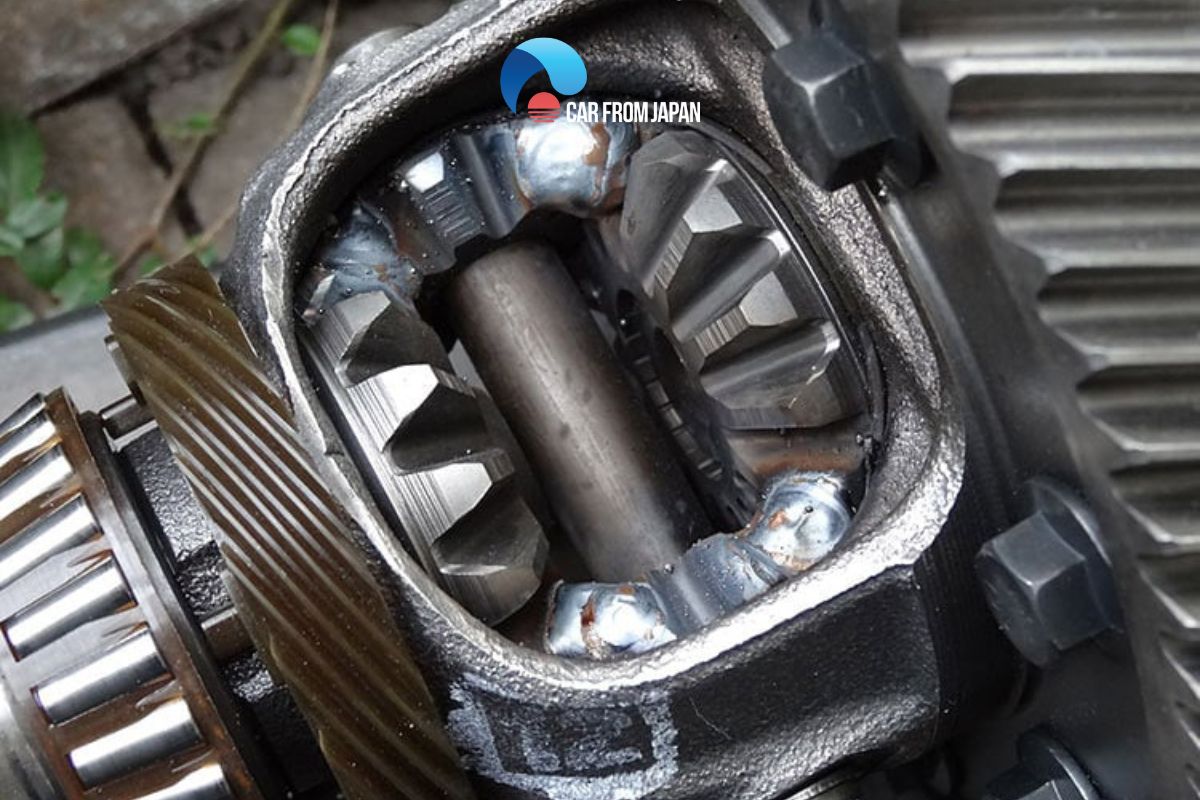
An open or conventional differential typically consists of a ring gear, a pinion gear, and several spider gears (pinion gears and side gears). The input shaft from the transmission drives the pinion gear, which in turn rotates the larger ring gear. The ring gear is connected to a differential carrier, which houses the spider gears. These spider gears are free to rotate relative to each other and to the differential carrier.
When the vehicle travels in a straight line, there is minimal difference in wheel speed, and the spider gears effectively act as a solid unit, driving both wheels at approximately the same rate. However, when turning, the resistance on the inside wheel causes the spider gears to rotate, allowing the inside wheel to slow down and the outside wheel to speed up, smoothly navigating the corner.
Limitations of Open Differentials
While excellent for street driving and comfort, an open differential has a significant limitation: it always sends power to the path of least resistance. This means if one wheel loses traction—for instance, when encountering ice, mud, or simply lifting off the ground during aggressive cornering—the differential will direct almost all engine torque to that spinning wheel. The wheel with traction will receive little to no power, effectively rendering the vehicle immobile or severely limiting its ability to accelerate. This characteristic is why vehicles with open differentials can easily get stuck or struggle for grip in challenging conditions.
The Concept of a Welded Diff
A welded differential is a direct and somewhat crude solution to the traction limitations of an open differential. Rather than introducing complex mechanical systems, it physically eliminates the differential action altogether.
Mechanical Modification Explained
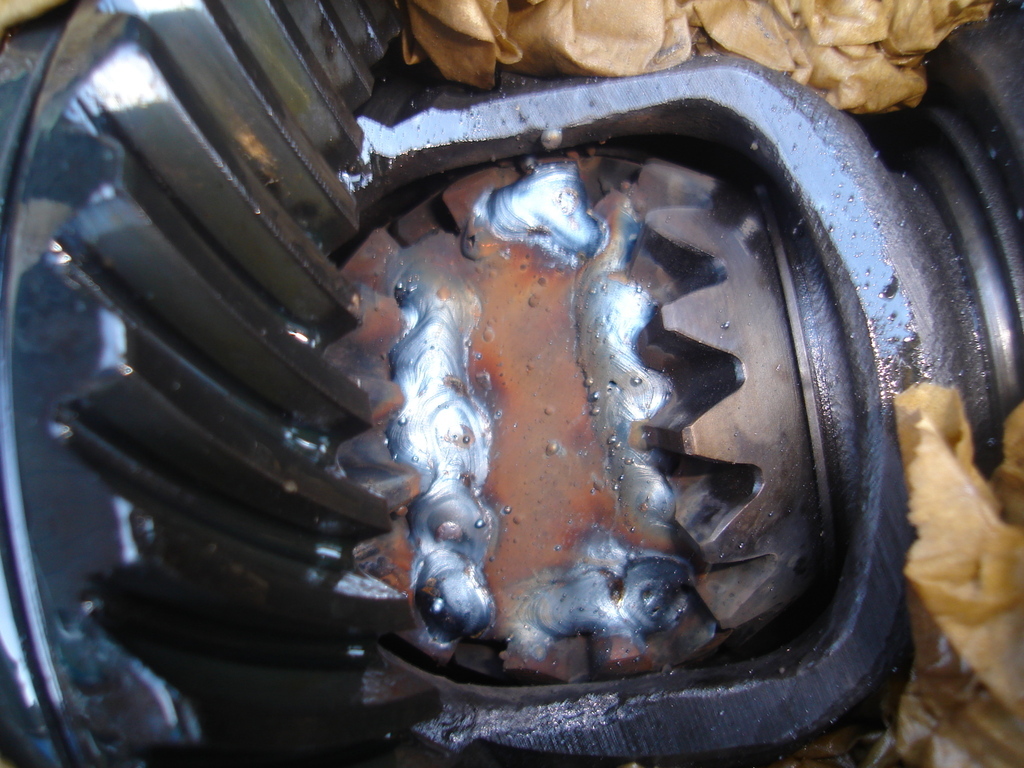
The modification involves permanently locking the internal gears of an open differential by welding them together. Specifically, the spider gears are welded to the differential carrier, and often to each other, creating a solid, immovable assembly. Once welded, the differential’s internal components can no longer rotate independently. The output shafts—and consequently, the drive wheels—are forced to rotate at precisely the same speed at all times, regardless of the vehicle’s movement or traction conditions.
How it Transforms Power Delivery
With a welded diff, the engine’s power is split equally and directly to both drive wheels. There is no longer a path of least resistance; if one wheel begins to slip, the other wheel, being mechanically locked, will still receive full torque and continue to push the vehicle forward. This provides maximum traction for acceleration in a straight line and ensures predictable power delivery to both wheels.
The Goal: Equal Wheel Speed
The fundamental goal of a welded diff is to ensure that both drive wheels spin at the exact same rate. This characteristic is highly desirable in specific performance scenarios where maintaining constant wheel speed parity is paramount for control or acceleration.
Applications and Performance Implications
The unique characteristics of a welded diff make it suitable for niche applications, each with distinct performance requirements.
Drifting and Motorsport Advantage
Perhaps the most common application for a welded diff is in drifting. In drifting, the driver intentionally oversteers, causing the rear wheels to lose traction and slide through corners. A welded differential is extremely beneficial here because it ensures both rear wheels spin at the same rate. This provides consistent, predictable power delivery to both tires, making it easier for the driver to initiate and maintain a controlled slide. Without it, the inside wheel might lose traction completely, making it harder to sustain the drift. The direct power transfer allows for more precise throttle control over the rear axle’s behavior.
Off-Road Traction
In severe off-road conditions, where wheels frequently lift off the ground or encounter extremely slippery surfaces, a welded diff can provide an immense traction advantage. If one wheel is airborne or in deep mud, a welded differential ensures the wheel with traction continues to receive power, allowing the vehicle to pull itself out of difficult situations where an open differential would simply leave it stuck. This is particularly appealing for budget-minded off-road enthusiasts who cannot afford expensive aftermarket locking differentials.
Drag Racing Dynamics
For straight-line acceleration events like drag racing, a welded diff can contribute to a more efficient launch. By ensuring both drive wheels receive equal power, it minimizes wheelspin on one side and maximizes the transfer of power to the ground. This can lead to harder, more consistent launches, especially on prepped surfaces where traction is abundant.
Daily Driving Considerations
This is where the limitations of a welded diff become glaringly apparent. For everyday street driving, a welded differential significantly compromises drivability and introduces several issues:
- Cornering Difficulties: When turning, both wheels are forced to rotate at the same speed. This means the inside wheel, which needs to travel a shorter distance, is forced to over-rotate, while the outside wheel, needing to travel further, is dragged. This leads to tire scrubbing, chirping, and severe strain on the drivetrain.
- Accelerated Tire Wear: The constant scrubbing and dragging during turns drastically increases tire wear, especially on the inner edges of the tires.
- Drivetrain Stress: The immense mechanical strain created during turns is transmitted throughout the entire drivetrain, including the axles, CV joints, and even the transmission. This can lead to premature failure of these components.
- Unpredictable Handling: On wet or low-traction surfaces, the differential’s tendency to force both wheels to spin at the same rate can make the rear end feel “pushy” or prone to snapping sideways unexpectedly, especially during turns under power.
- Noise and Vibration: The constant stress and tire scrubbing often result in noticeable clunking, groaning, or grinding noises, particularly at low speeds and during tight turns.
Advantages and Disadvantages
A comprehensive understanding of a welded differential requires weighing its benefits against its considerable drawbacks.
Pros: Cost-Effectiveness, Direct Power
The primary advantages of a welded diff are its cost-effectiveness and its ability to provide uncompromising direct power delivery. For those on a tight budget, welding an existing open differential is significantly cheaper than purchasing and installing a limited-slip differential (LSD) or a dedicated locking differential. This makes it an accessible modification for grassroots motorsport or hobbyist off-roaders. The direct power delivery means both wheels are always driven equally, maximizing available traction for specific high-performance scenarios.
Cons: Street Drivability, Tire Wear, Component Stress, Safety Concerns, Legality
The disadvantages, however, are numerous and significant, especially for vehicles used on public roads:
- Severe Compromise in Street Drivability: As detailed earlier, turning becomes a harsh, clunky, and often uncomfortable experience.
- Excessive Tire Wear: Tires will wear out much faster than normal due to constant scrubbing.
- Increased Component Stress: The entire drivetrain—axle shafts, universal joints, CV joints, and even the differential housing—is subjected to extreme stresses, drastically increasing the likelihood of premature failure. This is particularly true for components not designed to handle such constant stress.
- Safety Concerns: The unpredictable handling characteristics on varied surfaces, particularly in inclement weather, can make the vehicle dangerous to operate on public roads. It requires a highly skilled driver to manage, and even then, unexpected loss of traction can occur.
- Legality: In many regions, modifications that significantly alter a vehicle’s handling characteristics or introduce excessive tire wear are either illegal or can lead to vehicle inspection failures. A welded diff can fall into this category, rendering the vehicle non-roadworthy.
- Lack of Refinement: Modern vehicles are engineered for smoothness and predictability. A welded diff fundamentally undermines these characteristics, leading to a raw and often jarring driving experience.
Alternatives and Professional Solutions
Given the substantial drawbacks of a welded differential for general use, several professional and more refined alternatives exist for achieving enhanced traction.
Limited-Slip Differentials (LSDs)
Limited-slip differentials are designed to overcome the limitations of open differentials by allowing some difference in wheel speed during turns while still transferring power to the wheel with more traction when slip occurs. They use various mechanisms, such as clutch packs, viscous fluids, or gear-based systems (e.g., Torsen), to manage torque distribution. LSDs offer a much better balance between enhanced traction and street drivability, making them a popular choice for performance vehicles and sports cars. They improve acceleration out of corners and provide better grip in slippery conditions without the harshness of a welded unit.
Locking Differentials
Designed primarily for extreme off-road use, a locking differential (or “locker”) allows the driver to manually or automatically lock the differential’s internal gears, effectively mimicking a welded diff. The key difference is that a locker can be disengaged when not needed, restoring the differential’s normal operation for on-road driving. This provides the best of both worlds: full lock for maximum traction off-road, and open differential action for comfortable road use.

Considerations for Professional Installation
For any significant drivetrain modification, especially one as impactful as altering the differential, professional installation is paramount. A poorly executed weld can lead to catastrophic failure, dangerous handling, and costly repairs. Experienced technicians understand the metallurgy, stress points, and precise requirements for such a modification, ensuring any work performed is as safe and reliable as possible within the constraints of the chosen modification.
In conclusion, a welded differential is a high-impact, low-cost modification best reserved for dedicated track cars, drift vehicles, or serious off-road rigs where the goal is absolute, unyielding power delivery to both wheels and the significant compromises in drivability and durability are accepted. For daily drivers or enthusiasts seeking a balanced performance upgrade, more sophisticated and safer alternatives like limited-slip or selectable locking differentials are almost always the superior choice.
aViewFromTheCave is a participant in the Amazon Services LLC Associates Program, an affiliate advertising program designed to provide a means for sites to earn advertising fees by advertising and linking to Amazon.com. Amazon, the Amazon logo, AmazonSupply, and the AmazonSupply logo are trademarks of Amazon.com, Inc. or its affiliates. As an Amazon Associate we earn affiliate commissions from qualifying purchases.