
In the vast landscape of mechanical engineering and vehicle technology, few components blend simplicity with sophisticated performance as effectively as the torsion axle. Often overlooked by the casual observer, this ingenious suspension system plays a critical role in providing smooth rides, enhanced stability, and robust durability across a diverse range of applications, from utility trailers and recreational vehicles to specialized industrial equipment. Unlike traditional leaf spring or coil spring setups, the torsion axle operates on a fundamentally different principle, utilizing the elastic properties of rubber to absorb shock and support weight. Understanding its design, operational benefits, and specific applications offers a deeper appreciation for this impactful piece of engineering.
The Core Mechanics: Understanding Torsion Axle Design
At its heart, a torsion axle is a self-contained suspension system that replaces conventional springs and shock absorbers with a unique internal mechanism. Its design is minimalistic yet highly effective, offering distinct advantages in certain contexts.
How it Works: The Rubber Cord Suspension System
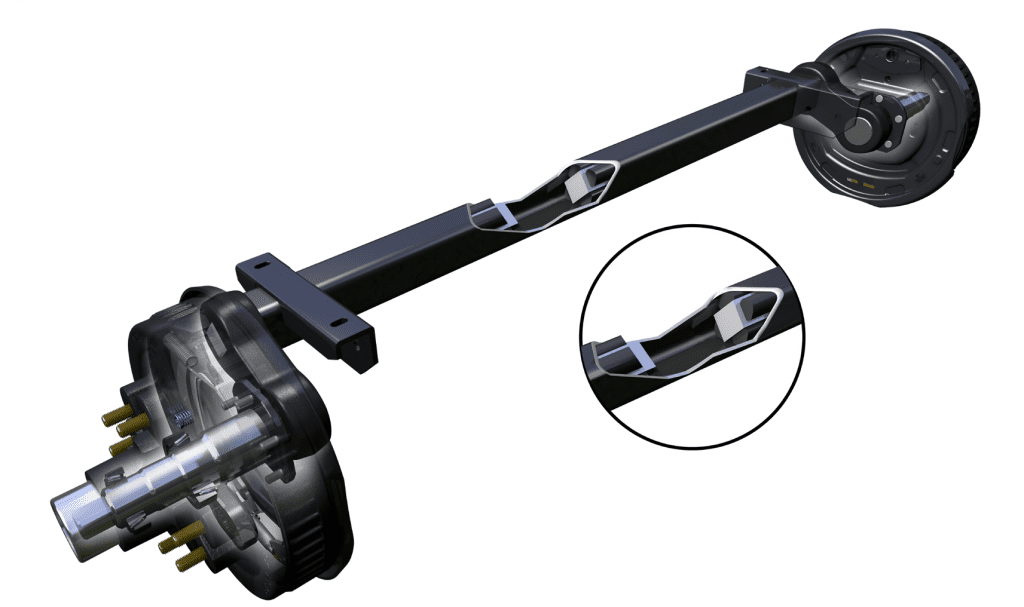
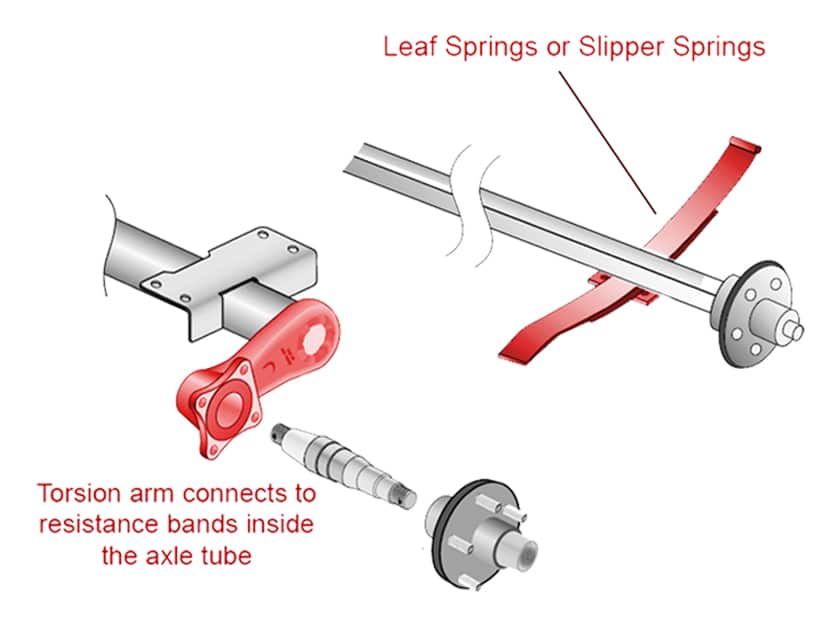
The operational principle of a torsion axle revolves around its eponymous “torsion” action. Instead of relying on the compression or extension of a spring, it harnesses the twisting resistance of rubber elements. Each wheel hub is connected to a spindle, which is then attached to an arm that extends into a central axle beam. Inside this robust square or round beam, several thick rubber cords or elastomers are firmly encased. When a wheel encounters a bump or experiences a load, the spindle arm rotates. This rotation, in turn, twists the internal rubber cords. The natural resistance of these rubber cords to twisting provides the spring action, absorbing kinetic energy and cushioning the ride. As the force subsides, the rubber cords untwist, returning the wheel to its original position. This direct, independent action for each wheel is a hallmark of the torsion system.
Key Components: Spindles, Axle Beam, and Rubber Inserts
To fully grasp the mechanics, it’s essential to identify the primary components:
- Axle Beam (Housing): This is the main structural component, typically a robust steel tube, often square or occasionally round. It houses the internal rubber cords and provides the rigid framework for the entire assembly. The beam itself remains stationary relative to the vehicle frame.
- Trailing Arms (or Leading Arms): Extending from the axle beam are the suspension arms, to which the wheel spindles are attached. These arms pivot on the internal rubber elements, allowing vertical wheel travel. The length and angle of these arms significantly influence the suspension’s characteristics, such as ride height and wheel travel.
- Spindles: These are the stub axles that protrude from the trailing arms. The wheel hubs, bearings, and brake assemblies are mounted directly onto the spindles. They are the critical interface between the wheel and the suspension system.
- Rubber Cords (or Elastomers): These are the core “springs” of the system. Typically, four longitudinal rubber cords are positioned within the axle beam, surrounding a central square shaft (or occasionally a circular one). When the trailing arm rotates, it twists these rubber cords, generating the resistive force. The durometer (hardness) and volume of the rubber determine the axle’s load capacity and ride characteristics.
- Inner and Outer Sleeves: These metal components encapsulate the rubber cords within the axle beam, ensuring their precise positioning and distributing the twisting forces effectively.
The Principle of Torsion: Twisting for Suspension
The term “torsion” refers to the twisting of an object due to an applied torque. In the context of the torsion axle, the wheel’s upward movement applies a torque to the trailing arm, which then translates this torque to the internal rubber cords. These cords are designed to resist this twisting force, thereby providing the necessary suspension. This principle is distinct from traditional compression (coil springs) or bending (leaf springs) mechanics, offering a unique set of performance attributes. The rubber’s inherent damping properties also help dissipate energy, reducing bounce without the need for separate shock absorbers in many applications.
Advantages and Disadvantages of Torsion Axles
Every engineering solution involves trade-offs, and torsion axles are no exception. Their specific design confers several notable benefits but also comes with certain limitations that must be considered during vehicle design and application.
Benefits: Smooth Ride, Low Maintenance, Durability, Independent Suspension
- Smoother, Quieter Ride: The rubber elements naturally absorb road vibrations and noise more effectively than metal springs, leading to a noticeably smoother and quieter towing or driving experience. The inherent damping properties of rubber also reduce rebound, minimizing bouncing.
- Independent Wheel Suspension: A significant advantage of most torsion axle designs is their independent suspension for each wheel. This means that a bump encountered by one wheel does not directly affect the other wheel on the same axle. This greatly improves stability, especially on uneven terrain, and reduces body roll.
- Low Maintenance and Enhanced Durability: With fewer moving parts compared to leaf spring systems (no shackles, hangers, U-bolts, or separate shock absorbers), torsion axles generally require less maintenance. There are no metal-on-metal wear points in the primary suspension mechanism, reducing the need for lubrication and inspection of wear components. The sealed nature of the rubber elements also protects them from environmental contaminants.
- Lower Profile and More Ground Clearance: The compact design of a torsion axle allows for a lower trailer deck height, which can make loading and unloading easier and improve overall stability due to a lower center of gravity. Conversely, by mounting the axle to allow the arms to point downwards, increased ground clearance can be achieved if desired.
- Corrosion Resistance: For marine applications or environments with high salt exposure, the sealed internal components of a torsion axle are far less susceptible to rust and corrosion than exposed leaf springs and their associated hardware.
Drawbacks: Cost, Limited Adjustability, Repair Complexity, Weight Distribution Considerations
- Higher Initial Cost: Torsion axles typically have a higher upfront cost compared to conventional leaf spring axles. This can be a deciding factor for budget-conscious manufacturers or buyers.
- Limited Ride Height Adjustability: Once installed, the ride height of a torsion axle is largely fixed by its design and the angle of its trailing arms. Significant adjustments are not straightforward and usually require specialized parts or modifications, unlike leaf springs where shims or blocks can alter height.
- Complex Field Repairs: While generally reliable, if the internal rubber elements or the axle beam itself are damaged, field repairs can be challenging or impossible. Often, the entire axle assembly needs to be replaced, which can be more expensive and time-consuming than replacing individual components in a leaf spring system.
- Weight Distribution Sensitivity: Torsion axles perform optimally when loaded within their specified weight range and with proper weight distribution. Overloading or uneven loading can prematurely wear out the rubber elements or lead to suboptimal suspension performance. The lack of dynamic load sharing between axles in tandem setups can also be a consideration if the terrain causes one axle to carry significantly more weight temporarily.
- Stiffer Ride When Unloaded: Because the rubber elements provide a continuous resistance, an unloaded trailer with torsion axles might exhibit a somewhat stiffer ride compared to a leaf spring system that has more flex when lightly loaded.
Applications Across Industries: Where Torsion Axles Shine
The unique characteristics of torsion axles make them particularly well-suited for specific applications where their benefits outweigh their drawbacks.
Utility Trailers and RVs: Enhancing Towing Experience
Perhaps the most common application of torsion axles is in utility trailers, boat trailers, and recreational vehicles (RVs). For utility trailers, the robust, low-maintenance nature is invaluable, especially for those that see intermittent but heavy use. In RVs and travel trailers, the independent suspension contributes significantly to a smoother and more stable towing experience, reducing sway and improving comfort for passengers inside the towed unit. The lower deck height can also be beneficial for easier entry and egress in RVs.
Agricultural Equipment: Navigating Uneven Terrain
Agricultural implements, such as spreaders, sprayers, and smaller field carts, often operate on uneven, soft terrain. Torsion axles provide excellent ground clearance and independent wheel articulation, allowing the equipment to traverse challenging landscapes with greater stability and less stress on the chassis. Their durability and low maintenance are also critical in demanding agricultural environments.
Specialized Vehicles: Custom Builds and Industrial Uses
Beyond mainstream applications, torsion axles are frequently found in specialized vehicles and industrial equipment. This includes custom-built trailers for specific cargo, mobile generators, emergency response vehicles, and various types of ground support equipment for airports or construction sites. The ability to customize load capacity and trailing arm angles makes them adaptable for unique requirements, and their sealed nature is advantageous in dirty or corrosive industrial settings.
Marine Trailers: Corrosion Resistance
For boat trailers, corrosion is a constant battle. The design of torsion axles, with their sealed internal components, offers superior resistance to saltwater exposure compared to traditional leaf spring setups where metal springs, shackles, and bolts are directly exposed to corrosive elements. This longevity in harsh marine environments makes them a preferred choice for many boat owners.
Installation, Maintenance, and Longevity Considerations
Maximizing the performance and lifespan of a torsion axle requires proper installation and diligent, albeit minimal, maintenance.
Proper Sizing and Installation: Critical for Performance
The correct sizing of a torsion axle for its intended load is paramount. Overloading can lead to premature wear of the rubber elements and compromised suspension performance, while an undersized axle might result in an overly stiff ride. Professional installation ensures proper alignment and mounting, which is crucial for tire wear, tracking, and overall towing stability. The axle must be securely bolted to the frame, and the spindle angles typically have a slight “down angle” when unloaded, ensuring optimal ride height and performance under load.
Routine Inspection: What to Look For
While torsion axles are low maintenance, routine visual inspection is still important. Key areas to check include:
- Tire Wear: Uneven tire wear can indicate alignment issues or a compromised axle.
- Trailing Arm Condition: Look for any signs of bending, cracks, or excessive corrosion on the suspension arms.
- Axle Beam Integrity: Inspect the main axle housing for dents, severe rust, or structural damage.
- Brake Components: Although not part of the suspension, brake components mounted on the spindle should be checked for wear.
- Mounting Hardware: Ensure all bolts securing the axle to the frame are tight and free from corrosion.
Unlike leaf springs, there are no bushings, shackle bolts, or U-bolts to lubricate or routinely replace. The internal rubber elements are designed to last the life of the axle, typically.
Common Issues and Troubleshooting: Addressing Wear and Tear
The most common issue with torsion axles over time is the gradual degradation and hardening of the internal rubber elements. This typically manifests as:
- Loss of Ride Height: The trailer may sag, especially under load.
- Stiffer Ride: The suspension becomes less compliant, leading to a harsher ride.
- Reduced Suspension Travel: The wheels may not articulate as freely.
Once the rubber elements significantly degrade, the entire axle is usually replaced, as internal components are not generally serviceable in the field. Other issues might include bent spindles (often due to impact), which would necessitate spindle replacement or, more likely, axle replacement.
Extending Axle Lifespan: Best Practices
To maximize the longevity of a torsion axle:
- Adhere to Weight Limits: Never exceed the Gross Axle Weight Rating (GAWR) of the axle.
- Proper Weight Distribution: Ensure the load is evenly distributed across the trailer and within the axle’s capacity.
- Regular Cleaning: Especially for marine applications, rinse the axle thoroughly after exposure to saltwater.
- Avoid Impacts: Protect the axle beam and trailing arms from severe impacts with obstacles.
- Store Properly: If possible, store trailers on level ground to avoid uneven loading on the axles for extended periods.
Torsion Axles vs. Leaf Spring Axles: A Technical Comparison
When choosing a suspension system, the primary alternative to a torsion axle is often the leaf spring axle. Understanding their fundamental differences is key to making an informed technological decision.
Suspension Mechanism: Rubber vs. Steel Springs
- Torsion Axle: Uses the twisting action of internal rubber cords for suspension. Each wheel typically operates independently.
- Leaf Spring Axle: Relies on the bending and deflection of stacked steel spring leaves. Often, both wheels on an axle are connected, meaning a bump on one side affects the other, though some designs incorporate equalizers to mitigate this.
Ride Quality and Stability
- Torsion Axle: Generally provides a smoother, quieter ride with superior damping characteristics and independent wheel articulation, leading to better stability on uneven roads and reduced trailer sway.
- Leaf Spring Axle: Can offer a softer ride when lightly loaded (if appropriately sprung), but often has more bounce and less refined damping. The dependent nature can lead to more jostling when one wheel hits an obstruction.
Maintenance and Cost Implications
- Torsion Axle: Higher initial cost, but significantly lower ongoing maintenance due to fewer moving parts and sealed components. Field repair of internal components is often not practical.
- Leaf Spring Axle: Lower initial cost, but higher ongoing maintenance dueates to multiple wear points (bushings, shackles, U-bolts) that require periodic inspection, lubrication, and replacement. Individual components are readily replaceable.

Design Flexibility and Ground Clearance
- Torsion Axle: Offers good design flexibility for low-profile applications or increased ground clearance (by reversing arm angle), but ride height adjustment post-installation is limited.
- Leaf Spring Axle: Easier to modify ride height (e.g., with blocks), but the springs themselves can hang low, potentially reducing ground clearance unless specialized “overslung” or “underslung” configurations are used.
In conclusion, the torsion axle stands as a testament to elegant engineering, offering a compelling blend of performance, durability, and low maintenance for specific applications. Its unique rubber-based suspension system provides a distinct alternative to traditional spring setups, consistently delivering a smooth, stable, and reliable ride across various vehicular and industrial contexts.
aViewFromTheCave is a participant in the Amazon Services LLC Associates Program, an affiliate advertising program designed to provide a means for sites to earn advertising fees by advertising and linking to Amazon.com. Amazon, the Amazon logo, AmazonSupply, and the AmazonSupply logo are trademarks of Amazon.com, Inc. or its affiliates. As an Amazon Associate we earn affiliate commissions from qualifying purchases.