
In the vast and ever-evolving landscape of digital audio, where complex algorithms meet artistic expression, certain foundational technologies underpin much of what we hear. Among these, the soundfont stands as a crucial, often unsung, hero. At its heart, a soundfont is a file format that contains digital audio samples of musical instruments, along with parameters that control how these samples are played back. It’s a sophisticated blueprint that allows computers and digital instruments to emulate a wide array of sounds, from grand pianos and orchestral strings to synthesizers and percussion kits, without needing the physical instrument itself.
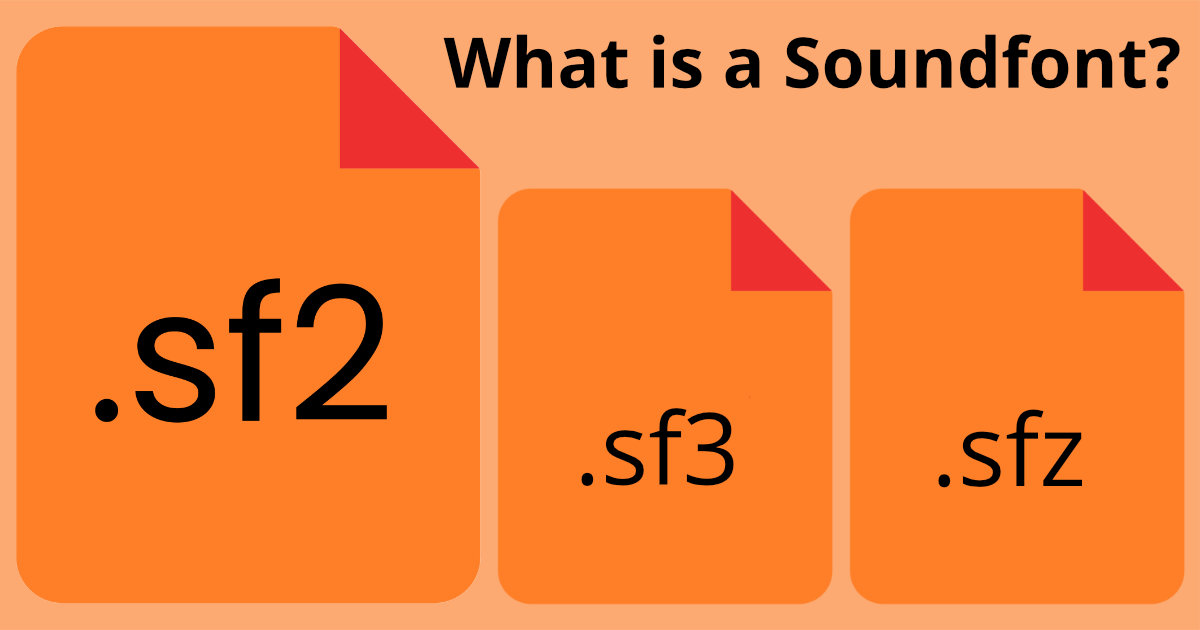
The concept emerged from the necessity to standardize and simplify the process of storing and recalling instrument sounds within MIDI (Musical Instrument Digital Interface) systems. Before soundfonts, each sound module or synthesizer had its own proprietary method for generating or storing sounds, making consistent playback across different hardware challenging. Soundfonts provided a universal language for instrument definition, enabling a more portable and accessible approach to digital music production and playback. They essentially package the essence of an instrument into a digital file, ready to be interpreted by compatible software or hardware.
The Core Concept: Digital Audio Sampling
Understanding soundfonts begins with grasping the fundamental principle of digital audio sampling. Sampling is the process of converting analog sound waves into digital data, capturing a snapshot of the sound at specific intervals. This digital representation can then be stored, manipulated, and reproduced by electronic devices.
From Acoustic to Digital: How Real Instruments Become Data
When a real instrument, such as a piano, is sampled, microphones record its sound across its entire playable range. Each note, and often multiple velocity layers (how hard a note is struck), is recorded individually. For instance, a single piano key might be sampled at five different dynamic levels, capturing the nuances from a soft whisper to a powerful forte. These individual recordings, known as samples, are the raw building blocks of a soundfont. They are typically short snippets of audio, ranging from a fraction of a second to several seconds, designed to loop seamlessly or sustain for their natural duration. The goal is to capture the instrument’s unique timbre, attack, decay, and resonance, preserving its sonic character in a digital format.
The Anatomy of a Sample: Pitch, Velocity, Decay
Beyond the raw audio, each sample within a soundfont is accompanied by specific instructions that dictate its behavior.
- Pitch Mapping: This defines which MIDI note triggers which sample. For example, playing middle C on a MIDI keyboard would trigger the sample recorded from the middle C key on the original piano. Soundfonts can also instruct a playback engine to pitch-shift a single sample across a small range of notes, conserving memory but potentially reducing realism.
- Velocity Layers: As mentioned, multiple samples for the same note, played at different intensities, are often included. Velocity mapping ensures that when a MIDI note is played softly, the soft sample is triggered, and when played hard, the loud sample is used, adding expressive realism.
- Loop Points: For sustained instruments (like strings or organs), samples are designed with loop points. These are markers within the sample that define a segment of the audio that can be repeated seamlessly for as long as a key is held down, preventing the sound from cutting off prematurely while keeping the sample file size manageable.
- Release Samples: Some advanced soundfonts include “release samples,” which capture the sound an instrument makes when a note is released (e.g., the sound of a piano damper falling onto the strings). This adds another layer of authenticity.
How Soundfonts Work: Architecture and Implementation
The genius of the soundfont lies in its structured file format, which consolidates all these elements into a single, cohesive package. The most widely adopted format is SF2 (SoundFont 2), developed by Creative Labs, primarily for their Sound Blaster line of sound cards.
The SF2 Format: Standardization and Structure
An SF2 file is essentially a highly organized database that groups instrument samples and their associated parameters. It’s a binary file containing various “chunks” of data, each serving a specific purpose. These chunks include:
- Info Chunk: Contains metadata about the soundfont, such as its name, author, copyright information, and creation date.
- Sample Data Chunk: Stores all the raw digital audio samples (the actual WAV data) that the soundfont uses. This is typically the largest part of the file.
- Instrument Chunk: Defines individual “instruments” within the soundfont. An instrument is a collection of one or more “presets” and references the samples from the sample data chunk.
- Preset (or Program) Chunk: This is the user-facing part. A preset is a specific configuration of an instrument, including mappings of samples to MIDI notes, velocity ranges, and various synthesis parameters. It allows for multiple variations of a single instrument (e.g., “Grand Piano” and “Bright Piano” might be different presets utilizing the same core piano samples but with different processing).
- Generator Chunk: Contains the instructions and parameters for how each sample should be played back. This is where the magic happens, dictating pitch, volume, filters, envelopes, and other synthesis elements.
Instruments, Presets, and Banks: Organizing Complex Sounds
A single soundfont can contain hundreds of instruments, each accessible as a preset. These presets are often organized into banks, similar to how a physical synthesizer might have different banks of sounds. This hierarchical structure allows for efficient browsing and selection of sounds. For instance, a soundfont might have Bank 0 containing GM (General MIDI) instruments, Bank 1 containing various synth pads, and so on. This organization is critical for broad compatibility, especially with the General MIDI standard, which assigns specific instrument types to specific program numbers, ensuring that a MIDI file played back on any GM-compatible device will use roughly the intended instrument sounds.
Synthesis Parameters: Shaping the Sound Beyond Samples
While samples provide the fundamental sound, soundfonts are not merely static sample players. They incorporate a range of synthesis parameters that can dramatically shape and alter the playback of those samples. These parameters are stored in the Generator Chunk and are applied in real-time by a soundfont player (either software or hardware). Key parameters include:
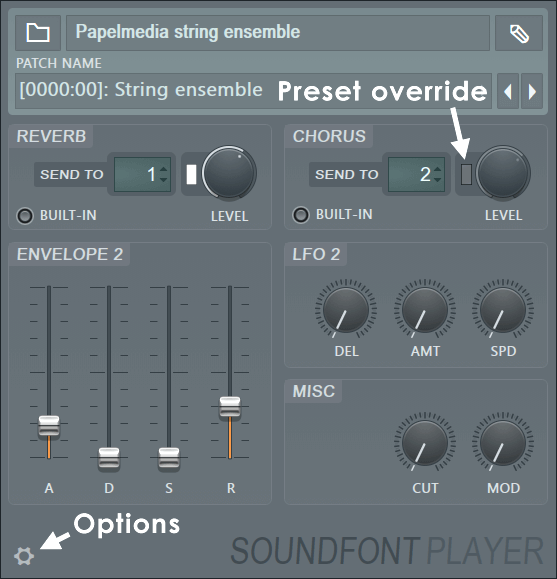
- Envelopes (ADSR): Attack, Decay, Sustain, Release controls how the volume of a sound changes over time, mimicking the natural amplitude changes of an instrument.
- Filters: Low-pass, high-pass, and band-pass filters can be applied to shape the timbre by selectively removing or boosting certain frequencies. This can make a sound brighter, darker, warmer, or thinner.
- LFOs (Low-Frequency Oscillators): Used for adding modulation effects like vibrato (pitch modulation), tremolo (amplitude modulation), or filter sweeps, creating dynamic and expressive sounds.
- Chorus/Reverb: Simple built-in effects that can add depth and spaciousness to an instrument’s sound.
- Pitch Bend Range: Defines how much the pitch wheel on a MIDI controller can alter the instrument’s pitch.
These parameters allow a soundfont designer to sculpt the raw samples into fully realized, expressive virtual instruments, often allowing for far more sonic versatility than merely playing back unedited recordings.
Applications Across Digital Audio
The versatility and efficiency of soundfonts have cemented their place in various domains of digital audio, even as newer technologies emerge.
Music Production and Composition: Virtual Instruments in DAWs
For aspiring and professional musicians, soundfonts offer an accessible entry point into computer-based music production. They function as virtual instruments within Digital Audio Workstations (DAWs) like FL Studio, Logic Pro, Cubase, or even simpler MIDI sequencers. Many DAWs and plugins can load SF2 files, allowing composers to use a vast library of instrument sounds to build their tracks without needing to invest in expensive hardware synthesizers or live musicians. This democratized music creation, enabling individuals to create orchestral pieces, electronic music, or full band arrangements with just a computer and a MIDI controller. While modern VST (Virtual Studio Technology) instruments often offer more advanced features and realism, soundfonts remain a lightweight and CPU-friendly option for certain applications, especially for those seeking specific lo-fi or retro sounds.
Game Development and Multimedia: Efficient Sound Playback
In game development and other multimedia applications, efficiency and low resource consumption are paramount. Soundfonts excel here because they are relatively small files compared to large, multi-gigabyte sample libraries, and their playback engines are designed to be lightweight. This makes them ideal for providing background music, sound effects, and ambient audio without taxing system resources, crucial for ensuring smooth gameplay or application performance. Older games, in particular, often relied heavily on soundfonts to deliver a rich sonic experience on hardware with limited memory and processing power. Even today, they can be found in embedded systems or applications where footprint is a concern.
Education and Accessibility: Low-Cost Instrument Emulation
Soundfonts play a significant role in music education and accessibility initiatives. They provide a low-cost solution for schools and individuals to access a wide range of instrument sounds without requiring the purchase of physical instruments. Students can learn about orchestration, composition, and instrument timbres by experimenting with soundfonts, fostering musical creativity and understanding. For individuals with disabilities, soundfonts, combined with assistive technologies, can open up avenues for musical expression and participation that might otherwise be inaccessible.
Legacy Systems and Retro Computing: Preserving Classic Sounds
The SF2 format originated in the 90s, and as such, it holds a special place in the hearts of retro computing enthusiasts and those working with legacy systems. Soundfonts are instrumental in accurately reproducing the audio experience of older software, games, and MIDI files that were designed to be played on specific sound cards. They allow modern systems to emulate the exact sounds of classic hardware, preserving a piece of digital audio history and ensuring that older content can be experienced as originally intended. The rich community around soundfonts has led to the creation of extensive libraries that meticulously replicate the sounds of vintage synthesizers and sound modules.
Advantages and Limitations of Soundfonts
Like any technology, soundfonts come with their own set of strengths and weaknesses, especially when compared to contemporary alternatives.
Pros: Efficiency, Flexibility, and Community
- Efficiency: Soundfonts are generally lightweight and require minimal CPU and RAM, making them suitable for older hardware, mobile devices, or situations where system resources are limited. This efficiency allows for a high polyphony (number of simultaneous notes) without audio dropouts.
- Flexibility: The SF2 format is highly customizable. Users can create their own soundfonts, combining samples and parameters in unique ways to craft bespoke instruments. This fosters a vibrant community of soundfont creators and sharers.
- Portability: A single SF2 file can be easily shared and loaded into various compatible software and hardware players, ensuring consistent playback across different systems (provided the players interpret the parameters correctly).
- Cost-Effective: Many high-quality soundfonts are available for free or at a low cost, providing an economical way to expand an instrument library.
Cons: Realism, Dynamic Range, and Evolving Standards
- Realism Compared to Modern VSTs: While impressive for their time, soundfonts often struggle to match the hyper-realism of modern sample libraries and VST instruments. Newer technologies employ vastly larger sample sets, advanced scripting, physical modeling, and complex convolution reverbs to capture every minute detail and performance articulation of an instrument. Soundfonts typically rely on fewer samples and simpler parameter controls.
- Limited Dynamic Range: Due to smaller sample sets and fewer velocity layers, soundfonts might offer a less nuanced dynamic range compared to advanced instruments, making it harder to achieve truly expressive performances without extensive MIDI CC (Continuous Controller) automation.
- Evolving Standards: While SF2 is a robust format, the broader industry has moved towards more advanced plugin architectures like VST, AU (Audio Units), and AAX, which offer greater complexity, more sophisticated signal processing, and direct integration into DAWs. Soundfonts often require dedicated players or converters to integrate into modern workflows.
- Mono-timbrality: Many older soundfont implementations are primarily designed for GM playback, which is often mono-timbral (one instrument per MIDI channel), making complex multi-instrument setups more challenging without layering multiple soundfont players.
Soundfonts in the Modern Era: A Continuing Legacy
Despite the emergence of more sophisticated virtual instrument technologies, soundfonts have not faded into obscurity. Instead, they continue to be relevant, finding new niches and evolving through community support.
Integration with Modern Software: Plug-ins and Converters
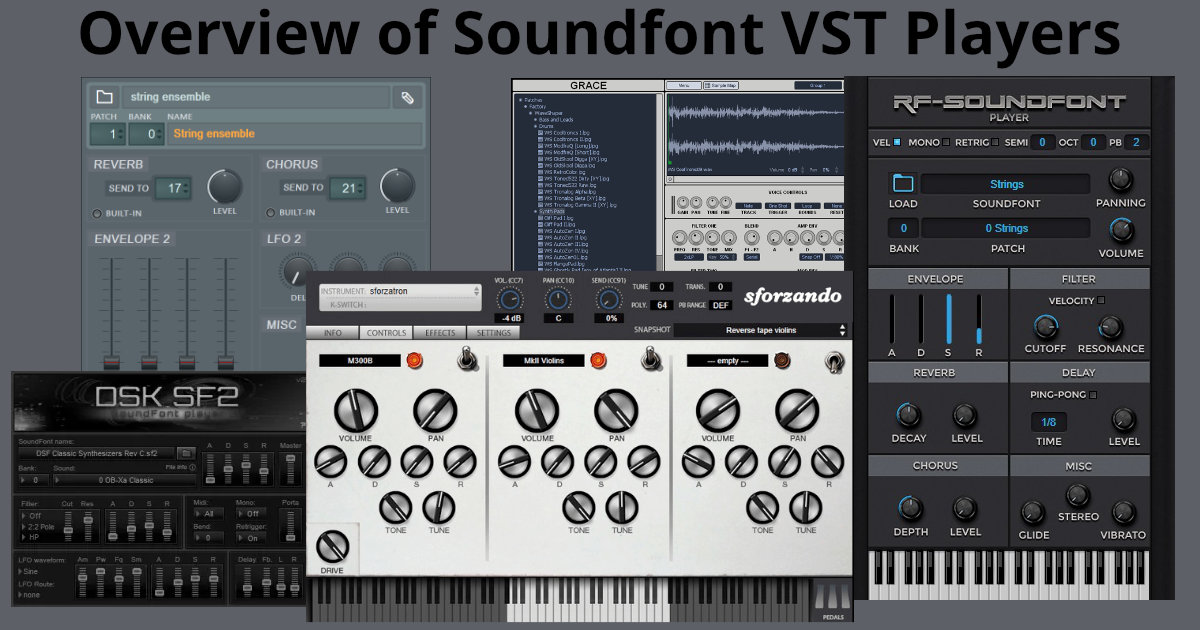
Many modern DAWs and music software applications still provide built-in support for soundfonts or offer dedicated plugins (like the popular SFZ Player, sforzando, or various soundfont hosts) that can load and play SF2 files. There are also numerous converters available that allow users to transform soundfonts into other formats, such as SFZ (a text-based, open-source soundfont format that offers more flexibility) or even into custom sample libraries for modern samplers. This continued integration ensures that the vast archive of existing soundfonts remains accessible and usable within contemporary production environments.
The Open-Source Community and Revival
A vibrant open-source community continues to support, develop, and share soundfonts. This community is responsible for creating new soundfonts, meticulously recreating vintage instrument sounds, and developing tools for editing and managing soundfont libraries. Projects like FluidSynth (a software synthesizer that can play SF2 files) and various soundfont editors keep the technology alive and relevant. This grassroots effort ensures that soundfonts remain an active and evolving part of the digital audio landscape, appealing to those who appreciate their efficiency, flexibility, and unique sonic character, as well as those interested in preserving the history of digital music. The open-source nature also encourages experimentation, leading to creative and unexpected uses of the format, from unique synth patches to experimental soundscapes.
In conclusion, a soundfont is more than just a file; it’s a testament to ingenious engineering in digital audio. It transformed how we conceive and create music on computers, standardizing instrument definitions and paving the way for the virtual instruments we know today. While contemporary technologies push the boundaries of realism, soundfonts endure as efficient, flexible, and culturally significant tools, reminding us that sometimes, elegance lies in simplicity and open standards.
aViewFromTheCave is a participant in the Amazon Services LLC Associates Program, an affiliate advertising program designed to provide a means for sites to earn advertising fees by advertising and linking to Amazon.com. Amazon, the Amazon logo, AmazonSupply, and the AmazonSupply logo are trademarks of Amazon.com, Inc. or its affiliates. As an Amazon Associate we earn affiliate commissions from qualifying purchases.