
Hawaii’s real estate market is notoriously unique, often characterized by high prices and a finite land supply. Within this distinctive landscape, the concept of “leasehold property” emerges as a fundamental differentiator, carrying significant financial implications for both prospective homeowners and astute investors. Unlike the more common fee simple ownership, a leasehold interest fundamentally alters the financial dynamics of property acquisition and long-term wealth building in the Aloha State. Understanding this structure is paramount for anyone navigating Hawaii’s property market, as it directly impacts initial costs, ongoing expenses, financing options, and future asset value.
Understanding the Fundamentals of Leasehold Ownership
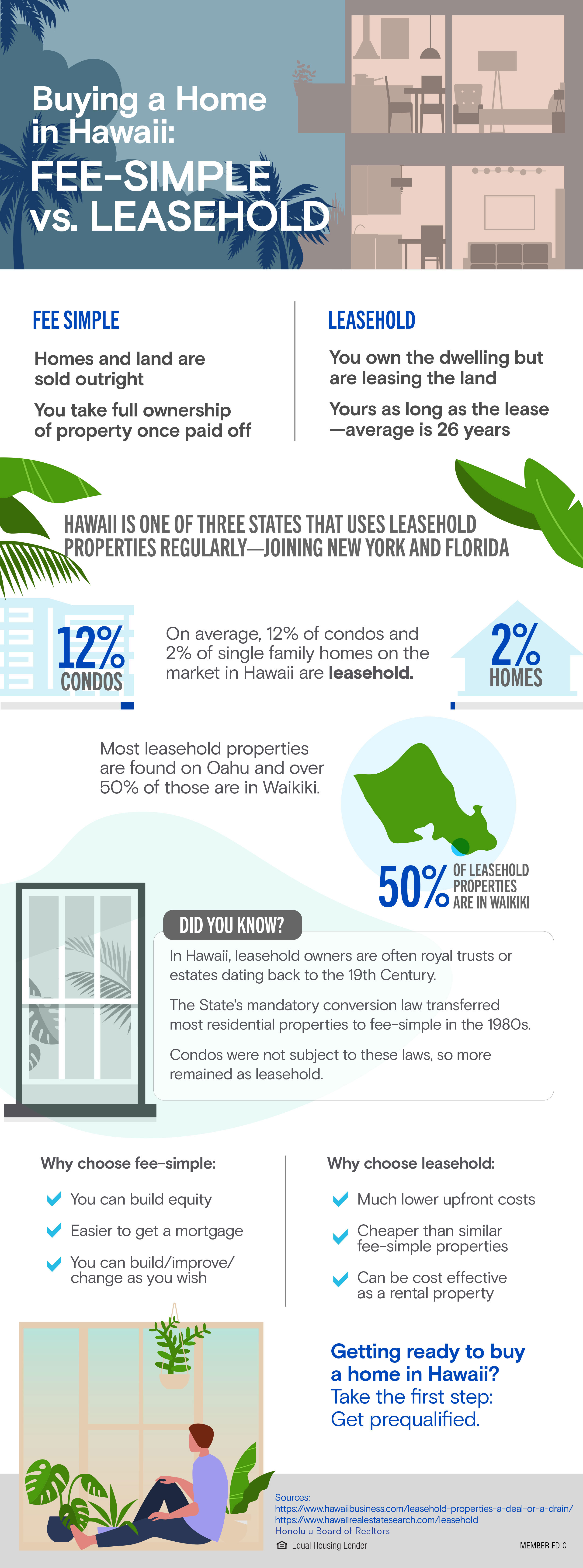
At its core, leasehold ownership means you own the improvements on a piece of land, such as a house or condominium unit, but you do not own the land itself. Instead, you lease the land from a landowner for a specified period, typically several decades. This arrangement has historical roots in Hawaii, stemming from the traditional land division systems and the concentration of land ownership among a few large estates.
Fee Simple vs. Leasehold: A Crucial Distinction
The most critical financial distinction in Hawaii’s real estate market lies between fee simple and leasehold ownership.
-
Fee Simple: This is the most complete form of ownership. When you purchase a fee simple property, you own both the land and any improvements on it indefinitely. You have full control over the property, subject only to zoning laws, easements, and property taxes. From a financial perspective, fee simple properties typically command higher upfront prices but offer greater long-term stability, predictable carrying costs (outside of taxes and maintenance), and generally better appreciation potential as the land itself is a valuable, appreciating asset. Furthermore, fee simple properties are usually easier to finance, as lenders perceive them as lower risk due due to the indefinite ownership of both land and structure.
-
Leasehold: With a leasehold property, you are essentially purchasing the right to use and occupy the land for a specific term, as defined by a comprehensive lease agreement. While you own the physical structure (e.g., your condo unit), you are obligated to pay a “ground rent” or “lease rent” to the landowner, known as the lessor, in addition to maintenance fees and property taxes. The duration of this lease term is a critical financial factor; common lease terms in Hawaii might range from 30 to 99 years, though many properties today have shorter remaining terms. The financial implications are immediate: leasehold properties generally have a lower initial purchase price compared to comparable fee simple properties, making them seem more affordable on the surface. However, this upfront saving is often offset by ongoing lease rent payments and the declining value of the property as the lease term diminishes towards expiration.
The Role of the Lessor (Landowner) and Lessee (Property Owner)
In a leasehold arrangement, clarity regarding the roles of the lessor and lessee is essential for managing financial expectations and obligations.
- Lessor (Landowner): This is the entity that owns the underlying land. In Hawaii, lessors can be large trusts, private estates, religious organizations, or even individual families. Their primary financial interest is the collection of lease rent, and they retain ultimate ownership of the land. The lease agreement grants them significant control over the property’s use and outlines their rights regarding lease rent renegotiation and reversion.
- Lessee (Property Owner): This is the individual or entity that purchases the right to occupy the land and owns the improvements. The lessee is responsible for paying the agreed-upon lease rent, property taxes, maintenance fees, and adhering to all covenants and conditions within the lease agreement. Financially, the lessee’s asset (the improvements) depreciates not just physically, but also in market value as the lease term shortens. Upon the expiration of the lease, the land and improvements typically revert back to the lessor, often with no compensation to the lessee. This “reversionary interest” is a key financial risk that future buyers must consider.
Key Terms: Lease Term, Ground Rent, Lease Rent Renegotiation
Several specific terms define the financial framework of a leasehold property in Hawaii:
- Lease Term: This is the total duration of the lease agreement, typically measured in years. The remaining lease term is a crucial factor in property valuation and financing eligibility. A shorter remaining term significantly impacts the property’s marketability and the ability to secure a long-term mortgage. Lenders are often reluctant to finance properties with very short remaining lease terms (e.g., less than 20-30 years beyond the loan term).
- Ground Rent (Lease Rent): This is the periodic payment made by the lessee to the lessor for the use of the land. Lease rents can be paid monthly, quarterly, or annually. Critically, these rents are not fixed for the entire lease term.
- Lease Rent Renegotiation: Most Hawaiian lease agreements include clauses for periodic lease rent renegotiation, often every 10, 15, or 20 years. This is a significant financial consideration, as these renegotiations can result in substantial increases in ground rent, sometimes leading to significant spikes in monthly housing costs. The method for calculating new lease rents is typically outlined in the lease and may involve appraisals, market value assessments, or a percentage of the land value. Lessees must budget for the potential of significantly higher housing expenses after a renegotiation period.
The Financial Implications of Leasehold in Hawaii
The financial landscape of leasehold property in Hawaii presents both opportunities for entry into a high-cost market and distinct challenges that require careful financial planning and risk assessment.
Initial Cost Savings vs. Long-Term Expenses
The primary financial appeal of leasehold properties is their lower initial purchase price. For instance, a leasehold condominium in a desirable Honolulu neighborhood might cost 30-50% less than a comparable fee simple unit. This reduced upfront capital outlay can make homeownership accessible to a broader range of buyers, or allow investors to acquire property in prime locations they otherwise couldn’t afford.
However, this initial saving must be weighed against the ongoing and potentially increasing long-term expenses:
- Lease Rent: This is a continuous expense that functions much like rent for the land. Unlike mortgage payments on a fee simple property, lease rent does not build equity in the land.
- Property Taxes & Maintenance Fees: Leasehold owners are still responsible for property taxes (based on the value of the improvements and the leasehold interest) and association/maintenance fees, just like fee simple owners.
- Lease Rent Renegotiation Risks: The unpredictability of future lease rent increases during renegotiation periods poses a significant financial risk. A substantial increase could make the property unaffordable for the owner, forcing a sale under potentially unfavorable conditions. This risk is particularly acute for individuals on fixed incomes or those with tight budgets.
- Diminishing Asset Value: As the lease term approaches its expiration, the market value of the leasehold property typically declines. This is because the remaining time a buyer has to enjoy the property, and potentially resell it, becomes shorter, and the looming reversion of the asset back to the lessor becomes a more immediate concern.
Financing Challenges and Opportunities
Securing financing for leasehold properties in Hawaii can be more complex and restrictive than for fee simple properties.
- Lender Reluctance: Many conventional lenders are hesitant to provide mortgages for leasehold properties, especially those with shorter remaining lease terms. The risk of the land reverting to the lessor, potentially leaving the lender with an unsaleable asset (the improvements on land they don’t own), is a major deterrent.
- Shorter Loan Terms: If financing is available, loan terms for leasehold properties are often shorter than standard 30-year fee simple mortgages. Lenders typically require the mortgage term to be significantly shorter than the remaining lease term (e.g., a 20-year mortgage for a property with at least 30-40 years remaining on its lease). This results in higher monthly mortgage payments, even if the principal amount borrowed is lower.
- Higher Interest Rates: Due to the perceived higher risk, some lenders may charge higher interest rates for leasehold mortgages.
- Specific Lenders: Buyers of leasehold properties often need to work with specific local lenders or credit unions that specialize in leasehold financing and have a deeper understanding of Hawaii’s unique market.
- Cash Buyers: A significant portion of leasehold transactions, particularly for properties with very short remaining lease terms, are cash purchases, limiting the buyer pool and potentially impacting liquidity.
Impact on Property Value and Appreciation
The appreciation potential and overall market value of a leasehold property are fundamentally different from fee simple properties.
- Land Appreciation vs. Building Depreciation: In fee simple ownership, both the land and the improvements typically appreciate over time, though land usually appreciates faster and more reliably. In leasehold, you are only “owning” the improvements, which generally depreciate over time, while the land you don’t own still appreciates. Your “ownership” is essentially the right to use the appreciating land for a finite period.
- Lease Term Depreciation: The most significant factor influencing leasehold value is the remaining lease term. As the lease term dwindles, the value of the leasehold interest typically diminishes. This is often referred to as “lease decay.” The property’s value can plateau or even decline as the expiration date approaches, regardless of overall market conditions for fee simple properties.
- Renegotiation Impact: Approaching lease renegotiation periods can create uncertainty and impact value. Potential buyers may be deterred by the unknown future lease rent, leading to a dip in market interest and price.
- Conversion Potential: If a leasehold property has the potential for “fee conversion” (where the landowner offers to sell the land to the lessee, converting it to fee simple), this can significantly boost the property’s value. However, the cost of conversion can be substantial and must be factored into the overall financial assessment.
Leasehold Property as an Investment in the Aloha State
For investors, leasehold properties in Hawaii present a complex yet potentially lucrative niche, demanding a nuanced understanding of its financial peculiarities.
Risk Assessment and Due Diligence
Investing in leasehold requires a rigorous financial risk assessment beyond what’s typically needed for fee simple.
- Lease Agreement Scrutiny: Thoroughly reviewing the lease document is paramount. Investors must understand the lease term, renegotiation clauses, default provisions, and any specific restrictions on the property. This includes understanding how lease rent is calculated during renegotiation (e.g., market value of land, fixed percentage) and the lessor’s historical approach to these adjustments.
- Financial Projections: Develop detailed financial models that account for potential lease rent increases, property tax changes, maintenance fees, and the impact of a diminishing lease term on future resale value. Sensitivity analysis should be performed to understand the impact of various lease rent increase scenarios.
- Market Analysis: Analyze the local market specifically for leasehold properties, understanding their pricing trends relative to fee simple, typical buyer profiles, and absorption rates. Investors should look for properties where the initial lower entry cost provides sufficient cushion for future rent increases and still offers a reasonable return on investment.
Potential for Cash Flow and Rental Income
Despite the complexities, leasehold properties can offer attractive investment opportunities, particularly for generating rental income.
- Lower Entry Barrier: The lower initial purchase price often translates to a higher potential capitalization rate (cap rate) compared to fee simple properties in Hawaii, meaning a higher annual rental income relative to the acquisition cost. This can lead to stronger cash flow for investors, especially if mortgage financing is secured at favorable terms.
- High Demand for Rentals: Hawaii’s robust tourism industry and transient military population create a consistent demand for rental properties. Leasehold condos, particularly those with good amenities and locations, can be highly desirable as long-term or short-term rentals (subject to association rules and zoning).
- Yield Focus: Investors focused purely on generating strong rental yield and cash flow, rather than long-term capital appreciation tied to land ownership, may find leasehold attractive. The emphasis shifts from equity growth in the land to maximizing the income stream during the remaining lease term.
Exit Strategies and Market Liquidity
Planning an exit strategy is crucial for leasehold investments, given the unique nature of the asset.
- Resale Challenges: As the lease term shortens, finding a buyer can become increasingly difficult, and the pool of potential buyers (especially those who need financing) shrinks. This can impact market liquidity and force price reductions. Investors must project a realistic resale value based on the remaining lease term at their anticipated sale date.
- Lease Extension/Fee Conversion: If the option to extend the lease or convert to fee simple becomes available, this can be a valuable exit strategy or a way to enhance the asset’s long-term value. However, the costs associated with these options can be substantial and must be factored into investment calculations. The decision to convert to fee simple is a significant financial one, weighing the upfront cost against the benefits of full ownership and improved marketability.
- Timing the Market: Investors need to be strategic about when they plan to sell. Selling a leasehold property with a reasonable remaining lease term (e.g., 20+ years) is generally easier and yields a better price than selling one approaching its expiration.
- Estate Planning: For individual investors, leasehold properties also raise important estate planning considerations. How will the diminishing asset be managed and transferred to heirs? Will the heirs be able to afford potential lease rent increases or the cost of conversion?
Navigating the Leasehold Market: Practical Considerations
Successfully engaging with Hawaii’s leasehold market requires careful navigation and expert guidance to protect one’s financial interests.
Legal Advice and Contract Review
Given the intricate nature of leasehold agreements, obtaining qualified legal counsel is non-negotiable for both buyers and sellers. An attorney specializing in Hawaii real estate law can:
- Interpret Lease Clauses: Help you understand all terms and conditions, especially those related to lease rent renegotiation, default, and reversion.
- Identify Risks: Point out potential pitfalls and unusual clauses that could have significant financial ramifications.
- Due Diligence Support: Assist in reviewing all relevant documents, including the master lease, amendments, and any association documents.
- Negotiation Support: Provide guidance during negotiations, particularly if there are options for lease extension or fee conversion being discussed.
The Process of Leasehold to Fee Simple Conversion
For many leasehold owners, the ultimate financial goal is to convert their property to fee simple. This process, when available, significantly enhances the property’s value, removes the lease rent burden, and simplifies financing.
- Offering by Lessor: The lessor typically initiates the process, offering to sell the underlying land to the lessees. The price for this conversion is usually determined by an appraisal of the land’s market value.
- Financial Outlay: The cost of conversion can be substantial, often hundreds of thousands of dollars, making it a significant financial decision. Owners may need to obtain new financing for the conversion cost.
- Collective Action: In condominium projects, fee conversion often requires a collective decision by a significant percentage of the unit owners, as the lessor typically sells the entire land parcel to the association or a collective of owners.
- Impact on Value: Upon successful conversion, the property’s market value generally increases significantly, often bringing it in line with comparable fee simple properties, making it more attractive to a wider range of buyers and easier to finance.

Future Planning: Estate and Legacy Considerations
Leasehold ownership requires specific considerations for long-term financial and estate planning.
- Asset Liquidation for Heirs: When planning an estate, consider how a leasehold property with a diminishing term will be handled. Will heirs be able to manage the ongoing lease payments or the potential costs of conversion or extension? It might be more prudent to sell the property before the lease term becomes too short, maximizing its value for the estate.
- Long-Term Affordability: For those planning to live in the property for their lifetime, assess the long-term affordability of lease rent increases, especially if income sources are fixed in retirement.
- Investment Horizon: Investors must align their investment horizon with the remaining lease term. For instance, if the lease has 30 years remaining, a long-term buy-and-hold strategy needs to account for the property’s potential depreciation in value over that period as the lease expires.
In conclusion, “What is a leasehold property in Hawaii?” delves into a complex financial arrangement that profoundly shapes the state’s real estate market. While offering a potentially more affordable entry point, leasehold ownership demands a rigorous understanding of its unique financial risks—from ongoing lease rents and unpredictable renegotiations to financing challenges and the eventual reversion of the land. For both homeowners and investors, a deep dive into the financial nuances, coupled with expert guidance, is essential to make informed and strategic decisions in Hawaii’s distinctive property landscape.
aViewFromTheCave is a participant in the Amazon Services LLC Associates Program, an affiliate advertising program designed to provide a means for sites to earn advertising fees by advertising and linking to Amazon.com. Amazon, the Amazon logo, AmazonSupply, and the AmazonSupply logo are trademarks of Amazon.com, Inc. or its affiliates. As an Amazon Associate we earn affiliate commissions from qualifying purchases.