
In the complex world of international trade and corporate finance, businesses constantly seek secure and efficient ways to facilitate transactions across borders. One such powerful, yet often misunderstood, financial instrument is the banker’s acceptance (BA). A cornerstone of money markets and trade finance for decades, the BA offers a unique blend of security, liquidity, and financing potential, playing a critical role in global commerce. Understanding its mechanics and implications is essential for any business engaged in cross-border trade or investors looking for secure short-term instruments.
The Foundation: Defining a Banker’s Acceptance
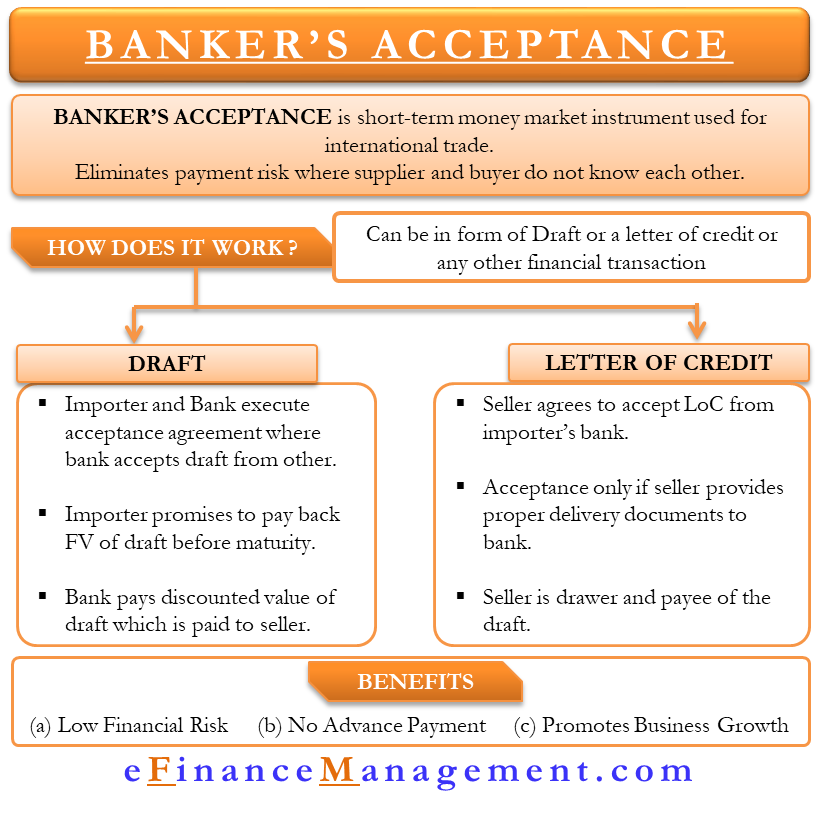
At its core, a banker’s acceptance is a time draft (or bill of exchange) drawn on and accepted by a bank. What transforms an ordinary trade draft into a BA is this crucial “acceptance” by a financial institution, effectively making the bank primarily liable for payment at maturity. This acceptance legally obligates the bank to pay the face amount of the draft to the holder at a specified future date, typically within 30 to 180 days from the date of acceptance.
Key Characteristics and Structure
A banker’s acceptance possesses several distinctive features that define its utility and standing in financial markets:
- Bank Guarantee: The most significant characteristic is the bank’s unconditional promise to pay. This commitment substitutes the credit risk of the underlying commercial transaction parties (the importer or exporter) with the credit risk of the accepting bank, which is generally much higher rated. This drastically reduces the risk for the seller (exporter) and makes the instrument highly attractive to investors.
- Time Draft: Unlike a sight draft payable immediately, a BA is a time draft, meaning payment is due at a future specified date. This period allows the buyer (importer) time to receive and sell the goods before payment is due, and it provides a short-term financing option.
- Negotiable Instrument: BAs are fully negotiable, meaning they can be bought and sold in the secondary market before their maturity date. This liquidity is a major advantage for both the initial holder (exporter) and subsequent investors.
- Short-Term Maturity: BAs are short-term debt instruments, usually maturing within six months. This makes them attractive for money market funds and investors seeking short-duration, low-risk investments.
- Discount Basis: BAs are typically sold at a discount from their face value. The difference between the discounted price and the face value at maturity represents the investor’s return.
The Parties Involved in a BA Transaction
A typical banker’s acceptance transaction involves several key players:
- The Drawer (Exporter/Seller): The party selling goods or services, who initiates the draft to request payment. They seek assurance of payment and potentially immediate financing.
- The Drawee/Acceptor (Buyer’s Bank): The bank that “accepts” the draft, thereby guaranteeing payment. This is usually the importer’s bank, which has an existing relationship and credit line with the importer.
- The Importer/Buyer (Applicant): The party purchasing goods or services, who is ultimately obligated to reimburse the accepting bank at maturity.
- The Payee (Exporter/Holder): Initially the exporter. After acceptance, the exporter can either hold the BA until maturity or sell it in the secondary market to an investor.
- The Investor: An entity (e.g., money market fund, corporation, individual) that purchases the BA in the secondary market for a discount, holding it until maturity to receive the full face value.
The Operational Flow: How a Banker’s Acceptance Works
The lifecycle of a banker’s acceptance begins with an international trade transaction and evolves into a distinct financial instrument. Understanding this flow illuminates its practical application and value.
Initiating the Trade Transaction
The process typically starts with a contract between an importer and an exporter for goods or services. The exporter, wary of the importer’s creditworthiness or simply seeking payment assurance, requests payment via a letter of credit (LC) issued by the importer’s bank. This LC typically stipulates that payment will be made against a time draft drawn by the exporter on the importer’s bank.
The Bank’s Acceptance and Assurance
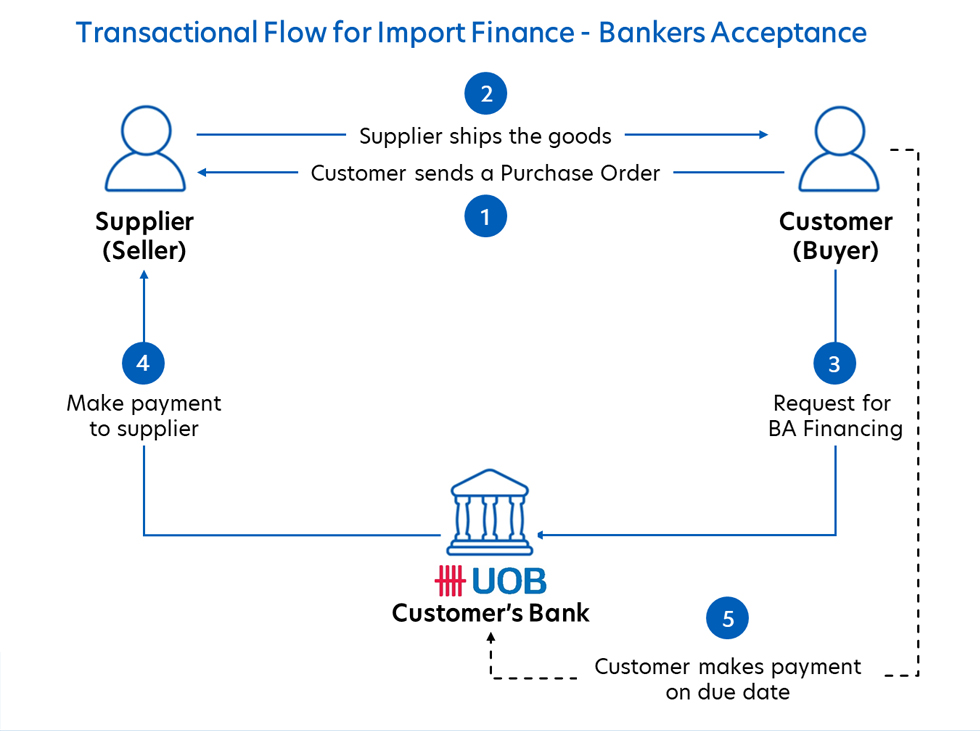
- Draft Presentation: Once the goods are shipped and the exporter prepares the necessary shipping documents, they draw a time draft on the importer’s bank for the amount of the invoice, presenting it along with other required documents (e.g., bill of lading, commercial invoice) to their own bank.
- Verification and Forwarding: The exporter’s bank verifies the documents and forwards them to the importer’s bank.
- Acceptance: The importer’s bank (the drawee), upon verifying that the documents comply with the terms of the letter of credit and that the importer’s credit line can support the transaction, “accepts” the draft. This is done by stamping “Accepted” across the face of the draft and adding a signature. At this point, the draft officially becomes a banker’s acceptance. The importer’s bank then releases the shipping documents to the importer, allowing them to take possession of the goods.
- Importer’s Obligation: The importer’s obligation now shifts from the exporter to the accepting bank. The importer agrees to pay the bank the face value of the BA before or at its maturity date.
Marketability and Discounting
Once the importer’s bank accepts the draft, the exporter has two primary options:
- Hold to Maturity: The exporter can hold the BA until its maturity date and present it to the accepting bank for payment of its full face value. This is a secure option, as the bank’s credit backs the payment.
- Sell in the Secondary Market (Discounting): More commonly, the exporter needs immediate cash flow. They can sell the BA in the secondary money market at a discount to its face value. This allows the exporter to receive funds promptly, albeit a slightly lesser amount, effectively financing their trade. The discount represents the interest rate charged by the market for holding the BA until maturity. The buyer in the secondary market (the investor) then holds the BA and receives the full face value from the accepting bank at maturity.
Benefits and Risks for Businesses and Investors
Banker’s acceptances are a win-win for various parties, offering distinct advantages while carrying minimal, manageable risks.
Advantages for Importers and Exporters
- For Exporters (Sellers):
- Credit Risk Mitigation: The primary benefit is the substitution of the importer’s credit risk with that of a reputable bank. This provides unparalleled payment assurance, especially in international trade where credit assessments can be challenging.
- Flexible Financing: Exporters can convert future receivables into immediate cash by discounting the BA, improving working capital management.
- Lower Financing Costs: Due to the bank’s high credit standing, BAs typically carry a lower discount rate (interest rate) compared to other forms of short-term financing or direct borrowing.
- For Importers (Buyers):
- Payment Deferral: Importers gain valuable time to receive, process, and potentially sell the goods before having to make payment, aiding their cash flow.
- Access to Goods: The BA mechanism facilitates the release of shipping documents, allowing the importer to take possession of goods more quickly than some alternative financing methods.
- Enhanced Credibility: Using a BA, especially through a letter of credit, enhances the importer’s credibility with the exporter, fostering trust in trade relationships.
Investor Appeal
- Low Risk: BAs are considered extremely low-risk investments because they are backed by the credit of a major financial institution. This makes them attractive to conservative investors and money market funds.
- Liquidity: The active secondary market ensures that investors can sell BAs before maturity if needed, providing good liquidity.
- Competitive Yields: While low-risk, BAs typically offer competitive yields compared to other short-term money market instruments like Treasury bills, especially during periods of higher interest rates.
- Diversification: They offer a means for portfolio diversification within the short-term fixed-income segment.
Potential Drawbacks and Considerations
While highly secure, BAs are not without minor considerations:
- Complexity: The initial setup and understanding of the documentation (letters of credit, drafts) can be complex for new participants in international trade.
- Fees: Banks charge fees for issuing letters of credit and accepting drafts, which can add to the overall transaction cost.
- Bank Solvency: Although rare, the ultimate risk for an investor or exporter is the default of the accepting bank itself. Investors typically mitigate this by investing only in BAs from highly-rated banks.
- Interest Rate Risk: Like all fixed-income instruments, the market value of a BA in the secondary market can fluctuate inversely with prevailing interest rates, though this risk is minimal due to their short maturities.
Banker’s Acceptance in the Broader Financial Landscape
Banker’s acceptances are an integral part of the global money market, coexisting and sometimes competing with other short-term financial instruments.
Comparison with Other Trade Finance Instruments
- Letters of Credit (LCs): LCs are closely intertwined with BAs, often serving as the initial guarantee that leads to the creation of a BA. An LC ensures payment to the exporter if conditions are met, while a BA is the actual payment instrument that arises from that guarantee.
- Promissory Notes: Unlike a promissory note, which is a promise to pay by the issuer (often the importer), a BA is a promise by a bank, offering superior credit quality.
- Commercial Paper: Both BAs and commercial paper are short-term, unsecured debt instruments sold at a discount. However, commercial paper is issued by large corporations directly to investors, relying solely on the issuer’s credit, whereas BAs carry the bank’s guarantee.
- Treasury Bills (T-Bills): T-bills are government-issued, zero-coupon bonds, considered the safest short-term investment. BAs offer slightly higher yields than T-bills but carry minimal, though present, bank credit risk.
Regulatory Environment and Market Evolution
The market for banker’s acceptances is well-established and operates within existing banking and financial market regulations. While their usage has seen fluctuations due to the rise of other financing methods like supply chain finance and direct loans, BAs remain a robust tool, particularly for transactions involving emerging markets or parties with less established credit histories. Innovations in digital platforms and blockchain technology are beginning to explore ways to streamline the creation and transfer of trade finance instruments, potentially impacting the traditional BA market by making transactions faster and more transparent.
Practical Applications and Modern Relevance
Today, banker’s acceptances continue to be a vital instrument in various scenarios:
- Commodity Trading: Facilitating the trade of large volumes of commodities where securing payment and financing is crucial.
- Capital Goods Import/Export: Supporting the purchase and sale of machinery and equipment, often involving significant sums and longer lead times.
- Cross-Border Transactions: Providing a trusted payment mechanism where parties in different countries may have limited familiarity with each other’s legal or banking systems.
In essence, a banker’s acceptance serves as a testament to financial engineering, transforming a potentially risky commercial obligation into a highly secure and liquid investment vehicle. Its enduring relevance underscores its fundamental value in lubricating the wheels of global trade and providing crucial short-term funding in the money markets.
aViewFromTheCave is a participant in the Amazon Services LLC Associates Program, an affiliate advertising program designed to provide a means for sites to earn advertising fees by advertising and linking to Amazon.com. Amazon, the Amazon logo, AmazonSupply, and the AmazonSupply logo are trademarks of Amazon.com, Inc. or its affiliates. As an Amazon Associate we earn affiliate commissions from qualifying purchases.