
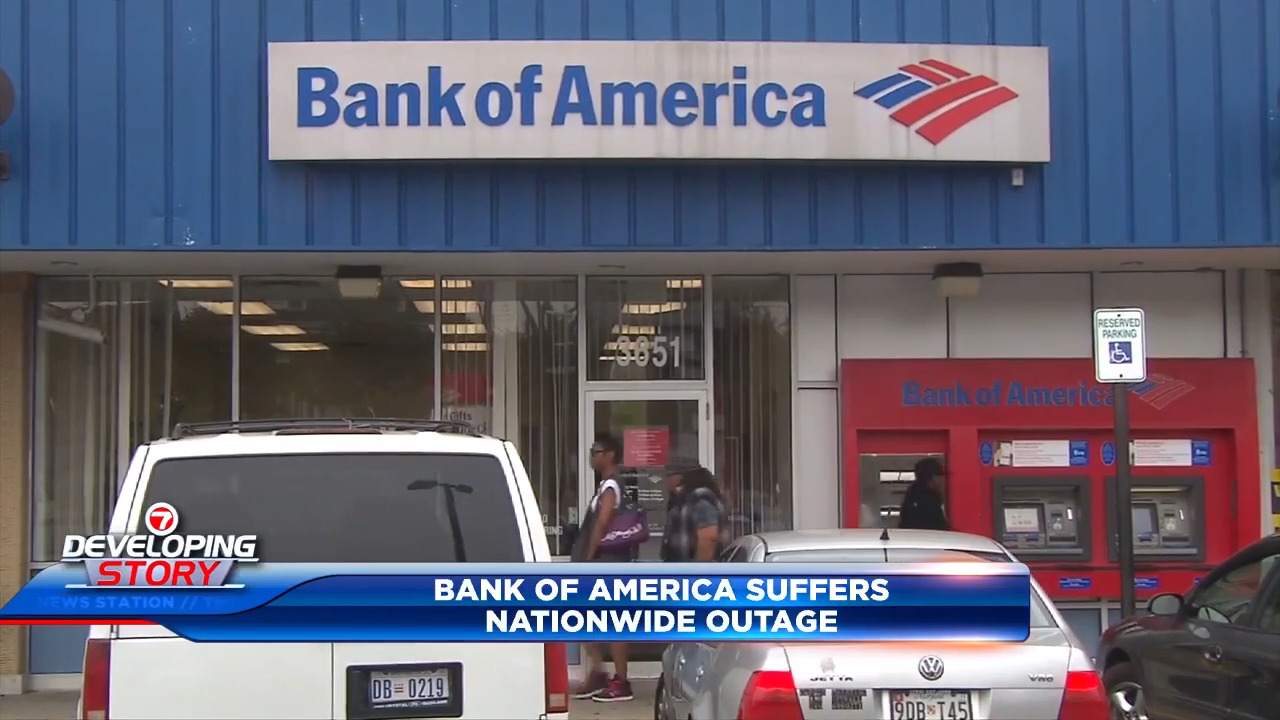
In the modern financial landscape, few things trigger more immediate anxiety than logging into a banking portal to find an inaccurate balance or a complete lack of access to funds. Based on recent reports from major news outlets like CNN, Bank of America—one of the world’s largest financial institutions—has faced significant service disruptions that left millions of customers questioning the security and stability of their assets.
When headlines break regarding a major bank, the implications ripple far beyond a simple technical glitch. It touches on the core of personal finance, the reliability of digital wealth management, and the systemic vulnerabilities of our cashless society. This article explores the nature of these recent disruptions, the immediate impact on consumer liquidity, and the strategic steps individuals must take to safeguard their financial health in an increasingly digital world.

Decoding the Incident: What Bank of America Customers Experienced
The chaos typically begins with a surge of social media reports and a spike on outage tracking websites. For Bank of America customers, the “today” in question involved a terrifying sight: account balances showing zero dollars or significant discrepancies in transaction histories. These events, while often categorized by the bank as “display issues,” create a profound sense of financial instability.
The Vanishing Balance Phenomenon
The primary concern reported by CNN and various financial analysts was the temporary disappearance of account balances. In many instances, customers could log into their mobile apps or desktop portals but were greeted by an empty screen where their life savings should have been. From a personal finance perspective, this is the ultimate “black swan” event. While the money technically exists within the bank’s ledger, the inability of the user to see or verify it halts financial activity. These glitches are rarely about the money being “gone” in a legal or physical sense; rather, they represent a failure in the communication layer between the bank’s core database and the user interface.
Transaction Delays and Mobile App Accessibility
Beyond the balance display issues, disruptions often extend to the processing of peer-to-peer transfers, such as those made through Zelle. Bank of America, a founding member of the consortium that owns Zelle, frequently sees these integrations fail during system-wide outages. When transactions are “stuck” in a pending state during a bank-wide disruption, it creates a liquidity vacuum. For individuals living paycheck to paycheck or those managing tight business cash flows, a delay of even six hours in a transfer can lead to missed obligations or late fees.
The Financial Ripple Effect: Impact on Personal Finance Management
A bank outage is never just a technical problem; it is a personal finance crisis. When a major institution like Bank of America experiences downtime, the secondary effects can be devastating for the average consumer’s financial planning.
Managing Overdrafts and Bill Payment Anxiety
One of the most immediate fears during a banking disruption is the “domino effect” of failed payments. If an account balance is incorrectly displayed as zero, or if a system is unable to authorize a scheduled transfer, automated bill payments for mortgages, car insurance, or utilities may fail. This leads to a cascade of financial penalties. While Bank of America generally waives internal fees associated with their own outages, they have less control over the late fees or “returned payment” charges levied by external creditors. For the consumer, this requires a tedious process of documenting the outage and negotiating with multiple vendors to restore their standing.
The Importance of Diversifying Financial Institutions
The Bank of America incident serves as a stark reminder of a fundamental rule in sophisticated money management: never keep all your capital in a single basket. Financial experts have long advocated for “banking redundancy.” This means maintaining accounts at at least two different institutions—ideally one national mega-bank (like Bank of America) and one local credit union or online-only high-yield savings account. In the event of a localized or institutional outage, having a secondary debit card or a liquid reserve in a different system ensures that your daily life is not paralyzed by a server failure.
Behind the Vault: Infrastructure and Business Finance Risks
To understand why these events happen to a company with the resources of Bank of America, one must look at the intersection of business finance and aging infrastructure.
Legacy Systems vs. Modern Demands
Most “Too Big to Fail” banks operate on a hybrid of modern cloud interfaces and decades-old “legacy” core banking systems. These legacy systems were often built in the 1970s and 80s using languages like COBOL. As banks attempt to layer modern features—like instant mobile deposits and real-time AI fraud detection—on top of these ancient foundations, friction occurs. From a business finance perspective, the cost of completely overhauling these systems is in the billions, and the risk of a “migration failure” is often deemed higher than the risk of occasional outages. This creates a perpetual cycle of patching old software, which inevitably leads to the type of glitches reported by CNN.
Regulatory Oversight and Consumer Protection
When disruptions occur, the Consumer Financial Protection Bureau (CFPB) and the Office of the Comptroller of the Currency (OCC) take notice. For Bank of America, these events are not just PR nightmares; they are potential regulatory liabilities. Under the Electronic Fund Transfer Act (Regulation E), banks have specific obligations regarding the timely correction of errors. If a systemic glitch results in widespread financial harm, the bank may face massive fines. For the investor and the customer, understanding these protections is vital. The money is backed by the FDIC up to $250,000, but the FDIC protects against insolvency, not inaccessibility. This distinction is crucial for long-term financial planning.
Safeguarding Your Wealth in a Digital-First World
As the banking industry moves toward a completely paperless and branchless future, the responsibility for monitoring account health falls increasingly on the individual.
Best Practices for Monitoring Account Health
To mitigate the risks of a bank outage, consumers should adopt a proactive stance toward their data. This includes:
- Downloading Monthly Statements: Physical or digital copies of monthly statements serve as legal proof of balance in the event of a catastrophic system failure.
- Enabling Real-Time Alerts: Set up SMS or email notifications for every transaction. This creates a secondary “ledger” in your inbox that exists outside the bank’s primary app.
- Third-Party Aggregators: Using tools like Empower or YNAB (You Need A Budget) can provide a cached view of your accounts. While they may not have real-time data during an outage, they offer a historical record of your financial state immediately prior to the disruption.
Emergency Funds and Liquidity Planning
The Bank of America outage highlights the need for a “physical” component to an emergency fund. While most financial advice focuses on the amount of an emergency fund (3–6 months of expenses), the accessibility of that fund is equally important. Experts now suggest keeping a small amount of “emergency cash” in a secure location at home—enough to cover 48 to 72 hours of essential expenses like gas and groceries. This bridges the gap during the window of time it takes for a bank to restore its digital services.
The Future of Banking: Stability in an Uncertain Economy
The recurring nature of these disruptions raises questions about the long-term reliability of commercial banking. As we look toward the future, the relationship between the consumer and the bank is evolving from one of blind trust to one of cautious verification.
Is Your Money Safe? Analyzing FDIC Protections
The short answer is yes—your money is safe from a total loss perspective. The Federal Deposit Insurance Corporation (FDIC) remains the bedrock of American financial stability. However, the Bank of America “glitch” reminds us that safety and access are not the same thing. In a modern economy, “time is money,” and an inability to access funds for 24 hours can result in lost investment opportunities or the accrual of interest on unpaid debts. When evaluating where to place your capital, consider not only the interest rate (APY) but also the institution’s track record for uptime and customer service responsiveness during crises.
Long-term Outlook for Commercial Banking
The banking sector is currently at a crossroads. Larger institutions are under pressure to innovate to compete with “FinTech” startups, yet they are burdened by the sheer scale of their operations. For Bank of America, the path forward involves massive reinvestment in “resiliency architecture.” For the consumer, the path forward involves a more sophisticated approach to personal finance—one that involves multiple accounts, a healthy skepticism of “all-in-one” financial apps, and a commitment to maintaining a paper trail of one’s net worth.
In conclusion, what happened at Bank of America “today” is a symptom of a larger transition in the world of money. As we move away from physical currency, our financial lives become dependent on the uptime of servers and the integrity of code. By staying informed through reliable news sources like CNN and implementing redundant financial strategies, you can ensure that even when the “big banks” stumble, your personal financial foundation remains unshakable.
aViewFromTheCave is a participant in the Amazon Services LLC Associates Program, an affiliate advertising program designed to provide a means for sites to earn advertising fees by advertising and linking to Amazon.com. Amazon, the Amazon logo, AmazonSupply, and the AmazonSupply logo are trademarks of Amazon.com, Inc. or its affiliates. As an Amazon Associate we earn affiliate commissions from qualifying purchases.