
The allure of vintage coins often stems from their historical narrative as much as their potential monetary value. Among these, the 1922 dollar coin, specifically a Peace Dollar, holds a unique place in American numismatic history. Understanding its worth requires a delve into its historical context, key valuation factors, and the nuances of the coin collecting market. For individuals holding such a coin or contemplating its acquisition, a detailed assessment is crucial for accurate financial understanding.
The Historical Significance of the 1922 Peace Dollar
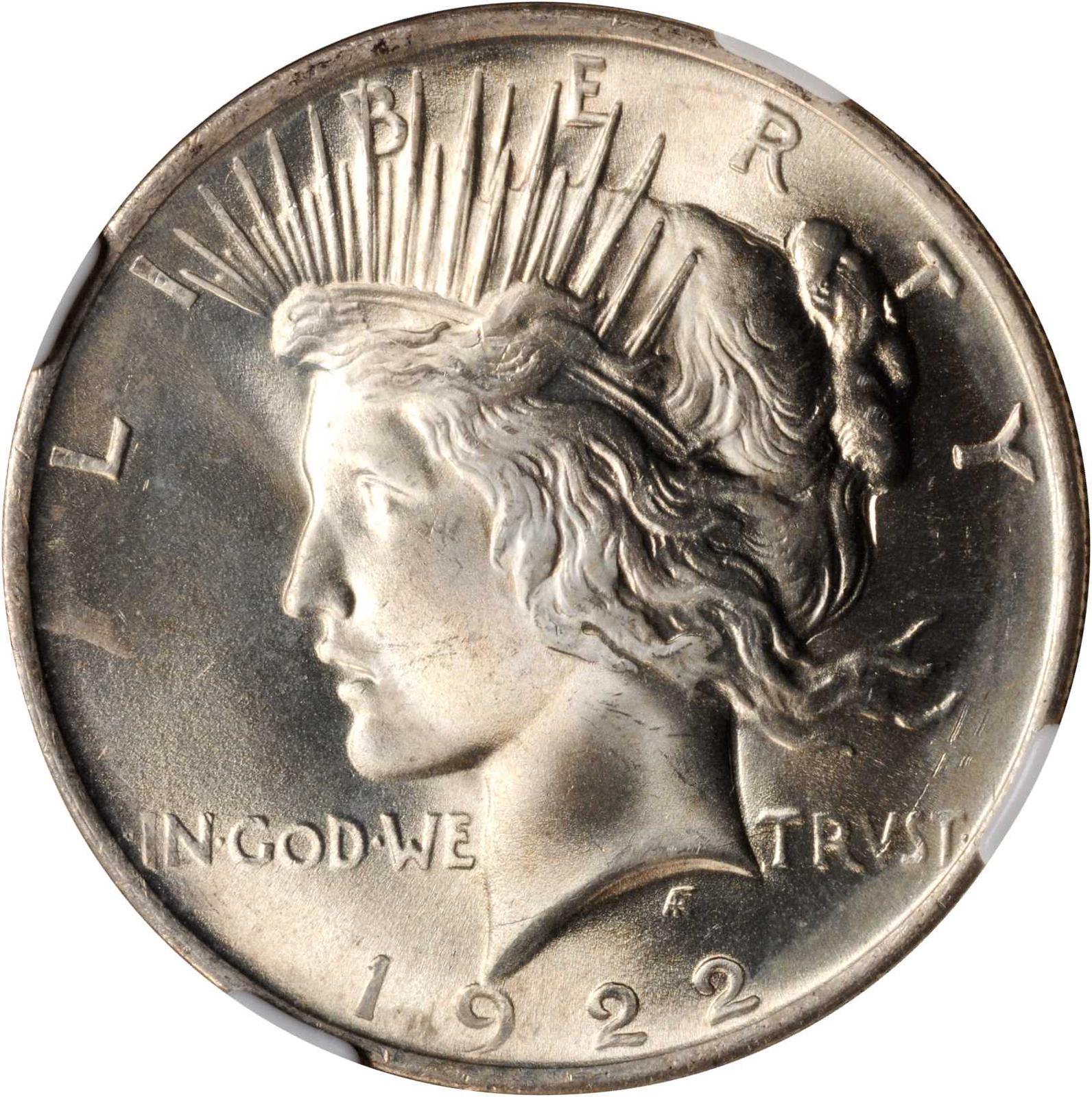
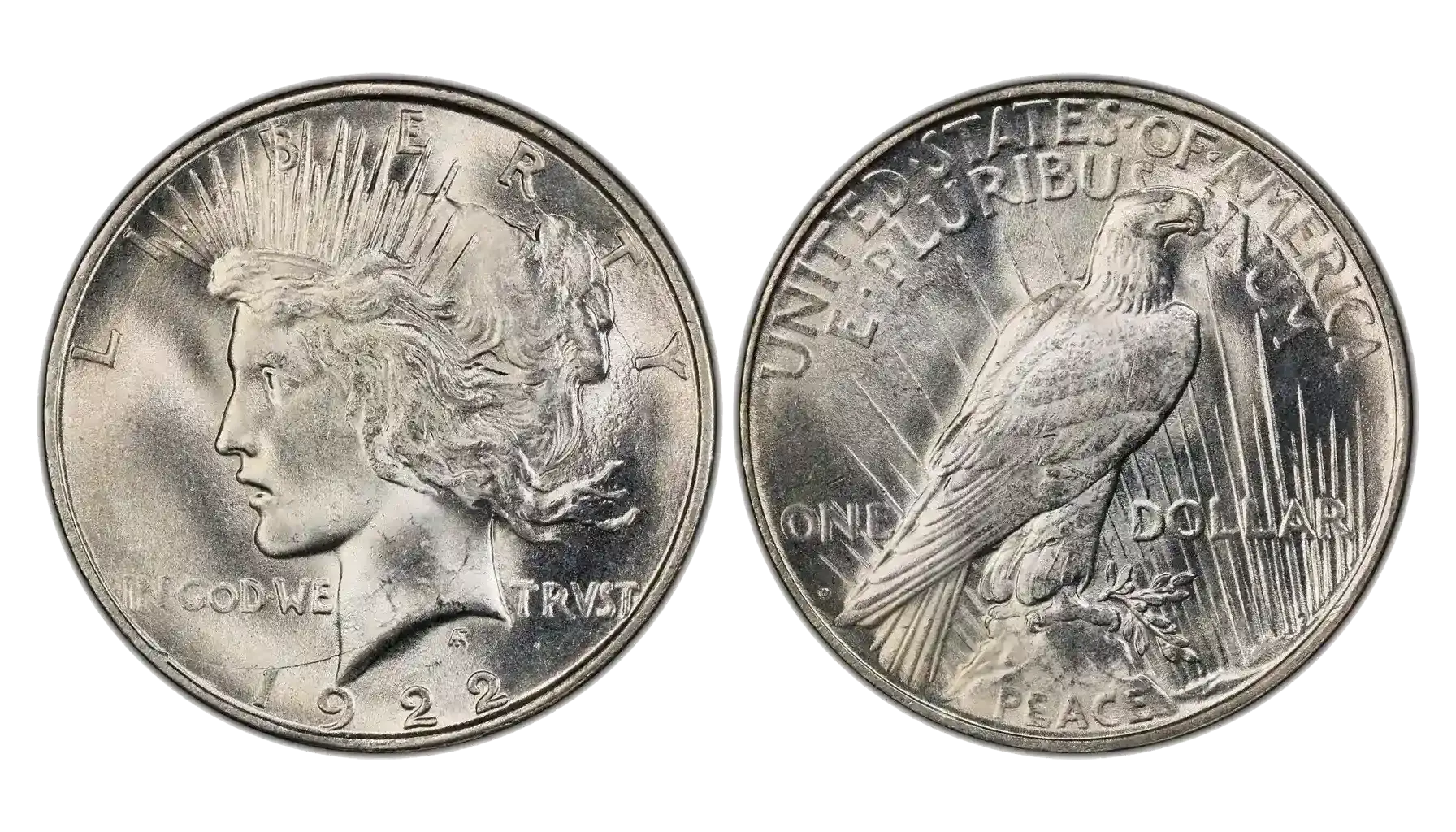
The 1922 dollar coin is almost exclusively a Peace Dollar, a series minted from 1921 to 1928, and again in 1934 and 1935. Designed by Anthony de Francisci, this coin was a symbolic representation of peace following the end of World War I. Its striking design features a bald eagle perched on a rock with the word “PEACE” on the reverse, and a left-facing profile of Liberty on the obverse. This particular year, 1922, saw some of the highest mintages in the series, influencing its general availability today.
Origins and Design
The Peace Dollar was the last circulating silver dollar struck in the United States, replacing the Morgan Dollar. Its creation was mandated by the Pittman Act of 1918, which required the melting and recoinage of millions of silver dollars. The design competition for the new dollar aimed to commemorate peace. De Francisci’s design was chosen, notable for its Art Deco influences and the symbolic representation of peace, embodying a sense of hope and progress for the nation. The year 1922 stands out because it was the first full year of its mass production, after the lower mintage and high-relief 1921 issue.
Mintage Figures and Initial Distribution
In 1922, the U.S. Mint produced Peace Dollars at three different facilities: Philadelphia (no mint mark), Denver (‘D’), and San Francisco (‘S’).
- Philadelphia Mint (no mint mark): 51,737,000 coins
- Denver Mint (‘D’): 15,063,000 coins
- San Francisco Mint (‘S’): 17,475,000 coins
These figures are substantial, particularly for the Philadelphia mint, making the 1922 Peace Dollar one of the most common issues in the series. This high mintage directly impacts its baseline value, as greater availability generally correlates with lower individual unit prices, especially for coins in common grades. However, despite the high mintage, factors such as survival rates, condition, and specific varieties can significantly alter this general rule. Many of these coins saw heavy circulation, meaning pristine examples are considerably scarcer than their initial production numbers might suggest.
Economic Context of the Early 1920s
The early 1920s in the United States were characterized by post-war economic adjustments, followed by a period of robust growth known as the “Roaring Twenties.” The production of millions of silver dollars, including the 1922 Peace Dollar, was partly a response to the need to stabilize the silver market and meet commercial demand. At this time, a dollar coin held significant purchasing power, and these coins circulated widely. This widespread use contributed to wear and tear, making high-grade examples more valuable to collectors today. The economic optimism of the era also played a subtle role in public perception of the coinage, though its primary financial impact was on the metals market and banking system.
Key Factors Influencing a Coin’s Value
The worth of any coin, including the 1922 Peace Dollar, is not static. It is a dynamic value determined by several critical factors that numismatists and financial appraisers consider.
Condition (Grade)
This is arguably the most important factor. A coin’s condition, or “grade,” refers to its state of preservation and wear. Grades range from Poor (P) to Perfect Mint State (MS-70). Key grades for collectors include:
- Good (G-4): Heavily worn, but major design elements are visible.
- Fine (F-12): Moderate wear, some detail visible.
- Very Fine (VF-20): Good detail, but wear is evident on high points.
- Extremely Fine (EF-40): Light wear on highest points, excellent detail.
- About Uncirculated (AU-50): Traces of wear on high points, retains much of its original luster.
- Uncirculated (Mint State, MS-60 to MS-70): No signs of wear, varying degrees of luster and bag marks.
For a 1922 Peace Dollar, the difference in value between a heavily circulated coin and an uncirculated example can be hundreds, if not thousands, of dollars. For instance, an MS-65 (Gem Uncirculated) coin will fetch a premium far exceeding one graded as AU-58. The quality of the strike can also influence the perceived grade and value; a “Full Head” designation for the Liberty portrait is particularly sought after in Peace Dollars.
Mint Mark
As mentioned, the 1922 Peace Dollars were struck at Philadelphia (no mint mark), Denver (‘D’), and San Francisco (‘S’). While the Philadelphia mint produced the vast majority, the ‘D’ and ‘S’ mint marks denote coins struck at the Denver and San Francisco Mints, respectively. Generally, due to their lower mintages, the 1922-D and 1922-S coins are slightly more valuable than the 1922-P in comparable circulated conditions. However, in higher uncirculated grades, the relative scarcity can shift, making a pristine 1922-P highly desirable.
Rarity and Demand
While the 1922 Peace Dollar overall is not considered rare in lower grades, specific varieties or exceptionally high-grade examples can be. Rarity is a function of initial mintage combined with survival rate. Demand, on the other hand, is driven by collector interest, which can fluctuate. A surge in popularity for the Peace Dollar series or a particular variety can temporarily inflate prices. The “discovery” of hoards or new information about a coin can also impact its perceived rarity and market value.
Market Trends
The numismatic market, like any other financial market, is subject to trends. Broader economic conditions, the price of silver, and the overall health of the collector community can influence prices. During periods of high inflation or economic uncertainty, there can be increased interest in tangible assets like precious metals and collectible coins, which can drive values up. Conversely, during economic downturns, discretionary spending on hobbies like coin collecting might decrease, affecting demand and prices. The price of silver, specifically, provides a floor for the melt value of these coins, as they contain 0.77344 troy ounces of pure silver.
Understanding 1922 Peace Dollar Varieties and Their Worth
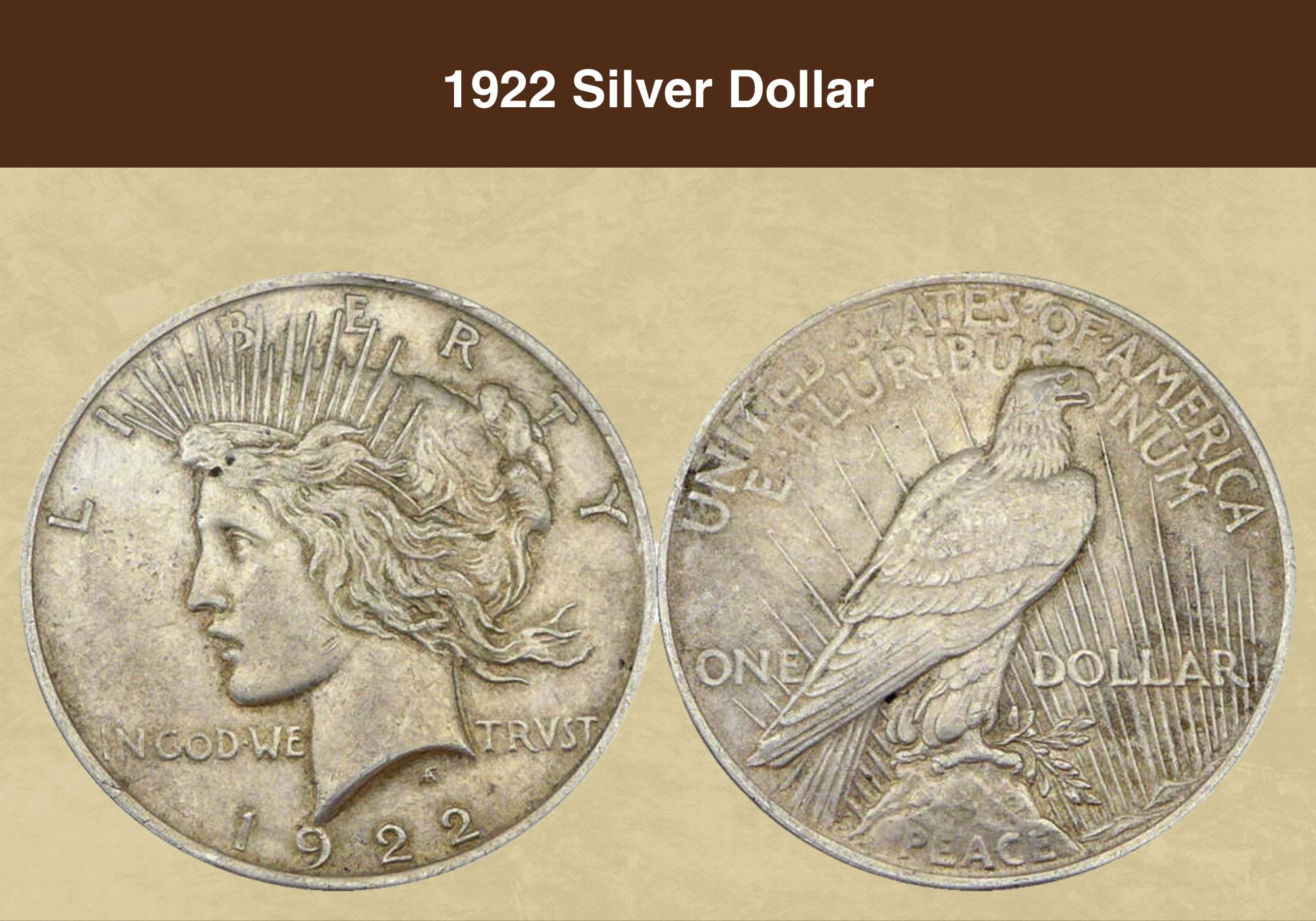
The value of your 1922 Peace Dollar will largely depend on its specific mint mark and, crucially, its condition.
1922-P (Philadelphia Mint)
The 1922-P Peace Dollar (no mint mark) is the most common variety.
- Circulated Grades (G-4 to VF-20): Typically worth slightly above their silver melt value, ranging from $25 to $40.
- Higher Circulated/Lower Uncirculated (AU-50 to MS-60): Values can range from $45 to $80.
- Mid-Range Uncirculated (MS-63 to MS-65): These are more sought after, fetching $100 to $400.
- Gem Uncirculated (MS-66 and higher): Prices escalate significantly, potentially reaching $1,000 to $5,000+, with top-tier examples (MS-67+) commanding even higher prices. “Full Head” examples in high grades are particularly valuable.
1922-D (Denver Mint)
The 1922-D Peace Dollar, with a ‘D’ mint mark on the reverse, is less common than the Philadelphia issue.
- Circulated Grades (G-4 to VF-20): Values typically range from $28 to $50.
- Higher Circulated/Lower Uncirculated (AU-50 to MS-60): Expect prices between $60 and $120.
- Mid-Range Uncirculated (MS-63 to MS-65): These can sell for $150 to $700.
- Gem Uncirculated (MS-66 and higher): Exceptionally rare in high grades, these can command prices from $1,500 to $10,000+, depending on the exact grade and eye appeal.
1922-S (San Francisco Mint)
The 1922-S Peace Dollar, identified by the ‘S’ mint mark, also has a lower mintage than the Philadelphia issue.
- Circulated Grades (G-4 to VF-20): Generally valued from $28 to $55.
- Higher Circulated/Lower Uncirculated (AU-50 to MS-60): Prices can be $65 to $130.
- Mid-Range Uncirculated (MS-63 to MS-65): These range from $175 to $800.
- Gem Uncirculated (MS-66 and higher): Similar to the 1922-D, high-grade San Francisco issues are scarce and can sell for $1,800 to $12,000+, with top specimens achieving record sums.
Proof Issues and Special Strikes
While rare, some proof examples of the 1922 Peace Dollar exist, though these are typically pattern coins or presentation strikes, not widely distributed. These would be exceptionally valuable, often in the tens of thousands of dollars or more, and require expert authentication. For the average collector, finding a proof 1922 Peace Dollar is highly unlikely.
How to Accurately Assess Your 1922 Dollar Coin
Determining the precise value of your 1922 Peace Dollar requires a methodical approach, moving from initial self-assessment to professional appraisal.
Self-Assessment and Initial Research
Begin by carefully examining your coin.
- Identify the Mint Mark: Look on the reverse, beneath the eagle’s tail feathers. No mark means Philadelphia (P), a ‘D’ means Denver, and an ‘S’ means San Francisco.
- Assess Condition (Roughly): Using a magnifying glass, check for wear on high points like Liberty’s hair, the eagle’s breast feathers, and the tips of the rock. Compare your coin to online grading guides or numismatic books with visual examples. Look for signs of cleaning, scratches, or damage, which can significantly reduce value.
- Consult Price Guides: Refer to reputable numismatic price guides such as the “Red Book” (A Guide Book of United States Coins) or online resources like PCGS.com, NGCcoin.com, and CoinValues.com. These provide estimated values across different grades and mint marks. Remember these are guides; actual market prices can vary.
Professional Grading Services (PCGS, NGC)
For any coin potentially valued at over a few hundred dollars, or if you are unsure about its grade, professional grading is highly recommended. The two most respected third-party grading services (TPGS) are:
- Professional Coin Grading Service (PCGS): Known for strict grading standards and robust market data.
- Numismatic Guaranty Corporation (NGC): Also a highly respected service with a strong reputation.
These services authenticate your coin, assign a precise numerical grade, and encapsulate it in a tamper-evident slab. This certification provides liquidity, buyer confidence, and often increases the coin’s market value by removing subjective grading concerns. The cost of grading varies but is a worthwhile investment for valuable specimens.
Consulting Reputable Dealers and Auction Results
Before selling, seek opinions from experienced numismatic dealers. They can offer an informed estimate and sometimes even make an offer. Be wary of dealers who offer significantly lower prices than published guides or pressure you to sell immediately.
Additionally, review recent auction results for 1922 Peace Dollars in similar grades and mint marks. Websites like Heritage Auctions, Stacks and Bowers, and eBay’s “sold listings” can provide real-world market data, reflecting what collectors are actually paying. This helps in setting a realistic expectation for your coin’s value.
Investing in Numismatics: Beyond the 1922 Peace Dollar
The pursuit of understanding a coin’s worth often extends beyond a single item, touching upon the broader principles of financial diversification and investment in tangible assets.
Long-Term Value Appreciation
Collectible coins, particularly rare and high-grade examples, have historically shown potential for long-term value appreciation. Unlike purely speculative assets, they offer intrinsic value (precious metal content) combined with numismatic value (rarity, historical significance, demand). While the value of a common 1922 Peace Dollar in circulated condition may only slightly outpace inflation, exceptional specimens can see substantial growth, providing a hedge against economic volatility.
Portfolio Diversification
For investors, numismatics can represent a unique avenue for portfolio diversification. Tangible assets like rare coins are often uncorrelated with traditional financial markets (stocks, bonds), offering a different risk profile. Including such assets can potentially reduce overall portfolio volatility and enhance returns over the long term, provided the investments are well-researched and acquired at fair market value.
Risks and Considerations
Investing in coins, like any other asset class, carries risks.
- Market Fluctuations: Values can rise and fall based on collector demand, economic conditions, and even new discoveries.
- Liquidity: Selling rare coins may not always be as quick or easy as selling publicly traded stocks.
- Authentication and Grading: The importance of professional grading cannot be overstated; misidentification or over-grading can lead to significant financial losses.
- Storage and Insurance: Proper storage (e.g., in a safe or bank vault) and insurance are necessary to protect your investment from theft or damage.
In conclusion, while a 1922 dollar coin, particularly a common circulated Peace Dollar, may have a modest value driven largely by its silver content, specific mint marks and, most significantly, its condition can elevate its worth considerably into the hundreds or even thousands of dollars. Accurate assessment requires diligent research, careful self-evaluation, and often the expertise of professional grading services to unlock its true financial potential.
aViewFromTheCave is a participant in the Amazon Services LLC Associates Program, an affiliate advertising program designed to provide a means for sites to earn advertising fees by advertising and linking to Amazon.com. Amazon, the Amazon logo, AmazonSupply, and the AmazonSupply logo are trademarks of Amazon.com, Inc. or its affiliates. As an Amazon Associate we earn affiliate commissions from qualifying purchases.