
The grim reality of unidentified human remains presents one of society’s most profound and persistent challenges. Beyond the immediate tragedy, each unidentified body represents a mystery, a potential missing person, and an unsolved puzzle for law enforcement, forensic scientists, and grieving families. In the 21st century, the process of investigating, identifying, and ultimately providing closure for these cases has been revolutionized by an array of sophisticated technologies, advanced software, and cutting-edge digital methodologies. Far from a static process, the handling of unidentified bodies is a dynamic field driven by continuous technological innovation, aiming to give names back to the nameless.

The Technological Frontier of Identification
The initial discovery of human remains triggers a cascade of investigative steps, each increasingly reliant on advanced technological tools. The primary goal is identification, a process that draws heavily on forensic science and digital databases.
DNA Forensics: The Gold Standard
Deoxyribonucleic acid (DNA) analysis stands as the cornerstone of modern forensic identification. When traditional methods like fingerprints or dental records are unavailable or insufficient, DNA extraction and profiling offer an unparalleled path to identification.
Specialized software is used to analyze DNA sequences, creating profiles that can be uploaded to national databases such as the Combined DNA Index System (CODIS) in the United States or its international equivalents. These powerful software platforms compare unknown profiles against a vast repository of convicted offender DNA, arrestee DNA, and increasingly, DNA from missing persons and their relatives. Advanced algorithms within these systems are designed to detect familial matches, even across generations, providing critical leads in cold cases spanning decades. The trend towards whole-genome sequencing and mitochondrial DNA analysis further refines this process, offering more robust data from degraded or minimal samples, pushing the boundaries of what was once considered unidentifiable.
Biometric Databases: Fingerprints and Dental Records
Before the advent of widespread DNA forensics, fingerprints and dental records were the primary biometric identifiers. Automated Fingerprint Identification Systems (AFIS) are sophisticated software platforms that can rapidly compare latent prints from unidentified individuals against millions of records in law enforcement databases. These systems employ complex pattern recognition algorithms to match ridge characteristics, minutiae points, and other unique features with remarkable speed and accuracy.
Similarly, dental records remain a crucial tool, particularly in cases involving severe trauma or advanced decomposition where other identifiers are compromised. Forensic odontologists utilize specialized imaging software to compare X-rays, dental charts, and reconstructive models of unidentified remains with antemortem dental records. Digital radiography and 3D modeling software have significantly enhanced the precision and efficiency of these comparisons, allowing for more detailed analyses and faster potential matches.
Digital Imaging and Reconstruction
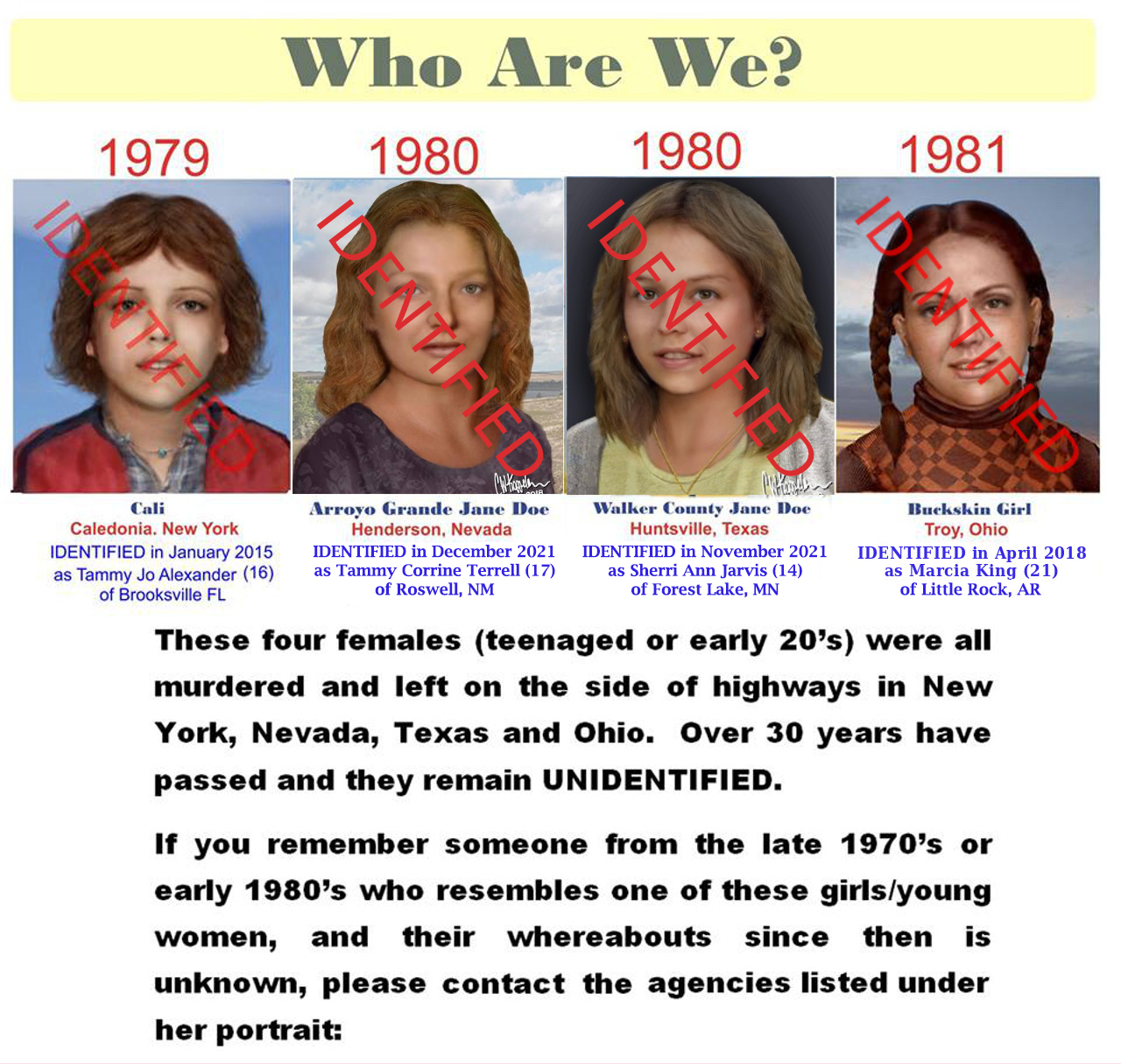
Visual identification, while often unreliable on its own, can be a vital first step, especially when combined with advanced digital techniques. Facial reconstruction software leverages anatomical data and anthropological principles to create 2D or 3D approximations of an individual’s face from skeletal remains. These software tools allow forensic artists and anthropologists to digitally sculpt muscle, tissue, and skin depth, often incorporating hair, eye color, and other features based on demographic estimations. The resulting digital images can then be circulated to the public or compared against missing persons photographs using AI-powered facial recognition systems, offering another avenue for potential identification. High-resolution digital photography and CT scanning also play a critical role, providing detailed visual documentation of remains and associated evidence, which can be shared securely with experts globally for consultation.
AI and Machine Learning in Cold Cases
The sheer volume of unidentified remains cases, coupled with vast databases of missing persons, has created an ideal environment for the application of artificial intelligence (AI) and machine learning (ML). These advanced computational tools are transforming how cold cases are approached, enabling new insights and accelerating the identification process.
Pattern Recognition and Predictive Analytics
AI algorithms excel at identifying subtle patterns and correlations that might escape human detection. In the context of unidentified bodies, ML models are being trained on extensive datasets comprising forensic anthropology data (age, sex, ancestry estimations), geographical location of discovery, manner of death indicators, and clothing characteristics. These models can predict probable demographic profiles with greater accuracy, narrow down potential missing persons matches, or even suggest common migratory patterns or lifestyle indicators based on isotopic analysis data. Predictive analytics can also help prioritize cases, flagging those with higher chances of identification based on available data points.
Database Interrogation and Linkage

One of the most significant contributions of AI is its ability to seamlessly interrogate and link disparate databases. The National Missing and Unidentified Persons System (NamUs) in the U.S., for instance, is a critical resource that integrates information on missing persons, unidentified remains, and unclaimed persons. AI-powered search engines within such systems can cross-reference textual descriptions, forensic data, dental characteristics, DNA profiles, and even facial recognition data from various sources. These intelligent systems can identify potential matches that might not be immediately obvious, such as a missing person report in one state matching unidentified remains in another, or finding familial connections across different forensic databases. This AI-driven data linkage significantly reduces the manual effort required and increases the probability of establishing a link.
Digital Security and Data Management
The handling of sensitive biometric and personal data associated with unidentified bodies and missing persons raises critical concerns regarding digital security, privacy, and data integrity.
Protecting Sensitive Biometric Data
Forensic databases, containing DNA profiles, fingerprints, and other biometric identifiers, are exceptionally sensitive. Robust digital security protocols are paramount to prevent unauthorized access, data breaches, or misuse. This involves multi-layered encryption, secure network architectures, access control mechanisms, and regular security audits. The integrity of the data is also crucial; any compromise could lead to misidentification or undermine legal proceedings. Therefore, strict chain-of-custody protocols are mirrored in the digital realm, ensuring that data inputs, modifications, and access are meticulously logged and auditable.
Interoperability Challenges and Solutions
A persistent challenge across jurisdictions and agencies is the lack of seamless interoperability between different forensic and law enforcement IT systems. Various states, counties, and federal agencies may use proprietary software or different data standards, creating silos of information. This fragmentation can hinder rapid data sharing and comparison, slowing down identification efforts. The trend is towards developing standardized Application Programming Interfaces (APIs) and common data exchange formats (e.g., XML-based standards like the National Information Exchange Model – NIEM) to facilitate secure and efficient data sharing between systems. Cloud-based platforms are also emerging as solutions, offering centralized, secure repositories that multiple agencies can access and contribute to, promoting a more integrated approach to managing these complex cases.
Emerging Technologies and Future Trends
The field of forensic technology is in constant evolution, with new innovations continuously emerging to enhance identification capabilities.
Advanced Isotope Analysis and Chemical Profiling
Beyond DNA, scientists are increasingly leveraging stable isotope analysis. By analyzing specific isotopes (e.g., oxygen, carbon, nitrogen, strontium) in bone, teeth, and hair, forensic scientists can infer geographical origins, dietary habits, and migration patterns of an individual over time. Specialized mass spectrometers and data analysis software interpret these complex chemical signatures, providing crucial leads for narrowing down the search area for missing persons and identifying potential places of origin. This chemical profiling offers a unique digital fingerprint of an individual’s life history imprinted in their remains.
Augmented Reality for Scene Reconstruction
Augmented Reality (AR) and Virtual Reality (VR) are beginning to find applications in forensic investigations. AR tools can overlay digital information onto physical crime scenes or laboratories, assisting investigators in visualizing evidence, marking points of interest, and even virtually reconstructing complex scenarios involving unidentified remains. This technology can enhance training, improve collaboration among geographically dispersed experts, and provide immersive, interactive platforms for presenting evidence in court.
The Role of Genomics and Phenotyping
Future trends point towards more comprehensive genomic analysis and forensic phenotyping. Beyond standard DNA profiling, advanced genomic sequencing can potentially predict an individual’s external physical characteristics (phenotype) such as hair color, eye color, skin tone, and facial features from their DNA. While still in its nascent stages for forensic application and raising ethical considerations about predictive policing, this technology holds the promise of creating a “digital composite sketch” directly from genetic material, offering a powerful new tool in cases where no antemortem photos or records exist. Coupled with AI for facial reconstruction from genetic data, this could dramatically alter how unidentified bodies are approached in the coming decades, bridging the gap between genetic code and visual identity.
The journey of an unidentified body, from discovery to potential identification, is increasingly a testament to human ingenuity applied through technology. From powerful DNA software and biometric databases to the transformative potential of AI and emerging genomic tools, technology serves as an indispensable ally in the solemn mission of restoring identity, providing answers, and ultimately bringing peace to those left behind.
aViewFromTheCave is a participant in the Amazon Services LLC Associates Program, an affiliate advertising program designed to provide a means for sites to earn advertising fees by advertising and linking to Amazon.com. Amazon, the Amazon logo, AmazonSupply, and the AmazonSupply logo are trademarks of Amazon.com, Inc. or its affiliates. As an Amazon Associate we earn affiliate commissions from qualifying purchases.