
The Wedding Band as a Cornerstone of Personal Branding
A man’s wedding band is far more than a simple piece of jewelry; it serves as a potent, non-verbal communication tool in the intricate landscape of personal branding. In an increasingly interconnected world, where every detail contributes to one’s professional and social image, the placement of this symbolic item can subtly influence perceptions, communicate values, and reinforce an individual’s overall brand identity. Understanding its role involves delving into the cultural, historical, and strategic implications of its display.
Non-Verbal Communication of Commitment and Stability
In the realm of personal branding, effective communication extends beyond spoken words or written résumés. Non-verbal cues play a critical role in shaping how individuals are perceived, often before a single word is exchanged. A wedding band, prominently worn, instantly communicates an individual’s marital status. This immediate signal can project an image of stability, reliability, and responsibility—qualities highly valued in both personal and professional spheres. For instance, in business interactions, clients or colleagues might unconsciously associate a married individual with a greater sense of accountability or long-term commitment, attributes that enhance their professional brand. It suggests an individual capable of forming and maintaining enduring relationships, which can translate positively to their ability to manage projects, lead teams, or build client trust. This subtle yet powerful branding element contributes significantly to an individual’s perceived character and professional gravitas.

Crafting an Image of Trust and Partnership
Beyond merely signifying marital status, the wedding band can project an image of being a committed partner, capable of collaboration and long-term vision. This aligns seamlessly with personal branding principles that emphasize consistency, dependability, and the capacity for teamwork. For leaders, entrepreneurs, or individuals in collaborative professions, such an image can foster trust and facilitate partnerships. It speaks to an ability to commit, to follow through on promises, and to invest in enduring relationships—qualities that are exceptionally prized in any robust branding strategy. The presence of a wedding band can subtly convey that an individual operates within a framework of mutual respect and partnership, extending the perceived benefits of their personal life into their professional interactions. This deepens the perception of an individual’s integrity and reliability, enriching their overall personal brand equity.
Cultural Identity and Global Personal Branding
The specific hand on which a man wears his wedding band is deeply rooted in cultural traditions, making it a fascinating case study in global personal branding. What might be standard practice in one region can be entirely different in another, underscoring the importance of cultural intelligence in crafting an effective and universally understood personal brand.
The Left Hand: A Dominant Western Brand Standard
In many Western cultures, including the United States, the United Kingdom, Canada, France, and parts of Ireland, the wedding band is traditionally worn on the fourth finger of the left hand. This tradition often traces back to ancient Roman beliefs in the “vena amoris,” or “vein of love,” which was thought to directly connect this finger to the heart. While anatomical accuracy has long since disproven this, the romantic symbolism has endured, cementing its status as a widely recognized cultural signifier. For individuals operating within these cultural spheres, adhering to this norm reinforces a conventional and easily understood personal brand. It signals an alignment with prevalent societal customs and expectations regarding marital status. Deviating from this placement without appropriate context might lead to misunderstandings or misinterpretations of one’s status or values, potentially impacting how one’s personal brand is perceived. Therefore, for most Western professionals, the left hand acts as the de facto standard for communicating marital commitment.
The Right Hand: Diverse Cultural Branding Approaches
Conversely, numerous cultures around the world traditionally place the wedding band on the right hand. This practice is common in countries such as Germany, Russia, India, Poland, Norway, Austria, and some parts of Eastern Europe and Latin America. The reasons for this variation are diverse, ranging from religious customs (e.g., in Orthodox Christian traditions) to historical precedents or simple local customs. For an individual engaged in international business or personal travel, understanding these nuances is crucial for developing a sophisticated and culturally sensitive personal brand. A professional conducting business in Mumbai or Berlin, for instance, who understands that a wedding band on the right hand signifies marriage, demonstrates cultural awareness and respect. This adaptability and appreciation for global diversity contribute positively to one’s personal brand, signaling an open-minded and worldly individual capable of navigating complex cultural landscapes effectively. Misplacing the ring due to ignorance of local customs could inadvertently miscommunicate one’s status or show a lack of cultural sensitivity, which can hinder relationship building in a global context.
Beyond Tradition: Personal Choice and Brand Authenticity
While cultural traditions are powerful, personal branding also allows for individual expression. Some men might choose to wear their wedding band on a different finger, or even on a necklace, due to comfort, occupational hazards (e.g., professions involving manual labor where a ring might get caught), or simply personal preference. When this intentional deviation from the norm is consistent with an individual’s broader personal brand narrative, it can be seen as an authentic expression of individuality. For example, a creative professional who deliberately chooses an unconventional placement might be reinforcing a brand that champions uniqueness and independent thought. The key is that the choice should be deliberate and align with the individual’s overall self-presentation, rather than creating confusion. An authentic personal brand is one where internal values align with external presentation, and sometimes this means consciously diverging from the conventional, provided it enhances rather than detracts from the desired message.
Design, Material, and the Brand Statement
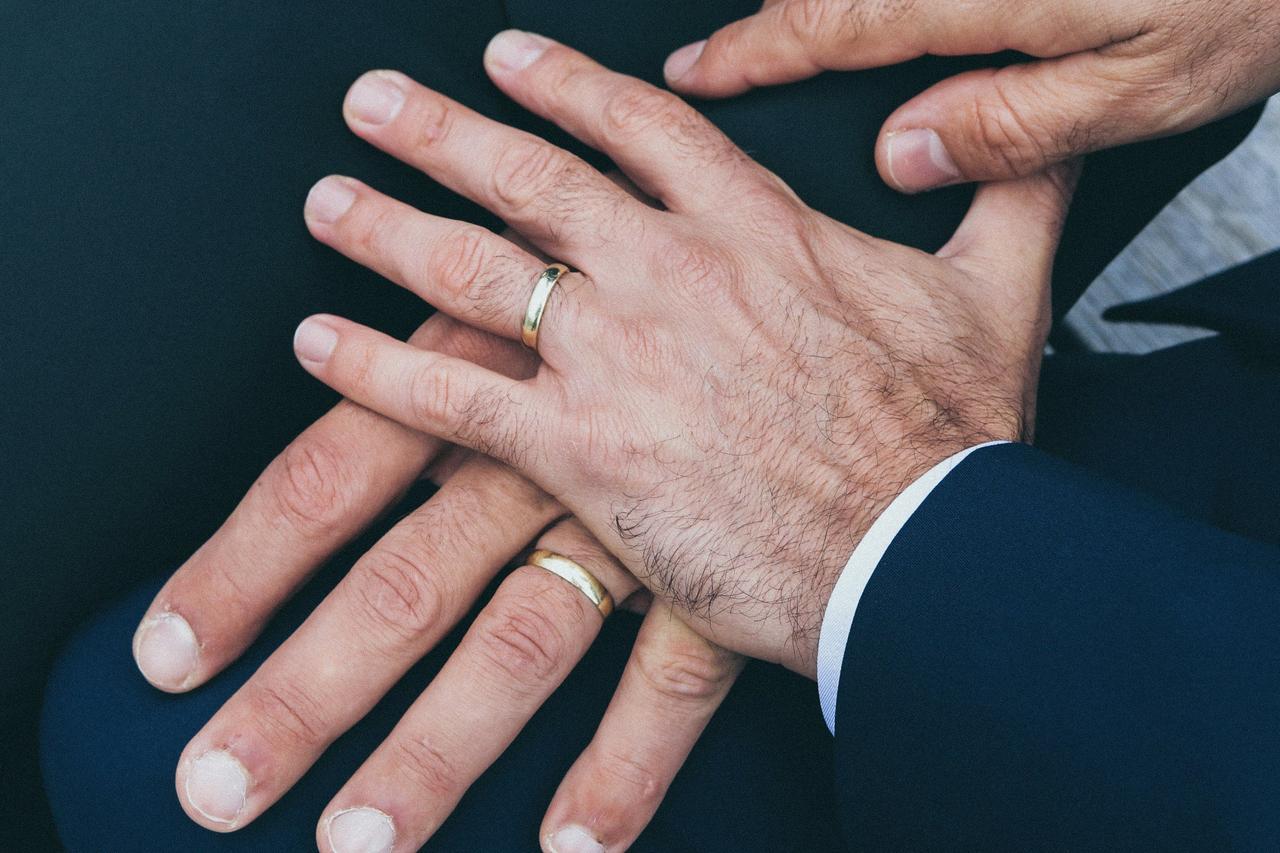
The design and material of a man’s wedding band are not merely aesthetic choices; they are integral components of his personal brand statement. Like any carefully selected accessory, the ring communicates values, taste, and even a subtle reflection of his lifestyle and economic standing.
Materiality and Message
The choice of material—be it classic gold, sophisticated platinum, modern titanium, or rugged tungsten—sends a distinct message. A simple, polished gold band might convey a preference for tradition, timelessness, and classic elegance, aligning with a brand that values heritage and established norms. Conversely, a sleek titanium or tungsten ring could signal innovation, practicality, durability, and a contemporary outlook, appealing to a brand identity focused on modernity and resilience. These material choices are not superficial; they are visual representations of an individual’s priorities and aesthetic sensibilities, all of which contribute to the perception of their personal brand. Even the finish—brushed, polished, hammered—adds another layer of detail, subtly reinforcing aspects of their personality and style.
Consistency with Overall Personal Style
For a cohesive and strong personal brand, every element of one’s appearance should ideally be consistent with their overall style and professional presentation. The wedding band, therefore, should complement a man’s other accessories, such as his watch, cufflinks, or even the cut of his suits. Does the ring’s design and material enhance or clash with his general aesthetic? This coherence reinforces a polished, intentional, and well-thought-out personal brand. Discrepancies can create visual dissonance, weakening the overall message and potentially making the individual appear less discerning or less attentive to detail. A wedding band that seamlessly integrates into one’s personal style elevates it from a mere symbol to an integral part of a carefully curated and impactful image. This attention to detail speaks volumes about an individual’s self-awareness and commitment to presenting a unified brand.
The Band as a Legacy Brand Element
Over time, a wedding band can transcend its initial function to become more than just a symbol of current commitment; it can evolve into a legacy piece. Passed down through generations, such a ring imbues the personal brand with a sense of enduring values, family history, and long-term commitment. In a personal branding context, this speaks to building a lasting legacy and a reputation that extends beyond one’s immediate professional life. It connects an individual to a lineage of integrity and fidelity, enhancing their perceived depth and character. The narrative associated with a generational wedding band can add a profound dimension to one’s personal brand, conveying a respect for history, family, and the enduring nature of commitments—qualities that resonates deeply in any comprehensive brand strategy.
Strategic Placement for Maximum Brand Impact
The seemingly simple act of choosing which hand to wear a wedding band on can carry significant strategic implications for one’s personal brand, especially when considering the unconscious cues people process daily.
The Unconscious Read
Humans are adept at processing non-verbal cues almost instantaneously and often unconsciously. The hand on which a wedding band is worn is one such powerful visual cue. In cultures where the left hand is the universally understood standard for marriage, wearing it on the right might lead others to unconsciously assume the wearer is unmarried, widowed, divorced, or simply from a different cultural background. This initial, subconscious read can shape first impressions before any verbal communication takes place. Understanding these unconscious assumptions allows for strategic placement that aligns with the desired brand perception, particularly in high-stakes environments such as initial business meetings, job interviews, or public speaking engagements where clarity and consistent messaging are paramount.
Professional Context and Brand Alignment
Consider the professional context in which an individual operates. In some industries or corporate cultures, appearing stable, committed, and family-oriented can be a significant asset to one’s personal brand, conveying reliability and trustworthiness. Ensuring the wedding band is worn on the hand most conventionally associated with marriage in that specific cultural or professional setting can subtly reinforce this perception, aligning the visual cue with the desired brand message. Conversely, in highly unconventional, creative, or artistic fields, a deliberate deviation from the norm might align with a brand that champions uniqueness, non-conformity, or an avant-garde approach. The key is intentionality: the choice of placement should be a conscious part of one’s overall brand strategy, supporting the professional image one wishes to project.

Authenticity Versus Conformity in Branding
While understanding and sometimes conforming to cultural norms is crucial for effective communication in personal branding, true authenticity also plays a vital role. The decision of which hand to wear the wedding band on should ultimately align with the individual’s comfort, personal beliefs, and desired self-presentation. An authentic personal brand is one where internal values and external presentation are in harmony. The goal is to make an informed choice that supports an authentic, yet strategically effective, personal brand narrative. This means weighing cultural expectations against personal comfort and identity, ensuring that the chosen placement enhances rather than detracts from the overall integrity of one’s brand. The most powerful personal brands are those that are both genuine and strategically communicated.
aViewFromTheCave is a participant in the Amazon Services LLC Associates Program, an affiliate advertising program designed to provide a means for sites to earn advertising fees by advertising and linking to Amazon.com. Amazon, the Amazon logo, AmazonSupply, and the AmazonSupply logo are trademarks of Amazon.com, Inc. or its affiliates. As an Amazon Associate we earn affiliate commissions from qualifying purchases.