
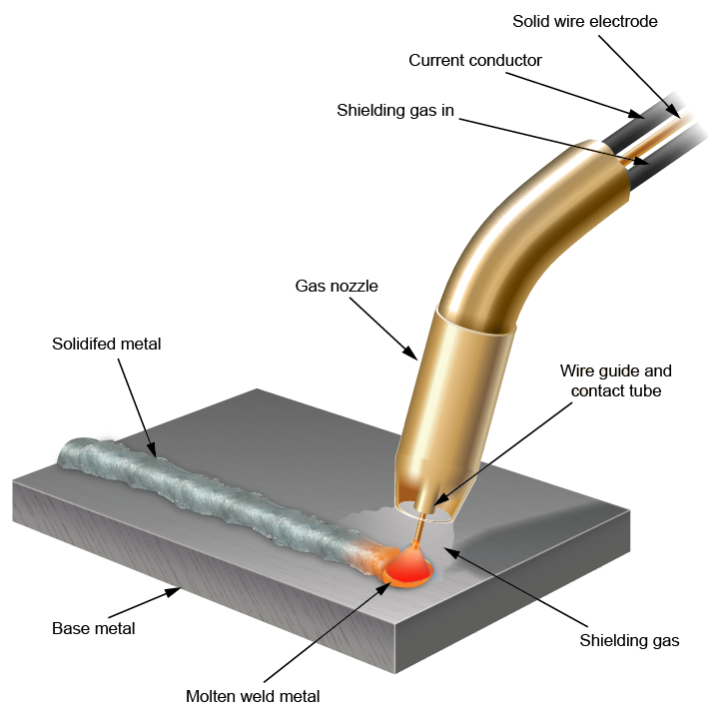
Metal Inert Gas (MIG) welding, also known as Gas Metal Arc Welding (GMAW), is a widely popular welding process due to its speed, versatility, and relative ease of learning. At its core, MIG welding relies on an automatically fed wire electrode that creates an arc between the wire and the workpiece, melting both to form a weld pool. Crucial to this process, yet often overlooked by novices, is the shielding gas. Far from a mere accessory, the choice of shielding gas profoundly impacts weld quality, appearance, penetration, and the overall efficiency of the welding operation. Understanding the technical properties and applications of various gases is paramount for any welder aiming for optimal results.

The Indispensable Role of Shielding Gas in GMAW
The primary function of shielding gas in MIG welding is to protect the molten weld pool and the electrode wire from atmospheric contamination. Air, composed primarily of nitrogen and oxygen, is detrimental to the welding process. Nitrogen can cause porosity and embrittlement, while oxygen leads to oxidation, reduced strength, and an unstable arc. Beyond this fundamental protection, shielding gases also play several other critical technical roles:
Preventing Contamination and Oxidation
As the arc forms and melts the metal, the high temperatures make the molten metal highly reactive. Oxygen and nitrogen from the surrounding air would readily combine with the molten metal, forming oxides and nitrides. These impurities compromise the mechanical properties of the weld, leading to porosity (gas bubbles trapped in the solidified weld), inclusions, and a weaker, more brittle joint. The shielding gas creates an inert or semi-inert envelope around the arc and weld pool, displacing the atmospheric gases and preventing these harmful reactions.
Influencing Arc Characteristics
The composition of the shielding gas directly affects the electrical properties of the arc. Different gases ionize at varying temperatures, which in turn influences arc stability, heat input, and arc penetration. For instance, gases like argon provide a smoother, more stable arc, while carbon dioxide creates a harsher, more turbulent arc. The specific ionization potential of the gas mixture dictates the voltage required to sustain the arc and its overall energy distribution. This interaction with the arc directly impacts the welding transfer mode (short circuit, spray, pulsed spray) and the resulting weld bead shape and characteristics.
Affecting Weld Bead Properties and Appearance
The choice of shielding gas significantly dictates the final appearance and mechanical properties of the weld bead. Penetration depth, bead width, spatter levels, and even the surface finish are all influenced. Some gases produce deep, narrow penetration, while others yield wider, shallower welds. Reactant gases like CO2 can lead to higher spatter due to their harsher arc, whereas inert gases like argon typically result in smoother welds with minimal spatter. The presence of active gases can also affect the deoxidation process within the weld metal, influencing ductility and tensile strength.
Common Shielding Gases and Their Technical Applications
The landscape of MIG welding gases comprises several primary types, often used in various blends, each tailored for specific materials and welding requirements.
Argon (Ar)
Argon is an inert gas, meaning it does not react with the molten metal. It is heavier than air, providing excellent shielding coverage.
- Pure Argon: Primarily used for welding non-ferrous metals like aluminum, magnesium, copper, and reactive metals. It produces a smooth, stable arc with excellent arc starting characteristics and minimal spatter. Its low thermal conductivity results in a narrow, deep penetration profile, making it ideal for thin materials and applications where aesthetic appearance is crucial. However, pure argon can create a finger-like penetration profile in steel, which is often undesirable for structural integrity.
- Argon Mixes: Argon is frequently mixed with other gases to enhance its properties for specific applications.
- Argon/CO2 (C-X): This is the most common mixture for welding carbon steel, mild steel, and low-alloy steels. The addition of CO2, an active gas, increases arc heat, improving penetration and bead wetting, while stabilizing the arc and reducing undercut compared to pure argon. Typical ratios range from 75% Ar / 25% CO2 (C-25) to 90% Ar / 10% CO2 (C-10). C-25 is versatile for short-circuit transfer welding on thin to medium-thick steels, offering good bead appearance and minimal spatter. C-10 provides a hotter arc suitable for spray transfer and thicker materials.
- Argon/Oxygen (Ar/O2): Often used for stainless steel and spray transfer welding of carbon steel. Small additions of oxygen (typically 1-5%) significantly stabilize the arc, reduce surface tension of the molten metal, improve bead wetting, and promote a flatter, smoother weld bead. It also enhances penetration. Common mixes include 98% Ar / 2% O2. Too much oxygen can lead to oxidation and discoloration, especially on stainless steel.
- Argon/Helium (Ar/He): Employed for welding thick sections of non-ferrous metals like aluminum and copper. Helium has a higher ionization potential and thermal conductivity than argon, resulting in a hotter arc and increased heat input. This translates to deeper penetration, faster travel speeds, and improved weld quality on thick plates. Common mixes are 75% Ar / 25% He, 50% Ar / 50% He, or even 25% Ar / 75% He for very thick materials.
Carbon Dioxide (CO2)
CO2 is an active gas and the least expensive shielding gas option.
- Pure CO2: Provides deep penetration and a wide, robust bead, making it suitable for welding thick carbon steels and low-alloy steels, especially in structural applications. It produces a very hot arc, leading to excellent weld fusion. However, pure CO2 results in a harsher arc, higher spatter levels, and can be more challenging to control, particularly with short-circuit transfer. The arc characteristics are rougher, and more post-weld cleaning is often required due to spatter. Despite this, its cost-effectiveness and penetration capabilities make it popular in heavy fabrication.
Helium (He)
Helium is an inert gas with significantly higher thermal conductivity than argon.
- Pure Helium: Rarely used alone for MIG welding due to its very high cost, lighter-than-air property (requiring higher flow rates for shielding), and the extremely hot, wide, and difficult-to-control arc it produces. However, its high heat input is invaluable for welding very thick sections of high-conductivity metals like aluminum, magnesium, and copper alloys where more heat is needed to achieve adequate fusion. When used, it’s almost always in an argon-helium mix.
Oxygen (O2)
Oxygen is an active gas used in small percentages (1-5%) primarily as an additive to argon.
- Oxygen Mixes (e.g., Ar/O2): As discussed under argon mixes, oxygen significantly stabilizes the arc, improves bead wetting, and flattens the weld profile. It’s particularly beneficial for spray transfer welding of carbon steels and stainless steels. It acts as an oxidizing agent, which can clean the weld pool but also lead to discoloration or oxide formation if used in excessive amounts, especially on reactive metals.
Selecting the Right Gas for Specific Metals and Transfer Modes
The optimal gas choice is a matrix decision based on the material being welded, the desired welding transfer mode, and specific application requirements.
Mild Steel and Carbon Steel
For mild steel and carbon steel, the most common choices are:
- 75% Ar / 25% CO2 (C-25): The industry standard for short-circuit transfer on thin to medium-thick materials. Offers good arc stability, minimal spatter, and a visually appealing bead.
- 100% CO2: Excellent for thick, heavy sections, especially with short-circuit and globular transfer modes. Provides deep penetration but with higher spatter. Cost-effective for industrial applications where spatter cleanup is factored into the process.
- 90% Ar / 10% CO2 (C-10): Preferred for spray transfer welding on thicker sections of steel. Provides a hotter arc, deeper penetration, and less spatter than pure CO2, with a smoother transition.
- Argon with 2-5% Oxygen: Often used for spray transfer, particularly when a very fluid weld pool and flat bead profile are desired. Offers excellent bead wetting and arc stability.
Stainless Steel
Stainless steel requires careful gas selection to avoid carbide precipitation (which reduces corrosion resistance) and discoloration.
- Argon with 1-2% Oxygen: A common choice for spray transfer on stainless steel. The small oxygen addition helps stabilize the arc and improve bead wetting. However, excessive oxygen can lead to oxidation and reduced corrosion resistance.
- Argon with 2-5% CO2: Suitable for short-circuit transfer on stainless steel. While CO2 is an active gas, it’s less reactive than oxygen. However, prolonged exposure to high heat from CO2 can lead to carbon pick-up and carbide formation, which is detrimental to corrosion resistance. Therefore, low percentages are crucial.
- Argon with Helium (and sometimes CO2/O2): For very thick stainless steel, especially when high heat input is required, helium additions can be beneficial. Tri-mixes like Ar/He/CO2 are sometimes used.
Aluminum
Aluminum is highly reactive, making inert gases essential to prevent oxidation.
- 100% Argon: The standard choice for MIG welding aluminum. Provides a stable arc, good penetration, and clean welds. Its relatively low heat input is suitable for most aluminum thicknesses.
- Argon with Helium Mixes (e.g., 75% Ar / 25% He, up to 50% Ar / 50% He): Essential for welding thicker aluminum sections. The higher thermal conductivity of helium provides the necessary increased heat input to overcome aluminum’s high thermal conductivity, ensuring proper fusion and penetration without excessive preheating. Higher helium percentages are used for progressively thicker aluminum.
Other Alloys (e.g., Copper, Nickel)
These materials often share characteristics with aluminum regarding thermal conductivity and reactivity.
- Pure Argon: A good starting point for many copper and nickel alloys, especially thinner sections.
- Argon with Helium Mixes: For thicker sections of copper and its alloys, helium additions are crucial to provide the higher heat input needed for good fusion.
Factors Beyond Metal Type: Joint Design, Transfer Mode, and Cost
While metal type is paramount, other technical considerations influence gas selection.
Short Circuit Transfer
This low-heat, low-current transfer mode involves the wire electrode making repeated contact with the weld pool. It’s suitable for thin materials and out-of-position welding.
- Preferred Gases: Typically argon-CO2 blends (e.g., C-25) or pure CO2 for steel. The CO2 component provides the necessary arc drive and good wetting for this mode.
Spray Transfer
A higher-current, higher-voltage transfer mode where molten metal droplets are projected across the arc without touching the weld pool. Produces a very fluid weld pool, high deposition rates, and deep penetration. Best for thicker materials in flat or horizontal positions.
- Preferred Gases: Argon-rich blends (e.g., 90% Ar / 10% CO2, or Ar with 2-5% O2). The high argon content facilitates the smooth transfer of molten droplets across the arc. Pure argon for aluminum.
Pulsed Spray Transfer
An advanced variant of spray transfer that cycles between a high peak current and a low background current. It allows for spray transfer characteristics at lower average currents, making it suitable for a wider range of material thicknesses and positions, including out-of-position welding.
- Preferred Gases: Generally argon-rich blends, similar to conventional spray transfer (e.g., Ar/CO2, Ar/O2 for steel; pure argon or Ar/He for aluminum). The pulse parameters are often optimized for specific gas mixes.
Gas Cost and Availability
Pure CO2 is the most economical shielding gas. Argon and its common blends are moderately priced and widely available. Helium is significantly more expensive and often less readily available, limiting its use to specialized applications where its unique properties are indispensable. For high-volume production, even small differences in gas cost can impact profitability.
Equipment Compatibility
Ensure your MIG welder is capable of handling the chosen gas. While most modern machines are versatile, specific wire feeders, liners, and contact tips are optimized for certain wire types and gas flows. Regulator and flowmeter compatibility with different gas cylinder connections is also a practical consideration.

Safety Considerations and Best Practices
Working with compressed gases requires adherence to strict safety protocols.
- Ventilation: All welding produces fumes and gases. Shielding gases themselves, especially inert ones like argon and helium, can displace oxygen in confined spaces, leading to asphyxiation. Always ensure adequate ventilation and, if necessary, use supplied-air respirators.
- Gas Cylinder Handling: Compressed gas cylinders are heavy and under high pressure. Secure them properly to prevent tipping, handle them with care, and never subject them to extreme heat or impact.
- Material Safety Data Sheets (MSDS/SDS): Always review the Safety Data Sheets for any gas you use to understand its specific hazards and recommended safety measures.
The selection of shielding gas in MIG welding is a technical decision that balances material properties, desired weld characteristics, welding process parameters, and economic factors. A thorough understanding of each gas’s unique properties and how it interacts with the arc and molten metal is fundamental to achieving high-quality, efficient, and safe welding operations.
aViewFromTheCave is a participant in the Amazon Services LLC Associates Program, an affiliate advertising program designed to provide a means for sites to earn advertising fees by advertising and linking to Amazon.com. Amazon, the Amazon logo, AmazonSupply, and the AmazonSupply logo are trademarks of Amazon.com, Inc. or its affiliates. As an Amazon Associate we earn affiliate commissions from qualifying purchases.