
For owners of the formidable Ford F-350, a truck synonymous with heavy-duty capability, the discussion often gravitates towards enhancing its already impressive performance envelope. Among the most common modifications, overload springs stand out as a critical upgrade. However, the decision to invest in these components is rarely just about brute strength; it’s a strategic financial choice that impacts everything from operational costs and maintenance to income generation and asset longevity. Understanding F-350 overload springs through a financial lens reveals them not as mere accessories, but as integral tools for safeguarding investments and maximizing economic returns.
The Financial Prudence of Uprating Your F-350’s Payload Capacity
The Ford F-350 is built to work. Whether it’s towing substantial trailers for a landscaping business, hauling materials to a construction site, or serving as a mobile workshop for a side hustle, its utility is directly linked to its payload and towing capacities. When these capacities are consistently pushed to their limits, or even exceeded, the long-term financial health of the vehicle, and by extension, the owner’s finances, come into question. This is where overload springs enter the equation, offering a tangible financial return on investment (ROI).
Standard suspension systems are designed to handle the factory-specified Gross Vehicle Weight Rating (GVWR) and payload. However, real-world applications often involve scenarios that push these limits. Installing overload springs, which are supplementary suspension components, provides additional support to the existing leaf springs or replaces them with a heavier-duty alternative. This enhancement directly translates to improved load-carrying stability and reduced suspension sag, but its financial implications run deeper.
Protecting Your Core Investment: Avoiding Costly Repairs
The initial purchase of an F-350 represents a significant capital expenditure, often tens of thousands of dollars. Protecting this asset from premature wear and tear or catastrophic failure due to overloading is paramount. Without adequate support, consistently carrying heavy loads can lead to:
- Accelerated Wear on Suspension Components: Original leaf springs can flatten, coil springs can sag, and shock absorbers can blow out prematurely. Replacing these components is not just a parts cost but also involves labor, and crucially, vehicle downtime.
- Tire Damage and Blowouts: Overloaded tires run hotter, increasing the risk of blowouts, which can be dangerous and expensive, especially if it damages the wheel well or bodywork. Regular premature tire replacement represents a recurring operational cost.
- Frame and Axle Stress: The vehicle’s frame and axles are subjected to immense stress under excessive load. Repeated strain can lead to cracking, bending, or weakening of these foundational structures, potentially rendering the truck unsafe or leading to incredibly costly, even uneconomical, repairs.
- Braking System Overload: A heavier load requires more stopping power, putting extra strain on brake pads, rotors, and calipers. This accelerates wear, necessitating more frequent and expensive brake service.
Overload springs mitigate these risks by distributing weight more effectively and providing the necessary support. By preventing these issues, they reduce the frequency and severity of maintenance and repair costs, safeguarding the depreciation curve of your asset and ensuring its operational availability. The upfront cost of overload springs is often dwarfed by the potential savings in repairs and prolonged vehicle lifespan.
Maintaining Compliance and Insurance Validity
Operating a vehicle outside its specified GVWR is not only dangerous but also illegal in many jurisdictions. Overloading can lead to hefty fines, particularly for commercial operators. Furthermore, in the event of an accident, an insurance company might deny coverage if it’s determined that the vehicle was overloaded beyond its factory specifications, especially if the overload springs were installed after the fact and not properly documented or certified. Investing in proper overload solutions helps maintain legal compliance and ensures that your valuable insurance coverage remains valid, protecting you from potentially ruinous financial liabilities.
Maximizing Earning Potential: F-350 Overload Springs in Business Operations
For many F-350 owners, the truck is not just transportation; it’s a critical tool for generating income. Whether it’s for a primary business or a lucrative side hustle, the capacity and reliability of the F-350 directly influence its earning potential. Overload springs can significantly enhance this aspect.
Increasing Hauling Efficiency and Project Capacity
In many businesses, time is money. Being able to transport more materials, equipment, or products in a single trip directly translates to greater efficiency and profitability. Overload springs allow an F-350 to consistently carry heavier loads closer to its practical maximum without compromising safety or accelerating wear. This means:
- Fewer Trips: Reducing the number of trips required for a job saves on fuel costs, driver wages (if applicable), and vehicle wear-and-tear.
- Larger Project Capability: Businesses can bid on or undertake larger projects that require moving more substantial quantities of materials, thus expanding their service offerings and potential revenue.
- Reliable Performance: Knowing the truck can handle the load reliably reduces stress, improves driver confidence, and minimizes unexpected delays or breakdowns that halt operations.
For a contractor, landscaper, or even someone running a mobile repair service, the ability to carry a heavier load of tools, materials, or even a specialized piece of equipment can be the difference between turning a profit and barely breaking even. Overload springs unlock the truck’s full potential as an income-generating asset.
Cost-Benefit Analysis: Evaluating Overload Spring Solutions
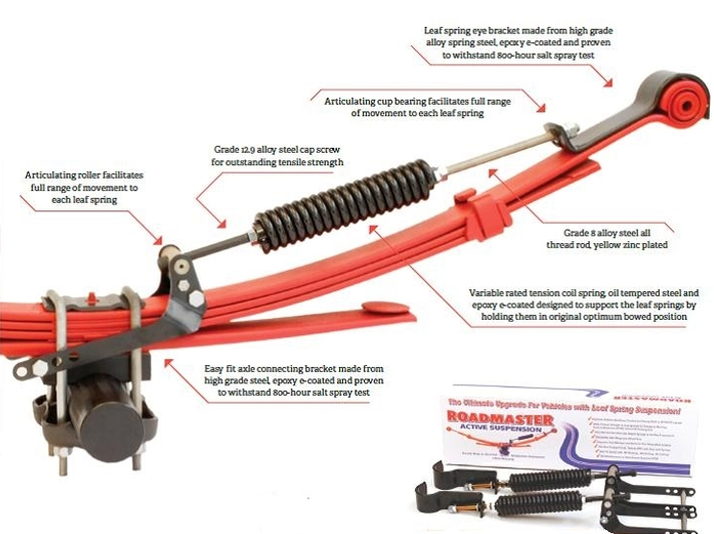
The market offers a variety of overload spring solutions, each with its own cost, installation complexity, and performance characteristics. Making an informed financial decision requires understanding these options and weighing them against specific needs and budget.
Types of Overload Springs and Their Financial Implications
-
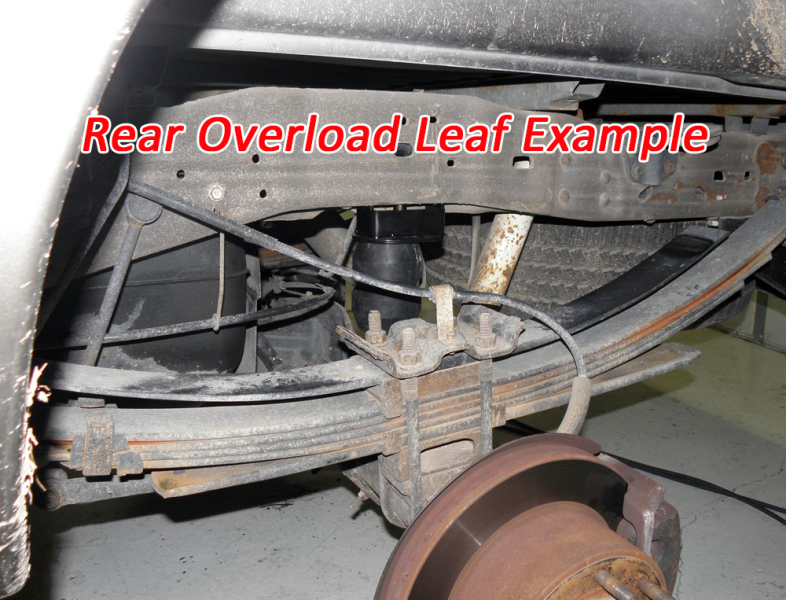
Helper Leaf Springs: These are auxiliary leaf springs installed above or below the existing leaf pack. They engage only when the primary springs begin to deflect under load, offering progressive support.
- Cost: Generally the most economical option, with kits ranging from a few hundred to under a thousand dollars.
- Installation: Can often be a DIY project for mechanically inclined individuals, saving labor costs, or installed by a shop for a moderate fee.
- Benefit: Cost-effective solution for intermittent heavy loads or moderate payload increases.
-
Add-a-Leaf Kits: These involve inserting an additional leaf into the existing leaf spring pack.
- Cost: Relatively inexpensive, similar to helper springs.
- Installation: Requires disassembling the leaf pack, which can be more involved than helper springs, potentially incurring higher labor costs if done professionally.
- Benefit: Provides a permanent increase in spring rate and ride height, suitable for consistent heavy loads.
-
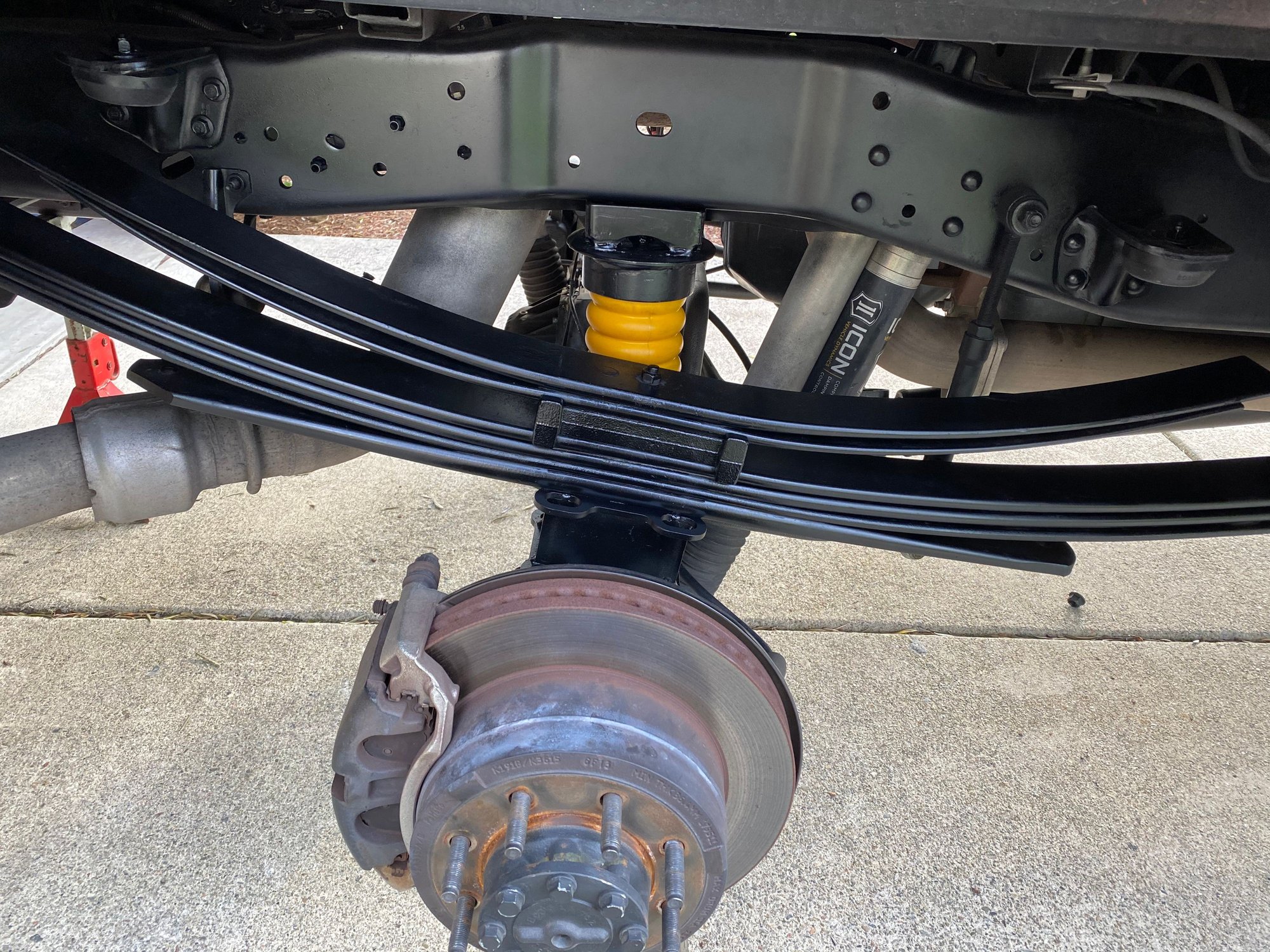
Air Bag Helper Springs (Air Suspension Kits): These systems use inflatable airbags mounted between the frame and the axle. Air pressure can be adjusted to support varying loads.
- Cost: Typically the most expensive option, ranging from $500 to well over $1,500, especially with onboard compressors and automatic leveling systems.
- Installation: More complex, often requiring drilling and plumbing for air lines, making professional installation more common and thus adding to the overall cost.
- Benefit: Offers superior adjustability and ride comfort, allowing the user to dial in the perfect support for any load. Ideal for those who carry highly variable loads or value ride quality. The flexibility can lead to better fuel efficiency when unloaded, as pressure can be reduced.
-
Full Leaf Spring Replacement: In some extreme cases, or for very old, worn-out springs, replacing the entire leaf spring pack with a heavy-duty aftermarket set is the best option.
- Cost: Significant, potentially $1,000+ per axle for parts alone, plus substantial labor.
- Installation: Labor-intensive, almost always requiring professional installation.
- Benefit: A comprehensive, long-term solution for consistently carrying maximum or near-maximum loads, restoring and enhancing the truck’s load-carrying foundation.
When evaluating these options, consider the frequency and weight of your typical loads, your budget for parts and installation, and the desired level of adjustability and ride comfort. The cheapest option might not always provide the best financial return if it doesn’t adequately meet your needs, leading to future compromises or further upgrades.
Calculating the Return on Investment (ROI)
For businesses, calculating the ROI of overload springs is straightforward:
- Increased Revenue/Efficiency: Quantify how many more jobs can be taken on, how much time is saved per trip, or how much fuel is saved due to fewer trips.
- Reduced Costs: Estimate the savings from preventing premature wear on tires, brakes, and suspension components, as well as avoided fines or insurance claim denials.
- Extended Vehicle Lifespan: Consider the financial benefit of delaying the need for a new F-350 by several years.
By summing the tangible financial benefits and subtracting the total cost of the overload spring system (parts + installation), you can determine the payback period and overall ROI. For many F-350 owners who rely on their truck for income, this calculation often reveals a compelling financial case for the upgrade.
Maintenance, Longevity, and Resale Value: A Financial Perspective
Beyond immediate operational benefits, overload springs play a role in the long-term financial health of your F-350.
Enhancing Vehicle Longevity and Reducing Depreciation
A truck that operates consistently within its safe and supported limits will naturally last longer. By providing critical support, overload springs reduce the strain on every part of the drivetrain and chassis. This means fewer stress fractures, less component fatigue, and a significantly extended operational life for your F-350. Prolonging the useful life of a major asset like an F-350 directly reduces its annual depreciation expense, making it a more cost-effective investment over time. This also delays the need for a costly replacement vehicle, preserving capital.
Impact on Resale Value
While modifications can sometimes be a double-edged sword for resale value, well-chosen and professionally installed overload springs are generally viewed positively by potential buyers, especially those looking for a work truck. A truck that has been properly equipped to handle its designed purpose, showing evidence of responsible ownership and proactive maintenance, will often command a higher resale price. It signals to buyers that the vehicle has been well-maintained and is ready for heavy use, offering added value over an unmodified, potentially stressed, counterpart.
In conclusion, “what F-350 overload springs” translates into a financial question of optimizing asset performance, mitigating risks, and maximizing revenue. It’s about making a calculated investment that protects your primary asset, enhances its income-generating capabilities, and secures its long-term value, ultimately contributing positively to your bottom line.
aViewFromTheCave is a participant in the Amazon Services LLC Associates Program, an affiliate advertising program designed to provide a means for sites to earn advertising fees by advertising and linking to Amazon.com. Amazon, the Amazon logo, AmazonSupply, and the AmazonSupply logo are trademarks of Amazon.com, Inc. or its affiliates. As an Amazon Associate we earn affiliate commissions from qualifying purchases.