
Epoxy adhesives represent a crucial class of high-performance engineering materials, underpinning countless technological advancements across diverse industries. Far from being a simple glue, epoxy adhesives are thermosetting polymers renowned for their exceptional strength, chemical resistance, and versatility, making them indispensable in applications where structural integrity and durability are paramount. Understanding their fundamental chemistry, performance characteristics, and broad application spectrum is key to appreciating their vital role in modern technology.
The Fundamental Chemistry and Structure of Epoxy Adhesives
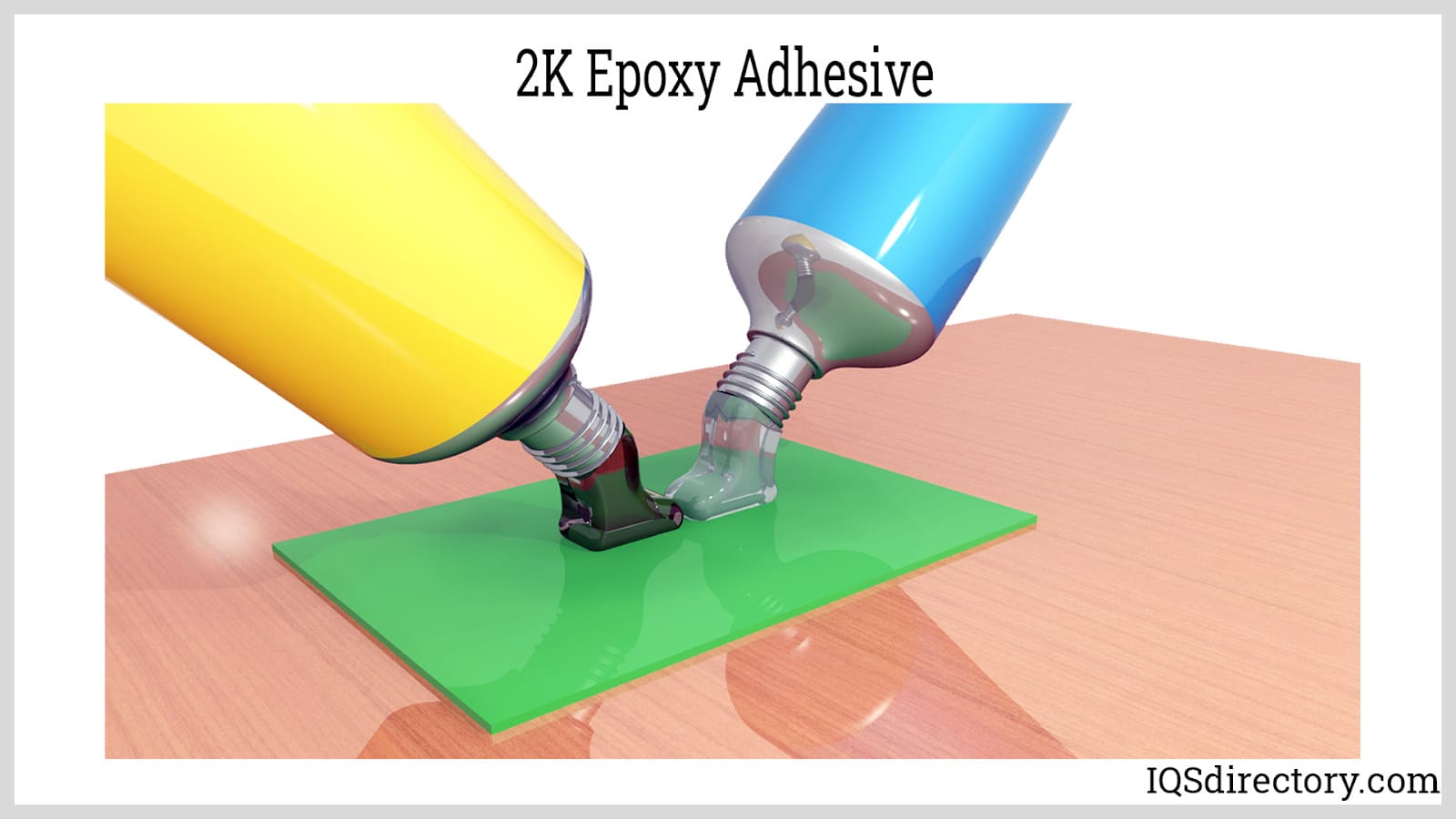
At its core, an epoxy adhesive is a two-part system typically comprising an epoxy resin and a hardener (also known as a curing agent or activator). The resin component contains epoxide groups, which are cyclic ethers consisting of an oxygen atom bonded to two carbon atoms. Common epoxy resins are based on bisphenol A (BPA) and epichlorohydrin, forming diglycidyl ether of bisphenol A (DGEBA), which is the most widely used type. Other resins, such as novolacs or cycloaliphatic epoxies, are employed for specific performance requirements.
The Polymerization Process
The magic of epoxy adhesives lies in their polymerization process, often referred to as curing. When the epoxy resin is mixed with the hardener, a chemical reaction initiates, leading to the formation of a rigid, cross-linked polymer network. The hardener reacts with the epoxide rings, opening them and facilitating the formation of covalent bonds between the resin molecules. This reaction is irreversible and exothermic, meaning it generates heat.
Hardeners come in various forms, each imparting different properties to the final cured adhesive. Amine-based hardeners (aliphatic, cycloaliphatic, aromatic) are common, offering varying cure speeds, pot lives, and thermal resistance. Anhydrides provide excellent high-temperature performance and chemical resistance, while polyamides offer flexibility and toughness. The choice of hardener significantly influences the cure time, viscosity, adhesion strength, flexibility, and temperature resistance of the final adhesive. The precise stoichiometry (ratio of resin to hardener) is critical for achieving optimal mechanical properties and complete curing. Improper mixing or incorrect ratios can lead to incomplete reactions, resulting in reduced strength, poor chemical resistance, and compromised durability.
Key Chemical Properties
The densely cross-linked network formed during curing is responsible for epoxy adhesives’ superior performance. This structure provides high cohesive strength, excellent adhesion to a wide array of substrates (metals, ceramics, composites, many plastics), and robust resistance to chemicals, solvents, and moisture. The lack of volatile organic compounds (VOCs) released during curing, compared to some other adhesive types, also contributes to their dimensional stability and minimal shrinkage. Furthermore, the ability to formulate epoxies with varying degrees of flexibility, thermal conductivity, and electrical insulation properties allows for tailored solutions for highly specialized technological applications.
Diverse Applications Across High-Tech Industries
The unique combination of strength, durability, and versatility makes epoxy adhesives indispensable across numerous high-tech sectors, where they contribute to product performance, reliability, and manufacturing efficiency. Their ability to bond dissimilar materials, fill gaps, and withstand harsh operating conditions is critical.
Aerospace and Automotive Engineering
In aerospace, epoxy adhesives are extensively used in the construction of aircraft, spacecraft, and missiles. They bond lightweight composite materials like carbon fiber reinforced polymers (CFRPs) and glass fiber reinforced polymers (GFRPs) to metal structures, forming primary and secondary load-bearing components. This allows for weight reduction, improved fuel efficiency, and enhanced structural integrity. Applications include bonding fuselage panels, wing sections, helicopter rotor blades, and satellite components. The adhesives must meet stringent requirements for fatigue resistance, impact strength, and performance across wide temperature ranges and in vacuum environments.
Similarly, in the automotive industry, epoxy adhesives are vital for lightweighting initiatives, contributing to improved fuel economy and reduced emissions. They are employed for structural bonding of body panels, chassis components, and advanced battery enclosures in electric vehicles. Their ability to bond aluminum, steel, and carbon fiber composites is crucial for multi-material designs, enhancing crash safety and overall vehicle performance. Specialized epoxies also find use in engine compartments due to their heat and fluid resistance.
Electronics and Microelectronics
The electronics sector heavily relies on epoxy adhesives for encapsulation, potting, and bonding sensitive components. Epoxies provide electrical insulation, protecting delicate circuitry from moisture, dust, vibrations, and thermal shock. They are used to glob-top microchips, bond surface-mount devices (SMDs) to circuit boards, encapsulate integrated circuits (ICs), and pot power supplies. Electrically conductive epoxies, filled with silver or other conductive particles, serve as alternatives to solder, particularly for temperature-sensitive components or flexible electronics. Thermally conductive epoxies are used to dissipate heat from high-power components, bonding heat sinks to processors or LEDs. The precision and reliability offered by epoxy systems are critical for the long-term performance and miniaturization trends in modern electronics.
Advanced Composites and Manufacturing
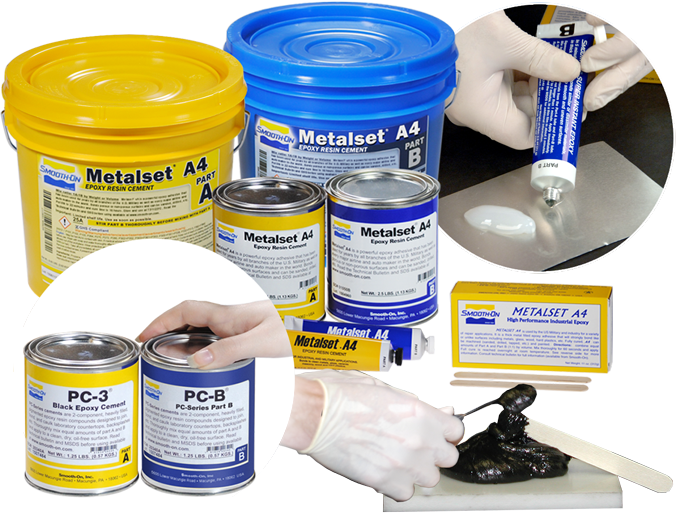
Beyond aerospace and automotive, epoxy adhesives are fundamental to the manufacturing of advanced composites used in wind turbine blades, sporting goods (e.g., tennis rackets, skis), marine vessels, and industrial equipment. They act as matrices, binding reinforcing fibers (carbon, glass, aramid) into a rigid structure, transferring loads efficiently across the material. This enables the creation of structures with exceptional strength-to-weight ratios and design flexibility. In general manufacturing, epoxies are used for tool bonding, fixture assembly, and repairs, offering robust and long-lasting solutions for demanding industrial environments. Their role in creating durable, high-performance materials is central to modern engineering and product development.
Performance Characteristics and Selection Criteria
Selecting the right epoxy adhesive for a specific technological application requires a deep understanding of its performance characteristics and how they align with operational demands. Key considerations include mechanical strength, environmental resistance, thermal properties, and cure kinetics.
Strength, Durability, and Environmental Resistance
Epoxy adhesives are renowned for their high shear and tensile strength, often exceeding the strength of the substrates they bond. This makes them ideal for structural applications. Durability is also a hallmark, with cured epoxies exhibiting excellent resistance to creep under sustained loads. Their robust chemical structure provides superior resistance to a wide range of chemicals, solvents, fuels, and acids, making them suitable for harsh industrial or automotive environments. Furthermore, epoxies generally offer good moisture resistance, preventing degradation in humid conditions, and can be formulated to withstand UV radiation for outdoor applications.
Thermal and Electrical Properties
The thermal performance of epoxy adhesives is a critical consideration. While standard epoxies typically perform well up to 100-150°C, high-temperature formulations can withstand continuous exposure to over 200°C, vital for aerospace or engine applications. Their glass transition temperature (Tg) is a key indicator of their high-temperature capabilities, marking the point at which the polymer transitions from a rigid, glassy state to a more rubbery, flexible state.
Electrically, most epoxy formulations are excellent insulators, making them ideal for protecting electronic components. However, for applications requiring electrical continuity, conductive epoxies (filled with silver, nickel, or carbon) are used, providing low electrical resistance. Conversely, thermally conductive epoxies, filled with ceramic or metallic powders, are engineered to facilitate heat transfer away from sensitive components, preventing overheating and improving reliability in power electronics and LED lighting.
Cure Mechanisms and Application Techniques
Epoxies are available in various cure mechanisms, influencing application methods and manufacturing processes. Room-temperature curing epoxies are convenient but may require longer cure times to achieve full strength. Heat-cured epoxies, often one-part systems that activate upon heating, offer faster curing, higher strength, and better high-temperature performance, suitable for industrial assembly lines. UV-cured epoxies, activated by ultraviolet light, provide extremely fast curing, ideal for high-speed, automated production processes, particularly in electronics or medical device manufacturing. Application techniques range from manual dispensing for small repairs to automated robotic systems for high-volume, precision bonding in manufacturing settings. Proper surface preparation (cleaning, abrasion, priming) is crucial for achieving optimal adhesion regardless of the chosen cure mechanism.
Innovations and Future Trends in Epoxy Technology
The field of epoxy adhesives is not static; continuous research and development are driving innovations to meet the evolving demands of advanced technological applications. These advancements focus on enhancing performance, enabling new functionalities, and addressing environmental concerns.
Smart Epoxies and Self-Healing Materials
Emerging trends include the development of “smart epoxies” with integrated functionalities. This encompasses self-healing epoxies, which incorporate microcapsules or vascular networks containing healing agents. When a crack forms, these capsules rupture, releasing the healing agent to polymerize and repair the damage, thereby extending the material’s lifespan and reducing maintenance costs, particularly in critical infrastructure or aerospace components. Other smart epoxies might exhibit sensing capabilities, changing properties (e.g., electrical resistance) in response to stress, temperature, or other environmental stimuli, offering real-time structural health monitoring.
Sustainability and Eco-Friendly Formulations
With increasing environmental awareness, a significant focus is on developing more sustainable epoxy formulations. This involves reducing reliance on petroleum-derived feedstocks by incorporating bio-based resins, derived from renewable resources like plant oils or lignin. Efforts are also directed towards creating low-VOC or solvent-free systems to improve worker safety and reduce environmental impact. Furthermore, research into recyclable or debondable epoxies that can be efficiently separated from composite materials at the end of their life cycle aims to facilitate material recovery and promote circular economy principles in manufacturing.
Integration with Additive Manufacturing
Epoxy resins are increasingly being adapted for additive manufacturing (3D printing) processes. Specialized photopolymer epoxy resins are used in stereolithography (SLA) and digital light processing (DLP) to create high-resolution, complex parts with excellent mechanical properties. These advancements enable the rapid prototyping and production of customized tools, jigs, and functional components that leverage the inherent strength and chemical resistance of epoxies. The ability to precisely control the geometry and internal structure of parts through 3D printing, combined with the performance of epoxy, opens new avenues for lightweighting, functional integration, and accelerated product development across various technological domains.
aViewFromTheCave is a participant in the Amazon Services LLC Associates Program, an affiliate advertising program designed to provide a means for sites to earn advertising fees by advertising and linking to Amazon.com. Amazon, the Amazon logo, AmazonSupply, and the AmazonSupply logo are trademarks of Amazon.com, Inc. or its affiliates. As an Amazon Associate we earn affiliate commissions from qualifying purchases.