
The relationship between wealth and spirituality has been a subject of profound inquiry for millennia, with ancient texts like the Bible offering extensive guidance. Far from a simplistic condemnation or endorsement, the biblical perspective on the rich is a tapestry of nuanced insights, presenting both accolades and stark warnings. For those navigating the complexities of modern finance, understanding these ancient principles can provide a powerful framework for ethical wealth accumulation, management, and distribution, aligning financial endeavors with a deeper sense of purpose and responsibility.
A Nuanced View of Wealth: Not Inherently Evil
A common misconception is that the Bible inherently views wealth as evil. This is a simplification that overlooks significant portions of scripture. The biblical narrative frequently portrays wealth as a potential blessing, a sign of divine favor, and a tool for good, provided it is acquired and managed justly.
Blessings and Divine Favor
Throughout the Old Testament, prosperity and riches are often depicted as rewards for obedience, diligence, and faithfulness. Figures like Abraham, Isaac, Jacob, and King Solomon were immensely wealthy individuals, whose riches were, at times, explicitly attributed to God’s blessing. Their stories suggest that wealth itself is not inherently sinful; rather, it is the heart’s posture towards that wealth, its source, and its use, that determines its moral standing. Wealth, in this context, can be seen as a tangible manifestation of God’s provision, empowering individuals and communities to thrive and fulfill their divine calling. It underscores the idea that financial abundance can be a legitimate outcome of living in alignment with divine principles, hard work, and wise stewardship.
Responsibility and Stewardship
Crucially, the Bible consistently couples wealth with immense responsibility. Rich individuals are not just owners but rather stewards of the resources entrusted to them. This concept of stewardship is central to the biblical economic ethic. It implies that all possessions ultimately belong to God, and humans are merely managers of these resources. For the rich, this means a heightened obligation to manage their wealth wisely, not just for personal gain, but for the benefit of their families, communities, and the wider world. This responsibility extends to ethical business practices, fair treatment of employees, and charitable giving. Financial success, therefore, is not an end in itself but a means to fulfill a greater purpose, requiring diligent and accountable management.
The Dangers of Wealth: Idolatry and Oppression
While not inherently evil, wealth presents profound temptations and dangers that the Bible explicitly warns against. These warnings are not merely moralistic pronouncements but astute observations about human nature and the corrupting potential of unchecked financial power.
The Love of Money as a Root of Evil
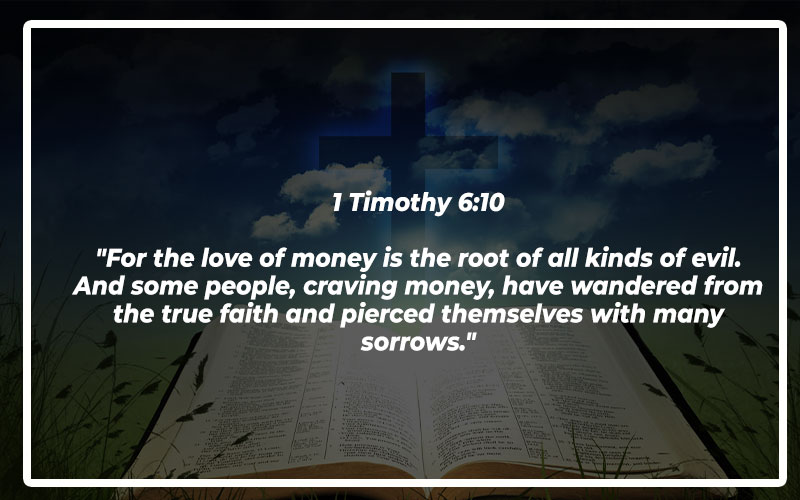
Perhaps the most famous biblical warning concerning wealth is found in 1 Timothy 6:10, which states, “For the love of money is a root of all kinds of evil.” It’s critical to note the emphasis is not on money itself, but on the love of money – an idolatrous attachment that supplants loyalty to God and ethical principles. When wealth becomes the primary pursuit, it can lead to greed, covetousness, deceit, and a relentless pursuit of more, often at the expense of others. This obsession can warp an individual’s priorities, corrupt their character, and alienate them from relationships, spiritual values, and ultimately, a meaningful life. For modern investors and business leaders, this serves as a potent reminder to regularly examine their motivations and ensure that financial goals remain aligned with broader ethical and humanistic values.
Warning Against Exploitation and Injustice
The Bible reserves its harshest condemnations for those who use their wealth to oppress the poor, exploit workers, or hoard resources unjustly. Prophets throughout the Old Testament and Jesus himself vehemently spoke against injustice perpetrated by the wealthy. Verses in James 5:1-6, for instance, deliver a scathing indictment against rich oppressors who defraud laborers of their wages. This highlights a critical aspect of biblical finance: wealth must be acquired and maintained through just means. Any accumulation of riches that comes at the cost of others’ suffering or through dishonest practices is severely condemned. This principle has profound implications for corporate social responsibility, fair labor practices, and ethical supply chains in today’s global economy. Businesses and investors are called to ensure their operations do not contribute to systemic injustice or exploit vulnerable populations.
Generosity and Social Responsibility: A Divine Mandate
A recurring theme in the biblical discourse on wealth is the imperative for generosity. The rich are consistently reminded of their obligation to share their abundance, particularly with the less fortunate, seeing it as an act of worship and justice.
Tithing and Offerings
The practice of tithing (giving a tenth of one’s income) and various offerings is a foundational principle of biblical finance. While often discussed in religious contexts, the underlying economic principle is a commitment to regular, proportionate giving. This discipline serves multiple purposes: it acknowledges a higher source of provision, cultivates a spirit of detachment from material possessions, and provides a systematic way to fund communal needs and support those who serve in ministry. For the wealthy, proportionate giving implies a greater absolute contribution, reflecting their larger capacity. This ancient practice offers a timeless model for philanthropic endeavors and regular charitable contributions, anchoring financial success in a commitment to giving back.

Care for the Poor and Vulnerable
Beyond specific religious contributions, the Bible places a strong emphasis on providing for the poor, the widow, the orphan, and the stranger. Jesus’ teachings, particularly the parable of the Good Samaritan and the judgment of the nations in Matthew 25, clearly link one’s eternal standing to how one treats the most vulnerable. For the rich, this means actively seeking out opportunities to alleviate poverty, support social welfare, and champion justice for marginalized communities. This isn’t merely charity; it’s presented as a core ethical obligation, a test of genuine faith, and a pathway to a righteous life. Modern financial planning for the wealthy, therefore, ought to integrate significant philanthropic strategies, impact investing, and direct support for social causes as integral components.
Investing in the Kingdom
The concept of “storing up treasures in heaven” (Matthew 6:19-21) encourages a long-term perspective on wealth management. While it metaphorically refers to spiritual priorities, it can also be interpreted to mean investing resources in endeavors that have eternal value – acts of charity, justice, and community building. This encourages a shift from purely self-serving financial accumulation to wealth deployment that aligns with broader human flourishing and societal good. For business leaders, this might translate into creating companies that offer valuable services, provide dignified employment, and contribute positively to society, rather than solely maximizing shareholder profit without regard for external impact.
Perspective on Riches: Eternal vs. Temporal
The biblical narrative consistently contrasts the fleeting nature of earthly riches with the enduring value of spiritual treasures. This perspective provides a powerful framework for prioritizing financial decisions.
Storing Up Treasures in Heaven
Jesus’ admonition to “not store up for yourselves treasures on earth, where moths and vermin destroy, and where thieves break in and steal. But store up for yourselves treasures in heaven…” is a radical call to re-evaluate the ultimate purpose of wealth. It’s not a prohibition against all earthly possessions, but a warning against placing ultimate security and identity in them. Earthly riches are temporary and vulnerable; true security and lasting satisfaction are found in cultivating virtues, serving others, and fostering a relationship with the divine. This perspective encourages financial prudence and long-term planning but discourages an idolatrous attachment to material assets. It suggests that while accumulating wealth is possible, the primary focus should be on how that wealth can be used to create lasting value, both for oneself and for others, beyond the material realm.
Contentment and Detachment from Material Possessions
A recurring theme is the call for contentment and a degree of detachment from material possessions, regardless of one’s wealth level. Hebrews 13:5 advises, “Keep your lives free from the love of money and be content with what you have.” This isn’t an endorsement of poverty but a spiritual discipline to prevent wealth from becoming an all-consuming master. For the rich, this means cultivating an internal freedom from the incessant desire for more, finding satisfaction not in accumulation, but in purpose, relationships, and generosity. It’s about recognizing that true security and happiness are not found in the size of one’s portfolio, but in a well-ordered life grounded in ethical principles and meaningful contributions.
Practical Implications for Modern Finance
The ancient biblical principles concerning the rich offer timeless wisdom that remains profoundly relevant for contemporary financial practices. They challenge conventional notions of success and profit, urging a more holistic and ethical approach to wealth.
Ethical Investing and Business Practices
The biblical emphasis on justice, fair treatment, and social responsibility directly informs the principles of ethical investing. Investors can choose to divest from companies engaged in exploitative labor, environmental damage, or morally questionable industries. Conversely, they can actively seek out opportunities to invest in businesses that align with ethical values, promote sustainability, foster employee well-being, and contribute positively to society. This approach moves beyond mere financial returns to consider the broader impact of capital, reflecting the steward’s responsibility to manage resources in a way that honors both human dignity and ecological integrity. For entrepreneurs and business leaders, it means building companies founded on integrity, transparency, and a genuine commitment to their stakeholders, not just their shareholders.
Financial Planning with Purpose
For wealthy individuals and families, biblical principles advocate for financial planning that extends beyond mere accumulation and preservation. It encourages a structured approach to philanthropy, generational wealth transfer with a focus on character and contribution, and the establishment of endowments or foundations dedicated to supporting causes aligned with justice and human flourishing. This involves crafting wills and estate plans that reflect a commitment to social responsibility, ensuring that wealth continues to serve a purpose beyond the individual’s lifetime. It transforms financial strategy from a purely personal endeavor into a legacy of positive impact.

Combating Consumerism and Materialism
In an era defined by consumerism, the biblical warnings against the love of money and the fleeting nature of earthly riches serve as a vital counter-narrative. For the rich, this means actively resisting the societal pressure to constantly acquire more, to define self-worth by possessions, or to engage in ostentatious displays of wealth. Instead, it promotes a lifestyle characterized by thoughtful consumption, generous giving, and a clear understanding that true fulfillment comes from meaningful relationships, purpose, and contribution, rather than endless acquisition. It encourages a critical evaluation of spending habits, prioritizing investments in experiences, relationships, and causes over transient material goods.
Ultimately, the Bible’s message to the rich is a complex invitation: to embrace wealth as a potential blessing and a powerful tool, while simultaneously guarding against its seductive dangers. It’s a call to stewardship, justice, generosity, and a perspective that values eternal treasures over fleeting earthly possessions, offering a compelling blueprint for ethical and purposeful financial living in any age.
aViewFromTheCave is a participant in the Amazon Services LLC Associates Program, an affiliate advertising program designed to provide a means for sites to earn advertising fees by advertising and linking to Amazon.com. Amazon, the Amazon logo, AmazonSupply, and the AmazonSupply logo are trademarks of Amazon.com, Inc. or its affiliates. As an Amazon Associate we earn affiliate commissions from qualifying purchases.