
Selecting the right pressure washer involves more than just picking the most powerful unit available. The optimal Pounds per Square Inch (PSI) for your needs is a crucial technical specification that dictates performance, efficiency, and safety. Understanding the nuances of pressure washer technology—from its core metrics to accessory compatibility and power source—is essential for making an informed investment that yields pristine results without damaging surfaces.
Understanding Pressure Washer Basics: PSI vs. GPM
Before delving into specific PSI recommendations, it’s vital to grasp the two fundamental metrics that define a pressure washer’s capabilities: PSI and Gallons Per Minute (GPM). Together, these figures quantify the machine’s true cleaning power.

The Role of PSI (Pounds per Square Inch)
PSI measures the force with which water exits the nozzle. A higher PSI indicates greater force, allowing the pressure washer to dislodge stubborn dirt, grime, and even old paint. Think of PSI as the “punch” behind the cleaning action. For instance, a unit rated at 2,000 PSI delivers 2,000 pounds of force onto every square inch of the surface being cleaned. This powerful blast is what makes pressure washing so effective at removing tough contaminants.
The Significance of GPM (Gallons Per Minute)
While PSI dictates the force, GPM quantifies the volume of water flowing through the system per minute. A higher GPM means more water is applied to the surface, which is critical for rinsing away loosened debris quickly and efficiently. If PSI is the “punch,” GPM is the “rinse.” A machine with high PSI but low GPM might blast dirt off, but it will take longer to clear the surface of the residue. Conversely, a high GPM with moderate PSI can still be very effective for general cleaning, as it efficiently flushes away larger areas of dirt.
The PSI x GPM Equation: Cleaning Power Units
The most comprehensive way to evaluate a pressure washer’s total cleaning capability is through its “Cleaning Power Units” (CPU), calculated by multiplying PSI by GPM. A higher CPU number indicates a more powerful and efficient cleaning machine overall. For example, a 2,000 PSI / 1.5 GPM unit provides 3,000 CPU, while a 2,800 PSI / 2.5 GPM unit delivers 7,000 CPU, demonstrating a significantly greater capacity for demanding tasks. Considering both metrics ensures you select a gadget that not only blasts dirt but also rinses it away effectively.
Matching PSI to Common Cleaning Tasks
The optimal PSI varies significantly depending on the surface you’re cleaning and the type of grime you’re tackling. Using a pressure washer with too high a PSI on a delicate surface can cause irreparable damage, while too low a PSI will prove ineffective for heavy-duty tasks, wasting time and resources.
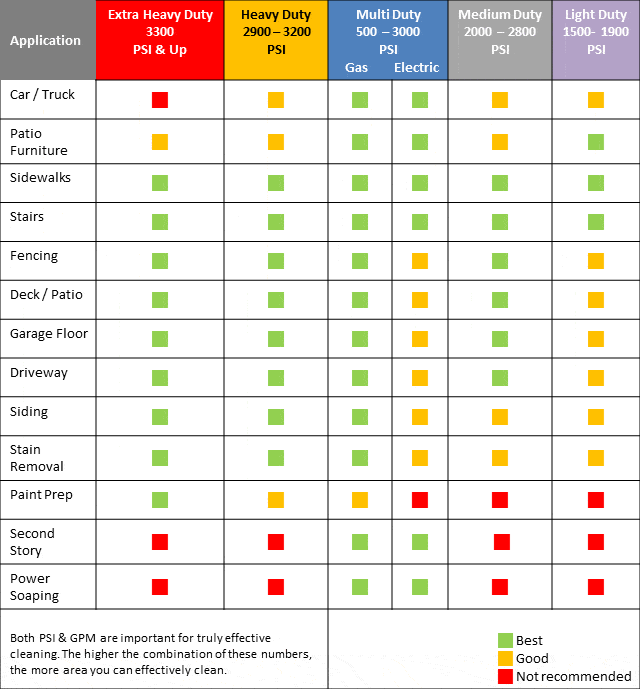
Light-Duty Cleaning (1300-1900 PSI)
For general household cleaning and lighter tasks, a pressure washer in this PSI range is typically sufficient. These units are often electric, making them quieter, lighter, and easier to store.
- Patio Furniture & Grills: Gently removes pollen, light dirt, and grease without stripping paint or damaging materials like plastic, wicker, or delicate powder coatings.
- Vehicles (Cars, Motorcycles, Bicycles): Ideal for washing away road salt, dust, and mud. Using the correct nozzle (a wider spray like 40-degree or soap nozzle) at a safe distance prevents paint damage.
- Small Decks & Patios: Effective for routine cleaning to remove mildew, algae, and surface dirt from wooden decks or concrete patios that aren’t heavily stained.
- Delicate Surfaces: Suitable for vinyl siding, screens, and outdoor equipment that could be marred by excessive force. Always start with a lower pressure and test on an inconspicuous area.
Medium-Duty Cleaning (2000-2800 PSI)
This range represents the sweet spot for many homeowners, offering a robust balance of power and versatility for a wider array of outdoor projects. Both electric and gas models are available in this category.
- Driveways & Sidewalks: Excellent for removing common stains from oil, rust, mud, and tire marks on concrete and asphalt. The higher PSI efficiently penetrates porous surfaces.
- Siding (Vinyl, Aluminum, Wood): Tackles accumulated grime, mold, and mildew on home exteriors. Caution is still advised, using appropriate nozzles and maintaining distance to avoid water intrusion behind siding.
- Fences (Wood, Vinyl): Prepares surfaces for staining or painting and removes unsightly green growth. For wood, lower PSI and a wider spray are recommended to prevent gouging.
- Decks (Larger/Stained): Effectively cleans larger wooden or composite decks, removing deep-seated dirt and preparing surfaces for sealant.
- Boats & RVs: Capable of cleaning hull grime, algae, and general buildup from these larger recreational vehicles, using care on painted or gel-coated surfaces.
Heavy-Duty Cleaning (2900-3300+ PSI)
These powerful machines are typically gas-powered and are designed for the most demanding cleaning tasks, often approaching professional-grade performance.
- Concrete Stripping & Paint Preparation: Essential for removing peeling paint, loose coatings, and deeply embedded stains from concrete, masonry, and other robust surfaces. High PSI effectively etches surfaces for new coatings.
- Deeply Embedded Grime & Oil Stains: Tackles severe oil spills, grease, and years of accumulated dirt on industrial floors, heavy machinery, or very old concrete.
- Removing Graffiti: Can be effective against certain types of graffiti on hard, non-porous surfaces, often requiring specialized detergents in conjunction with high pressure.
- Industrial & Commercial Applications: Suitable for large property maintenance, cleaning construction equipment, or preparing commercial spaces.
Electric vs. Gas: Power Source Considerations
The choice between an electric and a gas pressure washer is a key decision, influencing not only the available PSI and GPM but also portability, maintenance, noise levels, and overall user experience.
Electric Pressure Washers: Convenience and Control
Electric pressure washers are generally favored for lighter-duty tasks and are a popular choice for homeowners due to their ease of use and lower maintenance requirements.
- Pros: Quieter operation, no exhaust fumes, lighter weight for easy maneuverability, plug-and-play simplicity, lower initial cost, and less maintenance (no fuel, oil changes, or spark plugs).
- Cons: Limited power output (typically maxing out around 2,200-2,300 PSI), restricted by the length of the power cord and proximity to an electrical outlet, and generally less durable pumps (axial cams) compared to higher-end gas models.
- Ideal User: Apartment dwellers, those with smaller cleaning areas, or individuals who prioritize convenience and environmental friendliness for tasks like washing cars, patio furniture, and light deck cleaning.
Gas Pressure Washers: Unmatched Power and Mobility
Gas-powered pressure washers offer superior power and freedom of movement, making them suitable for larger properties and more intensive cleaning projects.
- Pros: Significantly higher PSI and GPM ratings (up to 4,000+ PSI), cordless operation for complete mobility across large areas, faster cleaning times due to greater power, and more robust pump types (triplex plungers) for extended lifespan.
- Cons: Considerably louder, produce exhaust fumes requiring good ventilation, heavier and bulkier, require more maintenance (fuel, oil changes, spark plugs, winterization), and generally have a higher initial cost.
- Ideal User: Homeowners with extensive driveways, large decks, or challenging stains; professionals requiring high performance for commercial applications; and those who need to clean remote areas without electrical access.
Beyond PSI: Essential Features and Accessories
While PSI is a primary consideration, a pressure washer’s overall utility and effectiveness are significantly enhanced by its design features and available accessories. Paying attention to these technical details can greatly improve your cleaning efficiency and the longevity of your gadget.
Nozzle Types and Their Applications
Nozzles are critical for controlling the spray pattern and intensity, directly impacting cleaning effectiveness and preventing damage. They are color-coded for easy identification:
- 0-degree (Red): A concentrated, pinpoint stream for blasting extremely stubborn spots or reaching high areas. Use with extreme caution as it can easily damage surfaces.
- 15-degree (Yellow): A narrow, powerful fan spray for intensive cleaning of hard surfaces, like concrete, removing paint, or deep stains.
- 25-degree (Green): A wider, general-purpose fan spray, suitable for most routine cleaning tasks on decks, patios, and driveways.
- 40-degree (White): The widest, most gentle fan spray, ideal for delicate surfaces like vehicles, windows, or light siding.
- Soap (Black) Nozzle: Designed to apply detergent at low pressure, covering a wide area before high-pressure rinsing.
Beyond these standard nozzles, turbo nozzles (rotating 0-degree stream for faster cleaning) and surface cleaners (rotary spray bars under a dome for even, streak-free cleaning of flat surfaces) are valuable technical upgrades.
Detergent Tanks and Injection Systems
Many pressure washers come with an onboard detergent tank or a siphoning tube. These systems allow you to apply specialized pressure washer soaps, which can significantly improve cleaning results, especially for mold, mildew, or grease. Ensure the system is easy to fill and clean.
Hose Length and Durability
A longer hose (25-50 feet) provides greater reach, reducing the need to frequently move the pressure washer unit. Look for non-marring, kink-resistant hoses for improved user experience and longevity. The hose material (e.g., PVC vs. rubber) also impacts flexibility and durability.
Wheels and Portability
For heavier gas units, robust wheels and an ergonomic handle are crucial for easy transport across varied terrains. Even electric models benefit from wheels for convenient storage and movement.
Safety Features and Best Practices
Modern pressure washers often include safety features like trigger locks and automatic shut-off systems when the trigger is released. Always wear appropriate personal protective equipment (safety glasses, gloves, closed-toe shoes) and maintain a safe distance from the nozzle. Never point the wand at people or animals.
Making the Right Investment: Longevity and Maintenance
A pressure washer is a significant gadget investment. Understanding the technical specifications related to build quality and considering maintenance practices can ensure your unit delivers reliable performance for years.
Pump Quality: Axial vs. Triplex
The pump is the heart of a pressure washer, and its type greatly influences durability and lifespan:
- Axial Cam Pumps: Common in electric and lighter-duty gas models. They are compact and require less maintenance but have a shorter lifespan (around 100-200 hours of use) as they generate more friction and heat. They are not designed for continuous, prolonged use.
- Triplex Plunger Pumps: Found in higher-end gas models and commercial units. These are more robust, designed for heavy use, and can be rebuilt, offering a significantly longer lifespan (500-1000+ hours). They are more efficient and generate less heat, making them ideal for professionals or extensive home use.
Material Durability: Brass vs. Aluminum
The material of the pump head is another indicator of quality. Brass pump heads are more durable and resistant to corrosion than aluminum, which is typically found in entry-level models.

Storage and Winterization Tips
Proper care extends the life of any pressure washer. For gas units, draining fuel or using a fuel stabilizer is essential for off-season storage. Both electric and gas units require draining all water from the pump, hose, and wand to prevent freezing and damage, especially in colder climates. Using a pump saver solution before storage can also lubricate and protect internal components, ensuring your tech gadget is ready for optimal performance when the next cleaning season arrives.
aViewFromTheCave is a participant in the Amazon Services LLC Associates Program, an affiliate advertising program designed to provide a means for sites to earn advertising fees by advertising and linking to Amazon.com. Amazon, the Amazon logo, AmazonSupply, and the AmazonSupply logo are trademarks of Amazon.com, Inc. or its affiliates. As an Amazon Associate we earn affiliate commissions from qualifying purchases.