
The Peace Dollar Series: A Historical Context
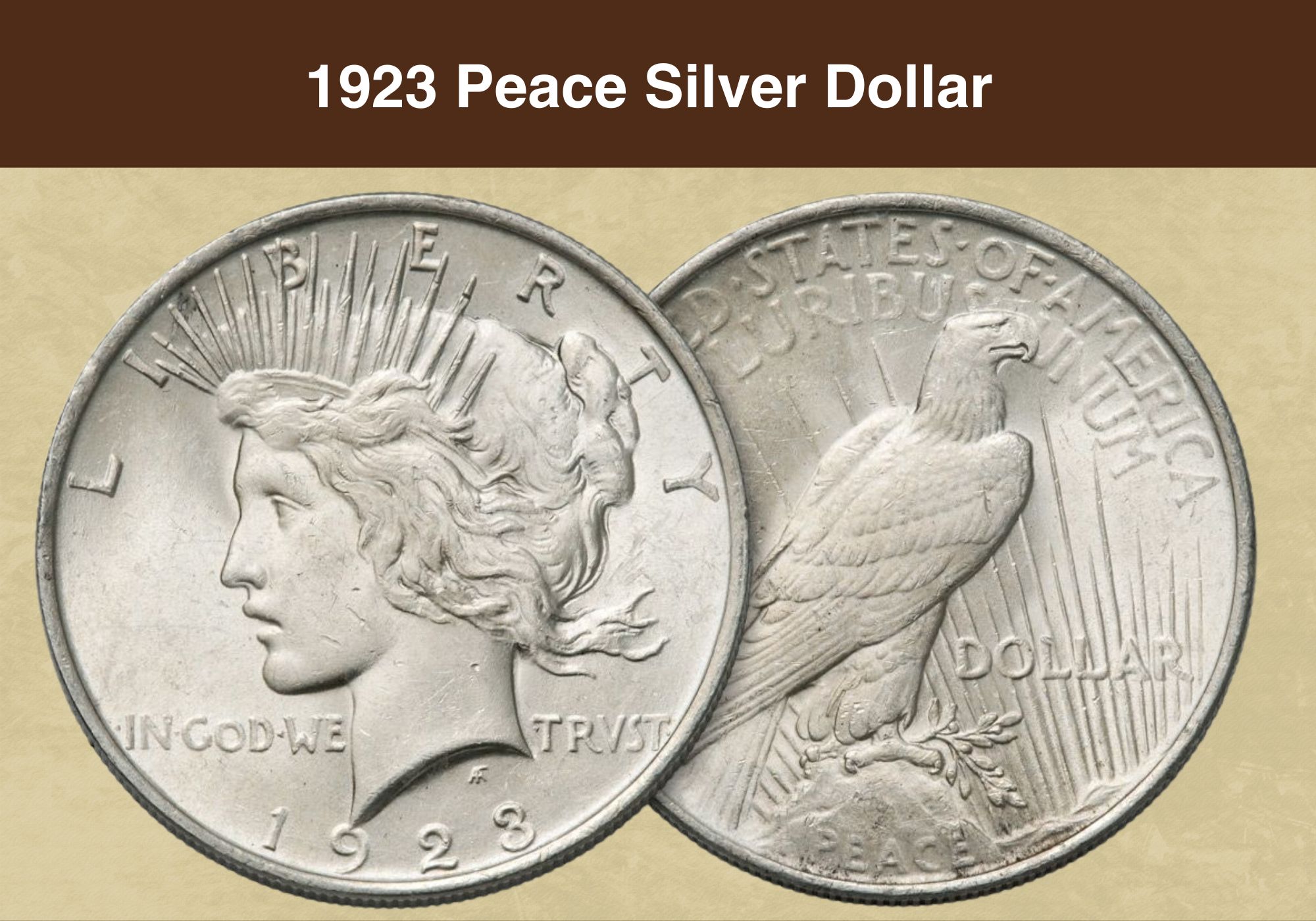
The 1923 silver dollar is an integral part of the Peace Dollar series, a captivating collection often sought after by numismatists and investors alike. Born from the aftermath of World War I, this coin was minted to commemorate the period of peace that followed the “war to end all wars.” Its design, chosen through a competition, was crafted by Anthony de Francisci and officially began production in late 1921. The series ran until 1928, saw a brief resurgence in 1934 and 1935, and has since become a cherished symbol of an optimistic era in American history.
Birth of an Icon: Post-War Commemoration
The Peace Dollar’s inception was unique. Unlike most coins introduced primarily for everyday commerce, its creation was driven by a strong public sentiment for a coin symbolizing peace. The Pittman Act of 1918 mandated the melting of millions of Morgan Dollars to finance the war effort, creating a need for a new silver dollar design once wartime silver reserves were replenished. This historical mandate provided the perfect opportunity to introduce a coin with profound symbolic meaning. Its majestic design, featuring an eagle perched on a mountain with an olive branch on the reverse and a serene Lady Liberty on the obverse, resonated deeply with a nation recovering from conflict.
General Characteristics and Design
Each Peace Dollar, including the 1923 issue, comprises 90% silver and 10% copper, weighing 26.73 grams with a diameter of 38.1 millimeters. The design’s high relief on early strikes, particularly the 1921 issue, was challenging for minting presses and often resulted in coins lacking sharp details, especially on Liberty’s hair and the eagle’s feathers. By 1922, the design was slightly modified to a lower relief, which facilitated better strikes and greater production efficiency, making subsequent issues, like the 1923, generally better struck than their 1921 predecessor. However, even with the lower relief, finding a 1923 Peace Dollar with an exceptional, full strike remains a key factor in its rarity and value.
Defining Rarity in the Numismatic Market
The concept of “rarity” in numismatics extends far beyond simple mintage figures. While a low initial production number is a foundational element, true rarity is a multifaceted phenomenon shaped by survival rates, condition, demand, and specific characteristics that differentiate one coin from its brethren. For the savvy investor or collector, understanding these nuances is paramount to identifying genuinely scarce and valuable assets.
Beyond Mintage: The True Meaning of Scarcity
Many novice collectors mistakenly equate rarity solely with a low original mintage number. While low mintage certainly contributes to scarcity, it doesn’t tell the whole story. A coin might have had a high mintage but faced massive meltings due to changes in silver prices or government policies. Conversely, a coin with a relatively modest mintage might be considered common if most examples survived in circulated condition and hold little premium. The true measure of scarcity lies in the number of surviving examples that meet a particular standard, especially in uncirculated or high-grade conditions. This “survival rate” is heavily influenced by historical events, economic conditions, and how coins were stored and handled over decades.
The Critical Role of Condition and Grade
Perhaps no factor influences a coin’s rarity and value more significantly than its condition, or “grade.” A coin’s grade is a universally accepted numerical and descriptive scale, typically ranging from Poor (P-1) to Perfect Mint State (MS-70). A coin might be common in heavily circulated grades but become exceedingly rare and valuable in uncirculated (Mint State) conditions, particularly at the higher end of the MS scale (e.g., MS-65 and above). Professional grading services like PCGS (Professional Coin Grading Service) and NGC (Numismatic Guaranty Corporation) provide objective assessments, encapsulating coins in tamper-evident holders and assigning them a precise grade. This standardization is critical for liquidity and confidence in the numismatic market, transforming subjective evaluation into a verifiable financial asset.
Unpacking the Rarity of the 1923 Peace Dollar
When we apply these numismatic principles to the 1923 silver dollar, we begin to understand why certain examples command significant premiums, elevating them from mere collectibles to valuable investment pieces. The interplay of mintage, survival, and especially condition, sculpts its market desirability.
Mintage Figures: A Starting Point
The 1923 Peace Dollar was produced at three U.S. Mints: Philadelphia (no mint mark), Denver (D), and San Francisco (S).
- Philadelphia (no mint mark): 30,800,000 minted.
- Denver (D mint mark): 5,670,000 minted.
- San Francisco (S mint mark): 19,020,000 minted.
At first glance, the Philadelphia issue appears abundant, while the Denver mintage is considerably lower, suggesting it might be the “key date” for 1923. However, initial mintage is only the beginning of the story.
Survival Rates and Circulated Specimens
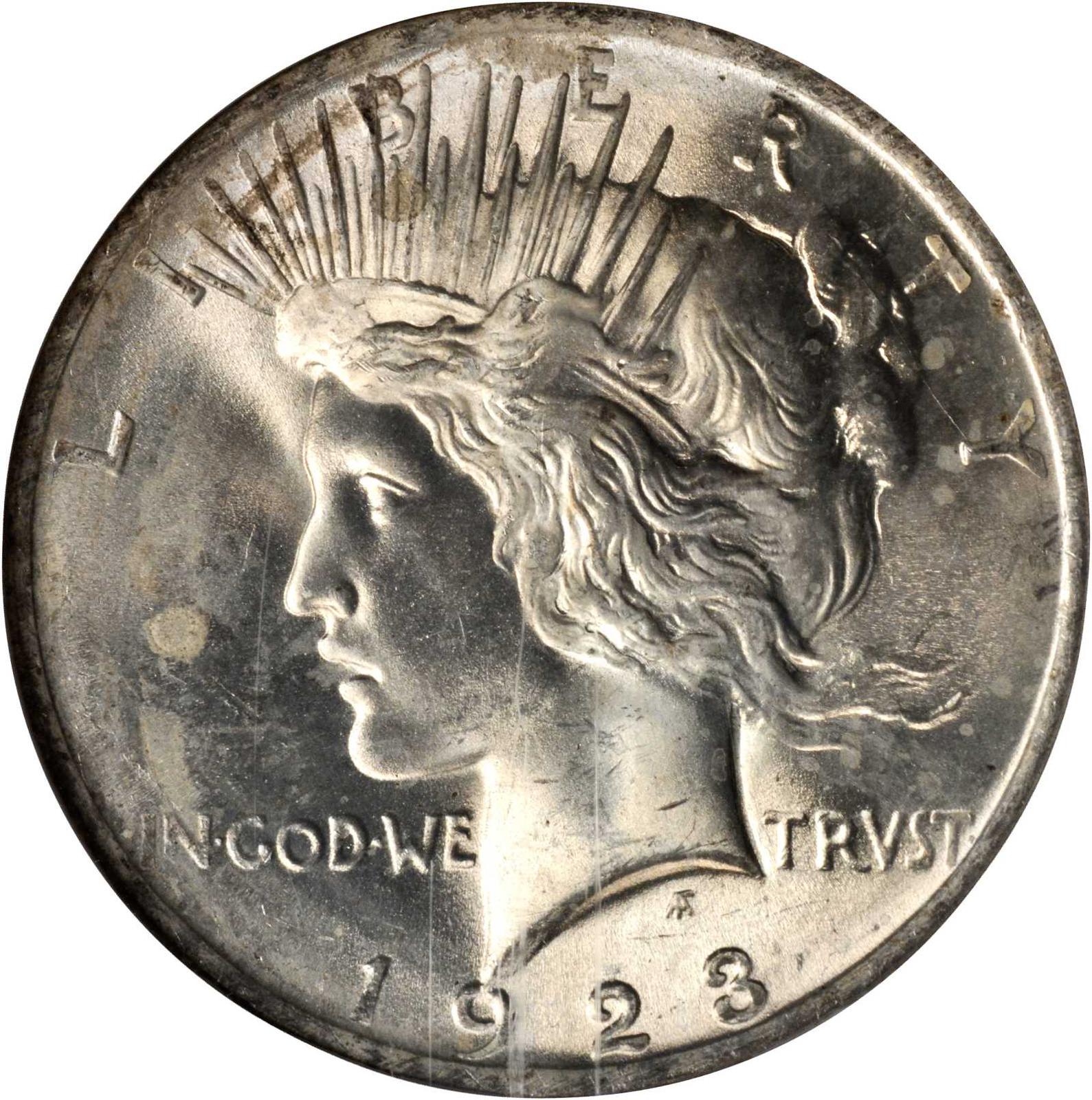
Despite its large initial mintage, millions of 1923 Philadelphia Peace Dollars entered circulation, experiencing heavy wear. Additionally, a significant number of Peace Dollars from the early 1920s, especially those stored in Treasury vaults, were later melted down due to changing silver prices and lack of demand for silver dollars in commercial transactions, particularly outside the western U.S. As a result, while circulated examples of the 1923-P are readily available and affordable, finding examples in higher circulated grades (e.g., AU-58, About Uncirculated) or, more importantly, in Mint State (uncirculated) condition, becomes progressively challenging. The 1923-D, with its lower mintage, is indeed rarer in all conditions compared to the 1923-P, but its survival rate in high grades also makes it significantly more valuable. The 1923-S sits somewhere in between, having a substantial mintage but also suffering from significant circulation and melting.
The Premium for Pristine Examples
This is where the true rarity and financial value of the 1923 Peace Dollar become evident. While common in lower grades, coins that escaped circulation entirely and were stored properly are highly prized.
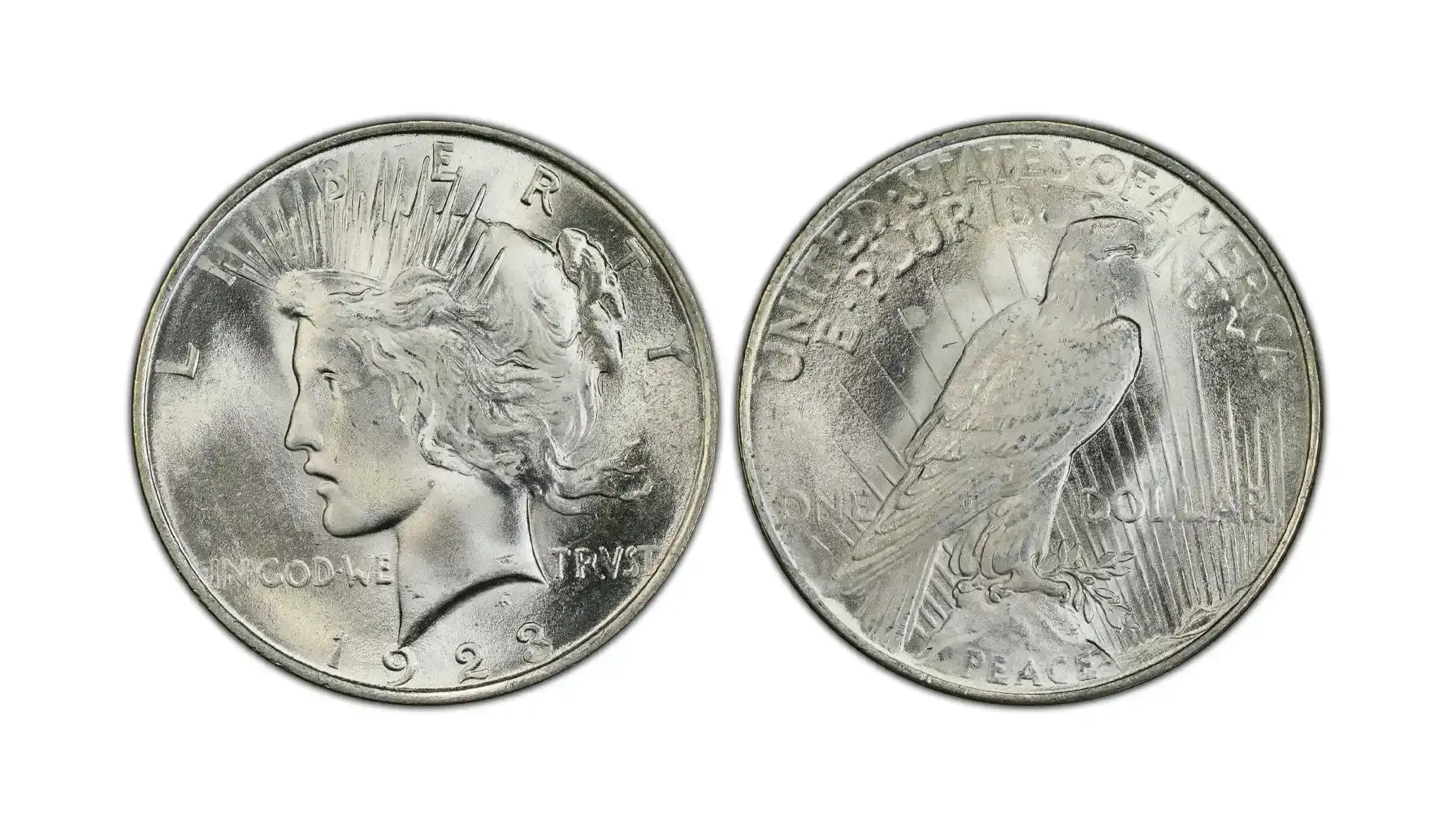
- Mint State Grades (MS-60 to MS-70): A 1923 Peace Dollar graded MS-60 (uncirculated) can be worth substantially more than a heavily circulated one. However, the exponential increase in value occurs as the grade climbs. An MS-63 example is significantly more valuable than an MS-60, and an MS-65 (Gem Uncirculated) is often many multiples of an MS-63. For 1923, reaching grades like MS-66 or MS-67 is exceptionally rare, and these specimens command five-figure sums, sometimes even higher for a particularly superb strike or aesthetic appeal. The reason is simple: so few survived in such pristine condition, free from bag marks, abrasions, or toning issues.
- The “Full Strike” and “Blast White” Appeal: Beyond the numerical grade, specific characteristics elevate a coin’s desirability. A “full strike” refers to a coin where all design elements are sharply detailed, particularly Liberty’s hair and the eagle’s feathers, areas notoriously weak on many Peace Dollars. A coin that is “blast white” retains its original brilliant silver luster, free from unattractive toning or haziness, further enhancing its visual appeal and rarity. These attributes, often noted on grading labels, signify superior quality and command higher prices within a given grade. For example, a “full strike” MS-64 1923-S might be worth more than a poorly struck MS-65.
Scarce Varieties and Error Coins
While the 1923 Peace Dollar is not widely known for major die varieties or dramatic errors comparable to some other coin series, subtle variations can exist and impact value. Collectors constantly search for minor die cracks, repunched mint marks (RPMs), or doubled dies (DDO/DDR). Though not “key date” errors for this year, discovering a significant, well-documented variety can make an individual coin far rarer and more valuable than its standard counterparts. The rarity here is tied to the extremely limited number of surviving examples of that specific variant, often appealing to highly specialized collectors.
The Investment Landscape for the 1923 Silver Dollar
Investing in rare coins, particularly the 1923 Peace Dollar, represents a unique asset class that blends historical appreciation with tangible value. Understanding its place in the broader financial market is crucial for both collectors and astute investors.
Numismatics as an Asset Class
Rare coins, often referred to as “hard assets,” can serve as a diversification tool within an investment portfolio. Unlike stocks or bonds, their value is not solely tied to corporate performance or interest rates. Instead, it’s driven by factors like intrinsic metal value, historical significance, artistic merit, and the immutable laws of supply and demand within the specialized numismatic market. High-grade 1923 Peace Dollars, especially those graded MS-65 or higher, have demonstrated strong appreciation over decades, often outperforming traditional investments during periods of economic uncertainty. They offer a tangible store of wealth, resistant to many of the pressures faced by paper assets.
Factors Influencing Market Value and Appreciation
Several dynamics dictate the financial trajectory of a 1923 Peace Dollar:
- Supply and Demand Dynamics: The finite supply of high-grade examples, coupled with a growing global base of affluent collectors, inherently drives demand. As more collectors enter the market or upgrade their existing collections, competition for top-tier coins intensifies, pushing prices upward.
- Economic Conditions and Precious Metals Prices: While a coin’s numismatic value often far exceeds its melt value, the underlying price of silver can still influence market sentiment. During periods of high inflation or economic instability, investors often turn to tangible assets, including precious metals and rare coins, as a hedge, which can buoy prices across the board. However, the rarity and grade premiums typically ensure that a rare 1923 Peace Dollar’s value isn’t solely beholden to the fluctuating spot price of silver.
- The Role of Professional Grading Services: The legitimacy and liquidity of the rare coin market rely heavily on trusted third-party grading services like PCGS and NGC. Their objective evaluation provides buyers with confidence, standardizes values, and creates a transparent market where assets can be bought and sold efficiently. A rare 1923 Peace Dollar without professional certification will generally trade at a significant discount, if at all, to its graded counterpart.
Strategies for Collectors and Investors
For those considering the 1923 Peace Dollar as an investment, a discerning approach is essential. Focus on acquiring coins in the highest possible grade that your budget allows, prioritizing those with strong strikes and original luster. For the 1923-D, even lower Mint State grades can be valuable due to its scarcer mintage. For the 1923-P and 1923-S, reaching MS-65 and above is where true investment-grade rarity resides. Understanding population reports from grading services (which show how many examples exist at each grade level) can help identify genuinely scarce items. Consult reputable dealers and auction houses, and always insist on professionally graded and authenticated coins to protect your investment.
Conclusion: A Multifaceted Rarity
The rarity of a 1923 silver dollar is not a simple calculation but a complex interplay of historical mintage figures, the brutal realities of circulation and melting, and critically, its condition and aesthetic appeal today. While millions were initially struck, only a tiny fraction survived in the pristine, uncirculated grades that define true numismatic rarity and command significant investment premiums. The discerning collector or investor understands that a 1923 Peace Dollar in MS-65 or higher is not just a piece of history, but a testament to its improbable survival and a tangible asset with a compelling financial trajectory within the specialized and vibrant market of numismatics. Its story embodies the very essence of what makes a coin truly rare and valuable.
aViewFromTheCave is a participant in the Amazon Services LLC Associates Program, an affiliate advertising program designed to provide a means for sites to earn advertising fees by advertising and linking to Amazon.com. Amazon, the Amazon logo, AmazonSupply, and the AmazonSupply logo are trademarks of Amazon.com, Inc. or its affiliates. As an Amazon Associate we earn affiliate commissions from qualifying purchases.