
The quest for the “ideal” barrel length in any firearm, particularly the ubiquitous .22 Long Rifle (22LR), is a nuanced discussion that transcends simple metrics. Far from a one-size-fits-all answer, the optimal barrel length is a sophisticated interplay of ballistic performance, handling characteristics, and specific application. For the technically-minded enthusiast, understanding these intricate dynamics is key to unlocking the full potential of this remarkably versatile cartridge.
The Fundamentals of Barrel Length and Ballistics
At its core, a firearm barrel serves to guide the projectile and allow the expanding gases from the burning propellant to accelerate it to maximum velocity. However, the efficiency of this process is not linear, particularly with the 22LR.
Understanding the 22LR’s Propulsion
The 22LR cartridge contains a relatively small powder charge compared to centerfire rounds. This propellant burns rapidly, producing a burst of high-pressure gas that pushes the bullet down the barrel. Unlike larger cartridges where propellant might still be burning well down a longer barrel, the 22LR’s powder charge often achieves full combustion within a relatively short barrel section—typically somewhere between 10 to 14 inches, depending on the specific powder blend and charge weight. Beyond this point, the primary force driving the bullet becomes the residual gas pressure, which continuously drops as the bullet travels further.
The Point of Diminishing Returns
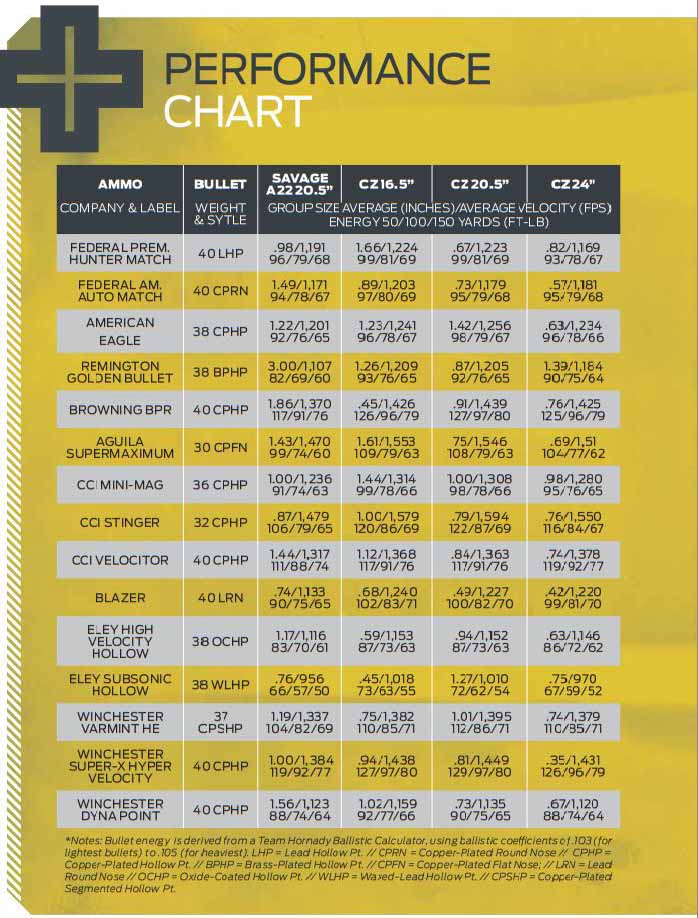
This rapid combustion and gas expansion characteristic leads directly to the concept of diminishing returns. As barrel length increases, the bullet gains velocity. However, a critical inflection point is reached where the benefits of continued gas expansion are eventually outweighed by the increasing friction between the bullet and the rifling. Once the gas pressure drops below a certain threshold, the drag on the bullet within a longer barrel can actually begin to slow it down, or at least cease to provide any significant additional acceleration. For most standard 22LR ammunition, this peak velocity is often observed in barrels ranging from 16 to 18 inches.
Velocity: The Primary Metric
For many, velocity is the most tangible performance metric, directly influencing trajectory, energy, and downrange effectiveness.
The Velocity Curve
Testing universally shows that 22LR velocity generally increases with barrel length up to a certain point. Starting from very short barrels (e.g., 2-4 inches), velocity gains are substantial with each additional inch. This rate of gain typically slows as the barrel lengthens. For instance, an increase from 4 inches to 8 inches might yield a significant jump in feet per second (FPS), whereas the jump from 16 inches to 20 inches might be considerably smaller, perhaps only adding 10-30 FPS. The optimal length for maximizing velocity typically hovers around 16-18 inches for standard and high-velocity 22LR loads. Beyond this, further length additions often provide minimal, if any, velocity benefit.
Beyond Peak Velocity: Friction and Deceleration
While counter-intuitive to some, very long 22LR barrels (e.g., 24-28 inches) can actually lead to a slight reduction in muzzle velocity compared to barrels in the 16-18 inch range. This phenomenon is attributed to the bullet experiencing greater frictional drag within the extended barrel once the gas pressure has sufficiently dissipated. The small charge of powder in a 22LR simply cannot sustain propulsive force over an excessively long tube without being overcome by friction. This is why high-performance 22LR firearms, even those designed for precision, rarely feature barrels extending far beyond 20 inches. Different ammunition types also interact uniquely with barrel length. Subsonic ammunition, designed to stay below the speed of sound, often benefits from slightly shorter barrels (around 10-14 inches) to ensure the bullet remains subsonic, especially for suppressed applications where velocity is critical to maintaining a quiet report.
Accuracy: Dispelling Myths and Understanding Realities
Accuracy is often conflated with barrel length, but the relationship is more nuanced than commonly believed.
Barrel Length vs. Mechanical Accuracy
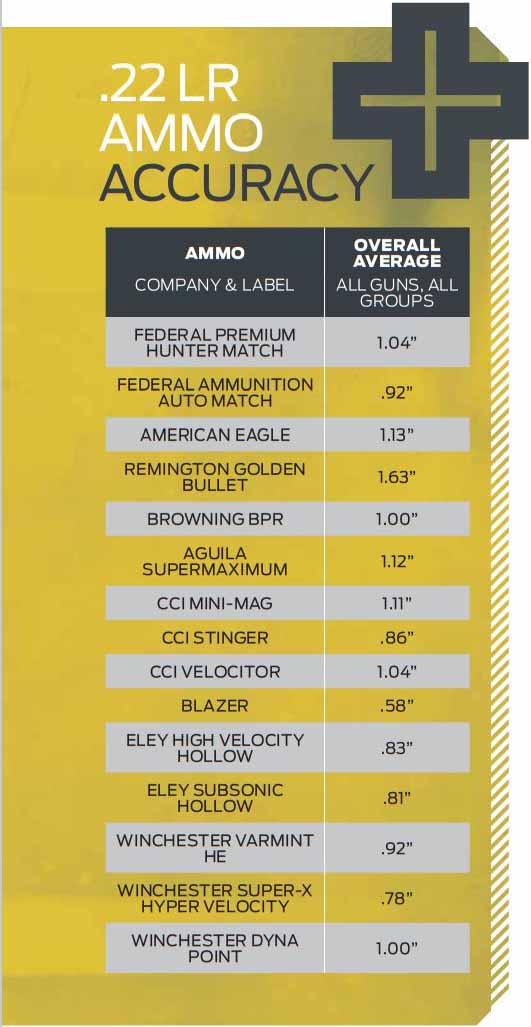
It’s a common misconception that a longer barrel inherently means greater mechanical accuracy (the rifle’s ability to consistently place shots in a tight group). In reality, the intrinsic mechanical accuracy of a 22LR firearm is primarily determined by several critical factors: the quality of the barrel steel, the precision of the bore and rifling, the consistency of the chamber dimensions, the rigidity of the barrel, and the overall manufacturing tolerances of the action and stock interface. A short, high-quality match-grade barrel can easily outperform a long, poorly manufactured one. Vibrational consistency (barrel harmonics) also plays a role, with stiffer, often shorter and thicker, barrels tending to vibrate less predictably, which can improve shot-to-shot consistency.
The Role of Sight Radius
Where barrel length does significantly impact practical accuracy for the shooter is through its effect on sight radius. When using open (iron) sights, a longer barrel provides a greater distance between the front and rear sights. This extended sight radius magnifies any aiming error, making precise alignment easier to achieve. Consequently, a shooter using iron sights on a rifle with a 20-inch barrel will generally find it easier to shoot more accurately than with a 10-inch barrel, assuming all other factors are equal. This is a benefit to the human operator’s precision, not an inherent enhancement of the firearm’s mechanical grouping ability. For firearms equipped with optics (scopes or red dots), sight radius becomes irrelevant, and therefore, barrel length’s impact on practical accuracy is negligible in this context.
Barrel Harmonics and Rigidity
Every barrel vibrates when a shot is fired, a phenomenon known as barrel harmonics. These vibrations affect the barrel’s position at the exact moment the bullet exits the muzzle, influencing the point of impact. While custom gunsmithing can tune a barrel’s harmonics, a well-designed, rigid barrel—regardless of specific length—will exhibit more consistent harmonics. Thicker barrels tend to be more rigid than thin barrels of the same length, reducing whip and vibration. Shorter barrels, by their nature, are generally more rigid than longer ones, assuming similar profiles, which can contribute to more consistent shot placement.
Handling, Ergonomics, and Practical Considerations
Beyond ballistic performance, the practical usability of a 22LR firearm is heavily influenced by its barrel length.
Weight and Balance
Longer barrels naturally add more weight to the firearm, and crucially, they shift the balance point forward. While this front-heavy balance can feel steadier for some shooters when shooting from a rest or bipod, it makes the firearm less nimble and more challenging to hold steadily for extended periods during off-hand shooting. Conversely, shorter barrels result in a lighter, more centrally balanced firearm that is easier to maneuver and hold without support, making them popular for general plinking or youth shooters.
Maneuverability and Storage
The overall length of a firearm is largely dictated by its barrel length. A rifle with a 24-inch barrel will be significantly longer than one with a 16-inch barrel. This impacts everything from transport and storage in gun cases or vehicles to maneuverability in confined spaces like thick brush during hunting, small shooting lanes at an indoor range, or when moving through an obstacle course in a rimfire competition. Shorter barrels offer distinct advantages in portability and ease of handling.
Sound Signature and Suppression
The length of the barrel profoundly impacts the firearm’s sound signature. A shorter barrel allows the propellant gases to exit the muzzle earlier, and often at higher pressure, resulting in a louder report. This is particularly noticeable with standard and high-velocity ammunition. When considering a suppressor, barrel length becomes even more critical. Shorter barrels (typically 4-12 inches) are popular for suppressed 22LR firearms, as they help keep the overall length manageable once the suppressor is attached. Furthermore, for optimal sound reduction with standard velocity ammunition (which is generally subsonic), ensuring the barrel length does not cause the bullet to exceed the speed of sound is key. Some shooters even opt for specific barrel lengths (e.g., 4.5 inches or 10.5 inches) that are known to keep most high-velocity ammunition subsonic, transforming it into “quiet” ammo without needing special subsonic loads.
Optimizing for Specific Applications
The “ideal” barrel length ultimately depends on the intended use.
Precision Target Shooting
For dedicated precision target shooting, especially in disciplines like benchrest or Olympic-style rimfire, barrels often fall into the 18-24 inch range. The rationale here is less about maximizing velocity (though it’s a consideration) and more about achieving the utmost consistency. Longer, heavy barrels are favored for their rigidity and stability, which helps mitigate barrel harmonics and provides a perceived steadiness for the shooter. The longer sight radius, if iron sights are used, is also a significant benefit for practical accuracy.
Hunting and Pest Control
Hunters typically seek a balance of portability, sufficient velocity for ethical kills, and reasonable accuracy. Barrels in the 16-20 inch range are very common for 22LR hunting rifles. This length provides good velocity to ensure adequate energy transfer at typical rimfire hunting distances while remaining maneuverable enough for field use. The ability to mount a scope without feeling overly cumbersome is also a key factor.
Plinking and General Purpose
For casual plinking, range fun, or general-purpose use, shorter, lighter barrels (16-18 inches) are highly desirable. They offer excellent maneuverability, are less fatiguing to shoot for extended periods, and are easier to transport. The minor loss of velocity compared to a 20-inch barrel is negligible for these applications, and the handling benefits far outweigh any ballistic trade-offs. The 16-inch barrel is particularly popular due to legal minimum length requirements in many jurisdictions, making it the shortest practical length for a non-NFA (National Firearms Act) rifle.

Suppressed Applications
When using a sound suppressor, barrel length becomes a critical determinant of the firearm’s overall length and sound performance. Very short barrels, often ranging from 4.5 inches to 12 inches, are prevalent. These lengths allow the combined barrel-plus-suppressor unit to remain relatively compact. For maximum sound reduction with standard ammunition, a barrel length that keeps the bullet subsonic is paramount. This often means carefully matching ammunition to barrel length, or specifically choosing a barrel length known to achieve this across a wide range of standard velocity loads.
In conclusion, there is no single “ideal” barrel length for the 22LR. Instead, there’s an optimal length for specific purposes, balancing ballistic performance, shooter ergonomics, and practical considerations. Understanding these trade-offs empowers the user to select or configure a 22LR firearm that is perfectly suited to their individual needs and preferences.
aViewFromTheCave is a participant in the Amazon Services LLC Associates Program, an affiliate advertising program designed to provide a means for sites to earn advertising fees by advertising and linking to Amazon.com. Amazon, the Amazon logo, AmazonSupply, and the AmazonSupply logo are trademarks of Amazon.com, Inc. or its affiliates. As an Amazon Associate we earn affiliate commissions from qualifying purchases.