
The athletic footwear industry is a testament to specialized engineering, where every curve, material, and stud pattern is meticulously designed to optimize performance for a specific sport. While football and baseball cleats might appear similar to the casual observer, they represent distinct technological marvels, each precisely calibrated to the unique biomechanical demands and playing conditions of their respective games. Understanding these differences goes beyond mere aesthetics; it delves into the core principles of traction, support, and agility, showcasing sophisticated material science and design methodologies at play.
The Fundamental Engineering: Sport-Specific Demands
The primary distinction between football and baseball cleats stems from the fundamental movements and forces exerted in each sport. Football is a game of explosive, multi-directional movements: quick cuts, lateral shuffles, sudden stops, powerful pushes, and often high-impact collisions. Players need to accelerate and decelerate rapidly, change direction on a dime, and maintain stability during physical contact, all while playing on varying turf conditions, from natural grass to artificial fields.
Baseball, conversely, emphasizes rotational power, linear speed, and precise, controlled movements. Batters generate immense torque through their feet and hips; pitchers require stable pivot points and strong push-offs; and base runners need maximum linear acceleration and confident stops. While agility is important, the predominant forces are rotational for hitting/pitching and forward-backward for running and fielding, on surfaces that are typically a mix of dirt and grass. This divergence in athletic requirements dictates vastly different engineering approaches for their respective footwear.
Sole Plate and Stud Configuration: Grounding Performance
The sole plate and the studs, or cleat pattern, are perhaps the most critical technological differentiators. They are the direct interface between the athlete and the ground, responsible for traction, stability, and energy transfer.
Football Cleats: Multi-Directional Grip and Traction
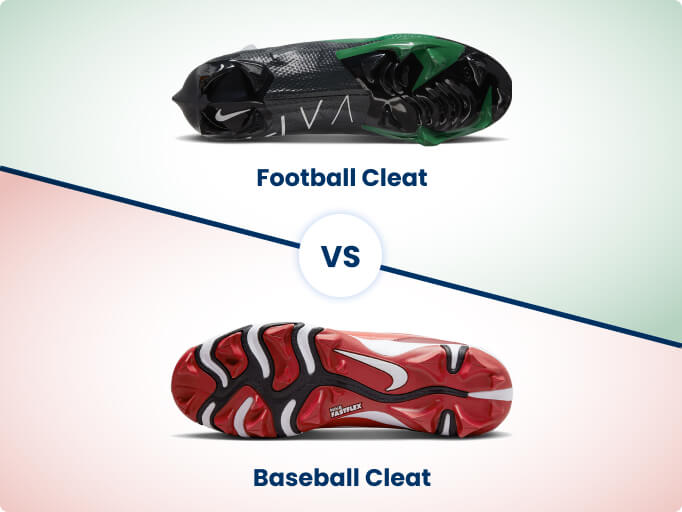
Football cleats are engineered for maximum grip and quick changes of direction on diverse playing surfaces. Their sole plates often feature a dynamic and varied arrangement of studs, strategically placed to provide aggressive traction for both linear and lateral movements.
- Stud Shapes: You’ll typically find a mix of conical (circular) and bladed (rectangular or triangular) studs. Conical studs excel at rotational traction, allowing for quick pivots and changes in direction without excessive twisting. Bladed studs, especially those positioned at the edges and forefoot, dig aggressively into the ground, providing powerful linear acceleration and deceleration, crucial for explosive sprints and sudden stops.
- Stud Arrangement: The pattern is usually more complex and denser than baseball cleats, with studs distributed across the entire forefoot, midfoot, and heel. This multi-point contact system ensures stability and grip regardless of the foot’s angle during a tackle, block, or cut. Heel studs are often angled to aid in stopping power.
- Materials: Football studs are predominantly made from durable thermoplastic polyurethane (TPU) or rubber for molded cleats, offering a balance of flexibility, durability, and grip. For higher-end or specialized positions, screw-in metal studs (often aluminum or steel) are available, providing superior bite on softer natural grass, though their use is often regulated at amateur levels due to safety concerns.
- Positional Variants: Some football cleats are specialized. Lineman cleats often feature a higher cut and more robust sole plates with strategically placed, often wider, studs for pushing and stability. Skill player cleats (e.g., receivers, defensive backs) might prioritize lighter designs with more aggressive forefoot studs for explosive speed and quick cuts.
Baseball Cleats: Rotational Stability and Linear Speed
Baseball cleats prioritize different aspects of ground interaction: powerful rotational movements for hitting and pitching, and efficient linear acceleration for base running.
- Stud Materials and Type: The most significant difference is the widespread use of metal spikes in baseball. Metal cleats, typically made of steel, offer unparalleled penetration into dirt and grass, providing superior grip for generating rotational power during a swing or pitch, and for explosive push-offs during base stealing. This deep penetration ensures minimal slippage, allowing athletes to transfer maximum power. Molded plastic/rubber cleats are also common, especially for younger players or those preferring a lighter feel, offering good grip on harder surfaces but less aggressive bite than metal.
- Stud Arrangement: Baseball cleat patterns are often less dense and more focused. The forefoot typically features a cluster of studs designed for forward traction and to act as a pivot point for rotational movements. A distinct stud or set of studs is almost always present directly under the big toe to provide a stable anchor for the power transfer during a swing or pitch. The heel studs are generally fewer and designed for stability and initial push-off.
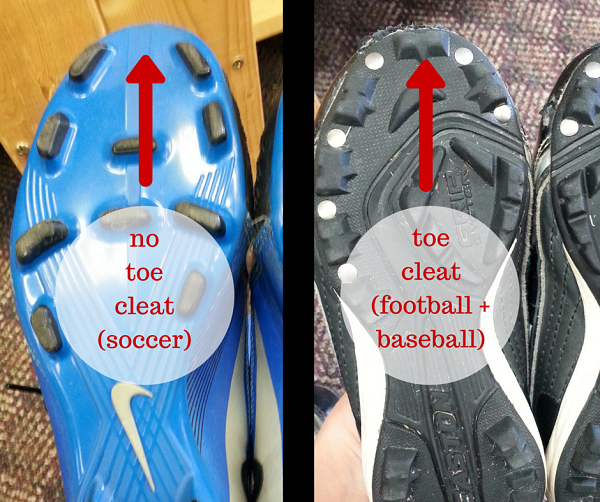
- Absence of Toe Stud (typically): Unlike football cleats, which often have a stud at the very tip of the toe for explosive push-offs, traditional baseball cleats historically omit this. This design choice is primarily for safety, preventing the toe from catching in the ground during a slide, which could lead to injury. Modern designs sometimes incorporate a small, non-aggressive toe nub for added durability and a slight edge in acceleration, but it’s typically not a full stud.
- Emphasis on Stability: While providing grip, the stud pattern also ensures stability for long periods of standing and specific body mechanics, such as a pitcher’s landing foot or a catcher’s squat.
Upper Construction and Ankle Support: Protection and Agility
Beyond the sole, the upper part of the cleat, including the materials and cut, is engineered to support the specific demands of each sport, balancing protection, flexibility, and comfort.
Football: Robust Protection and Versatile Support
Football cleats are built for robustness and support, reflecting the high-impact nature of the game.
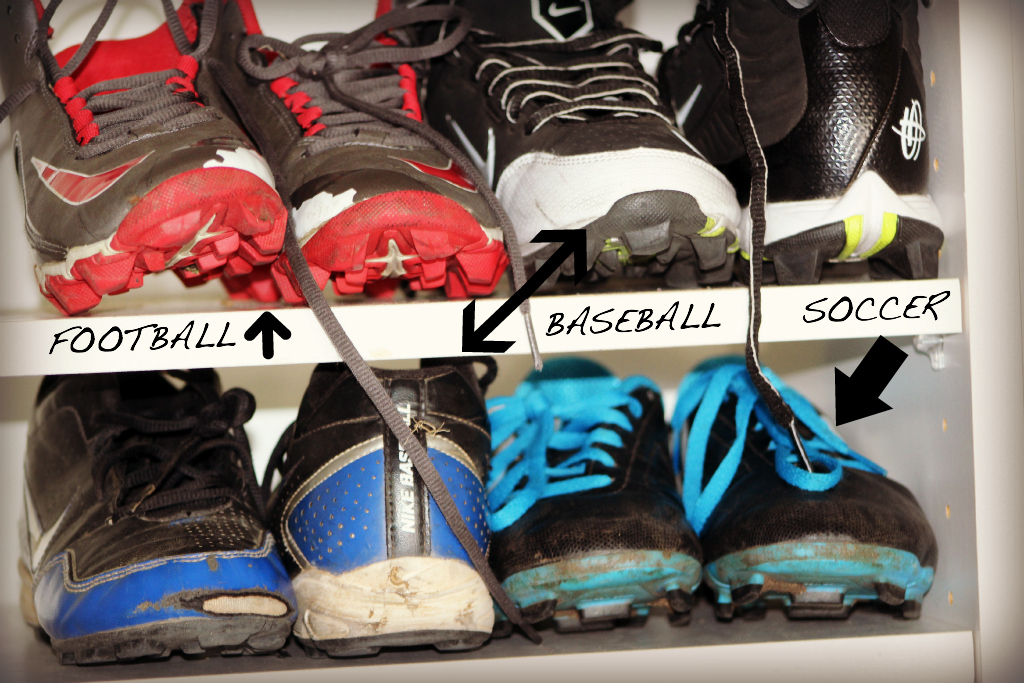
- Cut Height: Football cleats come in various cuts: low, mid, and high.
- Low-cut: Offers maximum ankle mobility, preferred by skill position players requiring extreme agility.
- Mid-cut: Provides a balance of support and mobility, a popular choice across many positions.
- High-cut: Offers significant ankle support and protection against lateral rolls, favored by linemen and players who need maximum stability during forceful movements and tackles.
- Materials: Uppers are typically constructed from durable synthetic leathers, reinforced mesh, or a combination thereof. These materials are chosen for their tensile strength, ability to withstand abrasion, and capacity to provide a snug, supportive fit. Some higher-end models incorporate carbon fiber elements or advanced synthetic weaves for enhanced lightweight support and protection.
- Padding and Reinforcement: Football cleats often feature more internal padding around the ankle and toe box to protect against impacts and provide comfort during prolonged, intense activity. Reinforcements are common in high-wear areas and where lateral support is critical.
- Fit: A secure, locked-down fit is paramount to ensure efficient energy transfer during explosive movements and to prevent the foot from sliding within the shoe during quick cuts.
Baseball: Lightweight Flexibility and Rotational Freedom
Baseball cleats prioritize lightweight construction, flexibility, and freedom of movement, particularly around the ankle, to facilitate rotational power and quick sprints.
- Cut Height: Baseball cleats are predominantly low-cut, offering maximum ankle mobility. This is crucial for activities like pitching, where the ankle needs to flex and extend freely, and for batting, where rotational hip movement relies on a flexible base. Mid-cut options exist for players desiring a bit more support, but high-tops are rare.
- Materials: Uppers are often lighter and more flexible than their football counterparts, utilizing breathable mesh, lightweight synthetics, and sometimes genuine leather. The emphasis is on reducing overall weight to minimize fatigue during long games and allowing for a more natural foot flexion during running and squatting.
- Minimal Padding: While still comfortable, baseball cleats generally have less bulky padding than football cleats, again, to reduce weight and promote a streamlined feel. Protection from direct impact is less of a concern compared to football.
- Flexibility: The forefoot section is engineered to be highly flexible, allowing for easy bending and push-off during running and for comfortable movement while standing in the outfield or dugout.
Material Science and Durability: Longevity and Comfort
Both types of cleats benefit from advanced material science, though the specific properties prioritized differ.
- Lightweight Synthetics: Both sports extensively use advanced synthetic materials that mimic or surpass the performance of traditional leather. These materials offer superior water resistance, reduced break-in time, and often contribute to a lighter overall shoe weight.
- Breathability: Modern cleats incorporate breathable mesh panels and moisture-wicking linings to keep feet cool and dry, a critical comfort factor during long games or intense practices.
- Midsole Technology: Foam cushioning (e.g., EVA, proprietary foam blends) in the midsole provides impact absorption and comfort. In football, this cushioning can also help dissipate forces from repeated impacts. In baseball, it aids in reducing foot fatigue over many innings.
- Outsole Durability: The materials chosen for the sole plates and studs are selected for their resistance to abrasion and impact. Football studs must endure aggressive planting on various surfaces, while baseball studs, especially metal, must withstand repeated digging into dirt and grass without dulling or breaking.
Beyond the Field: Maintenance and Evolution
Proper maintenance is crucial for maximizing the lifespan of both types of cleats. Cleaning off mud and dirt after each use, especially from the studs, prevents material degradation and maintains optimal traction. Storing them in a well-ventilated area helps prevent odor and mildew.
The evolution of cleat technology is ongoing. Manufacturers continually invest in biomechanical research, 3D printing for customized sole plates, and advanced material composites to push the boundaries of performance. Future innovations may include integrated sensors for real-time performance tracking, adaptive cushioning systems, or even self-cleaning materials. These advancements underscore the reality that athletic cleats are not just shoes; they are highly specialized pieces of equipment, meticulously engineered to provide athletes with a technological edge in their chosen sport.
aViewFromTheCave is a participant in the Amazon Services LLC Associates Program, an affiliate advertising program designed to provide a means for sites to earn advertising fees by advertising and linking to Amazon.com. Amazon, the Amazon logo, AmazonSupply, and the AmazonSupply logo are trademarks of Amazon.com, Inc. or its affiliates. As an Amazon Associate we earn affiliate commissions from qualifying purchases.