
Setting the optimal temperature for your water heater is more than a matter of personal preference; it’s a critical decision with significant financial implications for every homeowner. From direct energy costs to long-term appliance longevity and potential safety liabilities, the thermostat dial on your water heater directly impacts your personal finance ledger. Understanding the delicate balance between adequate hot water supply, energy efficiency, and safety is key to unlocking substantial savings and safeguarding your household’s financial well-being.
The Financial Equation of Hot Water: Balancing Comfort and Cost
For many households, hot water represents a substantial portion of monthly utility bills, often second only to heating and cooling. The energy required to heat and maintain water at a specific temperature directly translates into kilowatt-hours (for electric heaters) or cubic feet of natural gas (for gas heaters), which then become line items on your financial statements.
Direct Energy Consumption and Your Budget
Every degree Fahrenheit increase on your water heater thermostat translates to a measurable increase in energy consumption. This is due to two primary factors:
- Heating Demand: The higher the target temperature, the more energy is needed to initially heat the water from its incoming temperature.
- Standby Heat Loss: Even with modern insulation, water heaters lose heat to their surroundings. A higher internal temperature means a greater temperature differential between the tank and the ambient air, leading to increased heat loss and more frequent cycling to reheat the water. This “phantom load” silently siphons money from your wallet, day in and day out.
For a typical household, reducing the water heater temperature by just 10 degrees Fahrenheit can result in a 3-5% reduction in hot water energy costs annually. Over a decade, these seemingly small savings accumulate into hundreds, if not thousands, of dollars, directly impacting your household budget and freeing up capital for other financial goals.
The Trade-off: Convenience vs. Savings
While a lower temperature undoubtedly saves money, there’s a practical limit. Water that’s too cold is inconvenient for showering, dishwashing, and laundry. The goal is to find the “sweet spot” that provides sufficient hot water for daily needs without overspending on energy. This optimal point maximizes utility while minimizing financial outlay, a core principle of sound personal finance management.
Unpacking the Standard: Why 120°F is the Recommended Sweet Spot for Savings
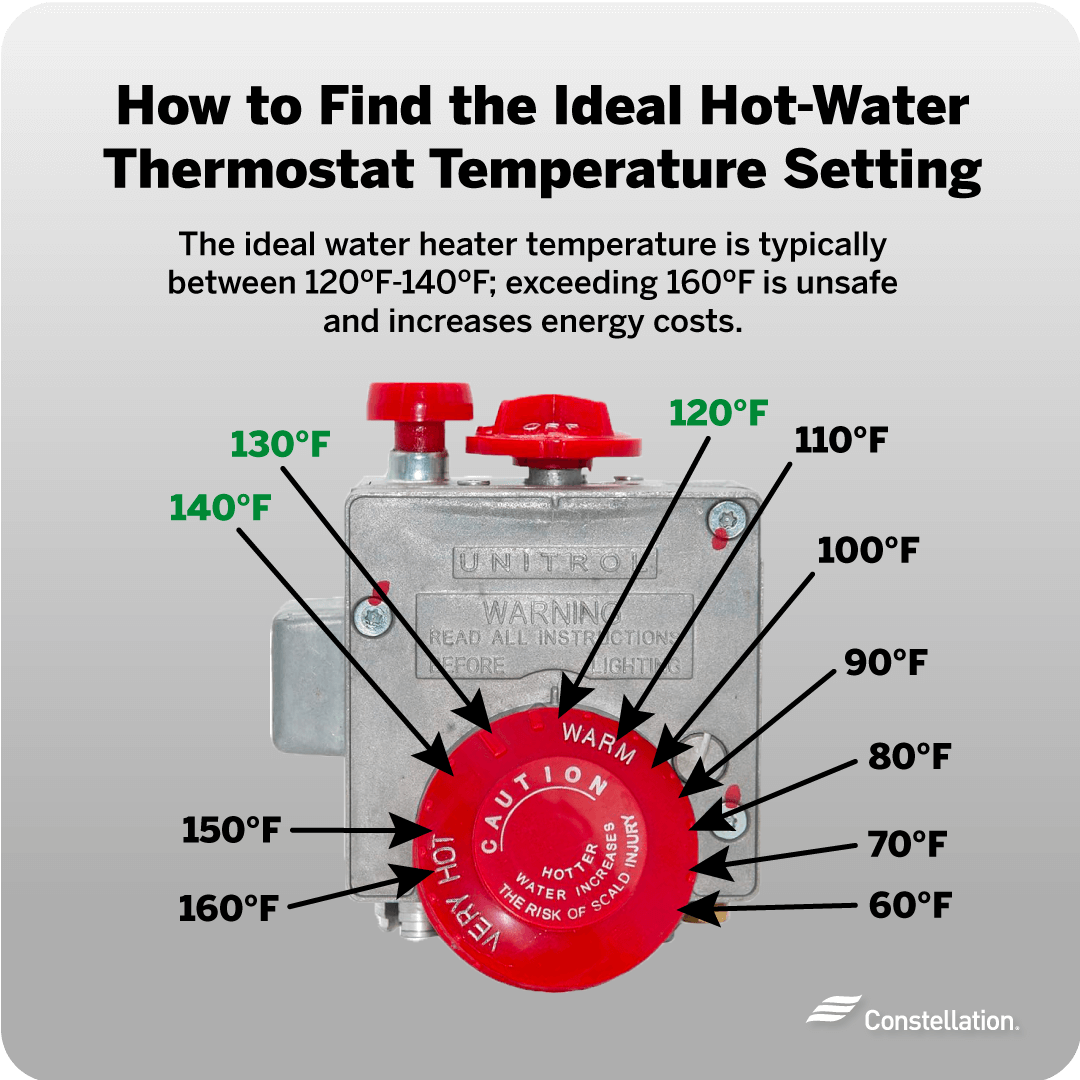
For most modern residential water heaters, a setting of 120°F (approximately 49°C) has emerged as the widely recommended standard. This isn’t an arbitrary figure; it’s a carefully considered balance that addresses financial efficiency, safety, and comfort.
The Financial Benefits of 120°F
At 120°F, a typical family has access to enough hot water for most daily tasks without incurring excessive energy costs from standby heat loss or continuous reheating.
- Optimized Energy Use: This temperature minimizes the energy required to maintain the water, significantly reducing standby losses compared to higher settings like 130°F or 140°F. The Department of Energy estimates that lowering your water heater temperature from 140°F to 120°F can save between $36 and $61 annually on your utility bill, depending on energy rates and usage patterns. Over the lifespan of a water heater (typically 10-15 years), these savings compound into a substantial financial benefit.
- Reduced Wear and Tear: While not immediately obvious, excessively high temperatures can accelerate the wear on internal components of the water heater, such as heating elements, anode rods, and tank linings. Operating at 120°F reduces thermal stress, potentially extending the lifespan of the unit and deferring the significant capital expenditure of a replacement.
- Scale and Sediment Mitigation: Higher temperatures contribute to faster mineral buildup (scale) inside the tank and on heating elements, especially in areas with hard water. This scale reduces the heater’s efficiency, forcing it to work harder and consume more energy to achieve the desired temperature, driving up costs. A 120°F setting helps to slow down this process, preserving efficiency and preventing costly repairs related to element failure or diminished performance.
The Safety Imperative: Preventing Scalding Injuries
Beyond financial considerations, 120°F is a critical threshold for safety, particularly for households with young children, the elderly, or individuals with sensory impairments.
- Scalding Risk Reduction: Water heated to 140°F can cause third-degree burns in as little as 3-5 seconds of exposure. At 120°F, it takes significantly longer – typically 5-10 minutes – to cause similar burns, providing a crucial window for avoidance. The financial costs associated with medical treatment for severe burns, potential lost wages, or even liability claims (if an injury occurs on your property) are astronomically higher than any perceived savings from maintaining a higher water temperature. Prioritizing safety through a 120°F setting is a fundamental aspect of financial risk management for homeowners.
Beyond the Standard: When to Adjust for Unique Financial and Safety Profiles
While 120°F is generally recommended, specific household circumstances may warrant deviations. Understanding these scenarios and their financial implications is vital.
When a Higher Temperature (130°F-140°F) May Be Justified

Certain situations might necessitate a higher water heater temperature, though always with an acute awareness of the increased financial outlay and safety risks.
- Health and Hygiene (Legionella Prevention): For households with individuals who have compromised immune systems or specific respiratory conditions, a higher temperature might be recommended by medical professionals to mitigate the risk of Legionella bacteria growth. Legionella thrives in stagnant water between 77°F and 113°F. Heating water to 135°F-140°F, even periodically, can kill the bacteria. However, this is a specialized consideration, often requiring professional consultation and rigorous adherence to safety protocols (e.g., mixing valves at faucets to prevent scalding). The financial implications here shift from energy savings to health preservation and avoiding potentially catastrophic medical costs.
- Dishwashers Without Internal Heaters: Some older or basic dishwashers rely solely on the home’s hot water supply for cleaning and sanitizing. For optimal performance, especially for effective sterilization, a slightly higher incoming water temperature (e.g., 130°F) might be required. In this case, the incremental energy cost must be weighed against the financial benefit of thoroughly cleaned dishes and avoided foodborne illnesses.
- Large Families or High Demand: Households with exceptionally high hot water demand, where the tank frequently runs out, might consider a slightly higher temperature (e.g., 130°F). This increases the “effective” volume of usable hot water, as less hot water is needed to achieve a comfortable mixed temperature at the faucet. However, this comes at the direct financial cost of increased energy consumption. A more financially prudent solution for persistent hot water shortages is often evaluating tank size, flow restrictors, or a more efficient water heater type (e.g., tankless).
When a Lower Temperature (<120°F) is an Option (With Caveats)
While tempting for maximum energy savings, setting the water heater below 120°F carries specific risks.
- Risk of Bacterial Growth: Temperatures below 120°F significantly increase the risk of bacterial growth, particularly Legionella. The potential medical costs and health risks associated with Legionnaires’ disease far outweigh any minor energy savings from a sub-120°F setting. This is a clear example where financial prudence must yield to health and safety, serving as a reminder that not all cost-cutting measures are advisable.
- Impracticality: Water much below 120°F is often insufficient for comfortable showers or effective cleaning, leading to dissatisfaction and the potential for increased usage (e.g., longer showers) that negates initial energy savings.
Long-Term Financial Health: Maintenance and Longevity Influenced by Temperature
The temperature setting isn’t just about immediate energy bills; it profoundly impacts the long-term financial health of your water heater and, by extension, your household budget. Proactive management of your water heater, including optimal temperature setting, translates into deferred replacement costs and consistent performance.
Extending Appliance Lifespan: A Capital Investment Perspective
A water heater is a significant household capital expenditure, often ranging from several hundred to over a thousand dollars for the unit alone, plus installation costs. Maximizing its lifespan is a direct way to protect this investment.
- Reduced Mineral Buildup: As mentioned, higher temperatures accelerate the formation of mineral scale inside the tank and on heating elements. This scale reduces efficiency and can corrode components, leading to premature failure. Maintaining 120°F helps to slow this process, prolonging the life of heating elements and the tank itself.
- Less Stress on Components: Consistent operation at excessively high temperatures puts more stress on seals, valves, and the tank’s lining, increasing the likelihood of leaks or component failures. Leaks can cause significant property damage, leading to costly repairs and potential insurance claims. By operating at the recommended temperature, you reduce these risks, thereby protecting your home and your financial assets.
The Role of Regular Maintenance and Financial Planning
Beyond temperature, regular maintenance like flushing the tank annually (to remove sediment) and inspecting the anode rod (to prevent tank corrosion) are crucial. These low-cost, preventative measures, combined with an optimal temperature setting, act as an insurance policy against unexpected, large repair or replacement expenses. Including water heater maintenance and eventual replacement in your long-term financial planning and emergency fund is a wise strategy for homeownership.
Smart Water Heating Strategies: Maximizing Savings Beyond Just Temperature
While setting the optimal temperature is foundational, savvy homeowners can employ additional strategies to maximize financial savings related to hot water.
Insulation: A Low-Cost Investment with High Returns
Insulating your water heater tank (especially older models or those in unheated spaces like garages) and the first six feet of hot and cold water pipes connected to the heater can significantly reduce heat loss. This translates directly into less energy required to maintain temperature, putting more money back into your pocket. The cost of insulation materials is minimal, often recuperated within a year through energy savings, making it an excellent financial return on investment.
Timers and Vacation Modes: Automated Savings
For electric water heaters, installing a timer can allow you to turn off the heating elements during periods of low or no demand (e.g., overnight or when you’re at work). Many modern water heaters also include a “vacation mode” that lowers the temperature to a minimum safe setting (e.g., 80-90°F) when you’re away, preventing bacterial growth while drastically cutting standby heat loss. These features automate savings, ensuring you’re not paying to heat water you’re not using.
Understanding Your Hot Water Habits
Analyzing your household’s hot water consumption patterns can also unlock savings.
- Shorter Showers: The most direct way to save hot water is to use less of it.
- Low-Flow Fixtures: Installing low-flow showerheads and faucet aerators significantly reduces the amount of hot water consumed without sacrificing pressure or comfort, leading to immediate and ongoing utility bill reductions.
- Efficient Appliance Use: Running dishwashers and washing machines with full loads and using their “eco” or “cold water” settings where appropriate can drastically cut hot water demand.
By combining the optimal temperature setting with smart usage habits and strategic insulation, homeowners can effectively manage their hot water expenses, transforming a significant utility cost into a manageable line item within their overall personal finance strategy. The “best” temperature is ultimately the one that balances financial prudence with practical household needs and unwavering safety, securing both your comfort and your financial future.
aViewFromTheCave is a participant in the Amazon Services LLC Associates Program, an affiliate advertising program designed to provide a means for sites to earn advertising fees by advertising and linking to Amazon.com. Amazon, the Amazon logo, AmazonSupply, and the AmazonSupply logo are trademarks of Amazon.com, Inc. or its affiliates. As an Amazon Associate we earn affiliate commissions from qualifying purchases.