
The area code 480 serves as a fundamental component of the North American Numbering Plan (NANP), specifically identifying a telecommunications region within Arizona. While seemingly a simple three-digit prefix, understanding area codes, particularly 480, involves delving into telecommunications infrastructure, digital evolution, and the intricate systems that facilitate modern communication. Far from being an antiquated relic, area codes continue to play a crucial role in how we connect, how services are delivered, and even in digital security efforts in an increasingly interconnected world.
Decoding the 480 Area Code: A Technological Overview
Area code 480 is not just a random sequence of numbers; it’s a carefully planned segment of the national telecommunications network designed to manage and direct calls efficiently within a specific geographical zone. Its implementation and current operation reflect significant technological considerations in managing a rapidly expanding user base.

Geographical Scope and Telecommunications Infrastructure
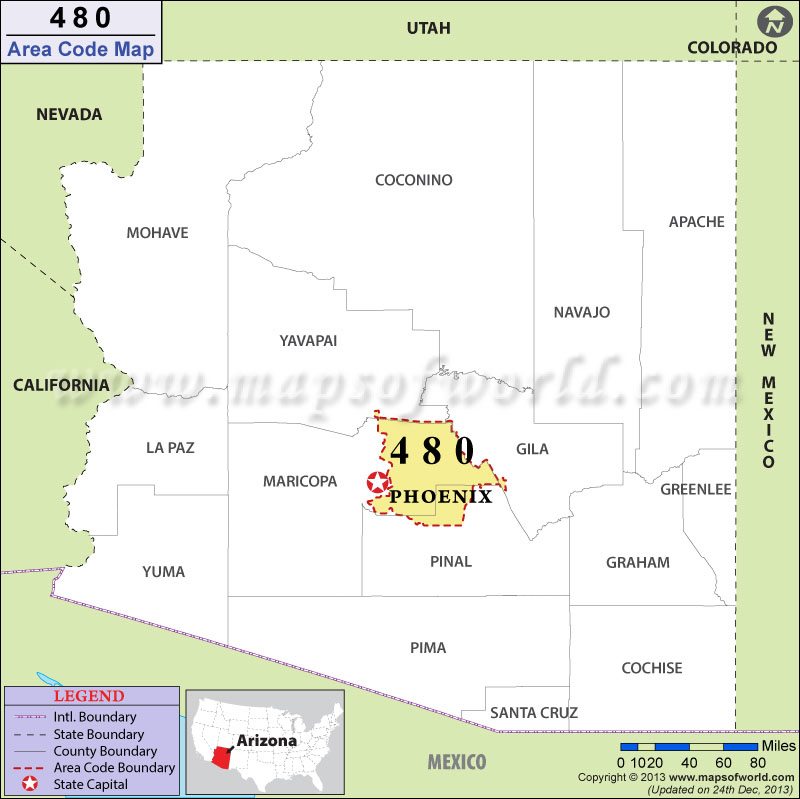
Area code 480 predominantly covers the eastern part of the Phoenix metropolitan area in Arizona. This includes prominent cities such as Scottsdale, Tempe, Mesa, Chandler, Gilbert, and much of the Gila River Indian Community. These areas are characterized by robust telecommunications infrastructure, supporting a high density of residential, commercial, and technological enterprises. The geographic allocation of 480 is crucial for routing calls via the Public Switched Telephone Network (PSTN) and increasingly, through Voice over Internet Protocol (VoIP) systems, ensuring that calls originating from or directed to these regions are correctly managed by switches and routers.
The underlying infrastructure includes extensive fiber optic networks, copper lines (though less prevalent for new installations), cellular towers, and data centers that collectively enable the vast amount of voice and data traffic. When a call is placed to a 480 number, the initial digits instruct the network to route the call to the appropriate regional exchange, which then directs it to the specific local exchange carrier (LEC) that serves the dialed number’s final destination. This intricate dance of digital packets and electrical signals happens within milliseconds, testament to the advanced engineering behind modern telecommunications.
The Overlay System: A Solution to Digital Demand
The 480 area code itself is a product of an overlay system, a common technological solution deployed when the original number pool for a geographic region becomes exhausted. Prior to 1999, the entire Phoenix metropolitan area was served by the 602 area code. As Arizona’s population exploded and the demand for new telephone numbers — driven by cellular phones, pagers (in their time), fax lines, and multiple business lines — surged, the NANP administrators recognized the impending depletion of 602 numbers.
Instead of splitting the 602 area into smaller, distinct geographic areas (a “split”), an overlay plan was implemented. This meant that the 480 area code was introduced over the same geographic region as 602, allowing new subscribers in that region to receive a 480 number while existing 602 numbers remained unchanged. This technological choice necessitated 10-digit dialing for all local calls within the overlay region (e.g., dialing 602-XXX-XXXX even if calling another 602 number within the same city, or 480-XXX-XXXX to a 480 number). The subsequent introduction of 623 and 520, and later 928, further complicated the numbering plan for Arizona, but the 480 overlay was a pioneering approach to manage digital demand without requiring customers to change their existing numbers—a significant user experience consideration.
Area Codes in the Evolving Landscape of Digital Communication
The role of area codes has transformed dramatically with the advent of digital communication technologies. While their foundational purpose remains geographic identification, their operational mechanics and perceived utility have adapted to a world increasingly dominated by internet-based communication.
From PSTN to VoIP: The Transition’s Impact
Traditionally, area codes were intrinsically tied to fixed-line telephony, directing calls through the circuit-switched Public Switched Telephone Network (PSTN). However, the rise of Voice over Internet Protocol (VoIP) technology has decoupled phone numbers from physical locations to a significant degree. VoIP converts voice signals into digital packets, which are then transmitted over the internet, bypassing much of the traditional PSTN infrastructure.
For a 480 number, this means a business or individual can now possess a 480 number without having a physical presence in Scottsdale or Mesa. A cloud-based VoIP system allows calls to a 480 number to be routed to a smartphone in New York, a laptop in London, or an office in California. This technological shift has profound implications for communication flexibility, scalability for businesses, and the very concept of “local.” While the area code still identifies a specific geographic region, the underlying technology determining where the call lands is now far more adaptable and globally dispersed, leveraging the internet’s reach.
Virtual Numbers and Geolocation Services
The emergence of virtual phone numbers, often facilitated by VoIP, exemplifies this technological evolution. A virtual 480 number can be acquired by anyone, anywhere, to establish a “local” presence without the need for physical infrastructure. This is invaluable for startups, remote businesses, and individuals who wish to project a local identity for marketing or logistical reasons, even if their operations are entirely distributed.
Furthermore, advancements in geolocation services, while distinct from area codes, often intersect with them. While an area code broadly indicates a region, modern mobile devices and internet services use GPS, Wi-Fi triangulation, and IP address mapping for highly precise location data. This technology is leveraged for everything from emergency services to targeted advertising. The 480 area code, in this context, serves as a macro-level geographic identifier, while digital geolocation provides micro-level precision, often within the same communication flow, enhancing the user experience and service delivery.
Digital Security Implications of Caller ID Technology
The ubiquity of caller ID, enabled by digital telephony, has made area codes a frontline indicator in telecommunication security. For an area code like 480, understanding its origins and typical usage can be a small but significant piece of a larger cybersecurity puzzle.
Leveraging Technology to Combat Telecommunication Scams
Caller ID technology, which displays the calling party’s number (and sometimes name), uses the area code as its primary geographical identifier. Unfortunately, this technology can be exploited by scammers through practices like “spoofing,” where they intentionally falsify the caller ID to display a local area code, such as 480, to trick recipients into answering. The goal is to create a sense of familiarity or urgency, leading to potential fraud.
Recognizing the prevalence of spoofing, technological solutions have been developed to combat these threats. Networks are increasingly implementing STIR/SHAKEN protocols (Secure Telephone Identity Revisited/Signature-based Handling of Asserted information using toKENs), which digitally “sign” calls to verify their origin and reduce the likelihood of spoofed numbers reaching consumers. For the 480 area code, as with all others, these protocols help validate if a call genuinely originates from a 480 number or if it’s a nefarious attempt to impersonate a local caller.
Advanced Call Screening and Blocking Solutions
Consumers and businesses are also equipped with an array of digital tools to manage unwanted calls from numbers, including those within the 480 area code. Smartphone operating systems (iOS, Android) integrate call blocking features, allowing users to manually block specific numbers or send all unknown callers directly to voicemail.
Beyond manual blocking, numerous third-party apps and network-level services employ sophisticated algorithms and databases to identify and block spam or scam calls. These technologies analyze call patterns, reported numbers, and originating network data to flag suspicious calls. For instance, if a 480 number suddenly makes thousands of calls within a short period, it might be flagged as a robocaller. These solutions provide an essential layer of digital security, allowing users to filter out nuisance or dangerous calls before they even ring, relying heavily on the intelligent processing of caller ID data, including the area code, to make informed decisions.
The Future of Area Codes in a Connected World
As technology continues to advance at an unprecedented pace, the utility and perception of area codes like 480 are also evolving. Their future relevance will be shaped by ongoing shifts in communication paradigms and the integration with emerging technologies.
Number Portability and the Mobile-First Revolution
Mobile numbers have largely superseded landlines as the primary mode of personal communication for most individuals. One of the key technological features driving this shift is number portability, which allows users to retain their existing phone number (including its area code) even when switching carriers or moving to a different geographic location. This flexibility means a 480 number is no longer strictly tied to an Arizona residence or business in the same way it once was. A person who moved from Tempe to Seattle can retain their 480 cell number, blurring the line between an area code’s original geographic intent and its modern-day usage.
This mobile-first approach, combined with number portability, suggests that while area codes will remain technical identifiers for routing, their role in indicating a caller’s current physical location is diminished. Their primary function for individuals might shift more towards a legacy identifier or a choice made for perceived local connection, rather than a strict geographic mandate.

Integrating Area Codes with Emerging IoT and 5G Networks
The advent of 5G networks and the proliferation of the Internet of Things (IoT) present new frontiers for telecommunications and, by extension, the area code system. 5G’s ultra-low latency and massive connectivity capabilities will enable billions of devices—from smart home appliances to industrial sensors—to communicate. While many IoT devices communicate directly via data protocols, some, like smart meters or vehicle emergency systems, may require voice or SMS capabilities, potentially utilizing existing numbering plans.
The question arises: will these devices be assigned traditional numbers with area codes like 480, or will new numbering schemes be developed? While it’s unlikely every smart toaster will get a phone number, critical IoT applications that interface with human communication or legacy systems might still rely on familiar numbering structures. For area codes like 480, this could mean their technical definitions might expand to encompass segments of these new digital ecosystems, facilitating communication between humans and devices, or device-to-device communication where human intervention is required. The challenge for telecommunications engineers will be to adapt the existing NANP, including area codes like 480, to accommodate these vastly increased demands without compromising network integrity or user experience.
aViewFromTheCave is a participant in the Amazon Services LLC Associates Program, an affiliate advertising program designed to provide a means for sites to earn advertising fees by advertising and linking to Amazon.com. Amazon, the Amazon logo, AmazonSupply, and the AmazonSupply logo are trademarks of Amazon.com, Inc. or its affiliates. As an Amazon Associate we earn affiliate commissions from qualifying purchases.